
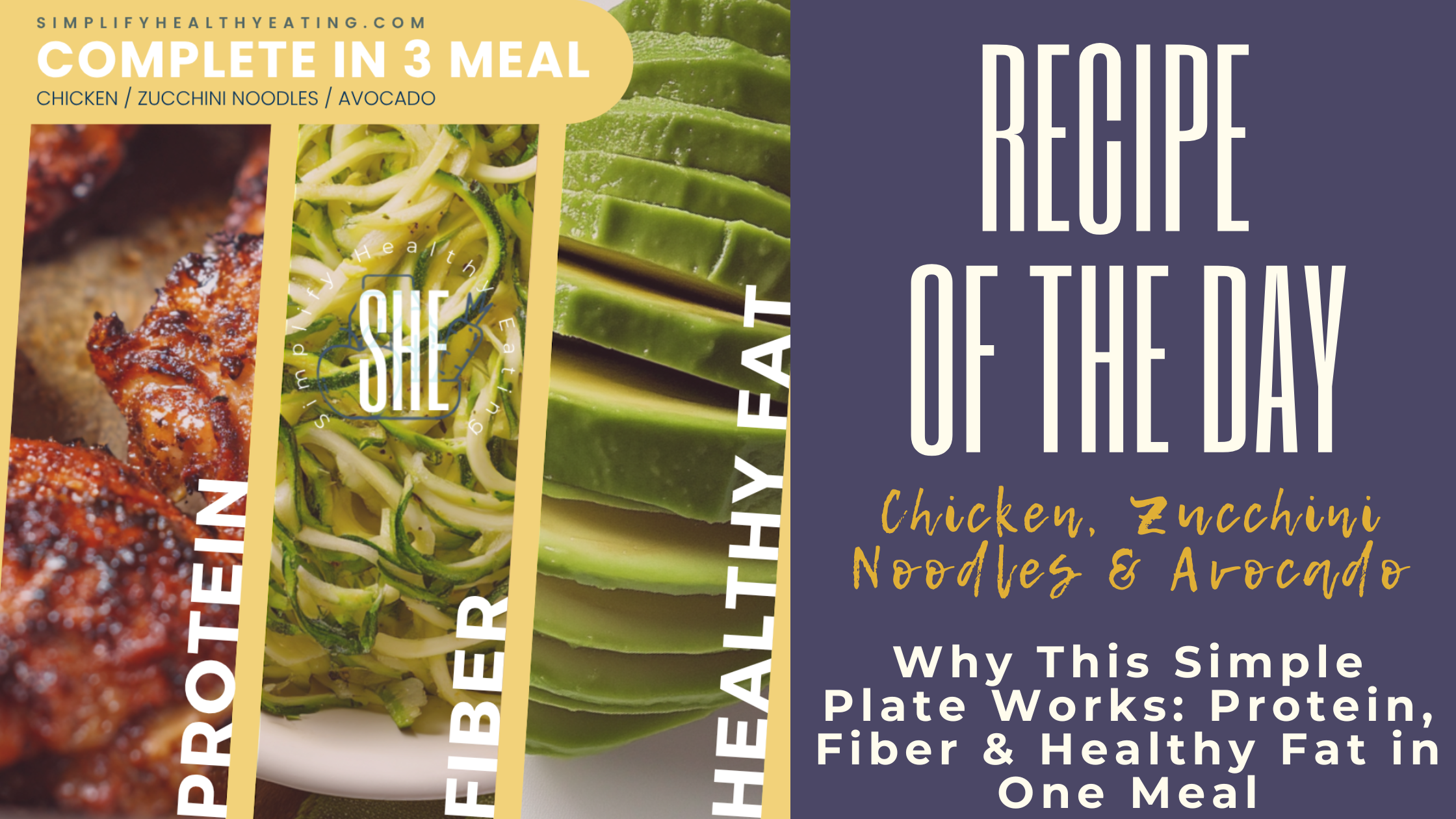
Why This Simple Plate Works: Protein, Fiber & Healthy Fat in One Meal
One of the biggest reasons healthy eating feels complicated is because people think every meal has to be a full production.
A new recipe.
A long grocery list.
A complicated prep schedule.
A dozen ingredients.
A sink full of dishes.
But sometimes the most sustainable meals are the ones that follow a simple structure: protein + fiber + healthy fat.
One of the biggest reasons healthy eating feels complicated is because people think every meal has to be a full production.
A new recipe.
A long grocery list.
A complicated prep schedule.
A dozen ingredients.
A sink full of dishes.
But sometimes the most sustainable meals are the ones that follow a simple structure: protein + fiber + healthy fat.
That is exactly why this “Complete in 3” meal works so well: chicken, zucchini noodles, and avocado.
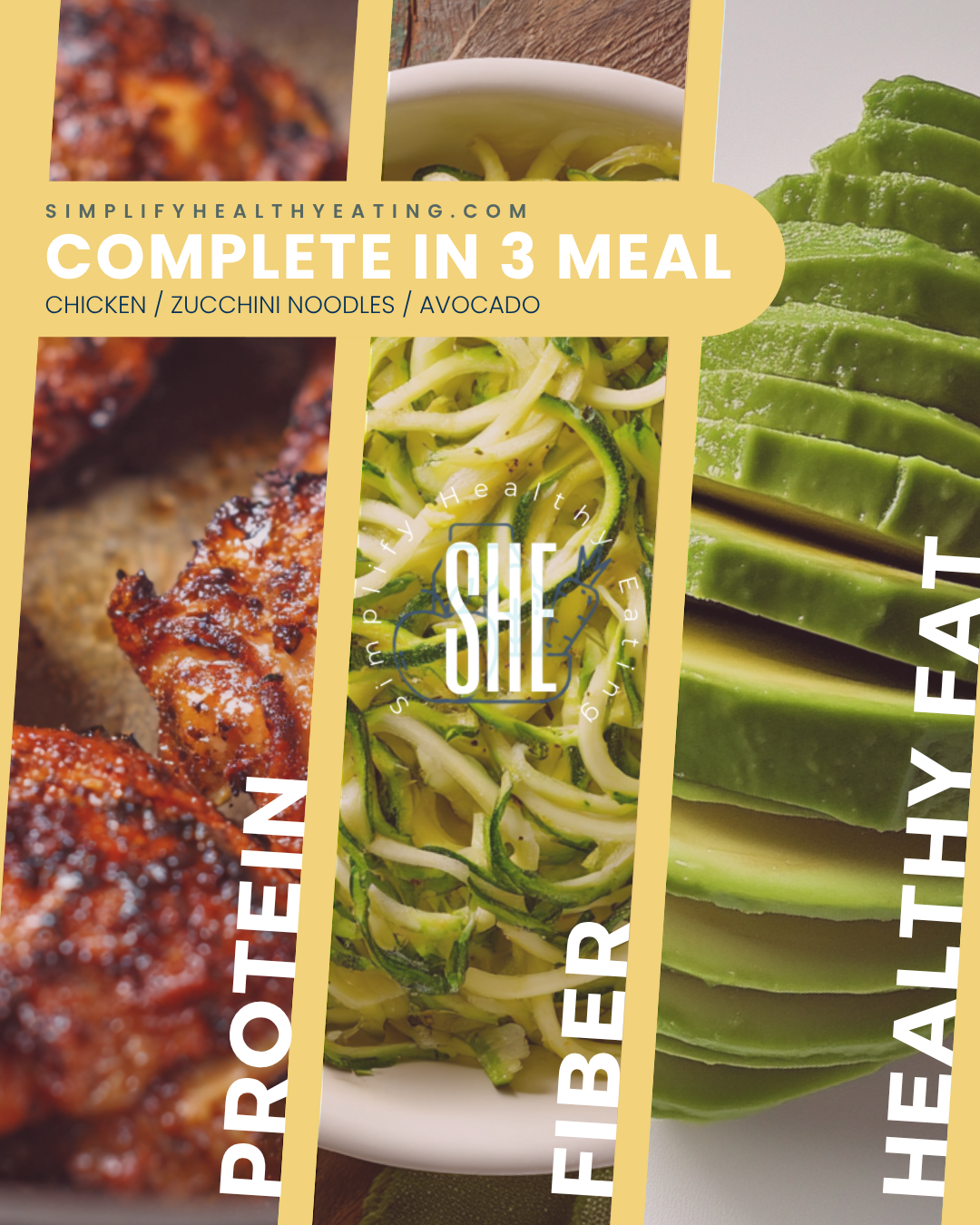
It is simple, satisfying, blood-sugar friendly, and easy to customize. It gives your body the kind of balanced support that helps you feel full without feeling heavy, nourished without feeling restricted, and consistent without needing a brand-new meal plan every Monday.
Ingredient 1: Chicken for Protein and Muscle Support
Chicken is the protein anchor of this meal.
Protein matters because it helps support muscle, fullness, tissue repair, and overall body function. It is especially important for women over 35 because muscle becomes more valuable as we age. The goal is not just “eat less.” The goal is to build meals that help your body feel supported while you pursue sustainable fat loss, energy, and strength.
Chicken is also versatile. You can grill it, bake it, shred it, air fry it, season it spicy, keep it simple, or meal prep it ahead of time. That makes it one of those practical protein options for busy women who need healthy meals without starting from scratch every day.
Protein also helps make meals more satisfying. When your plate is mostly low-protein, high-carb, or snack-based, you may notice hunger showing up again quickly. Adding chicken gives the meal more staying power and helps prevent that “I just ate, why am I still hungry?” feeling.
Harvard’s Nutrition Source describes protein as an essential macronutrient and lists chicken among common protein foods that can fit into a healthy eating pattern. (The Nutrition Source)
Ingredient 2: Zucchini Noodles for Volume, Fiber, and Hydration
Zucchini noodles, also called zoodles, bring the volume.
This matters because many women are trying to eat smaller portions when what their bodies actually need is a smarter plate. Zucchini noodles allow you to create a bigger, more satisfying meal while adding vegetables, texture, and freshness.
Zucchini is naturally light, hydrating, and easy to pair with sauces, proteins, and seasonings. It gives you the feel of a noodle-style meal without making the plate feel heavy. That does not mean traditional pasta is “bad.” It simply means zoodles can be a useful option when you want more volume, more vegetables, and a lighter base.
Zucchini also contributes dietary fiber and vitamin C. USDA SNAP-Ed lists zucchini as providing fiber and vitamin C, along with being naturally low in fat and free from added sugars. (SNAP-Ed Connection)
Fiber is one of the keys to making this meal work. Fiber helps slow digestion, supports fullness, and may help reduce sharp blood sugar swings after eating. Harvard’s Nutrition Source explains that soluble fiber attracts water in the gut and forms a gel-like substance that slows digestion, which may help reduce hunger and help prevent blood glucose surges. (The Nutrition Source)
Ingredient 3: Avocado for Healthy Fat and Satisfaction
Avocado brings the healthy fat.
This is the ingredient that helps the meal feel satisfying instead of “diet-y.” One of the biggest mistakes women make when trying to lose fat is cutting meals down so far that they remove the very foods that help them feel satisfied.
Healthy fat matters because it adds flavor, texture, and satiety. Avocado makes this meal feel more complete. It pairs beautifully with seasoned chicken and zucchini noodles, especially if you add lime, garlic, cilantro, crushed red pepper, or a light vinaigrette.
Avocados contain fiber and mostly unsaturated fat. Harvard’s Nutrition Source notes that avocados are a good source of fiber and contain more healthy fat than carbohydrate, making them a satisfying addition to healthful meal plans. (The Nutrition Source)
That is important because the goal is not to avoid fat. The goal is to choose fats that support the meal and help you stay consistent.
Why This Meal Supports Sustainable Fat Loss
This plate works because it is not built on restriction.
It is built on structure.
Chicken gives you protein.
Zucchini noodles give you volume and fiber.
Avocado gives you healthy fat and satisfaction.
Together, these ingredients create a meal that can support fullness, cravings, energy, and consistency. That is the heart of sustainable fat loss: meals that make sense for your body and your real life.
This meal is also easy to adjust. Need more energy? Add a small serving of brown rice, quinoa, beans, or roasted sweet potato. Want more flavor? Add salsa, pesto, lemon garlic sauce, or a Greek yogurt-based dressing. Need more volume? Add spinach, peppers, mushrooms, or cucumber.
The structure is simple, but the options are endless.
Simple Ways to Prepare It
Season chicken with garlic powder, paprika, black pepper, onion powder, and a squeeze of lemon.
Sauté zucchini noodles lightly so they stay firm instead of watery.
Top with sliced avocado right before serving.
Add a sprinkle of hemp seeds, fresh herbs, salsa, or a drizzle of olive oil if desired.
This is the kind of meal that proves healthy eating does not have to be complicated. Sometimes the best thing you can do is build a plate that checks the boxes: protein, fiber, healthy fat, flavor, and satisfaction.
References
Harvard T.H. Chan School of Public Health. (n.d.). Protein. The Nutrition Source. https://nutritionsource.hsph.harvard.edu/what-should-you-eat/protein/
Harvard T.H. Chan School of Public Health. (2022, April). Fiber. The Nutrition Source. https://nutritionsource.hsph.harvard.edu/carbohydrates/fiber/
Harvard T.H. Chan School of Public Health. (2022, April). Avocados. The Nutrition Source. https://nutritionsource.hsph.harvard.edu/avocados/
SNAP-Ed Connection. (n.d.). Zucchini. U.S. Department of Agriculture. https://snaped.fns.usda.gov/resources/nutrition-education-materials/seasonal-produce-guide/zucchini
Reset Your Mindset for Volume Eating: Why More of the Right Foods Can Help You Stop Overeating
For years, so many women have been taught that eating less is the path to results.
Less food.
Smaller plates.
Fewer carbs.
Tiny portions.
Skip breakfast.
Drink water when you’re hungry.
Push through cravings.
Be “good.”
But let’s tell the truth: for a lot of women, especially women over 35 who are juggling work, family, stress, hormones, fatigue, and real-life responsibilities, restriction does not create freedom.
For years, so many women have been taught that eating less is the path to results.
Less food.
Smaller plates.
Fewer carbs.
Tiny portions.
Skip breakfast.
Drink water when you’re hungry.
Push through cravings.
Be “good.”
But let’s tell the truth: for a lot of women, especially women over 35 who are juggling work, family, stress, hormones, fatigue, and real-life responsibilities, restriction does not create freedom.
It often creates the exact opposite.
It creates obsession. It creates overeating later. It creates guilt after meals. It creates that all-or-nothing cycle where you’re “good” all day, starving by 4 p.m., and then wondering why you’re picking through the pantry at night.
That is not a character flaw.
That is your body trying to survive a system that was never designed to support you.
Volume eating is not about stuffing yourself. It is not about eating endlessly. And it is definitely not about ignoring your body’s signals.
Volume eating is about choosing foods that give your body fullness, fiber, hydration, nutrients, and satisfaction without forcing you into a restrictive mindset.
In other words, it is about learning how to build a full plate that works with your body instead of constantly fighting against it.
Mindset Shift #1: “Eating More Food Will Make Me Gain Weight”
This is one of the biggest mental blocks around volume eating.
Many women hear “eat more” and immediately think, “Absolutely not. That’s how I gain weight.”
But the question is not simply, “Am I eating more food?”
The better question is: What kind of food am I eating more of?
There is a major difference between eating more ultra-processed snack foods that leave you hungry again in an hour and eating more vegetables, lean proteins, beans, berries, soups, salads, whole grains, and high-fiber foods that actually help your body feel nourished.
A full plate of grilled chicken, roasted vegetables, greens, avocado, beans, and a fiber-rich carbohydrate is not the same as a small plate of chips, cookies, or a low-protein “diet” meal that leaves you searching for more food later.
Volume eating helps you focus on foods that take up more space on the plate and in your stomach while also providing nutrition your body can actually use.
That is why the mindset shift matters:
Old thought: Eating more food will make me gain weight.
New thought: Eating more of the right food is exactly how I stop overeating.
Because when your meals are too small, too dense, too low in protein, or too low in fiber, your body keeps asking for more. Not because you lack discipline. Because it still has needs.
Mindset Shift #2: “I Need to Restrict to See Results”
Restriction can feel productive in the beginning because it gives you a sense of control.
But control is not the same as sustainability.
You can restrict for a few days. Maybe even a few weeks. But eventually, your body pushes back. Hunger increases. Cravings get louder. Energy drops. Your mood shifts. You start thinking about food constantly.
That is not failure.
That is biology.
Your body is designed to protect you. When it senses that food is limited, it does what it can to get your attention.
This is why so many women feel like they are starting over every Monday. The problem is not that they are weak. The problem is that the plan was too restrictive to begin with.
Volume eating gives you another way.
Instead of asking, “How little can I eat and still function?” you begin asking, “How can I build meals that keep me full, satisfied, energized, and consistent?”
That shift changes everything.
Because consistency is where results come from. Not punishment. Not starving. Not trying to prove you can survive on coffee, a boiled egg, and vibes.
A better plate might include protein, fiber-rich carbohydrates, healthy fats, and lots of colorful produce. That kind of meal supports fullness, energy, digestion, blood sugar balance, and cravings.
The goal is not to eat the smallest amount possible.
The goal is to eat in a way you can actually live with.
Old thought: I need to restrict to see results.
New thought: Restriction is what’s been keeping me stuck. Volume is what sets me free.
Mindset Shift #3: “A Small Plate Means I’m Being Good”
Let’s go ahead and retire the idea that tiny portions equal virtue.
A small plate does not automatically mean you are being disciplined.
Sometimes a small plate means you are under-eating.
Sometimes it means you are setting yourself up to snack all night.
Sometimes it means you are ignoring the fact that your body has been running all day on stress, caffeine, and willpower.
And let’s be honest: many women have been trained to see fullness as something to fear.
But fullness is not the enemy.
Being comfortably full after a balanced meal is a good thing. It means your body received enough nourishment to move on with life without begging for more food every 30 minutes.
A full plate of the right foods can be one of the smartest things you put in front of your body.
That does not mean every plate needs to be huge. It means your plate should be supportive.
A supportive plate may include:
Protein to help with fullness and muscle support.
Vegetables and fruits for fiber, volume, antioxidants, and hydration.
Slow-digesting carbohydrates for energy.
Healthy fats for satisfaction.
Flavor, seasoning, and texture so the meal actually feels enjoyable.
This is especially important for busy women who are trying to stabilize energy, reduce cravings, and stop living in the restrict-binge cycle.
Old thought: A small plate means I’m being good.
New thought: A full plate of the right foods is the smartest thing I can put in front of my body.
Mindset Shift #4: “I Shouldn’t Feel This Hungry — I Just Ate”
This is where a lot of guilt creeps in.
You eat a small, “healthy” meal and then an hour later you’re hungry again. Then the self-talk starts:
“What is wrong with me?”
“Why am I always hungry?”
“I have no discipline.”
“I just ate. I shouldn’t need more food.”
But hunger after a small, dense meal is often biology, not weakness.
For example, a small protein bar may have calories, but it might not have enough volume, fiber, or real satisfaction to keep you full. A tiny bowl of cereal might be quick, but it may not give your body the protein and fiber it needs. A small salad with no protein, no healthy fat, and no real substance may look “healthy,” but it might not hold you.
Your body is not only counting calories. It is responding to fullness, nutrients, hormones, blood sugar, stress, sleep, hydration, and satisfaction.
That means two meals with the same calories can feel completely different in your body.
One might leave you full for hours.
The other might have you searching for snacks before your next meeting.
This is why volume eating can be so powerful. Foods with water, fiber, and protein help create fullness in a way that feels supportive instead of restrictive.
Think soups, stir-fries, salads with protein, smoothie bowls with fiber, roasted vegetables, berries, beans, lentils, Greek yogurt bowls, egg scrambles with vegetables, or lean protein bowls with greens and whole-food carbs.
You do not have to shame your hunger.
You can learn from it.
Old thought: I shouldn’t feel this hungry — I just ate.
New thought: Hunger after a small, dense meal is biology, not weakness. My body needs volume.
Mindset Shift #5: “I Don’t Deserve to Eat a Full Plate”
This one goes deeper than food.
Some women are not just afraid of eating more. They feel like they have to earn nourishment.
They feel like they need to be smaller before they deserve a full plate. They feel like they have to punish themselves for yesterday. They feel like fullness means failure.
But your body is not your enemy.
Your body has carried you through stress, grief, work, caregiving, long days, hard seasons, and life transitions. Your body keeps showing up for you, even when you have not always known how to show up for it.
You do not have to earn food.
You do not have to punish your body into change.
You can nourish your body and still have goals. You can want fat loss and still eat enough. You can pursue better health without making your body feel unsafe.
That is the heart of sustainable wellness.
Not restriction.
Not shame.
Not punishment.
Not “starting over” every Monday.
But learning how to care for your body with structure, wisdom, and consistency.
Old thought: I don’t deserve to eat a full plate.
New thought: My body works hard for me every single day. It deserves to be fully fed.
What Volume Eating Can Look Like in Real Life
Volume eating does not have to be complicated. It can be as simple as adding more supportive foods to meals you already eat.
Instead of a small bowl of pasta alone, add grilled chicken, roasted vegetables, spinach, and a side salad.
Instead of a tiny breakfast that leaves you hungry, try eggs with vegetables, fruit, and a high-fiber carb.
Instead of snacking through the afternoon, build a lunch with protein, greens, beans or sweet potatoes, healthy fats, and flavor.
Instead of skipping meals to “save calories,” eat enough earlier in the day so you are not battling cravings at night.
This is not about perfection. This is about creating a system your body can trust.
Because when your body trusts that it will be fed, cravings often become easier to manage. When your meals are balanced, your energy becomes more stable. When you stop fearing food, consistency becomes easier.
And consistency is the real goal.
The Real Reset Starts in Your Mindset
Volume eating is not just a nutrition strategy. It is a mindset reset.
You are learning to believe that fullness is allowed.
You are learning that nourishment is not the same as overeating.
You are learning that eating enough can actually help you stop overdoing it later.
You are learning that your body needs support, not punishment.
That is why this conversation matters.
Because the plate is not the only thing that needs to change.
The thoughts behind the plate need to change too.
There’s Still Time to Join the 21-Day Happy Brain Challenge
If you’ve been feeling mentally foggy, emotionally drained, inconsistent, or stuck in the cycle of knowing what to do but struggling to actually do it, there’s still time to join the FREE 21-Day Happy Brain Challenge.
This challenge is designed to help you reset your mind, support your habits, and start creating simple daily rhythms that help you feel more clear, grounded, and consistent.
Over 21 days, you’ll focus on practical wellness, mindset, and encouragement that supports the way you eat, think, move, and show up for yourself.
No pressure.
No perfection.
No shame.
Just one intentional step at a time.
There’s still time to join us inside the FREE 21-Day Happy Brain Challenge. Get started here and take your next step toward a healthier mindset, a more nourished body, and a routine you can actually sustain.
Intervals for Energy
Some days, your body does not need a long workout. It needs a short, focused burst of movement that wakes you up, elevates your heart rate, improves endurance, and helps you feel like you got your energy back.
That is where this cardio interval workout comes in.
Some days, your body does not need a long workout. It needs a short, focused burst of movement that wakes you up, elevates your heart rate, improves endurance, and helps you feel like you got your energy back.
That is where this cardio interval workout comes in.
This routine is designed to be simple, low-equipment, and flexible enough to do at home, at the gym, or in a small space. The goal is to elevate your heart rate, improve cardiovascular endurance, and help your body practice moving with more power, coordination, and confidence.
This is not about punishment. This is not about trying to “burn off” food. This is about building energy, stamina, and strength from the inside out.
For women over 35, cardio does not have to mean endless running, extreme jumping, or workouts that leave your joints angry for three days. A smart cardio workout can be joint-conscious, scalable, and still effective.
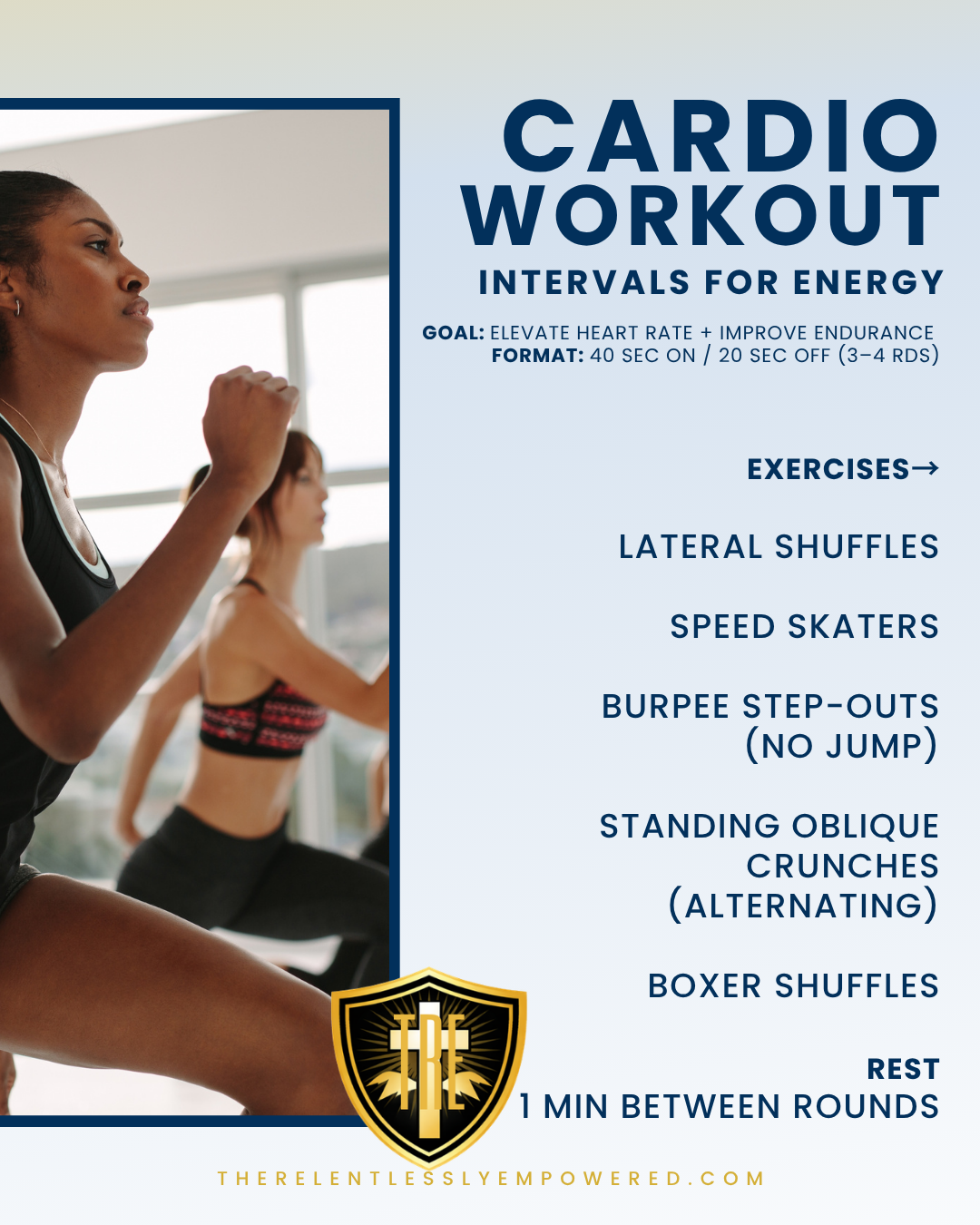
The Workout Format
Goal: Elevate heart rate and improve endurance
Format: 40 seconds of work, 20 seconds of rest
Rounds: 3–4 rounds
Rest: 1 minute between rounds
Exercises
Lateral shuffles
Speed skaters
Burpee step-outs, no jump
Standing oblique crunches, alternating
Boxer shuffles
Before you begin, warm up for 3–5 minutes with gentle marching, arm circles, side steps, hip circles, and light bodyweight squats. If you have joint pain, balance concerns, dizziness, chest pain, or any medical condition, modify as needed and check with your healthcare provider before starting.
Why This Cardio Workout Works
This workout uses interval training, which means you alternate periods of higher effort with short recovery periods. That structure helps you work hard without needing to sustain the same intensity for a long time.
The 40 seconds on and 20 seconds off format gives you enough time to build effort while still offering regular rest. This can be especially helpful if you are rebuilding fitness, managing a busy schedule, or trying to improve endurance without feeling overwhelmed.
Each move also trains something slightly different.
Lateral shuffles improve side-to-side movement and agility.
Speed skaters build coordination, balance, and lower-body power.
Burpee step-outs increase heart rate without requiring jumping.
Standing oblique crunches train core control while keeping you upright.
Boxer shuffles improve footwork, rhythm, and stamina.
Together, these exercises create a full-body cardio session that supports energy, endurance, coordination, and confidence.
How to Do Lateral Shuffles
Lateral shuffles are a side-to-side cardio move that helps train agility, lower-body endurance, and coordination.
How to do it:
Stand with your feet about hip-width apart.
Bend your knees slightly and hinge your hips back just a little, like you are preparing to move quickly.
Keep your chest lifted and core engaged.
Step quickly to the right for 2–4 steps, depending on your space.
Then shuffle back to the left.
Keep your feet light and avoid crossing your legs.
Continue moving side to side for the full 40 seconds.
Form tips:
Stay low but comfortable.
Keep your knees soft.
Push off the outside foot to change direction.
Let your arms move naturally to help with balance.
Modification:
Instead of shuffling quickly, step side to side at a controlled pace. You can also reduce the number of steps and simply do one step right, one step left.
How to Do Speed Skaters
Speed skaters are a cardio move that mimics a skating motion. They train balance, coordination, glutes, legs, and cardiovascular endurance.
How to do it:
Stand tall with your feet hip-width apart.
Step your right foot out to the side and slightly behind you.
Let your left knee bend as your right leg crosses behind.
Reach your opposite arm across your body if comfortable.
Push through your left foot and step to the other side.
Repeat side to side in a smooth rhythm.
Form tips:
Keep your chest lifted.
Land softly.
Keep your knees tracking in the same direction as your toes.
Move with control instead of rushing.
Modification:
Remove the hop completely. Step side to side instead of jumping. Keep the range of motion smaller if balance is a concern.
Progression:
Add a small hop between sides or increase the distance of each step.
How to Do Burpee Step-Outs With No Jump
Burpee step-outs are a joint-conscious version of a burpee. They elevate your heart rate without requiring a jump or full push-up.
How to do it:
Stand with your feet hip-width apart.
Bend your knees and hinge at your hips.
Place your hands on the floor or on an elevated surface like a bench, chair, or step.
Step one foot back, then the other foot back, coming into a plank position.
Keep your core engaged.
Step one foot forward, then the other foot forward.
Stand tall and squeeze your glutes at the top.
Repeat for 40 seconds.
Form tips:
Do not let your hips sag in the plank.
Keep your hands under your shoulders.
Move at a pace you can control.
Stand fully upright at the top before repeating.
Modification:
Use a sturdy chair, bench, or countertop to reduce pressure on the wrists and make the move more accessible.
Progression:
Step back faster, add a squat at the top, or add a push-up if appropriate.
How to Do Standing Oblique Crunches
Standing oblique crunches train the side body, core control, balance, and coordination without needing to get on the floor.
How to do it:
Stand tall with your feet hip-width apart.
Place your hands lightly behind your head or keep them in front of your chest.
Shift your weight slightly to your left leg.
Lift your right knee up and out to the side.
Bring your right elbow toward your right knee by gently crunching through the side waist.
Lower your foot and return to standing.
Switch sides and repeat.
Continue alternating for 40 seconds.
Form tips:
Move with control.
Do not pull on your neck.
Keep your chest open.
Focus on bringing your ribcage and hip closer together.
Modification:
Keep your hands on your hips and lift the knee only as high as comfortable.
Progression:
Add a light dumbbell or increase your pace while maintaining good form.
How to Do Boxer Shuffles
Boxer shuffles are a light-footed cardio move that improves rhythm, coordination, and endurance.
How to do it:
Stand with your feet slightly wider than hip-width apart.
Bend your knees softly.
Bring your hands up like a boxer guarding the face.
Shift your weight quickly from one foot to the other.
Let your heels lift lightly as you move.
Keep your core engaged and your shoulders relaxed.
Continue for 40 seconds.
Form tips:
Stay light on your feet.
Keep your breathing steady.
Avoid locking your knees.
Keep your movements small and quick.
Modification:
March in place with soft knees and gentle arm movement.
Progression:
Add light punches while you shuffle.
How to Structure the Workout
Complete each exercise for 40 seconds, then rest for 20 seconds before moving to the next exercise.
After completing all five moves, rest for 1 minute.
Repeat for 3–4 total rounds.
If you are newer to cardio, start with 2 rounds and build from there. If you are more advanced, increase your intensity during the work intervals while keeping your form clean.
Cool Down
After your final round, cool down for 3–5 minutes.
Walk slowly in place.
Take deep breaths.
Stretch your calves, quads, hamstrings, hips, and shoulders.
Let your heart rate come down gradually.
Do not skip the cool down. Your body deserves the transition.
Final Thoughts
This cardio interval workout is a powerful reminder that movement does not have to be complicated to be effective.
You can elevate your heart rate, build endurance, improve coordination, and boost energy with just a few simple moves. The key is consistency, not perfection.
Start where you are. Modify what you need. Build as you go.
Your body is not asking you to punish it.
It is asking you to support it.
A High-Protein Smoothie That Tastes Like Dessert but Supports Your Goals
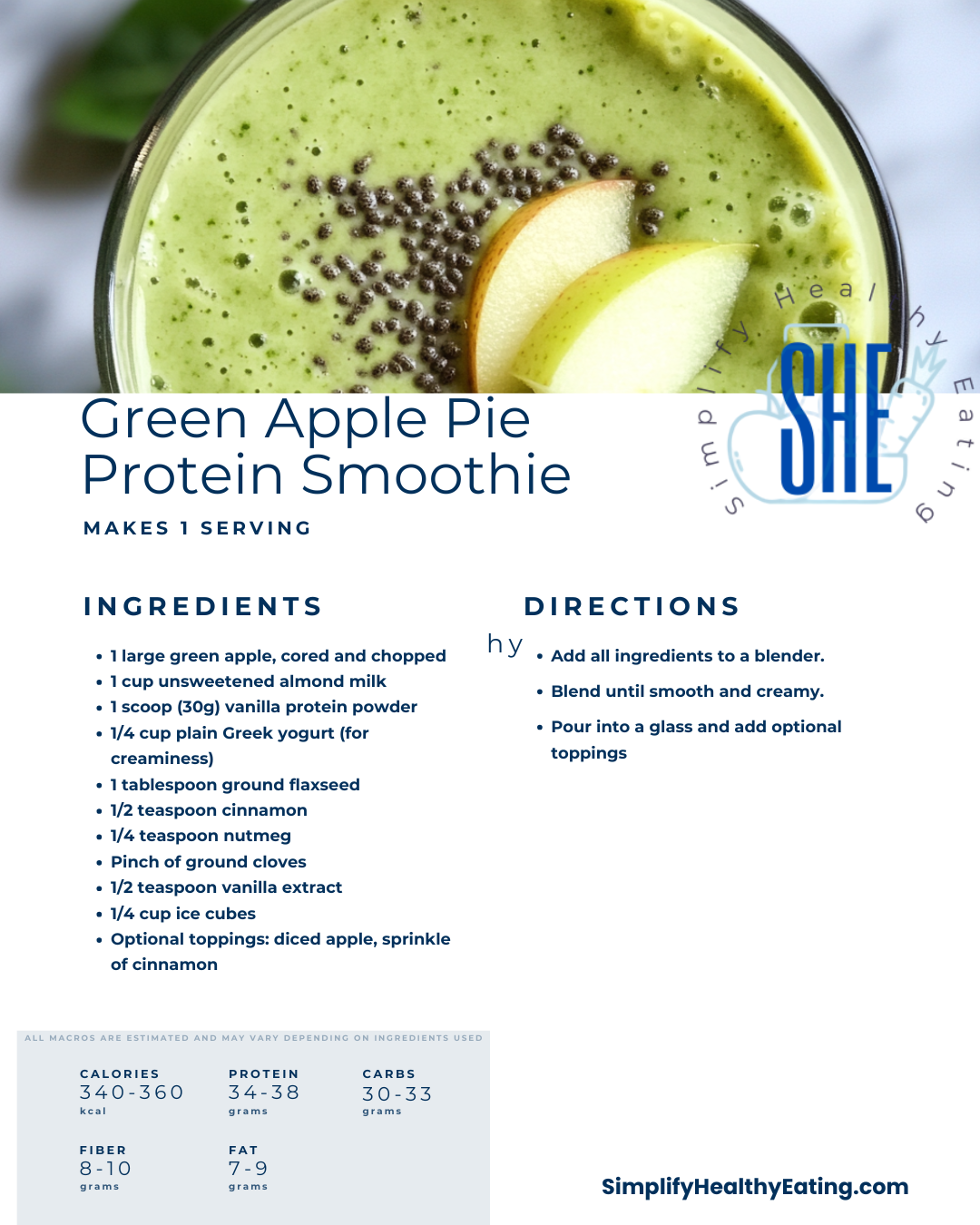
If you love the cozy flavor of apple pie but want something that supports your wellness goals, this Green Apple Pie Protein Smoothie is such a smart option.
If you love the cozy flavor of apple pie but want something that supports your wellness goals, this Green Apple Pie Protein Smoothie is such a smart option.
It gives you the sweet-tart flavor of green apple, the creaminess of Greek yogurt, the staying power of protein powder, and the warm comfort of cinnamon, nutmeg, and cloves — all blended into one quick, satisfying smoothie.
This is the kind of recipe that helps healthy eating feel less like restriction and more like strategy.
Because sometimes the difference between “I’m trying to eat healthy” and “I can actually stay consistent with this” comes down to whether your meals feel enjoyable, filling, and realistic.
That makes this smoothie more than a sweet drink. It is a balanced, protein-forward meal option.
Why Green Apple Works So Well
The green apple gives this smoothie its signature flavor.
Green apples are crisp, tart, naturally sweet, and refreshing. They bring that apple pie flavor without needing a heavy amount of added sugar.
They also contribute fiber, which helps support fullness and digestion. That matters because a smoothie without fiber may taste good but leave you hungry again shortly after drinking it.
The apple also gives this smoothie texture and body. When blended with Greek yogurt, almond milk, protein powder, and ice, it helps create a thicker, more satisfying consistency.
And let’s be honest — if your smoothie feels watery and thin, it does not feel like a meal.
This one feels more like a creamy apple pie shake.
Why Protein Powder Helps Keep You Full
Vanilla protein powder is one of the main reasons this smoothie works as a meal instead of just a snack.
Protein helps support fullness, muscle maintenance, and overall meal satisfaction. This is especially important for women over 35 who are trying to support sustainable fat loss, stabilize energy, and avoid the cycle of eating something quick but feeling hungry again too soon.
A smoothie made mostly from fruit and milk can be delicious, but it may not have enough protein to hold you.
Adding protein powder helps create staying power.
It also gives the smoothie a dessert-like flavor, especially when paired with vanilla extract and warm spices.
Why Greek Yogurt Adds Creaminess and Structure
Plain Greek yogurt brings creaminess, protein, and a slightly tangy balance to the sweetness of the apple.
It helps make the smoothie thicker and more satisfying without needing ice cream, whipped cream, or a lot of added sweetener.
Greek yogurt is also one of those ingredients that works beautifully in smoothies because it makes them feel more substantial.
If you are someone who struggles with breakfast or often runs on coffee and vibes, this is the kind of smoothie that can help you start the day with more structure.
Why Ground Flaxseed Is a Smart Add-In
Ground flaxseed may be small, but it adds a lot of value.
It contributes fiber, plant-based fat, and texture. The fiber helps with fullness and digestion, while the healthy fats help the smoothie feel more complete.
Flaxseed also blends well into smoothies without overpowering the flavor.
In this recipe, it works quietly in the background while the apple pie flavor takes center stage.
Why the Spices Matter
Cinnamon, nutmeg, and cloves are what make this smoothie taste like apple pie.
This is important because flavor matters.
Healthy eating becomes much harder when everything tastes plain, boring, or overly “diet.” These spices create warmth and comfort without needing to turn the smoothie into a sugar-heavy dessert.
Cinnamon gives sweetness and warmth.
Nutmeg adds depth.
Cloves bring that cozy bakery-style flavor.
Vanilla extract ties everything together.
This is how you make healthy meals feel good enough to repeat.
When to Enjoy This Smoothie
This Green Apple Pie Protein Smoothie works well as:
A high-protein breakfast
A post-workout smoothie
A mid-morning meal option
A sweet afternoon craving crusher
A healthy fall-inspired smoothie
A meal-prep friendly wellness drink
You can also customize it based on your needs.
Need it thicker? Add more ice or Greek yogurt.
Need more fiber? Add chia seeds or extra flaxseed.
Need more healthy fat? Add a few walnuts or almond butter.
Need it sweeter? Add a little stevia, monk fruit, or a small amount of honey.
Need it more filling? Pair it with boiled eggs or a small side of turkey sausage.
The goal is not perfection. The goal is a smoothie that fits your life.
There’s Still Time to Join the 21-Day Happy Brain Challenge
If you are working on healthier habits, fewer cravings, better energy, and a stronger mindset, there’s still time to join our FREE 21-Day Happy Brain Challenge.
This challenge is designed to help you reset your thoughts, habits, and wellness rhythm one simple day at a time.
Because healthy eating is not just about what you put in the blender.
It is also about how you think, how you respond to cravings, how you speak to yourself, and how you build daily routines that actually support the woman you are becoming.
There’s still time to join us.
Join the FREE 21-Day Happy Brain Challenge and start your reset today.
5 Easy Swaps to Eat More Food for Fewer Calories
Let’s be honest: most women do not struggle because they “don’t know” they should eat healthier.
They struggle because healthy eating has been presented like a punishment.
Tiny portions.
Bland meals.
Dry chicken.
Sad salads.
No snacks.
No dessert.
No joy.
And then we wonder why it is hard to stay consistent.
Let’s be honest: most women do not struggle because they “don’t know” they should eat healthier.
They struggle because healthy eating has been presented like a punishment.
Tiny portions.
Bland meals.
Dry chicken.
Sad salads.
No snacks.
No dessert.
No joy.
And then we wonder why it is hard to stay consistent.
The truth is, if your healthy eating plan makes you feel deprived, hungry, irritated, and obsessed with your next meal, it is probably not sustainable.
That is where smart food swaps come in.
Not swaps that make you feel punished.
Not swaps that remove all pleasure.
Not swaps that turn every meal into diet culture nonsense.
Smart swaps.
The kind that help you eat more volume, feel more satisfied, and still support your goals.
This is one of the main reasons I love volume eating as a strategy. It helps you stop thinking, “How little can I eat?” and start asking, “How can I build a plate that gives my body what it needs?”
Because sometimes the answer is not less food.
Sometimes the answer is more of the right foods.
More protein.
More fiber.
More fruits and vegetables.
More hydration.
More texture.
More color.
More satisfaction.
The goal is not to trick yourself into eating less. The goal is to build meals that support your body, your energy, your mindset, and your real life.
So let’s talk about five easy swaps that allow you to eat more food for fewer calories while still feeling satisfied.
Why Volume Eating Works
Volume eating is a simple concept: choose foods that give you more physical volume for fewer calories while still supporting nutrition and satisfaction.
This usually means building meals around foods like vegetables, fruits, lean proteins, Greek yogurt, broth-based soups, air-popped popcorn, berries, zucchini noodles, salads, and other high-fiber or water-rich foods.
But let me be clear: volume eating is not about eating air and pretending you are full.
It is about building smarter plates.
A plate that includes protein helps support fullness and muscle.
A plate that includes fiber helps support digestion and satisfaction.
A plate that includes fruits and vegetables gives your body nutrients and volume.
A plate that includes healthy fats helps the meal feel complete.
This matters because many women over 35 have spent years trying to shrink portions instead of learning how to build meals that actually hold them.
And when meals do not hold you, cravings get louder.
You may eat a small breakfast and feel “good” for two hours, then snack your way through the afternoon. You may eat a tiny lunch, then feel ravenous by dinner. You may avoid dessert all week, then feel out of control once you finally have it.
That is not weakness.
That is a system problem.
These swaps help create a better system.
Swap 1: Breakfast
Instead of Granola with Yogurt, Try Greek Yogurt with Berries and a Sprinkle of Granola
Granola can be delicious, but it is also very easy to overdo without realizing it. A bowl of granola with a little yogurt can become calorie-dense quickly while not always giving you the amount of protein or volume you need to stay full.
A smarter swap is to flip the ratio.
Instead of making granola the main event, make Greek yogurt and berries the foundation, then use granola as the topping.
This gives you a breakfast that feels fuller, looks bigger, and often supports your body better.
Greek yogurt brings protein and creaminess.
Berries add volume, fiber, color, and natural sweetness.
A sprinkle of granola adds crunch and satisfaction without taking over the whole bowl.
This is the kind of breakfast that can help you start the day with more structure.
And for busy women, that matters.
Because when breakfast is too small or too low in protein, the rest of the day can turn into a snack hunt. You may find yourself reaching for random foods, not because you lack discipline, but because breakfast did not give your body enough support.
Try this instead:
Start with plain or lightly sweetened Greek yogurt. Add strawberries, blueberries, raspberries, or blackberries. Add cinnamon or vanilla extract if you want more flavor. Then finish with a small sprinkle of granola for crunch.
You still get the granola experience, but now the bowl is working harder for you.
This is not restriction.
This is strategy.
Swap 2: Lunch
Instead of a Sandwich with Chips, Try Lettuce Wraps and a Massive Side Salad
A sandwich with chips is quick, familiar, and easy. There is nothing morally wrong with it.
But for many people, that combo can leave them wanting more because it may not provide enough volume, fiber, or produce to feel truly satisfying.
A great swap is to turn the sandwich into lettuce wraps and add a massive side salad.
This does a few things.
First, it increases volume. Lettuce wraps allow you to enjoy the fillings without relying on bread as the main structure. Then the side salad adds color, crunch, fiber, hydration, and more food on the plate.
Second, it gives you more opportunity to add nutrients. You can include lean turkey, chicken, tuna, eggs, hummus, beans, avocado, peppers, cucumbers, tomatoes, shredded carrots, cabbage, or greens.
Third, it helps lunch feel less like “diet food” and more like a full plate.
That matters because small lunches often create evening problems.
If you under-eat at lunch, you may be more likely to over-snack in the afternoon or feel out of control at dinner. A higher-volume lunch can help you feel more grounded and satisfied.
Try this:
Use romaine leaves, butter lettuce, or collard greens as your wrap. Add protein like chicken, turkey, tuna, tofu, or eggs. Add crunchy vegetables and a flavorful sauce or dressing. Then build a big side salad with greens, cucumbers, tomatoes, carrots, peppers, and a small amount of healthy fat like avocado, seeds, or olive-oil-based dressing.
The goal is not to remove joy.
The goal is to build a lunch that gives you more volume, more fiber, and more staying power.
Swap 3: Snack
Instead of Trail Mix Alone, Try a Giant Bowl of Popcorn with a Small Handful of Almonds
Trail mix can be a great snack, but it is also very calorie-dense. Nuts, dried fruit, chocolate pieces, and seeds can add up quickly in a small portion.
Again, this does not make trail mix “bad.”
It just means it may not always be the best choice when you want a bigger, more satisfying snack.
A smart swap is to pair a giant bowl of popcorn with a small handful of almonds.
Popcorn gives you volume and crunch.
Almonds give you healthy fat, texture, and satisfaction.
Together, this snack gives you more to eat while still feeling balanced.
This is especially helpful if you are someone who likes to snack while working, watching a show, or winding down in the evening. Sometimes you want the experience of eating something crunchy. A tiny handful of trail mix may be gone in two minutes, leaving you wanting more.
A bowl of popcorn gives you that crunchy snack experience with more volume.
Then the almonds help the snack feel more complete.
Try this:
Choose air-popped popcorn or a lightly seasoned popcorn option. Add cinnamon for a sweet vibe, chili lime seasoning for a savory vibe, or nutritional yeast for a cheesy flavor. Pair it with a small handful of almonds or another nut you enjoy.
This swap works because it honors the desire for a snack while making the snack more satisfying.
Healthy eating becomes easier when you stop pretending cravings do not exist and start building better options around them.
Swap 4: Dinner
Instead of a Pasta Bowl, Try Half Pasta, Half Zucchini Noodles with Roasted Veggies
This is one of my favorite swaps because it does not require you to give up pasta.
You do not have to go from a full bowl of pasta to a bowl of plain vegetables and sadness.
Instead, try half pasta and half zucchini noodles with roasted veggies.
This keeps the comfort of pasta while adding more volume, fiber, and nutrients.
The pasta gives you familiarity and satisfaction.
The zucchini noodles add volume and a lighter texture.
The roasted veggies bring flavor, color, and fullness.
This is a great example of what I call an “add more” strategy.
Instead of only focusing on what to remove, focus on what to add.
Add more vegetables.
Add more fiber.
Add more color.
Add more protein if needed.
Add more volume.
A dinner like this can feel abundant instead of restrictive.
And that matters because dinner is often the meal where people feel the most tired and the most tempted to throw the whole plan away. If your dinner feels too small or too strict, consistency becomes harder.
Try this:
Cook your favorite pasta. Lightly sauté zucchini noodles so they do not become watery. Roast vegetables like peppers, onions, mushrooms, eggplant, broccoli, or zucchini. Combine everything with a flavorful sauce. Add a protein like chicken, shrimp, ground turkey, salmon, tofu, or beans.
You still get the pasta bowl.
You just make it smarter.
This is how we stop making healthy eating feel like punishment and start making it feel practical.
Swap 5: Dessert
Instead of 2 Scoops of Ice Cream, Try ¾ Scoop Over a Huge Bowl of Frozen Berries
Dessert does not have to be all-or-nothing.
This is where a lot of women get stuck.
They either avoid dessert completely and feel deprived, or they have dessert and feel like they “failed.”
But food freedom lives in the middle.
A smart dessert swap is to use a smaller portion of ice cream over a huge bowl of frozen berries.
This gives you the sweetness and creaminess of ice cream while adding more volume, fiber, color, and natural sweetness from the berries.
The berries make the bowl feel big and satisfying.
The ice cream makes it feel like dessert.
Together, they create a balanced option that does not require guilt.
This is not about making dessert “perfect.” It is about creating a dessert that supports your goals and your life.
Try this:
Add frozen berries to a bowl and let them soften for a few minutes. Top with a smaller scoop of vanilla, chocolate, or your favorite ice cream. Add cinnamon, a few chopped nuts, or a drizzle of melted dark chocolate if you want to make it feel extra special.
You can also use Greek yogurt or whipped cottage cheese if you want a higher-protein version.
But the point is this: you can enjoy dessert without turning it into a shame spiral.
One of the biggest parts of sustainable wellness is learning how to include foods you enjoy in a way that still supports your body.
Your Next Grocery Shop Just Got Smarter
The best part about these swaps is that they do not require complicated ingredients.
You can build them with everyday grocery staples:
Greek yogurt
Berries
Granola
Lettuce
Salad vegetables
Lean protein
Popcorn
Almonds
Pasta
Zucchini
Roasted vegetables
Frozen berries
Ice cream
That is why this approach works.
It is simple. It is repeatable. It is realistic.
You are not trying to become a whole new person by Monday. You are just making your next grocery shop a little smarter.
And that is where consistency begins.
A smarter grocery list creates smarter choices. Smarter choices create better meals. Better meals support better energy, fewer cravings, and more confidence.
It is not about perfection.
It is about building a system that helps you show up for yourself.
The Mindset Shift: More Food Does Not Mean Less Progress
A lot of women hear “eat more food” and immediately panic.
But more food does not automatically mean more calories. And fewer calories does not automatically mean better nutrition.
What matters is the structure of the meal.
You can eat a tiny portion of calorie-dense food and still feel hungry. You can also eat a large, colorful, protein-and-fiber-rich plate and feel satisfied while still supporting your goals.
That is the beauty of volume eating.
It helps you stop fearing a full plate and start building one with intention.
Because your body does not need punishment.
Your body needs support.
And support looks like meals that nourish you, satisfy you, and help you stay consistent.
Try This Simple Food Swap Practice This Week
Choose one meal or snack from the list and try the swap this week.
Do not overhaul your whole life.
Just choose one:
Greek yogurt with berries and a sprinkle of granola.
Lettuce wraps with a massive side salad.
Popcorn with a small handful of almonds.
Half pasta, half zucchini noodles with roasted veggies.
Frozen berries with a smaller scoop of ice cream.
After you try it, pay attention to how your body feels.
Did you feel more satisfied?
Did you have more energy?
Did you feel less snacky later?
Did the meal feel easier to repeat?
Did it help you feel supported instead of restricted?
That is how you start learning your body.
And that awareness is powerful.
There’s Still Time to Join the 21-Day Happy Brain Challenge
If you are working on healthier eating, better habits, fewer cravings, and a more supportive mindset, there’s still time to join the FREE 21-Day Happy Brain Challenge.
This challenge is designed to help you reset the way you think, eat, move, and show up for yourself one simple step at a time.
Because healthy eating is not just about what is on your plate.
It is also about your mindset.
It is about learning how to stop operating from guilt, shame, stress, and all-or-nothing thinking.
Inside the challenge, you will receive simple daily encouragement and practical wellness support to help you feel more grounded, more intentional, and more consistent.
No pressure.
No perfection.
No shame.
Just one step at a time.
There’s still time to join us inside the FREE 21-Day Happy Brain Challenge.
Get started today.

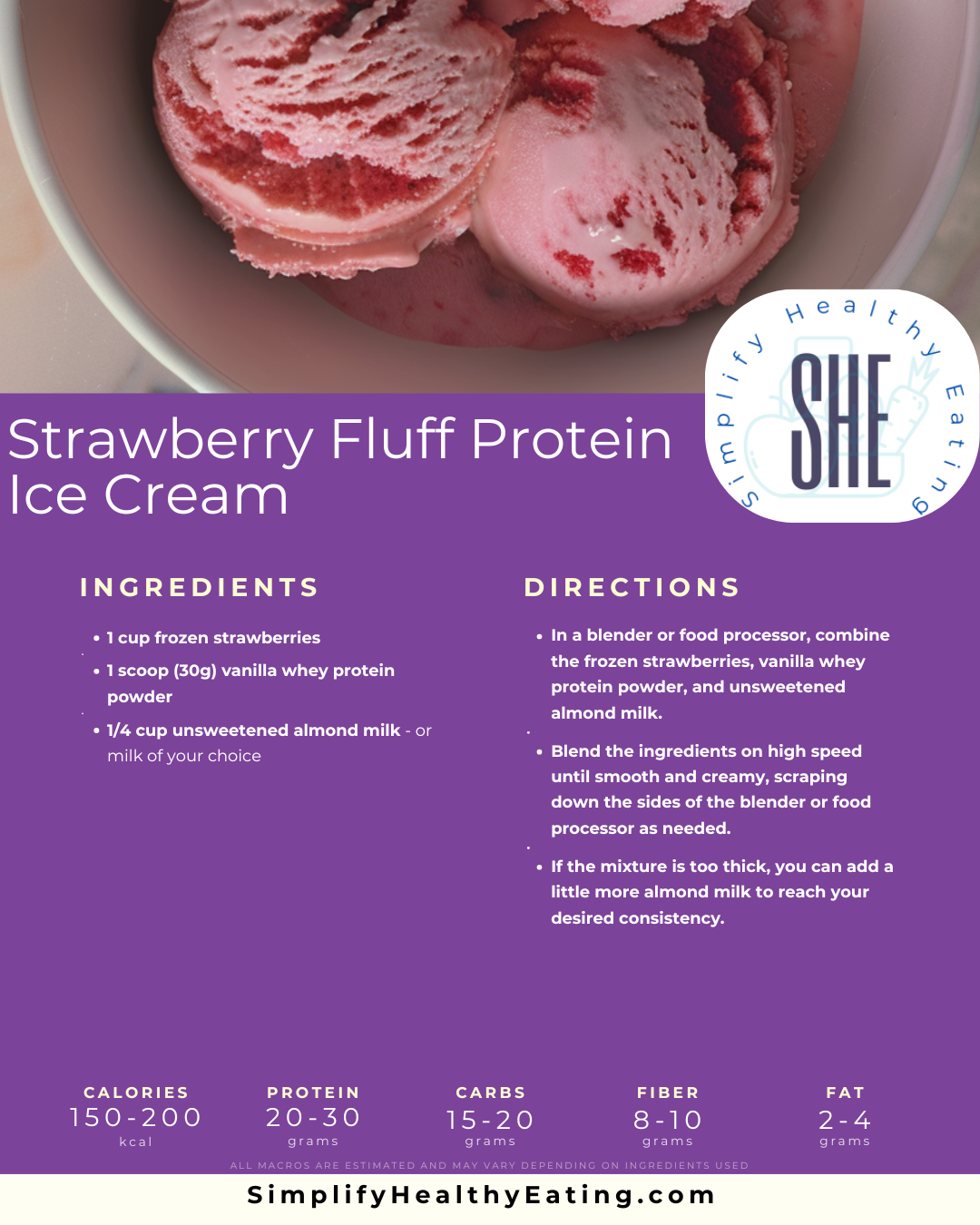
Strawberry Fluff Protein Ice Cream: A Healthier Dessert That Supports Your Goals
One of the biggest reasons many people struggle with consistency is because they believe healthy eating means giving up dessert completely.
But sustainable wellness is rarely built through extreme restriction.
It’s built through balance.
This Strawberry Fluff Protein Ice Cream is a perfect example of how healthier alternatives can help satisfy cravings while still supporting your wellness goals.
One of the biggest reasons many people struggle with consistency is because they believe healthy eating means giving up dessert completely.
But sustainable wellness is rarely built through extreme restriction.
It’s built through balance.
This Strawberry Fluff Protein Ice Cream is a perfect example of how healthier alternatives can help satisfy cravings while still supporting your wellness goals.
Why Restriction Often Backfires
When people feel deprived, cravings often increase.
That can lead to:
Overeating later
Binge-restrict cycles
Feeling “off track”
Frustration around food
Balanced alternatives help create sustainability.
And sustainability is what creates long-term success.
Strawberries Add Natural Sweetness and Fiber
Strawberries are naturally rich in:
✨ Vitamin C
✨ Antioxidants
✨ Fiber
Fiber helps support fullness and slows digestion, which can help reduce the quick energy crashes often associated with sugary desserts.
Using fruit as a natural sweetener can help create desserts that feel satisfying without excessive added sugars.
Protein Helps Make Desserts More Filling
Adding protein to desserts changes the experience completely.
Protein helps support:
✔️ Fullness
✔️ Muscle recovery
✔️ Stable energy
✔️ Reduced cravings later
Many traditional desserts are low in protein and easy to overeat because they don’t create much satiety.
This recipe provides a more balanced approach.
Almond Milk Keeps It Lighter
Unsweetened almond milk helps create a creamy texture while keeping the recipe lighter overall.
This allows the dessert to feel indulgent without becoming excessively heavy.
Healthy Eating Should Include Enjoyment
Healthy eating that feels miserable rarely lasts.
That’s why finding balanced swaps matters.
Recipes like this help create a lifestyle where:
💛 You can enjoy dessert
💛 You can satisfy cravings
💛 You can stay aligned with your goals
💛 You can stop viewing food as “all or nothing”
Because true wellness includes flexibility, balance, and sustainability.
Not perfection.
End-of-the-Month Reflection: You Made It Through More Than You Realize
There is something about the end of the month that makes you pause.
Maybe you look back and feel proud.
Maybe you look back and feel disappointed.
Maybe you had big plans for the month and life had other plans.
Maybe you started strong but got tired.
Maybe you lost focus.
There is something about the end of the month that makes you pause.
Maybe you look back and feel proud.
Maybe you look back and feel disappointed.
Maybe you had big plans for the month and life had other plans.
Maybe you started strong but got tired.
Maybe you lost focus.
Maybe stress took over.
Maybe work demanded more than you had to give.
Maybe your health, emotions, finances, family, or responsibilities pulled you in every direction.
And now here you are at the end of the month wondering:
“Did I do enough?”
“Did I make progress?”
“Why am I still here?”
“Why didn’t I get further?”
But before you rush into shame, I want you to pause.
Because you may have made more progress than you are giving yourself credit for.
Sometimes progress does not look like hitting every goal.
Sometimes progress looks like surviving a hard month without completely abandoning yourself.
Sometimes progress looks like choosing peace instead of chaos.
Sometimes progress looks like noticing your patterns.
Sometimes progress looks like realizing what needs to change.
Sometimes progress looks like not quitting, even when you wanted to.
And sometimes the win is simply this:
You are still here.
You made it through.
You get another opportunity to reset.
The End of the Month Is Not a Failure Report
Too many people treat the end of the month like a performance review of everything they did wrong.
They look at the goals they missed.
The workouts they skipped.
The meals they did not prepare.
The money they spent.
The boundaries they did not hold.
The routines that fell apart.
And then they use that information to beat themselves up.
But what if the end of the month was not meant to be a failure report?
What if it was meant to be a wisdom report?
A chance to ask better questions.
Not:
“What is wrong with me?”
But:
“What did this month reveal?”
“What drained me?”
“What supported me?”
“What patterns kept showing up?”
“Where did I need more structure?”
“Where did I need more rest?”
“What can I adjust moving forward?”
That shift matters.
Because shame keeps you stuck.
But reflection gives you strategy.
And if you are a stressed out professional over 40, you do not need another reason to feel like you are failing.
You need a way to evaluate your life without attacking yourself.
That is how you build resilience.
Resilience Is Built in the Review
Resilience is not just about pushing through hard things.
It is also about learning from them.
Every month teaches you something.
Some months teach discipline.
Some months teach surrender.
Some months teach boundaries.
Some months teach patience.
Some months teach you that your capacity has changed.
Some months teach you that you cannot keep living without support.
Some months teach you that the systems you used to rely on no longer fit the season you are in.
And that is not failure.
That is information.
If your month felt chaotic, maybe you do not need more motivation.
Maybe you need better routines.
If your energy crashed every afternoon, maybe your meals need more protein, fiber, and healthy fats.
If your stress stayed high, maybe your boundaries need strengthening.
If your sleep suffered, maybe your evenings need more protection.
If you felt spiritually disconnected, maybe your mornings need more quiet.
If you kept saying yes while your body begged for no, maybe your peace needs to become a priority again.
The end of the month gives you a chance to gather the lesson without carrying the shame.
The Relentless Pursuit of the Other Side
Getting to the other side of a hard season does not happen by accident.
It happens through small, intentional choices.
Not perfect choices.
Intentional choices.
The other side is built one decision at a time.
One morning where you choose not to scroll first.
One meal where you choose nourishment over convenience.
One moment where you pause before reacting.
One boundary where you say, “I cannot do that right now.”
One walk where you let your body release the stress.
One prayer where you tell God the truth.
One journal entry where you stop running from yourself.
One reset where you decide:
“I may not have done everything perfectly, but I am not giving up on me.”
That is the relentless pursuit.
It is not perfection.
It is returning.
Returning to your values.
Returning to your body.
Returning to your peace.
Returning to your faith.
Returning to the routines that support who you are becoming.
You Are Allowed to Reset Without Shame
One of the most powerful things you can do at the end of the month is give yourself permission to reset.
Not because you failed.
But because you are human.
Resetting is not starting over from zero.
Resetting is realigning.
It is saying:
“I see what happened.”
“I see what I need.”
“I see where I drifted.”
“And I am willing to come back to myself.”
That is maturity.
That is growth.
That is resilience.
You do not need to punish yourself into a better month.
You need to support yourself into one.
You need rhythms that help you follow through.
You need meals that stabilize your energy.
You need routines that reduce chaos.
You need boundaries that protect your peace.
You need faith that keeps you grounded.
You need tools that help you navigate life when life is life-ing.
Because let’s be honest.
It is hard out here in these streets.
People are tired.
People are overwhelmed.
People are trying to heal, work, grow, parent, caretake, pay bills, manage stress, and still become better versions of themselves.
That requires support.
Not shame.
End-of-the-Month Reflection Questions
Before you step into the next month, ask yourself:
What did this month teach me?
What drained my energy?
What gave me peace?
What habit helped me feel supported?
What boundary do I need to strengthen?
What am I proud of, even if nobody else noticed?
What is one thing I can do differently next month?
What is one small promise I can keep to myself this week?
These questions help you turn experience into wisdom.
And wisdom into strategy.
And strategy into resilience.
Monday Mindset Closing
As this month ends, I want you to remember:
You are not behind.
You are becoming.
You are not failing.
You are learning.
You are not starting over.
You are realigning.
The month may not have gone exactly the way you planned.
But you are still here.
You still have breath.
You still have opportunity.
You still have choices.
And you still have permission to pursue the other side with hope, faith, and intention.
If you are having trouble navigating life right now, explore our FREE and low-cost resources designed to help you reset your mindset, nourish your body, rebuild your routines, and take the next step forward.
You do not have to figure everything out alone.
Start with support.
Start with one small step.
Start again — without shame.
Financially Fit Fridays: Common Credit Myths That Keep People Stuck
There are few topics surrounded by more misinformation than credit.
Well-meaning advice passed down from family.
Half-truths shared online.
Rules that sound responsible but quietly cause harm.
Many people aren’t struggling with credit because they’re careless — they’re struggling because they’re operating on myths instead of clarity.
Let’s clear a few of the most common ones.
There are few topics surrounded by more misinformation than credit.
Well-meaning advice passed down from family.
Half-truths shared online.
Rules that sound responsible but quietly cause harm.
Many people aren’t struggling with credit because they’re careless — they’re struggling because they’re operating on myths instead of clarity.
Let’s clear a few of the most common ones.
Myth #1: “Checking Your Credit Hurts Your Score”
This is one of the biggest reasons people avoid looking at their credit at all.
The truth:
Checking your own credit report or score is a soft inquiry — it does not lower your score.
What can affect your score is applying for new credit that triggers a hard inquiry. Simply viewing your information is safe and encouraged.
Avoidance doesn’t protect your credit.
Awareness does.
Myth #2: “You Have to Carry a Balance to Build Credit”
This one is incredibly common — and incredibly costly.
The truth:
You do not need to carry a balance or pay interest to build credit.
Credit systems care about:
on-time payments
responsible usage
Not about how much interest you pay.
Paying your balance in full (or keeping it low) is often the healthiest option.
Myth #3: “Closing Credit Cards Helps Your Score”
This advice often comes from a desire to “start fresh.”
The truth:
Closing accounts can:
reduce available credit
shorten credit history
Both of which can lower your score.
This doesn’t mean you should keep every account forever — it just means decisions should be informed, not emotional.
Myth #4: “All Debt Is Bad”
This belief can lead to fear-based financial decisions.
The truth:
Not all debt functions the same way.
There’s a difference between:
strategic, manageable debt
high-interest, stress-inducing debt
Financial wellness isn’t about never using credit — it’s about using it intentionally and wisely.
Myth #5: “Once Your Credit Is Bad, It’s Always Bad”
This myth keeps people stuck longer than necessary.
The truth:
Credit is dynamic.
Scores change
Negative marks age
New patterns matter more than old mistakes
Rebuilding doesn’t happen overnight — but it does happen with consistency.
Myth #6: “You Need a High Income to Have Good Credit”
This one creates unnecessary discouragement.
The truth:
Credit scores are not based on income.
They are based on behavior patterns, not how much money you make.
Small, steady actions can build strong credit — regardless of income level.
Myth #7: “You Have to Fix Everything at Once”
This myth fuels overwhelm.
The truth:
Credit improves through focused, repeatable habits, not massive overhauls.
Trying to do everything at once often leads to burnout or avoidance.
One step at a time is not slow — it’s sustainable.
Why Letting Go of Myths Matters
Myths create:
fear
hesitation
shame-based decisions
Truth creates:
clarity
confidence
momentum
When you stop fighting imaginary rules, you free up energy to focus on what actually works.
Your Only Action Step This Week
Just one.
Notice which credit myth you’ve been operating under — and gently release it.
Replace it with:
“I’m learning how this system works.”
That shift changes everything.
Faith, Wisdom & Unlearning
Wisdom isn’t just about gaining new knowledge — it’s also about unlearning what no longer serves us.
Letting go of fear-based beliefs is part of stewardship. And grace applies here too.
You are not behind.
You are becoming informed.
And informed people make empowered choices.
What’s Coming Next
In the next Financially Fit Fridays post, we’ll explore:
The first 3 things to focus on if your credit is ‘bad.’
Simple. Practical. No overwhelm.
If this post challenged something you were taught, save it or share it with someone who’s trying to do better — not perfect.
And as always, explore the free and low-cost resources available at The Relentlessly Empowered, created to support your whole wellness journey.
Educational Disclaimer
The content shared in this Financially Fit Fridays series is for educational and informational purposes only and is not intended as financial, legal, or credit repair advice. Everyone’s financial situation is unique. Readers are encouraged to do their own research or consult with qualified professionals before making financial decisions. Our goal is to empower you with understanding — not pressure you into action.

Thoughtful Thursday: A Month-End Reflection to Pause, Reflect, and Realign
There is something powerful about the last Thursday of the month.
It is not quite the end, but it is close enough to feel the weight of everything you have carried. The meetings. The meals. The emotions. The decisions. The stress. The small wins. The quiet disappointments. The moments when you showed up even though you were tired. The days you wanted to quit but kept going anyway.
That is why this kind of reflection matters.
There is something powerful about the last Thursday of the month.
It is not quite the end, but it is close enough to feel the weight of everything you have carried. The meetings. The meals. The emotions. The decisions. The stress. The small wins. The quiet disappointments. The moments when you showed up even though you were tired. The days you wanted to quit but kept going anyway.
That is why this kind of reflection matters.
The end of the month is not about judging yourself. It is not about replaying everything you did wrong, shaming yourself for what did not get done, or trying to force a brand-new version of yourself overnight.
It is about pausing long enough to ask:
What did this month teach me?
What supported me?
What drained me?
What do I need to carry forward — and what do I need to release?
Because growth does not always look loud.
Sometimes growth looks like noticing what no longer works.
Sometimes healing looks like admitting you are exhausted.
Sometimes progress looks like choosing peace over pressure.
Sometimes realignment begins with one honest moment between you and God, your journal, your calendar, and your body.
Why Month-End Reflection Matters
Many women move through life on autopilot.
You wake up, take care of everyone else, work hard, manage responsibilities, try to eat better, try to move your body, try to pray more, try to stay positive, try to hold it together — and by the time the month ends, you barely know what happened.
You know you were busy.
You know you were tired.
You know you did a lot.
But did you actually pause to notice what helped you grow?
That is where month-end reflection becomes a powerful wellness practice.
Reflection helps you slow down and gather wisdom from your own life. It gives you the opportunity to stop treating every month like a blur and start recognizing patterns.
Maybe you realize your energy drops when you skip breakfast.
Maybe you notice that you feel more grounded when you start your day with prayer instead of your phone.
Maybe you discover that certain commitments are draining you more than they are helping you.
Maybe you see that you are more resilient than you gave yourself credit for.
Reflection gives you language for what your body, mind, and spirit have been trying to tell you.
Pause: Give Yourself Permission to Stop Performing
The first step is to pause.
Not because everything is finished.
Not because the house is spotless.
Not because your inbox is empty.
Not because you finally “earned” rest.
Pause because you are human.
So many women over 35 and 40 have been conditioned to keep going no matter what. We are praised for being strong, dependable, productive, and selfless. But strength without reflection can become survival mode.
You can be strong and still need rest.
You can be responsible and still need support.
You can be faithful and still feel overwhelmed.
You can be disciplined and still need a reset.
Pausing is not laziness. Pausing is wisdom.
It creates space for you to ask, “Am I building the life I actually want, or am I simply reacting to everything around me?”
That question alone can change how you enter a new month.
Reflect: Ask Better Questions
Reflection works best when you move beyond surface-level thoughts like, “This month was good,” or “This month was a mess.”
Instead, ask yourself questions that help you understand what really happened.
1. What drained me this month?
This is not about complaining. It is about awareness.
What left you feeling depleted?
Was it poor sleep? Too much screen time? Skipping meals? Overcommitting? Emotional stress? Lack of movement? Certain conversations? Saying yes when you wanted to say no?
When you identify what drained you, you can stop pretending everything is fine and start making adjustments.
2. What supported me?
This question is just as important.
What helped you feel steady?
Was it walking? Meal prepping? Journaling? Prayer? Better hydration? A consistent bedtime? A conversation with someone who understood? Time outside? Reading Scripture? Strength training? Saying no?
Your support systems are clues. They show you what your body and spirit respond to.
Do more of what supports you.
3. Where did I show resilience?
Sometimes we forget to acknowledge the strength it took to get through the month.
Maybe you handled a hard conversation.
Maybe you kept going through a stressful season.
Maybe you made one healthier choice when you normally would have given up.
Maybe you chose not to spiral.
Maybe you got back up after a setback.
Resilience does not always look like a dramatic breakthrough. Sometimes it looks like simply refusing to abandon yourself.
4. What habit helped me feel more grounded?
Grounding habits are the small practices that bring you back to yourself.
They do not have to be complicated.
A protein-rich breakfast.
A morning devotional.
A 10-minute walk.
A glass of water before coffee.
Writing down your thoughts instead of carrying them all day.
Stretching before bed.
Planning your meals before the week gets chaotic.
Small habits matter because they create structure. And structure is often what helps you feel safe, focused, and capable.
5. What do I need to release before the new month begins?
This is where the work gets personal.
Maybe you need to release guilt.
Guilt over what you did not finish.
Guilt over not being consistent.
Guilt over needing rest.
Guilt over starting again.
Guilt over not being where you thought you would be by now.
But guilt is not a growth strategy.
You can take the lesson without carrying the shame.
You can admit what needs to change without attacking yourself.
You can own your choices without staying stuck in regret.
Take the lesson. Keep the wisdom. Release the guilt.
6. What is one small promise I can keep to myself next month?
This may be the most important question.
Not ten promises.
Not a full life overhaul.
One small promise.
Maybe next month you will eat breakfast before coffee.
Maybe you will walk three times a week.
Maybe you will go to bed 30 minutes earlier.
Maybe you will journal every Thursday.
Maybe you will stop skipping lunch.
Maybe you will pray before you check your phone.
Maybe you will prepare one healthy meal at home each week.
The goal is not perfection. The goal is trust.
Every time you keep a small promise to yourself, you rebuild self-trust. And self-trust is one of the foundations of sustainable wellness.
Realign: Prepare Your Heart, Mind, and Body for What’s Next
Reflection is not meant to keep you stuck in the past. It is meant to help you realign.
Realignment means taking what you learned and using it to move forward with more intention.
It may sound like:
“This month showed me I need more structure.”
“This month reminded me that I cannot pour from an empty cup.”
“This month taught me that my energy improves when I eat balanced meals.”
“This month revealed that I need stronger boundaries.”
“This month helped me see that I am more resilient than I thought.”
Realignment is where wisdom becomes action.
And the action does not have to be extreme.
You do not need to punish yourself into a new routine.
You do not need to restrict your way into wellness.
You do not need to wait until Monday, next month, or a brand-new season to begin again.
You can begin with one small, faithful step.
Wellness Is Not Just Physical
When we talk about wellness, many people immediately think about food, exercise, weight loss, or body goals.
Those things matter. But true wellness is deeper than that.
Your mindset matters.
Your nervous system matters.
Your spiritual life matters.
Your stress levels matter.
Your habits matter.
Your self-talk matters.
Your emotional patterns matter.
Your ability to rest matters.
Your relationship with food matters.
Your relationship with yourself matters.
That is why a month-end reflection is such a powerful practice. It allows you to look at your whole life, not just one area.
Because sometimes the reason you are struggling with consistency is not because you lack discipline.
Sometimes you are overwhelmed.
Sometimes your brain is tired.
Sometimes your body is inflamed or undernourished.
Sometimes your routines are not supporting the season you are in.
Sometimes you need a reset that helps you reconnect with your peace, your focus, your faith, and your next step.
You Are Not Behind — You Are Becoming
One of the most important reminders you can carry into a new month is this:
You are not behind.
You are becoming.
Every lesson counts.
Every restart counts.
Every moment of awareness counts.
Every small promise you keep to yourself counts.
Even the hard months can produce wisdom if you are willing to slow down and listen.
The goal is not to enter next month perfectly.
The goal is to enter it honestly.
With clarity.
With grace.
With intention.
With a plan that supports your heart, mind, and body.
A Simple Month-End Reflection Practice
Before the new month begins, set aside 15 to 30 minutes. Light a candle, grab your journal, open your planner, or sit quietly with your thoughts.
Write down your answers to these questions:
What drained me this month?
What supported me?
Where did I show resilience?
What habit helped me feel more grounded?
What do I need to release before the new month begins?
What is one small promise I can keep to myself next month?
Then choose one next step.
Not a massive plan.
Not a complicated routine.
Just one small step that helps you feel more aligned.
Because the next month does not need a perfect version of you.
It needs the present version of you — willing, honest, supported, and ready to move forward with grace.
Ready for a Reset That Supports Your Mind, Body, and Spirit?
You do not have to navigate the next season alone.
If you are ready to reduce the mental clutter, rebuild supportive routines, and create space for more peace, clarity, and emotional steadiness, I invite you to join the FREE 21-Day Happy Brain Challenge, starting July 5th.
This challenge is designed to help you gently reset your mindset, nourish your body, support your emotional wellness, and build simple habits that help you feel more focused, grounded, and encouraged.
No pressure.
No perfection.
No shame.
Just practical daily support to help you take care of your mind, body, and spirit — one intentional step at a time.
Join the FREE 21-Day Happy Brain Challenge starting July 5th and give yourself permission to pause, reflect, realign, and become.
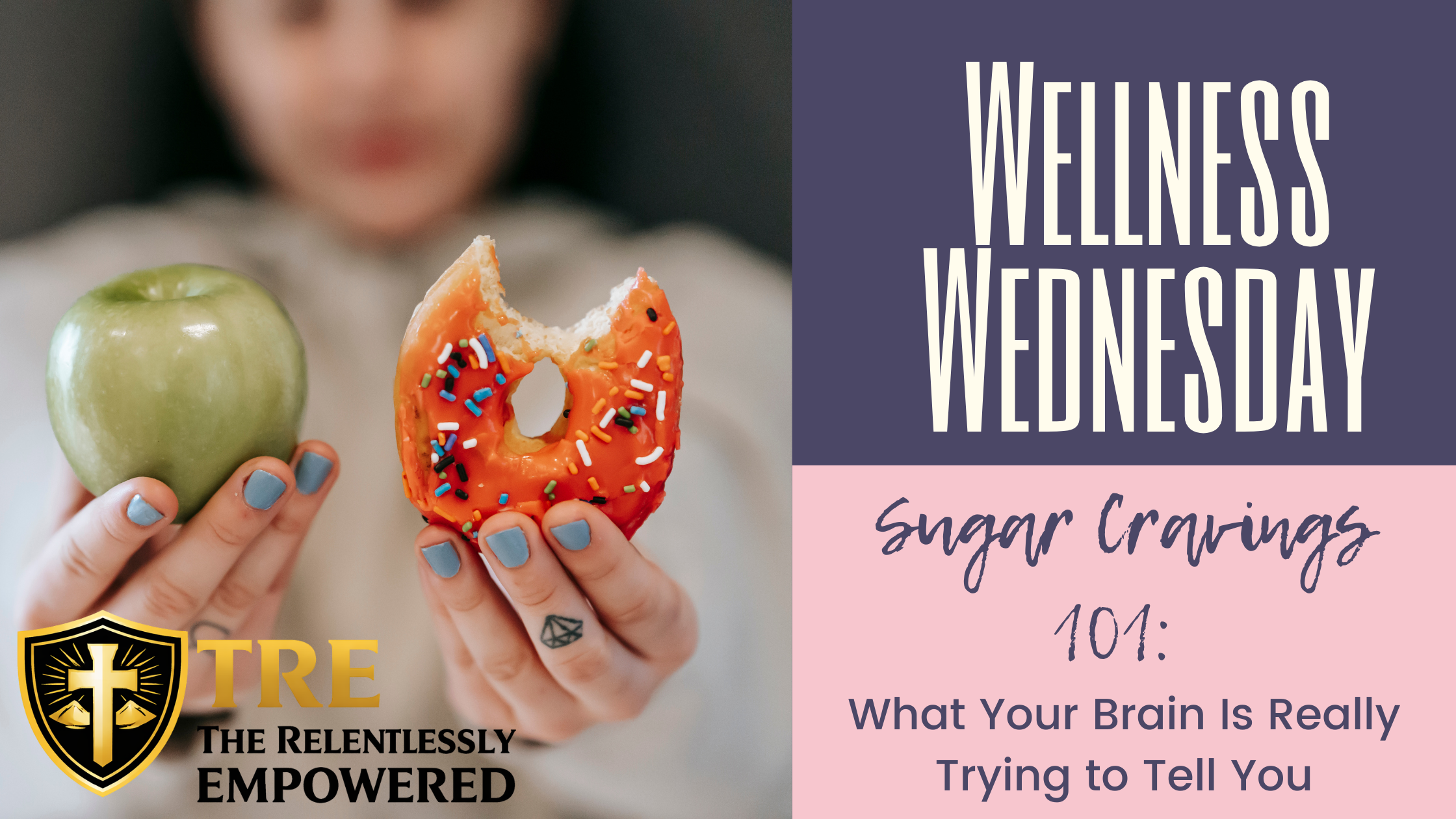
Sugar Cravings 101: What Your Brain Is Really Trying to Tell You
Ever feel like your brain suddenly screams for sugar?
One minute you’re fine…
and the next minute you’re standing in the kitchen searching for something sweet.
Cookies.
Candy.
Chocolate.
Ice cream.
Cereal.
Pastries.
And sometimes the craving feels so intense that it almost feels impossible to resist.
Why We Crave Sugar
Sugar is incredibly rewarding to the brain.
In fact, your brain LOVES quick energy.
When you eat sugar, your body rapidly converts it into glucose—the body’s preferred fast fuel source.
That quick burst of energy can temporarily make you feel:
energized
comforted
happier
calmer
more alert
And here’s why:
Sugar stimulates the release of “feel-good” chemicals like dopamine.
Dopamine is connected to:
pleasure
reward
motivation
habit formation
This is why sugary foods can feel emotionally comforting.
Your brain remembers:
“That felt good. Let’s do it again.”
Over time, repeated exposure creates stronger habit loops.
That’s why cravings can start feeling automatic.
Sugar Cravings Are Often About More Than Sugar
One of the biggest misconceptions is that cravings always mean:
“I just want sweets.”
But cravings can actually signal MANY different things happening inside the body.
Sometimes the craving isn’t even about sugar itself.
What Your Sugar Craving Might Really Mean
1. You’re Thirsty
Dehydration is one of the most overlooked craving triggers.
Your body can sometimes confuse thirst signals with hunger or sugar cravings.
This is why many cravings improve after:
drinking water
adding electrolytes
hydrating consistently throughout the day
Sometimes your body isn’t asking for cookies.
It’s asking for hydration.
2. You Need Rest
Poor sleep dramatically affects hunger hormones.
When you’re sleep deprived:
ghrelin (the hunger hormone) rises
leptin (the fullness hormone) decreases
Your body starts searching for QUICK energy.
And sugar provides fast fuel.
This is why exhaustion often increases cravings for:
sweets
carbs
processed snacks
caffeine
Your body is trying to compensate for low energy.
3. You’re Stressed
Stress changes everything.
When cortisol rises, the body often craves:
sugar
comfort foods
fast energy
highly palatable foods
Stress eating isn’t weakness.
It’s biology.
Your nervous system is looking for temporary relief.
Unfortunately, sugar often creates a short-term emotional “lift” followed by:
crashes
fatigue
more cravings
emotional eating cycles
4. You’re Actually Hungry
Sometimes cravings happen because you simply haven’t eaten enough.
Especially protein.
Or enough balanced meals.
When meals lack:
protein
fiber
healthy fats
blood sugar becomes less stable.
This can trigger:
energy crashes
irritability
intense cravings
overeating later
Many people try to “be good” all day…
then end up bingeing at night because their body is under-fueled.
5. You’re Running on Autopilot
Some cravings are habit-driven.
Not hunger-driven.
For example:
dessert every night
snacks during TV time
sweets during stressful work breaks
stopping for coffee and pastries every morning
The brain builds associations between:
places
emotions
routines
people
environments
Eventually the craving becomes automatic.
Not because your body NEEDS sugar…
but because your brain expects it.
Why Sugar Cravings Feel So Intense
Many people blame themselves for cravings.
But cravings are often rooted in:
biology
blood sugar regulation
stress responses
nervous system patterns
dopamine loops
habit reinforcement
That’s why “just use willpower” rarely works long term.
You can’t out-willpower a stressed nervous system, poor sleep, dehydration, or unstable blood sugar forever.
Real change comes from understanding the ROOT of the craving.
What to Do the Next Time a Craving Hits
Instead of immediately reacting…
pause first.
This simple pause creates awareness.
And awareness changes everything.
Step 1: Drink Water First
Before grabbing something sweet:
drink water.
Seriously.
Hydration helps more than most people realize.
Try:
💧 12–16 oz of water
💧 adding electrolytes
💧 sipping consistently throughout the day
You may notice the craving fades significantly.
Step 2: Eat a Balanced Snack
If you’re genuinely hungry, don’t ignore it.
But instead of reaching for pure sugar…
try pairing:
protein
fiber
healthy fats
Examples:
🥚 boiled eggs + fruit
🍎 apple + peanut butter
🥜 nuts + berries
🥣 Greek yogurt + chia seeds
🥕 veggies + hummus
Balanced snacks help stabilize energy instead of creating another blood sugar roller coaster.
Step 3: Take 3 Deep Breaths
This sounds simple…
but it works.
Deep breathing helps calm the nervous system.
Stress-driven cravings often become less intense when the body shifts out of “fight or flight” mode.
Your body may not need sugar.
It may need regulation.
Step 4: Wait 15 Minutes
Most cravings rise and fall like waves.
Not every craving needs immediate action.
Give yourself:
⏱️ 10–15 minutes
Sometimes the urge passes naturally once:
stress decreases
hydration improves
your nervous system settles
your attention shifts
Step 5: Ask Yourself What Triggered It
This is HUGE.
Pause and ask:
Am I stressed?
Am I tired?
Am I bored?
Did I skip meals?
Is this emotional?
Is this habit?
Am I actually hungry?
This question builds self-awareness instead of shame.
And awareness is how patterns begin to change.
You Don’t Need Perfection
Let’s be clear:
Having sugar sometimes is not failure.
Enjoying dessert does not mean you “blew it.”
The goal isn’t obsession.
The goal is understanding.
Because when you understand:
your triggers
your patterns
your biology
your habits
you stop feeling controlled by cravings.
And that changes your relationship with food completely.
Final Encouragement
Sugar cravings are incredibly common.
Especially in a world full of:
stress
sleep deprivation
processed foods
constant stimulation
emotional overload
So give yourself grace.
But also give yourself knowledge.
Because when you understand what your body is trying to communicate…
you can respond with intention instead of reacting automatically.
💛 Want support creating balanced meals and sustainable habits that help reduce cravings naturally?
Explore the wellness resources, meal plans, and healthy lifestyle tools available HERE.
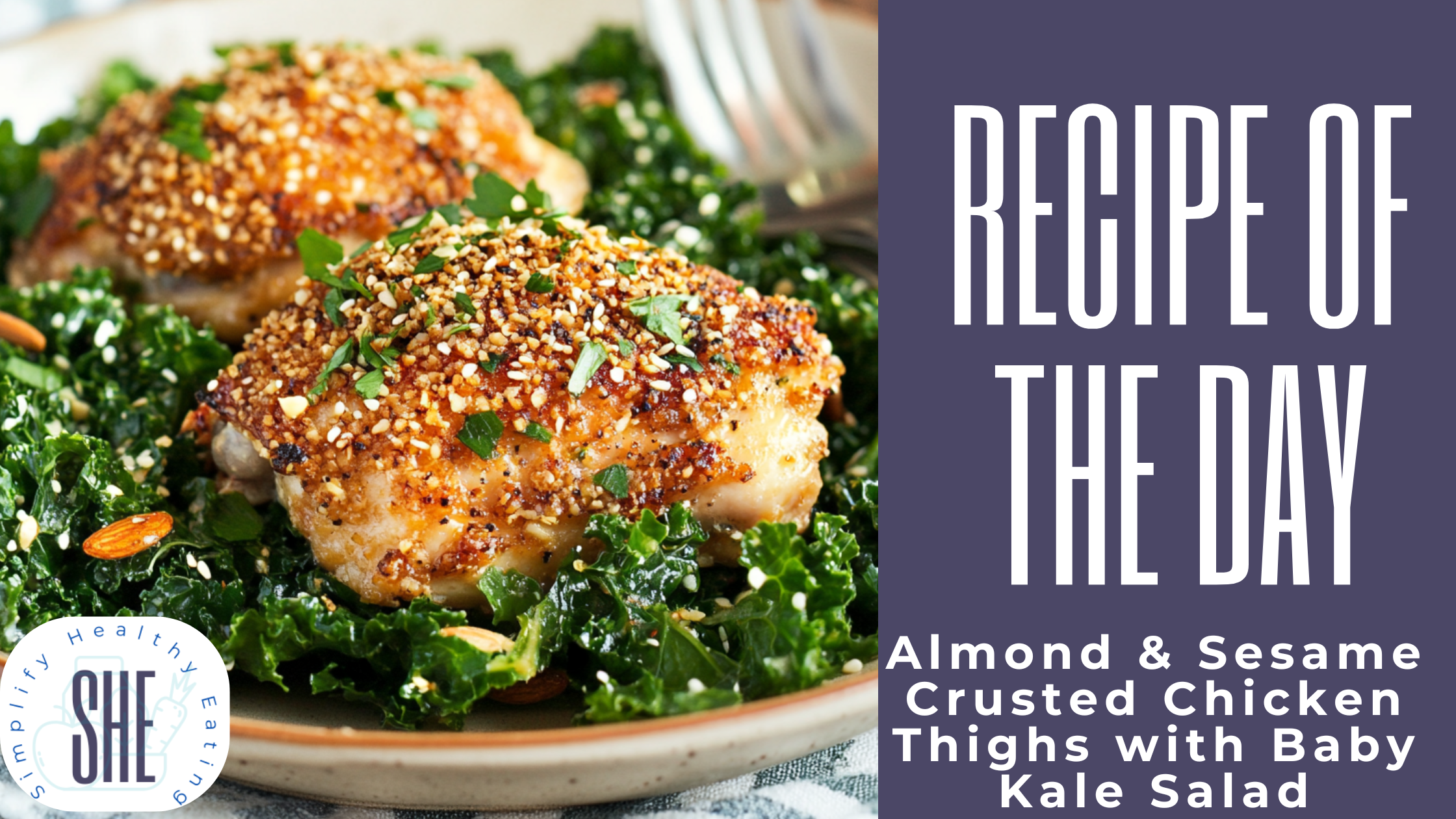
Almond & Sesame Crusted Chicken with Baby Kale Salad: A Balanced Meal for Sustainable Fat Loss
One of the biggest myths in wellness is that healthy meals need to feel small, boring, or unsatisfying.
But balanced meals are often the key to helping people stay consistent long term.
This Almond & Sesame Crusted Chicken with Baby Kale Salad combines protein, healthy fats, fiber, and flavor to create a meal that supports fullness, energy, and overall wellness.
ne of the biggest myths in wellness is that healthy meals need to feel small, boring, or unsatisfying.
But balanced meals are often the key to helping people stay consistent long term.
This Almond & Sesame Crusted Chicken with Baby Kale Salad combines protein, healthy fats, fiber, and flavor to create a meal that supports fullness, energy, and overall wellness.
Why Balanced Meals Matter
Meals that include:
✔️ Protein
✔️ Fiber
✔️ Healthy fats
…often help support:
Satiety
Stable energy
Reduced cravings
Blood sugar balance
That’s why meal composition matters so much.
It’s not just about calories.
It’s about how your meals make you feel afterward.
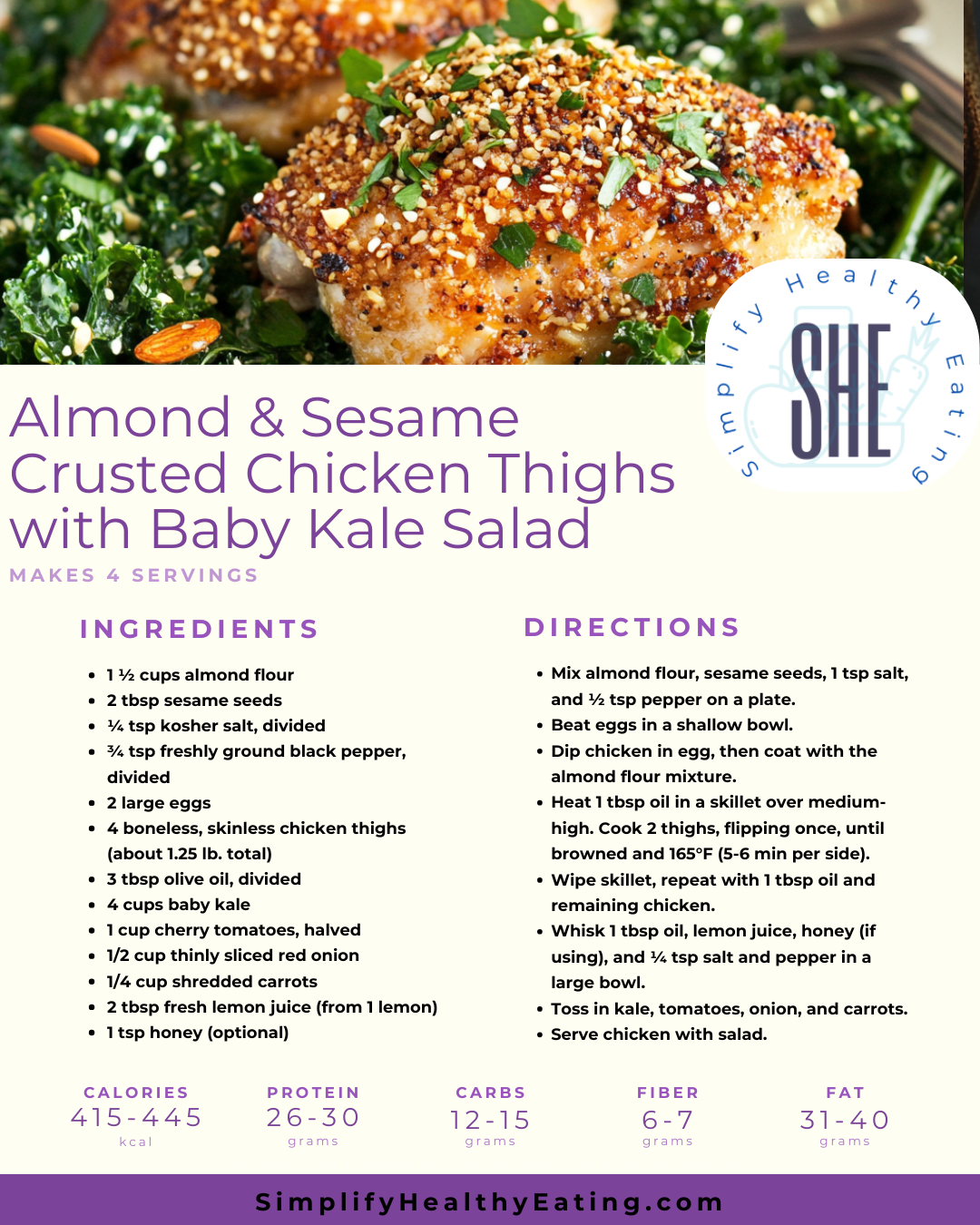
Chicken Thighs Provide Protein and Satisfaction
Protein is essential for:
✨ Muscle maintenance
✨ Recovery
✨ Fullness
✨ Metabolic support
Chicken thighs also tend to feel more satisfying than ultra-lean cuts because they contain more natural fat and flavor.
That satisfaction can help reduce the urge to snack constantly later.
Almond Flour Creates a More Balanced Coating
Traditional breading is often highly refined and low in nutrients.
Almond flour provides:
✔️ Healthy fats
✔️ Vitamin E
✔️ Texture and flavor
It also helps create a more balanced meal overall.
Sesame Seeds Add More Than Crunch
Sesame seeds contain minerals like:
Calcium
Magnesium
Iron
They also contribute healthy fats and flavor.
Small ingredients can make a big difference nutritionally.
Kale Supports Overall Wellness
Baby kale is packed with:
✨ Fiber
✨ Antioxidants
✨ Vitamins A, C, and K
Fiber-rich vegetables help meals feel larger and more satisfying while supporting digestion and overall health.
Healthy Eating Should Feel Sustainable
Sustainable wellness is not about constantly feeling deprived.
It’s about creating meals that:
💛 Taste good
💛 Support your goals
💛 Keep you satisfied
💛 Feel realistic long term
That’s the difference between temporary dieting and true lifestyle change.
The Stroke Changed My Life — But It Didn’t Get the Final Word
There are moments in life that divide everything into before and after.
Before the diagnosis.
Before the phone call.
Before the loss.
Before the health scare.
Before the moment your body forces you to stop.
For me, surviving a stroke became one of those moments.
There are moments in life that divide everything into before and after.
Before the diagnosis.
Before the phone call.
Before the loss.
Before the health scare.
Before the moment your body forces you to stop.
For me, surviving a stroke became one of those moments.
It was not just a medical event.
It was a life interruption.
A wake-up call.
A confrontation with my own humanity.
A reminder that the body is not just something we push, criticize, ignore, or drag through life.
The body is a gift.
And sometimes you do not realize how much of a gift it is until something happens that makes you wonder if you will ever move, function, or feel like yourself again.
When you have experienced something like a stroke, your relationship with your body changes.
Things you once took for granted suddenly become sacred.
Standing.
Walking.
Moving.
Preparing food.
Feeding yourself.
Having the energy to get through a day.
Being able to work out.
Being able to make choices that support your healing.
Being alive.
Those things become holy in a way they maybe were not before.
And I will never pretend that kind of season is easy.
Because it is not.
It is frightening.
It is humbling.
It is frustrating.
It is emotional.
It is one thing to talk about resilience when life is comfortable.
It is another thing to practice resilience when your body has been through trauma and you have to fight your way back one small step at a time.
When Your Body Forces You to Listen
Many of us, especially as women and professionals, get very good at ignoring our bodies.
We push through fatigue.
We normalize stress.
We skip meals.
We sleep poorly.
We overwork.
We carry emotional weight.
We function in survival mode.
We say, “I’m fine,” even when our bodies are sending warning signs.
And sometimes life has a way of making us stop.
A stroke made me look at my body differently.
Not as something to punish.
Not as something to shame.
Not as something to constantly criticize.
But as something to honor.
Something to protect.
Something to nourish.
Something to listen to.
Something to be grateful for.
After a health crisis, discipline takes on a different meaning.
It is no longer about appearance.
It is about stewardship.
It is about mobility.
It is about strength.
It is about energy.
It is about being able to participate in your own life.
It is about saying:
“I want to care for this body because it carried me through something hard.”
Resilience Looks Different After a Health Scare
When people think of resilience, they often think of big dramatic comebacks.
But after a stroke, resilience can look very quiet.
It can look like trying again.
It can look like moving slowly.
It can look like learning your limits.
It can look like crying because something that used to be easy now takes effort.
It can look like celebrating progress nobody else sees.
It can look like being grateful for small wins.
It can look like choosing nourishing food because your body deserves support.
It can look like resting without guilt.
It can look like moving your body with appreciation instead of punishment.
It can look like saying:
“I am not where I want to be yet, but I am still moving forward.”
That is relentless.
Not loud.
Not flashy.
Not perfect.
But relentless.
And sometimes relentless does not mean pushing harder.
Sometimes relentless means refusing to quit on yourself.
The Pursuit of the Other Side
Getting to the other side after a health crisis is not just physical.
It is mental.
Emotional.
Spiritual.
You have to rebuild trust with your body.
You have to process fear.
You have to accept that your life may require new rhythms.
You have to learn the difference between pushing yourself and supporting yourself.
You have to be honest about what your body needs now.
And that can be difficult when you are used to being the strong one.
The capable one.
The one who handles everything.
The one who keeps going.
But sometimes healing requires a new kind of strength.
The strength to slow down.
The strength to ask for help.
The strength to change your habits.
The strength to create structure.
The strength to honor your limitations while still believing in your capacity.
That is real resilience.
Healthy Habits Became a Form of Gratitude
After surviving something that threatened my body, healthy habits became more than wellness content.
They became gratitude in action.
Movement became gratitude.
Eating well became gratitude.
Rest became gratitude.
Hydration became gratitude.
Strength training became gratitude.
Preparing nourishing meals became gratitude.
Listening to my body became gratitude.
Because when you know what it feels like for your body to go through something serious, you stop seeing wellness as punishment.
You start seeing it as partnership.
You start understanding that every small supportive choice matters.
Not because you are chasing perfection.
But because you are honoring the life you still have.
And that is why I care so much about helping women build sustainable routines.
Because wellness should not be rooted in shame.
It should be rooted in appreciation.
Support.
Healing.
Stewardship.
And self-respect.
Your Body Deserves Support, Not Shame
If you are over 40 and feeling burned out, inflamed, tired, overwhelmed, or disconnected from your body, I want you to pause and ask yourself:
“What would it look like to support my body instead of fighting it?”
Not punish it.
Not shame it.
Not ignore it.
Support it.
With meals that nourish you.
With movement that strengthens you.
With rest that restores you.
With boundaries that protect you.
With routines that create stability.
With faith that reminds you that your story is not over.
Because sometimes the body is not asking for a stricter plan.
Sometimes the body is asking for care.
Monday Mindset Reflection
This week, I want you to think about one thing:
What is one small way you can honor your body today?
Maybe it is drinking more water.
Maybe it is going to bed earlier.
Maybe it is taking a 10-minute walk.
Maybe it is cooking a balanced meal.
Maybe it is scheduling the appointment.
Maybe it is resting without guilt.
Maybe it is simply saying, “Thank You, God, for another day to try again.”
Whatever it is, start there.
Because resilience is not always about making huge moves.
Sometimes resilience is making the next faithful move.
The next nourishing choice.
The next loving decision.
The next step toward the other side.
If you are in a season where your body, mind, or spirit feels tired, I invite you to explore our FREE and low-cost resources.
They were created to help you nourish your body, renew your mindset, and build simple routines that support your life — especially when life feels hard.
You are still here.
You are still becoming.
And your story is not over.
STRETCH + PILATES FLOW — RESET + RESTORE: Why Mobility, Stretching, and Recovery Matter for Total Wellness
In today’s culture, people often believe every workout needs to leave them completely exhausted to be worthwhile.
But recovery is part of wellness too.
Stretching and mobility work help support:
✔️ flexibility
✔️ posture
✔️ stress reduction
✔️ joint health
✔️ mobility
✔️ nervous system regulation
✔️ recovery and restoration
In today’s culture, people often believe every workout needs to leave them completely exhausted to be worthwhile.
But recovery is part of wellness too.
Stretching and mobility work help support:
✔️ flexibility
✔️ posture
✔️ stress reduction
✔️ joint health
✔️ mobility
✔️ nervous system regulation
✔️ recovery and restoration
And honestly?
Many busy women are carrying enormous amounts of physical and emotional tension daily.
Sometimes your body doesn’t need more intensity.
Sometimes it needs restoration.
Why Gentle Movement Matters
Low-impact movement practices like stretching and Pilates-style flows can help:
reduce stiffness
improve circulation
release muscle tension
improve balance
support core stability
encourage mindful breathing
calm the nervous system
This becomes especially important for women dealing with:
😰 chronic stress
💻 long desk hours
😴 exhaustion
🧠 mental overload
🚗 sedentary routines
Movement does not always have to be aggressive to be effective.
Workout Format
✨ Flow through 2–3 rounds
✨ Focus on slow controlled breathing
✨ Move intentionally—not quickly
THE MOVES + HOW TO DO THEM
1. Cat-Cow Stretch — 8 Reps
Benefits:
improves spinal mobility
releases back tension
supports posture
How to Do It:
Start on hands and knees.
Inhale and arch back gently (Cow).
Lift chest and tailbone upward.
Exhale and round spine (Cat).
Repeat slowly with breath.
2. Downward Dog to Plank Flow — 6 Reps
Benefits:
stretches hamstrings and calves
strengthens shoulders and core
improves mobility
How to Do It:
Start in downward dog.
Shift body forward into plank.
Keep core engaged.
Push hips back into downward dog.
Repeat slowly.
Beginner Modification:
Bend knees slightly in downward dog.
3. World’s Greatest Stretch — 5 Breaths Per Side
Benefits:
improves hip mobility
stretches spine and hamstrings
supports flexibility
How to Do It:
Step one foot forward into lunge.
Place both hands inside front foot.
Rotate chest upward toward front leg.
Hold and breathe deeply.
Switch sides.
4. Glute Bridge Hold — 30 Seconds
Benefits:
activates glutes
supports lower back
improves hip stability
How to Do It:
Lie on back with knees bent.
Lift hips upward.
Squeeze glutes.
Hold while breathing steadily.
5. Bird Dog — 8 Per Side
Benefits:
improves balance
strengthens core
supports spinal stability
How to Do It:
Start on hands and knees.
Extend opposite arm and leg outward.
Keep hips level.
Return slowly.
Alternate sides.
6. Child’s Pose — 30–60 Seconds
Benefits:
calms nervous system
stretches lower back
encourages relaxation
How to Do It:
Sit hips back toward heels.
Extend arms forward.
Lower chest gently.
Breathe deeply and relax.
Wellness Includes Recovery
One of the healthiest mindset shifts you can make is realizing this:
Rest is productive too.
Your body heals during recovery.
Your nervous system regulates during stillness.
Your muscles rebuild during restoration.
Slowing down is not weakness.
It is wisdom.
Final Thoughts
This Stretch-Pilates Flow is designed to help you:
💛 release tension
💛 reconnect with your body
💛 improve flexibility
💛 reduce stress
💛 move intentionally
Because true wellness is not built through punishment.
It’s built through support, consistency, and care.
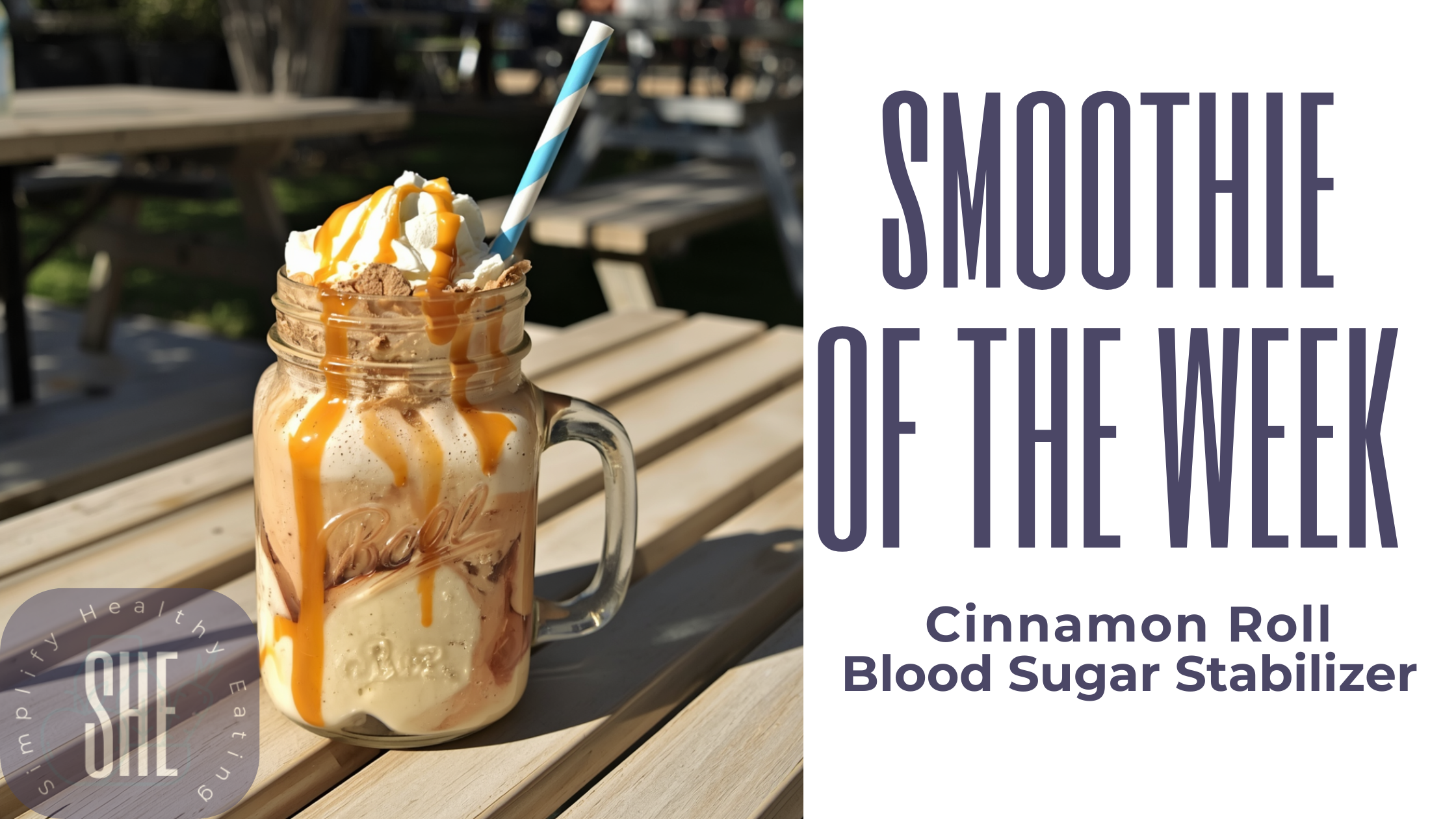
Cinnamon Roll Blood Sugar Stabilizer: A Cozy Smoothie That Supports Energy, Fullness, and Blood Sugar Stability
Many people think healthy eating has to feel boring, restrictive, or unsatisfying.
But balanced meals can absolutely feel comforting AND nourishing at the same time.
This Cinnamon Roll Blood Sugar Stabilizer smoothie combines ingredients that help support:
✔️ stable energy
✔️ blood sugar balance
✔️ fullness
✔️ fewer cravings
✔️ sustained satisfaction
And honestly?
Many people think healthy eating has to feel boring, restrictive, or unsatisfying.
But balanced meals can absolutely feel comforting AND nourishing at the same time.
This Cinnamon Roll Blood Sugar Stabilizer smoothie combines ingredients that help support:
✔️ stable energy
✔️ blood sugar balance
✔️ fullness
✔️ fewer cravings
✔️ sustained satisfaction
And honestly?
That kind of balance matters SO much for long-term consistency.
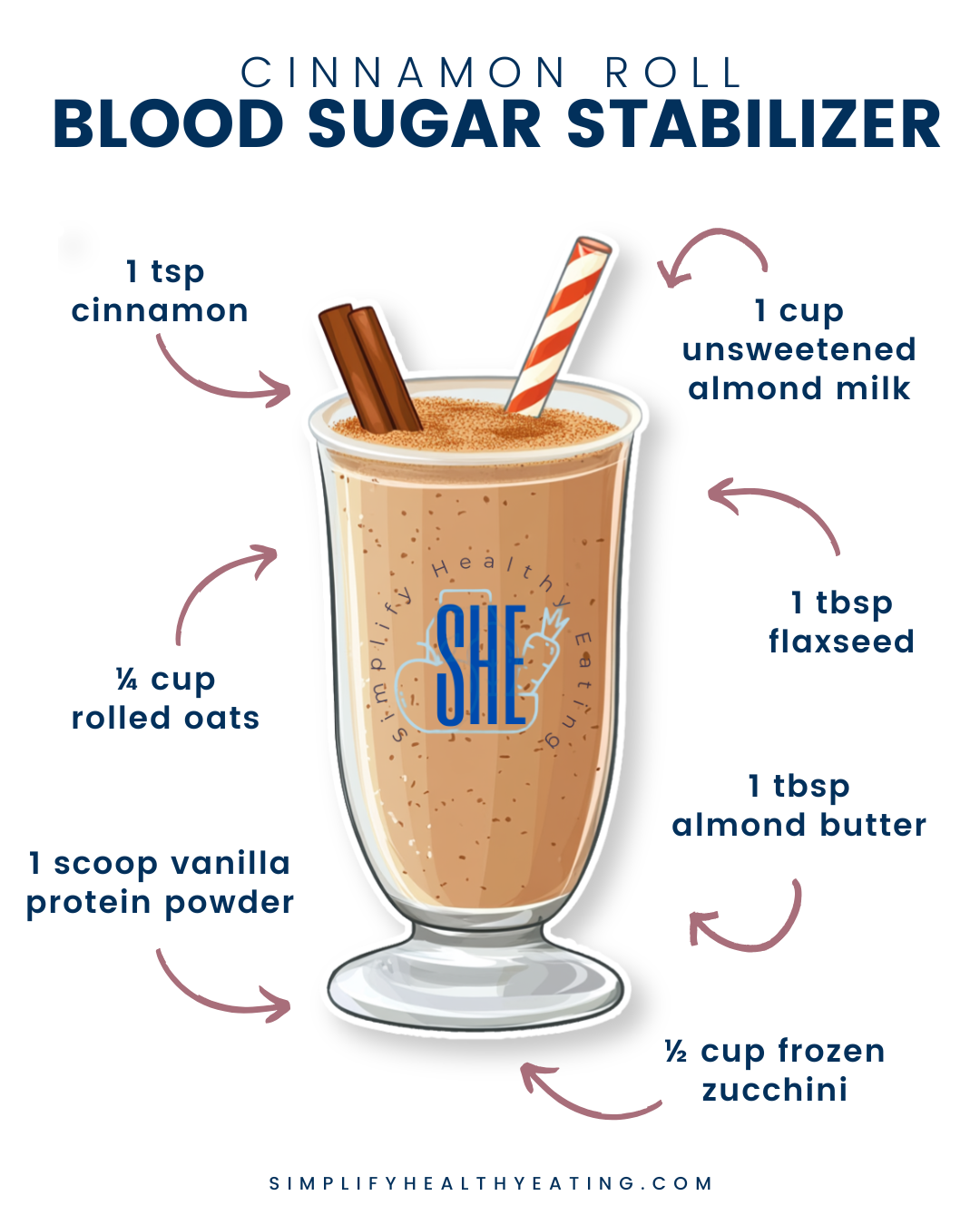
Why Blood Sugar Stability Matters
When meals are mostly refined carbs without enough protein, fiber, or healthy fats…
blood sugar rises quickly.
That rapid spike is often followed by:
❌ fatigue
❌ irritability
❌ brain fog
❌ increased hunger
❌ cravings
Balanced meals help slow digestion and provide steadier energy throughout the day.
That stability can help support:
productivity
focus
mood
appetite regulation
healthier eating habits
Especially for busy women and professionals constantly juggling responsibilities.
Ingredient Benefits
✨ Cinnamon
Cinnamon has been studied for its potential role in supporting insulin sensitivity and blood sugar regulation.
It also adds natural sweetness and warmth without requiring large amounts of sugar.
🌾 Rolled Oats
Oats provide:
fiber
slower-digesting carbohydrates
sustained energy
The fiber in oats helps support fullness and more gradual blood sugar responses compared to highly processed breakfast foods.
🌰 Almond Butter
Almond butter provides healthy fats that help:
✔️ slow digestion
✔️ improve satiety
✔️ support hormone health
✔️ stabilize energy
Healthy fats are essential for sustainable wellness and long-term satisfaction.
🌱 Flaxseed
Flaxseed contains:
fiber
omega-3 fats
nutrients that support digestion and fullness
Adding fiber-rich foods to meals can help reduce rapid blood sugar swings.
🥒 Frozen Zucchini
Zucchini creates creaminess while adding nutrients and volume without significantly increasing sugar content.
It’s a simple way to increase vegetables while maintaining a smooth texture.
💪 Protein Powder
Protein helps support:
muscle maintenance
fullness
blood sugar balance
energy stability
Protein is especially important for women who struggle with:
❌ constant snacking
❌ energy crashes
❌ cravings between meals
Why This Smoothie Supports Sustainable Wellness
This smoothie combines:
✔️ protein
✔️ healthy fats
✔️ fiber
✔️ balanced carbohydrates
That combination helps create:
steadier energy
improved fullness
reduced cravings
better consistency
Because healthy eating becomes MUCH easier when meals actually support your body.
Wellness Should Feel Supportive—Not Punishing
Sustainable wellness isn’t about perfection.
It’s about learning how to nourish your body consistently enough that:
💛 energy improves
💛 cravings decrease
💛 meals feel satisfying
💛 healthy habits become easier to maintain
And sometimes?
Simple balanced meals are the foundation that changes everything.
5 Nutrition Labels That Are Misleading You
Walk through any grocery store and you’ll see it everywhere:
“High Fiber.”
“Low Fat.”
“Gluten-Free.”
“All Natural.”
“No Sugar Added.”
At first glance, these labels sound healthy.
And honestly?
That’s exactly what food marketing is designed to do.
The problem is that many of these phrases create a “health halo” around foods that may still:
Walk through any grocery store and you’ll see it everywhere:
“High Fiber.”
“Low Fat.”
“Gluten-Free.”
“All Natural.”
“No Sugar Added.”
At first glance, these labels sound healthy.
And honestly?
That’s exactly what food marketing is designed to do.
The problem is that many of these phrases create a “health halo” around foods that may still:
spike blood sugar
increase cravings
disrupt digestion
contain highly processed ingredients
leave you unsatisfied and overeating later
This doesn’t mean every product with these labels is bad.
But it DOES mean you need to understand what these terms actually mean before assuming something supports your health goals.
Because sometimes the packaging sounds healthier than the product itself.
Let’s break down 5 nutrition labels that commonly mislead consumers—and what to look for instead.
1. “High Fiber”
Fiber matters.
A LOT.
Fiber helps:
stabilize blood sugar
support digestion
improve fullness
support gut health
regulate appetite
So when people see “High Fiber” on a package, they naturally assume:
“This must be healthy.”
But many “high fiber” processed foods are loaded with:
sugar alcohols
artificial sweeteners
highly refined ingredients
inflammatory oils
synthetic fibers added in isolation
Some products artificially boost fiber content while still functioning like ultra-processed snacks.
And in some people, sugar alcohols can trigger:
bloating
gas
digestive discomfort
diarrhea
increased cravings
What to Look For Instead
Instead of only focusing on fiber grams, ask:
What are the FIRST ingredients?
Is this minimally processed?
Does it contain protein or healthy fats?
Is the fiber naturally occurring?
Better fiber sources include:
🥑 avocado
🫘 beans
🥦 vegetables
🍓 berries
🥣 oats
🌾 quinoa
🌰 nuts and seeds
Whole-food fiber tends to support the body far better than heavily processed “fiber-enhanced” foods.
2. “Low Fat”
This one has confused people for decades.
For years, fat was blamed for weight gain.
So food companies removed fat from products…
…but often replaced it with:
more sugar
starches
fillers
artificial ingredients
And the result?
Many “low fat” foods actually spike blood sugar MORE aggressively.
Why?
Because fat slows digestion.
Without enough fat:
blood sugar rises faster
hunger returns quicker
cravings increase
satisfaction decreases
This is why many people eat a “low fat” snack…
and feel hungry again 30 minutes later.
Healthy Fats Are NOT the Enemy
Healthy fats support:
hormone health
satiety
brain function
nutrient absorption
blood sugar stability
Examples include:
🥑 avocado
🫒 olive oil
🥜 nuts
🐟 salmon
🥚 eggs
🌰 seeds
The goal isn’t “low fat.”
The goal is balanced nutrition.
3. “Gluten-Free”
This label is necessary and important for people with:
celiac disease
gluten intolerance
wheat sensitivity
But “gluten-free” does NOT automatically mean healthy.
Many gluten-free products are still highly processed and may contain:
refined starches
added sugars
inflammatory oils
low fiber
artificial additives
Some gluten-free breads, crackers, and snacks can spike blood sugar even faster than traditional versions.
Because removing gluten doesn’t magically make processed food nutritious.
What Actually Matters
Instead of focusing only on “gluten-free,” ask:
Is this minimally processed?
Does it contain protein and fiber?
Will this keep me full?
How does my body respond after eating it?
A gluten-free cookie is still a cookie.
A gluten-free donut is still a donut.
Labels don’t override food quality.
4. “Natural”
This one surprises people.
Because the term “natural” is largely unregulated in food marketing.
Which means companies can use it VERY loosely.
A product labeled “natural” may still contain:
processed sugars
syrups
preservatives
flavor enhancers
refined ingredients
The word creates a healthy image…
without necessarily meaning much nutritionally.
This is why reading the ingredient list matters more than the front label.
The Ingredient List Tells the Real Story
Generally speaking:
fewer ingredients = better
recognizable ingredients = better
minimally processed foods = better
Whole foods don’t need flashy marketing.
5. “No Sugar Added”
This one tricks people constantly.
“No sugar added” simply means no EXTRA sugar was added during production.
But the food may still contain:
fruit juice concentrates
purees
naturally high sugar levels
refined carbohydrate sources
Which means total sugar can still be very high.
For example:
dried fruit snacks
fruit spreads
smoothies
flavored yogurts
may still create significant blood sugar spikes.
What to Look At Instead
Always check:
✅ total sugar
✅ ingredient list
✅ serving size
✅ protein
✅ fiber
A food can technically have “no sugar added” while still functioning like a high-sugar food metabolically.
The Bigger Problem: Health Halos
Food marketing is designed to simplify decisions quickly.
And companies know certain words create trust.
That’s called a “health halo.”
When people see:
organic
natural
gluten-free
keto
high protein
low carb
low fat
they often assume:
“This must be healthy.”
But context matters.
Ingredient quality matters.
Blood sugar response matters.
Meal balance matters.
How your body FEELS after eating matters.
What You Should Focus On Instead
Instead of chasing labels…
focus on:
whole foods
protein
fiber
healthy fats
balanced meals
ingredient quality
blood sugar stability
A simple balanced meal often beats a heavily marketed “health food.”
A Simpler Way to Grocery Shop
Before buying something, ask:
1. Does this contain protein?
Protein helps stabilize hunger and cravings.
2. Does this contain natural fiber?
Fiber supports digestion and blood sugar balance.
3. Will this actually satisfy me?
If not, overeating later becomes more likely.
4. Is this highly processed?
More processing often means less satiety.
5. Would my great-grandmother recognize these ingredients?
Simple question.
Powerful filter.
Final Encouragement
You do NOT need to become obsessed with labels.
You just need awareness.
Because once you understand how food marketing works…
you stop making decisions based only on packaging.
And you start making choices based on:
nourishment
energy
stability
long-term wellness
That shift changes everything.
💛 Want help simplifying healthy eating without extremes, restriction, or confusion?
Explore the wellness tools, balanced meal plans, and healthy lifestyle resources available at HERE.
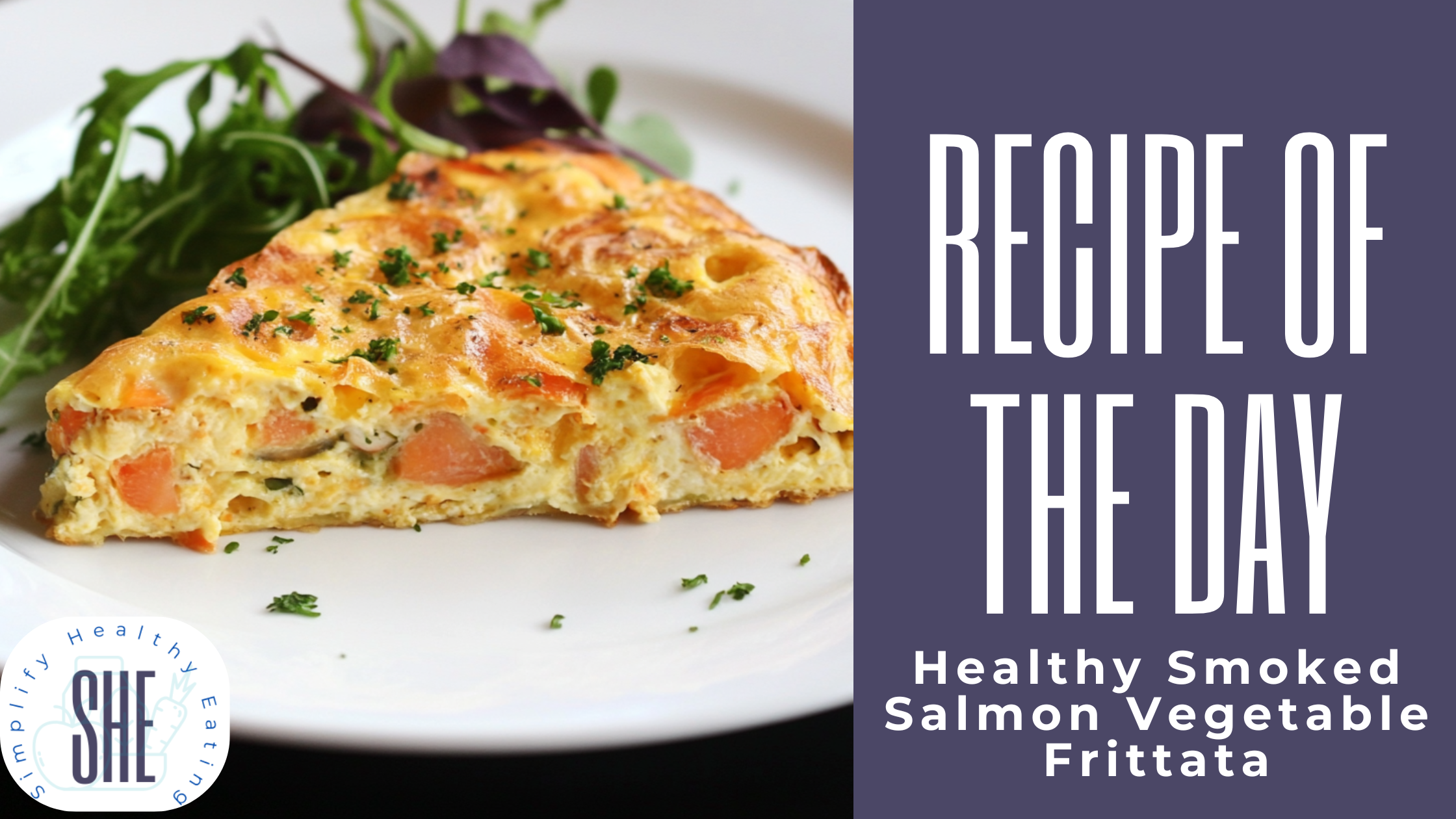
Healthy Smoked Salmon Vegetable Frittata: A High-Protein Breakfast for Energy and Fullness
Breakfast can either support your energy…
or work against it.
Many common breakfast foods are high in sugar and low in protein, leading to:
Energy crashes
Increased cravings
Mid-morning hunger
Blood sugar instability
That’s why balanced breakfasts matter so much.
This Healthy Smoked Salmon Vegetable Frittata combines protein, healthy fats, and vegetables to create a meal that supports fullness, energy, and consistency.
Breakfast can either support your energy…
or work against it.
Many common breakfast foods are high in sugar and low in protein, leading to:
Energy crashes
Increased cravings
Mid-morning hunger
Blood sugar instability
That’s why balanced breakfasts matter so much.
This Healthy Smoked Salmon Vegetable Frittata combines protein, healthy fats, and vegetables to create a meal that supports fullness, energy, and consistency.
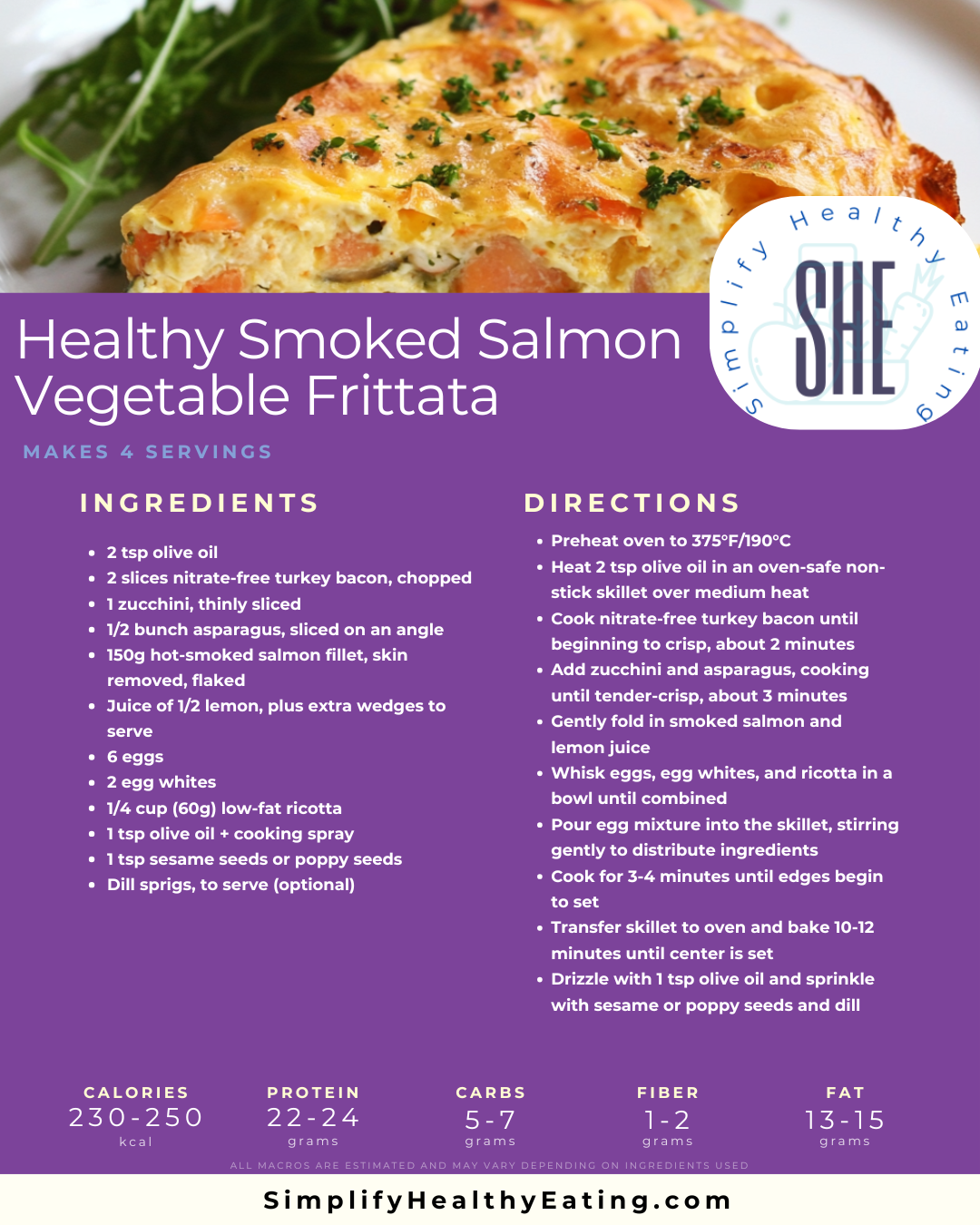
Why Protein Matters at Breakfast
Protein plays a major role in helping meals feel satisfying.
When breakfast lacks protein, many people find themselves:
❌ Hungry shortly after eating
❌ Reaching for snacks constantly
❌ Craving sugar later in the day
This recipe includes protein from:
🥚 Eggs
🐟 Smoked salmon
🧀 Ricotta cheese
Protein helps support:
✔️ Satiety
✔️ Muscle maintenance
✔️ Stable energy
✔️ Recovery
The Benefits of Smoked Salmon
Salmon provides omega-3 fatty acids, which support:
Brain health
Heart health
Inflammation balance
It also adds incredible flavor and richness to the dish.
For many people, incorporating more omega-3-rich foods can support overall wellness and balanced nutrition.
Vegetables Add Fiber and Nutrients
Zucchini and asparagus help add:
✨ Fiber
✨ Volume
✨ Antioxidants
✨ Vitamins and minerals
Fiber supports digestion and helps meals feel more satisfying without excessive calories.
This combination of protein + fiber + healthy fats creates a much more balanced meal experience.
Healthy Fats Support Satisfaction
Healthy fats help meals feel complete.
This recipe includes healthy fats from:
Olive oil
Salmon
Ricotta
Balanced meals that include healthy fats are often more sustainable because they help reduce feelings of deprivation.
A Better Way to Support Wellness
Healthy eating does not need to involve:
❌ Restriction
❌ Tiny portions
❌ Eliminating entire food groups
Instead, focus on meals that:
💛 Nourish your body
💛 Stabilize energy
💛 Support fullness
💛 Feel enjoyable
That’s how consistency is built long term.

Divorce Didn’t Destroy Me — It Revealed Me
There are seasons in life that don’t just hurt you.
They strip you.
They pull away the comfort, the illusion, the routine, the version of life you thought you were building, and they leave you standing there asking:
“Who am I now?”
Divorce was one of those seasons for me.
And let me tell you something honestly — divorce is not just the end of a marriage.
There are seasons in life that don’t just hurt you.
They strip you.
They pull away the comfort, the illusion, the routine, the version of life you thought you were building, and they leave you standing there asking:
“Who am I now?”
Divorce was one of those seasons for me.
And let me tell you something honestly — divorce is not just the end of a marriage.
It can feel like the end of an identity.
The end of a dream.
The end of what you thought your future was going to look like.
It can shake your confidence, your sense of safety, your finances, your faith, your friendships, your body, your appetite, your sleep, and your peace.
And what people don’t always understand is that you’re not just grieving a person.
You’re grieving the version of yourself who believed things would turn out differently.
You’re grieving the plans.
The expectations.
The family structure.
The security.
The “we.”
The life you worked so hard to hold together.
And if you are a woman over 40 navigating divorce, separation, heartbreak, betrayal, emotional exhaustion, or rebuilding after a major relationship shift, I want you to know this:
You are not weak because you’re tired.
You are not behind because you’re starting over.
You are not broken because something broke your heart.
Sometimes life does not fall apart because you failed.
Sometimes life falls apart because God is trying to free you from what was slowly taking you under.
And that’s not always easy to hear when you’re in the middle of it.
Because in the middle, it feels like loss.
It feels like rejection.
It feels like humiliation.
It feels like, “How did I get here?”
But sometimes what looks like devastation is actually deliverance.
Sometimes what feels like the end is really the beginning of coming back home to yourself.
When Survival Becomes the First Victory
After divorce, people love to tell you to “move on.”
But nobody talks enough about how hard it is to simply function when your nervous system is overwhelmed.
The emails still come.
The bills still come.
The responsibilities still come.
Your body still needs food.
Your home still needs attention.
Your job still expects you to perform.
And if you are a professional woman, especially one who is used to showing up strong, capable, polished, and dependable, it can feel like there is no room to fall apart.
So you keep going.
You answer the messages.
You attend the meetings.
You smile when necessary.
You take care of everyone else.
But inside?
You’re exhausted.
You’re carrying grief in your chest.
You’re replaying conversations.
You’re trying to figure out what went wrong.
You’re wondering how to rebuild.
And you’re trying to do all of this while still being productive, responsible, and emotionally available.
That kind of season requires more than motivation.
It requires grace.
It requires structure.
It requires support.
It requires small, steady decisions that remind you:
“I am still here.”
“I am still worthy.”
“I am still becoming.”
“I can rebuild my life one choice at a time.”
Resilience Is Not Pretending You’re Fine
Let’s be clear.
Resilience is not pretending it didn’t hurt.
Resilience is not acting like you’re unbothered.
Resilience is not rushing your healing so other people feel more comfortable.
Resilience is deciding that what happened to you will not have the final word over you.
It’s crying and still getting up.
It’s resting instead of quitting.
It’s praying when you don’t have the words.
It’s eating something nourishing when grief has stolen your appetite.
It’s taking a walk because your body needs somewhere to put the stress.
It’s turning off your phone because your peace matters.
It’s saying, “I don’t have to rebuild everything today. I just have to take the next right step.”
That is resilience.
Quiet resilience.
Sacred resilience.
Grown woman resilience.
The kind that doesn’t need applause.
The kind that says:
“I may be wounded, but I am not finished.”
Discipline Became a Form of Healing
One of the things I had to learn is that discipline does not have to come from pressure.
It can come from love.
After divorce, discipline looked different.
It was not about punishment.
It was not about proving anything.
It was not about pretending I was okay.
It was about creating safety for myself.
It looked like making my bed.
Drinking water.
Taking care of my body.
Protecting my peace.
Writing down what I was feeling.
Getting quiet with God.
Feeding myself something that supported my energy.
Moving my body when my emotions felt heavy.
Creating routines when life felt uncertain.
Because when life changes suddenly, your body craves stability.
Your mind needs anchors.
Your spirit needs reminders that everything is not lost.
And sometimes the most powerful thing you can do is create small routines that whisper:
“You are safe here.”
“You can trust yourself again.”
“You are allowed to start over.”
The Other Side Requires Participation
Now, let me say this with love.
Healing is not passive.
Yes, God restores.
Yes, time helps.
Yes, grace is necessary.
But getting to the other side also requires participation.
It requires a willingness to stop abandoning yourself.
It requires paying attention to your patterns.
It requires asking:
“What do I need now?”
“What did this season teach me?”
“Where do I need stronger boundaries?”
“Where have I confused loyalty with self-neglect?”
“Where do I need to stop performing strength and start practicing support?”
Because sometimes the hardest part of healing is admitting that the version of you who survived cannot be the same version who leads you forward.
Survival mode may have protected you.
But it cannot become your permanent home.
At some point, you have to start building again.
Slowly.
Honestly.
Intentionally.
Not because everything is perfect.
But because your life is still worth nurturing.
You Are Allowed to Rebuild Beautifully
If divorce changed you, let it make you wiser.
Let it make you clearer.
Let it make you softer in the right places and stronger in the necessary ones.
Let it teach you what peace feels like.
Let it teach you what love is not.
Let it teach you the importance of boundaries.
Let it teach you how powerful it is to choose yourself without guilt.
You are allowed to rebuild.
You are allowed to become someone you actually recognize again.
You are allowed to create a life that feels healthier, calmer, more honest, and more aligned.
And no, the road may not be easy.
But you are not starting from nothing.
You are starting from wisdom.
You are starting from experience.
You are starting from survival.
You are starting from the version of you that made it through what once felt impossible.
That matters.
Monday Mindset Reflection
This week, instead of asking:
“Why did this happen to me?”
Try asking:
“What is this season teaching me about who I am becoming?”
Because the other side is not always a place you arrive at overnight.
Sometimes it is built through small acts of courage.
One boundary.
One prayer.
One nourishing meal.
One honest journal entry.
One peaceful morning.
One decision to stop shrinking.
One decision to keep going.
And if you are in a season where life feels heavy, uncertain, or overwhelming, I want you to know this:
You do not have to navigate it alone.
Explore our FREE and low-cost resources created to help you rebuild your mindset, nourish your body, strengthen your routines, and take the next step toward the life you are becoming.
Because healing is real.
Resilience is real.
And the other side is still possible.
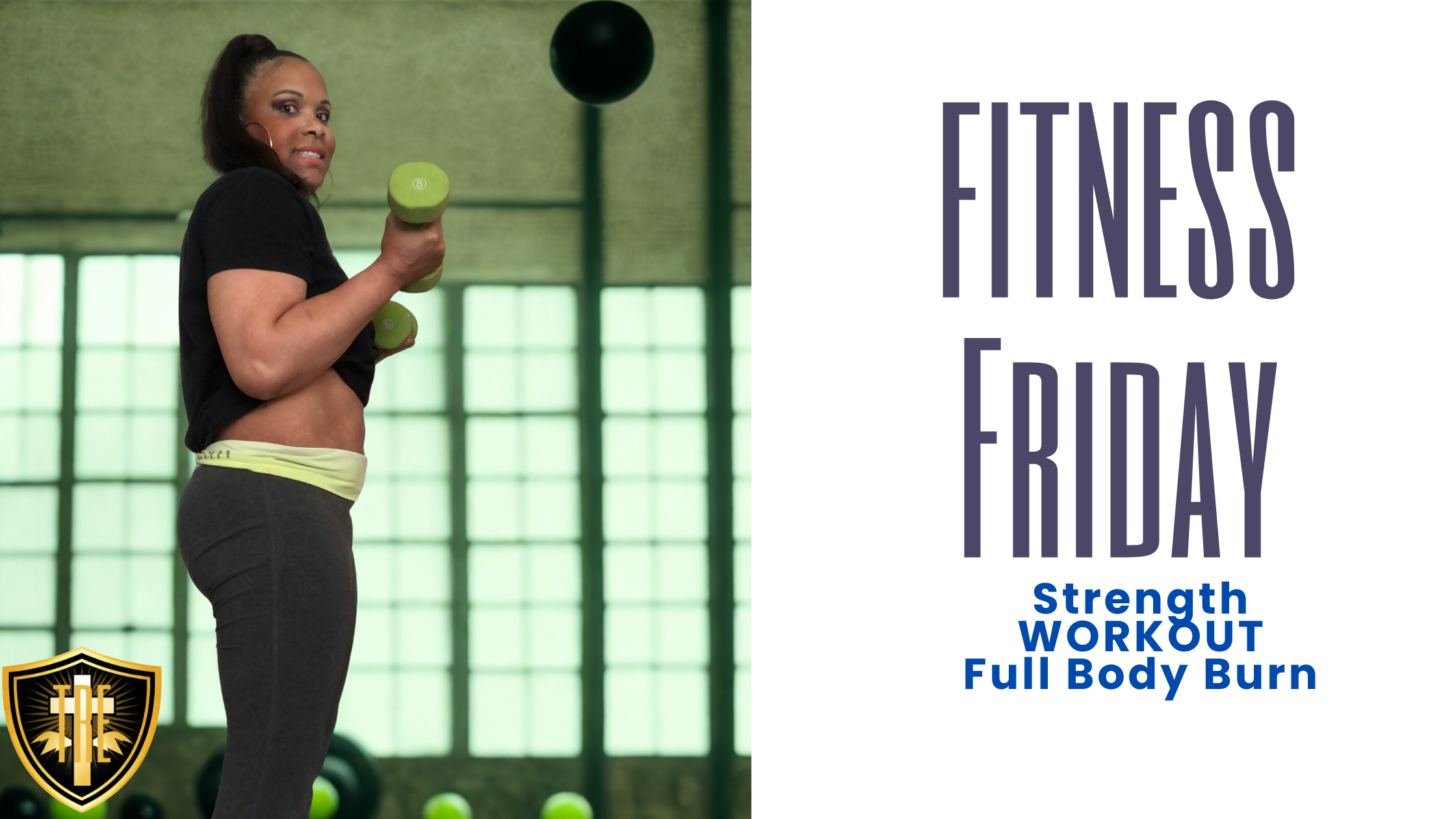
STRENGTH WORKOUT — FULL BODY BURN: Why Strength Training Matters More Than Most Women Realize
Muscle tissue requires more energy than fat tissue.
Which means:
the more muscle your body maintains…
the more efficiently your body uses energy throughout the day.
For years, many women were taught that fitness should focus almost entirely on cardio and eating less.
But strength training changes everything.
Building strength is not just about changing how your body looks.
It’s about improving how your body functions.
Strength training can help support:
✔️ metabolism
✔️ muscle tone
✔️ bone density
✔️ posture
✔️ blood sugar balance
✔️ joint support
✔️ mobility
✔️ long-term independence
And especially for women over 35, maintaining muscle becomes increasingly important for overall wellness.
Why Strength Training Supports Metabolism
Muscle tissue requires more energy than fat tissue.
Which means:
the more muscle your body maintains…
the more efficiently your body uses energy throughout the day.
Strength training may help support:
increased daily calorie burn
improved insulin sensitivity
better energy stability
healthier aging
improved body composition
And no—you do NOT need to lift extremely heavy to benefit.
Consistency matters more than intensity.
Workout Format
✨ Complete 3 rounds
✨ Rest 45–60 seconds between rounds
THE MOVES + HOW TO DO THEM
1. Squats — 12 Reps
Benefits:
strengthens glutes and legs
supports mobility
improves lower body strength
How to Do It:
Stand with feet shoulder-width apart.
Push hips backward as you lower into a squat.
Keep chest lifted and knees aligned with toes.
Push through heels to stand.
Beginner Modification:
Use a chair behind you for support.
2. Push-Ups — 10 Reps
Benefits:
strengthens chest, shoulders, and core
improves upper body endurance
How to Do It:
Place hands slightly wider than shoulders.
Keep body in a straight line.
Lower chest toward floor.
Push back upward.
Beginner Modification:
Perform on knees or against a wall.
3. Dumbbell Deadlifts — 12 Reps
Benefits:
strengthens hamstrings and glutes
supports posture
activates posterior chain muscles
How to Do It:
Hold dumbbells in front of thighs.
Hinge hips backward while lowering weights.
Keep back flat and core tight.
Return to standing by squeezing glutes.
Beginner Modification:
Use lighter weights or bodyweight only.
4. Bent-Over Rows — 10 Reps
Benefits:
strengthens back muscles
improves posture
supports shoulder stability
How to Do It:
Hinge slightly forward at hips.
Hold weights beneath shoulders.
Pull elbows backward toward ribs.
Lower slowly.
Beginner Modification:
Use lighter weights.
5. Glute Bridges — 15 Reps
Benefits:
strengthens glutes and core
supports lower back stability
How to Do It:
Lie on back with knees bent.
Press feet into floor.
Lift hips upward.
Squeeze glutes at the top.
Lower slowly.
6. Plank — 30 Seconds
Benefits:
strengthens core
improves stability
supports posture
How to Do It:
Place forearms on floor.
Extend legs behind you.
Keep body straight from head to heels.
Engage core and breathe steadily.
Beginner Modification:
Drop knees to the floor.
Strength Builds More Than Muscle
One of the most powerful things about strength training is this:
It builds confidence.
You begin noticing:
💛 more energy
💛 better posture
💛 improved stability
💛 increased resilience
💛 greater physical confidence
And over time…
those small wins add up.
Final Thoughts
You do not need to become obsessed with fitness to benefit from movement.
You simply need consistency.
Strength training is not punishment.
It is support.
Support for your metabolism.
Support for your bones.
Support for your future self.
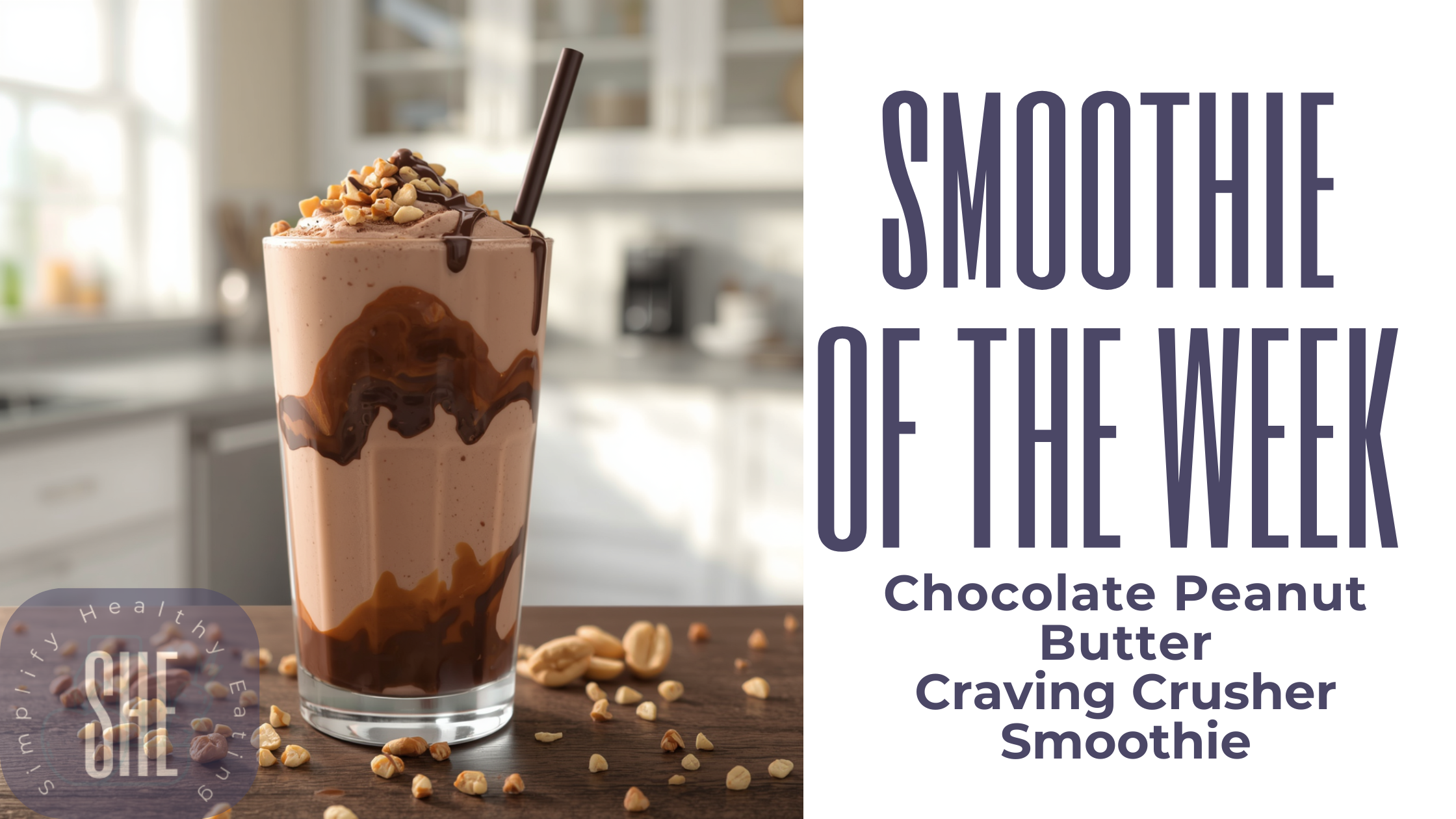
Chocolate Peanut Butter Craving Crusher Smoothie: A Balanced Smoothie Designed to Support Fullness and Fewer Cravings
One of the most common struggles people face with healthy eating is intense cravings for sweets.
And honestly?
Those cravings are often NOT about “lack of willpower.”
Many cravings are connected to:
One of the most common struggles people face with healthy eating is intense cravings for sweets.
And honestly?
Those cravings are often NOT about “lack of willpower.”
Many cravings are connected to:
blood sugar instability
under-eating
stress
poor sleep
emotional exhaustion
inconsistent meals
When the body feels depleted, the brain naturally searches for QUICK energy.
And sugar is one of the fastest fuel sources it remembers.
That’s why building meals with protein, fiber, and healthy fats matters so much.
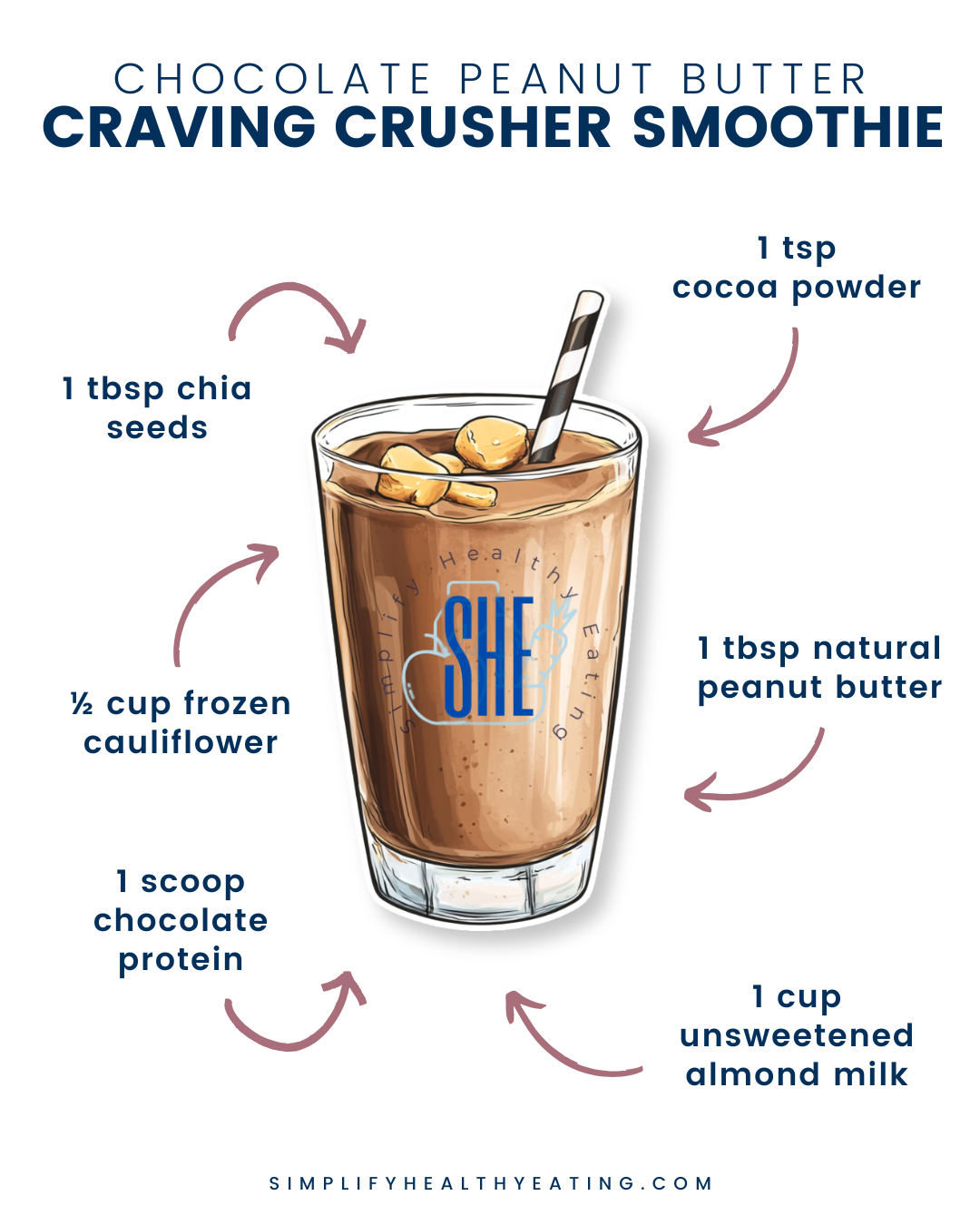
This Chocolate Peanut Butter Craving Crusher Smoothie is designed to help support:
✔️ fullness
✔️ blood sugar balance
✔️ sustained energy
✔️ reduced cravings
✔️ healthier eating consistency
Why Balanced Smoothies Help Reduce Cravings
Highly processed snacks often digest very quickly.
That rapid digestion can lead to:
❌ energy crashes
❌ more hunger
❌ blood sugar swings
❌ constant snacking
❌ intense cravings later
Balanced smoothies help slow digestion and create steadier energy.
When your body feels nourished consistently…
cravings often become much more manageable.
Ingredient Benefits
🍫 Cocoa Powder
Cocoa powder provides rich chocolate flavor while also containing antioxidants and magnesium.
Magnesium plays an important role in:
muscle function
nervous system support
blood sugar regulation
stress management
Many women are unknowingly low in magnesium, which may contribute to increased cravings and fatigue.
🥜 Natural Peanut Butter
Natural peanut butter contains:
✔️ healthy fats
✔️ protein
✔️ nutrients that support fullness
Healthy fats help slow digestion and improve satisfaction after meals.
That feeling of satisfaction matters because meals that leave people hungry shortly afterward often lead to overeating later.
🌱 Chia Seeds
Chia seeds are loaded with:
fiber
omega-3 fats
nutrients that support fullness
Fiber helps slow digestion and stabilize blood sugar responses.
Chia seeds also absorb liquid and expand, helping smoothies feel more filling and satisfying.
🥦 Frozen Cauliflower
Cauliflower may sound unusual in a smoothie…
but it creates incredible creaminess while adding nutrients and volume with minimal sugar.
It’s an easy way to:
✔️ increase vegetables
✔️ support fullness
✔️ add texture
✔️ reduce reliance on sugary ingredients
💪 Chocolate Protein Powder
Protein is one of the MOST important nutrients for appetite regulation.
Adequate protein intake helps support:
muscle maintenance
fullness
energy
metabolic health
reduced cravings
Adding protein to smoothies helps transform them from “snacks” into more balanced meals.
Why This Smoothie Works
This smoothie combines:
✔️ protein
✔️ healthy fats
✔️ fiber
✔️ slower digestion
Which helps support:
more stable blood sugar
fewer crashes
reduced snacking
sustained energy
And honestly?
That stability can make healthy eating feel MUCH easier.
Sustainable Wellness Means Nourishing Your Body
Cravings don’t automatically mean you’re failing.
Sometimes they simply mean:
💧 you’re depleted
😴 you’re exhausted
🍽️ you haven’t eaten enough balanced meals
😰 your body is stressed
The goal isn’t to shame cravings.
The goal is learning how to support your body differently.
Because lasting wellness is built through understanding—not guilt.
Why Sugar Cravings Feel Impossible to Stop (And How to Finally Break the Cycle)
Have you ever felt like sugar cravings completely take over your brain?
You tell yourself:
“This is the last time.”
But a few hours later…
you’re reaching for sweets again.
And after a while, it can start to feel frustrating, exhausting, and honestly a little defeating.
But here’s the truth most people never explain:
Sugar cravings are not usually about “lack of discipline.”
They are often rooted in biology.
Have you ever felt like sugar cravings completely take over your brain?
You tell yourself:
“This is the last time.”
But a few hours later…
you’re reaching for sweets again.
And after a while, it can start to feel frustrating, exhausting, and honestly a little defeating.
But here’s the truth most people never explain:
Sugar cravings are not usually about “lack of discipline.”
They are often rooted in biology.
Your body is responding to blood sugar changes, energy crashes, insulin shifts, and survival signals designed to keep you functioning.
Once you understand the cycle…
you stop blaming yourself.
And that understanding becomes the first step toward freedom.
Let’s break down exactly why sugar cravings feel so powerful—and how to finally interrupt the loop.
Step 1: You Eat Sugar or Refined Carbs
It usually starts innocently enough.
Maybe it’s:
pastries
chips
white bread
soda
sugary coffee drinks
cereal
crackers
sweets
refined snacks
These foods digest very quickly.
Which means glucose enters the bloodstream rapidly.
Within about 30–60 minutes:
⬆️ blood sugar spikes
⬆️ insulin rises
⬆️ dopamine increases
You may feel:
energized
happier
more alert
temporarily satisfied
This is often what people call a “sugar high.”
Your brain LOVES quick energy because sugar is the body’s fastest fuel source.
But the problem is what happens next.
Step 2: The Crash Hits
After the blood sugar spike comes the drop.
Insulin rushes in to pull sugar out of the bloodstream.
And when the spike is large…
the drop can become dramatic.
This is when you suddenly feel:
tired
shaky
foggy
irritable
anxious
unfocused
Your body interprets this as:
🚨 “We need fuel NOW.”
This is why cravings often feel urgent.
Your brain is trying to solve an energy emergency as quickly as possible.
And what food does your brain remember as the fastest fix?
Sugar.
This is why cravings are so difficult to “power through.”
You are not fighting a thought.
You are fighting biology.
Step 3: The Craving Returns
Now your brain wants quick relief.
Fast energy.
Immediate comfort.
And because sugar worked temporarily before…
your brain remembers it as the solution.
So the craving returns.
Not because you are weak.
But because your blood sugar has dropped below baseline and your body wants stability again.
This creates the loop:
🍩 sugar/refined carbs
⬆️ blood sugar spike
⬇️ crash
😩 fatigue + cravings
🍪 more sugar
🔁 repeat
Over time, this cycle can make cravings feel automatic.
Especially:
during stressful periods
when skipping meals
after poor sleep
during hormonal fluctuations
when eating highly processed foods regularly
Why Willpower Usually Fails
This part matters.
Many women think:
“I just need more discipline.”
But willpower struggles against survival signals.
When blood sugar crashes:
hunger hormones increase
stress hormones rise
the brain prioritizes fast energy
That’s why cravings can feel overpowering.
The goal is not stronger willpower.
The goal is creating more stable blood sugar patterns so the cravings stop screaming in the first place.
How to Break the Sugar Craving Loop
The good news?
You can absolutely reduce cravings naturally.
And it usually starts with stabilizing your meals.
1. Never Eat Carbs Alone
Pair carbohydrates with:
✅ protein
✅ healthy fats
✅ fiber
This slows digestion and helps prevent massive blood sugar spikes.
Examples:
apple + peanut butter
oatmeal + protein
rice + salmon + vegetables
sweet potato + chicken + avocado
Balanced meals create balanced energy.
2. Eat Consistently
Going too long without eating can trigger intense cravings later.
Try eating every 3–4 hours if cravings are severe.
This helps stabilize:
blood sugar
energy
mood
hunger hormones
Skipping meals often backfires.
Especially for women over 35 dealing with stress, hormone shifts, and busy schedules.
3. Choose Whole Food Carbs More Often
Not all carbs are the enemy.
Your body needs carbohydrates.
The difference is HOW they digest.
Whole food carbs digest more slowly and provide:
fiber
nutrients
longer-lasting energy
Better options include:
🥔 sweet potatoes
🥣 oats
🍎 fruit
🌾 quinoa
🫘 beans
🍚 brown rice
These foods support energy without the dramatic spike-and-crash cycle.
4. Prioritize Protein
Protein is one of the most powerful tools for appetite regulation.
It helps:
reduce cravings
stabilize blood sugar
increase fullness
support metabolism
preserve muscle mass
Aim to include protein at every meal.
Especially breakfast.
Many people notice fewer cravings throughout the day when they stop starting the morning with sugar alone.
5. Support Your Nervous System
Stress increases cravings.
Poor sleep increases cravings.
Burnout increases cravings.
Your body often seeks sugar when it feels overwhelmed because sugar provides quick dopamine and quick energy.
This is why sustainable wellness must include:
sleep
stress management
hydration
nourishment
nervous system support
Not just calorie counting.
The Real Goal Is Stability
The goal isn’t perfection.
The goal is stability.
Stable blood sugar.
Stable energy.
Stable habits.
Stable nourishment.
When your body feels safe and fueled consistently…
cravings usually become quieter.
Not overnight.
But gradually.
And that changes everything.
Final Encouragement
If sugar cravings have felt impossible to stop…
please know this:
Your body is not trying to sabotage you.
It is trying to protect you.
Understanding the cycle is the first step toward breaking it.
And small changes—done consistently—can completely transform your relationship with food, energy, and cravings over time.
💛 Want help building balanced meals that support fat loss, reduce cravings, and stabilize energy naturally?
Explore the wellness resources, meal plans, and healthy lifestyle tools available here.