

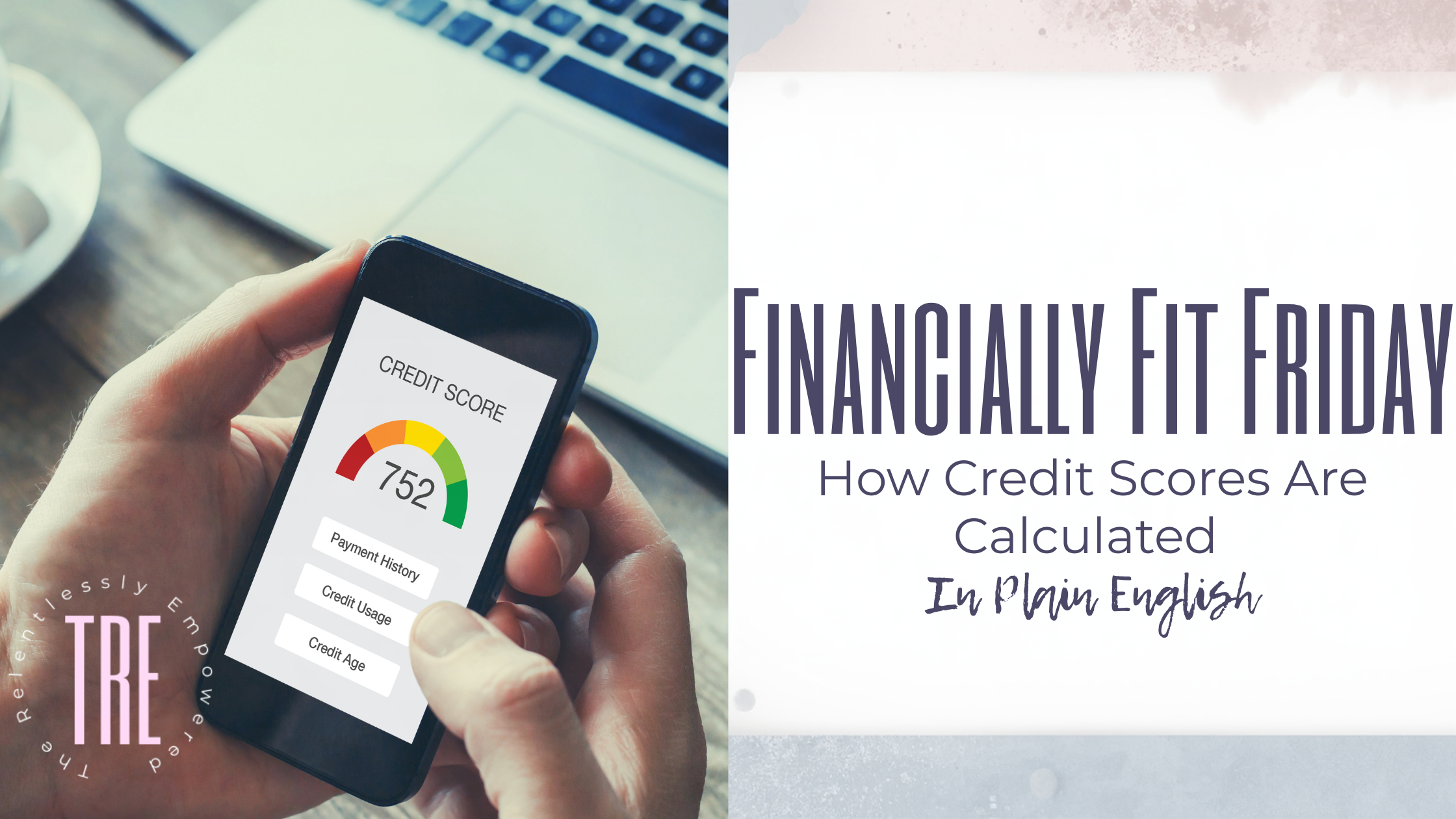
Financially Fit Fridays: How Credit Scores Are Calculated — In Plain English
If you’ve ever checked your credit score and thought,
“How did they even come up with this number?”
you’re not alone.
Credit scores can feel random — like they change without warning or logic. But the truth is, credit scores are calculated using specific, predictable factors. Once you understand them, you stop guessing and start making intentional moves.
Let’s break it down — simply, clearly, and without overwhelm.
If you’ve ever checked your credit score and thought,
“How did they even come up with this number?”
you’re not alone.
Credit scores can feel random — like they change without warning or logic. But the truth is, credit scores are calculated using specific, predictable factors. Once you understand them, you stop guessing and start making intentional moves.
Let’s break it down — simply, clearly, and without overwhelm.
The 5 Factors That Shape Your Credit Score
Most credit scores are based on five main categories. You don’t need to master them all at once — just understand how they work together.
1. Payment History (≈ 35%)
This is the biggest factor.
It answers one question:
Do you pay your bills on time?
What helps:
On-time payments
Catching up on past-due accounts
Consistency over time
What hurts:
Late payments
Accounts sent to collections
Missed payments (especially recent ones)
💡 Important note:
One late payment doesn’t ruin your life — but patterns matter. Recent behavior carries more weight than old mistakes.
2. Credit Usage / Utilization (≈ 30%)
This looks at how much of your available credit you’re using.
Example:
You have a credit card with a $1,000 limit
You’re using $800 of it
→ That’s 80% utilization (high)
Lower utilization generally helps your score.
A common guideline:
Aim to use 30% or less of your available credit when possible
This doesn’t mean you’re “bad” for using credit — it just means balance matters.
3. Length of Credit History (≈ 15%)
This factor considers:
How long your accounts have been open
The age of your oldest account
Longer histories help because they show patterns over time.
This is why:
Closing old accounts can lower a score
Starting over completely isn’t always helpful
You don’t need decades of history — just stability and patience.
4. Credit Mix (≈ 10%)
This looks at the types of credit you have, such as:
credit cards
installment loans (car, student loan, personal loan)
You are not required to have everything.
This factor simply rewards responsible variety over time.
No need to open accounts just to “check a box.”
5. New Credit / Inquiries (≈ 10%)
This reflects:
how often you apply for new credit
how many hard inquiries appear on your report
Too many applications in a short period can signal risk — not because you’re irresponsible, but because it can look unstable from a system perspective.
Slow and intentional beats rushed and reactive.
What Matters Most for Beginners
If you’re new to credit or rebuilding, focus on just two things first:
Paying on time
Keeping balances manageable
Those two alone influence more than half of your score.
You don’t need perfection.
You need consistency.
Why Scores Can Change Month to Month
Credit scores are dynamic — they update as new information is reported.
That means:
Paying down a balance can help quickly
A late payment can temporarily hurt
Improvement is possible sooner than you think
Scores are snapshots — not permanent labels.
Your Only Action Step This Week
Just one, again.
Choose one account and commit to on-time payment.
Not everything.
Not a full overhaul.
Just one clear promise you keep with yourself.
Momentum starts there.
Faith, Patience & Progress
Growth rarely happens instantly — and credit is no different.
Scripture speaks often about wisdom, stewardship, and faithfulness in small things. Financial health is built the same way: quietly, consistently, and without shame.
You are not late.
You are learning the system.
And learning changes outcomes.
What’s Coming Next
In the next Financially Fit Fridays post, we’ll cover:
How to check your credit safely — and what to look for when you do.
Because awareness plus understanding is where confidence is born.
If this post made credit feel clearer, save it or share it with someone who’s been afraid of the numbers.
And as always, explore the free and low-cost resources available at The Relentlessly Empowered, created to support your whole wellness journey — finances included.
Educational Disclaimer
The content shared in this Financially Fit Fridays series is for educational and informational purposes only. It is not intended as financial, legal, or credit repair advice.
Everyone’s financial situation is unique, and readers are encouraged to do their own research or consult with qualified professionals before making financial decisions.
Our goal is to empower you with understanding — not pressure you into action.

Financially Fit Fridays: What Credit Actually Is — And What It Is NOT
If you’ve ever checked your credit score and thought,
“How did they even come up with this number?”
you’re not alone.
One of the biggest reasons credit feels intimidating is because it’s often talked about in extremes.
Either it’s framed as something you should never touch…
or something you should somehow master overnight.
Neither is helpful — especially if you’re new to credit or rebuilding after a hard season.
So today, let’s clear the noise and get grounded in truth.
Because understanding what credit actually is — and what it is not — removes so much unnecessary fear.
What Credit Actually Is
At its core, credit is simply a record of borrowing behavior over time.
It tracks:
whether payments are made on time
how much available credit is being used
how long accounts have been open
how often new credit is requested
That’s it.
Credit is not mysterious.
It’s not emotional.
And it’s not personal — even though it often feels that way.
Think of it like a report card for patterns, not a verdict on your worth.
What Credit Is NOT (This Matters More Than You Think)
Let’s gently dismantle some common misconceptions.
Credit is NOT:
a reflection of your intelligence
proof that you’re irresponsible
a measure of your value or discipline as a person
a permanent sentence
Many people with “bad” credit weren’t reckless — they were surviving.
Medical bills.
Job loss.
Divorce.
Caring for others before yourself.
Credit systems don’t account for context — but we can.
Why This Distinction Is So Important
When people believe credit defines them, they tend to:
avoid checking it
delay learning about it
make decisions from fear instead of clarity
But when you understand credit as a neutral system, something shifts.
You stop asking:
“What’s wrong with me?”
And start asking:
“How does this work — and what’s my next best step?”
That shift alone creates momentum.
Credit Is a Tool — Just Like Anything Else
Just like:
food can nourish or harm depending on how it’s used
exercise can strengthen or injure without guidance
boundaries can protect or isolate depending on intention
Credit can either support stability or create stress — depending on understanding and use.
The goal of financial wellness isn’t avoidance.
It’s informed, intentional use.
Why Beginners Often Feel Conflicted
Many people are told:
“Never use credit”
“Credit cards are dangerous”
“Debt is always bad”
But the truth is more nuanced.
Credit isn’t inherently good or bad.
It’s leverage — and leverage requires wisdom.
Avoidance doesn’t build credit.
Blind use doesn’t either.
Education does.
Your Only Action Step This Week
Again — just one.
This week, notice how you talk to yourself about money and credit.
Pay attention to:
shame-based thoughts
“I’m bad with money” narratives
fear-driven avoidance
And gently interrupt them with:
“I’m learning. I’m allowed to learn.”
That awareness creates space for better decisions later.
Faith & Financial Understanding
Wisdom is a recurring theme throughout Scripture — not instant perfection.
Learning how systems work is not a lack of faith.
It’s stewardship.
And stewardship includes:
patience
humility
grace with yourself
You are not late.
You are not failing.
You are becoming informed.
What’s Coming Next
In the next Financially Fit Fridays post, we’ll break down:
How credit scores are calculated — in plain English.
No jargon.
No overwhelm.
Just clarity.
Because once you understand the pieces, the system stops feeling so intimidating.
If this post brought clarity, save it or share it with someone who’s been afraid to even start.
And if you’re ready to continue learning, explore the free and low-cost resources available here at The Relentlessly Empowered, designed to support your whole life — not just one piece of it.