
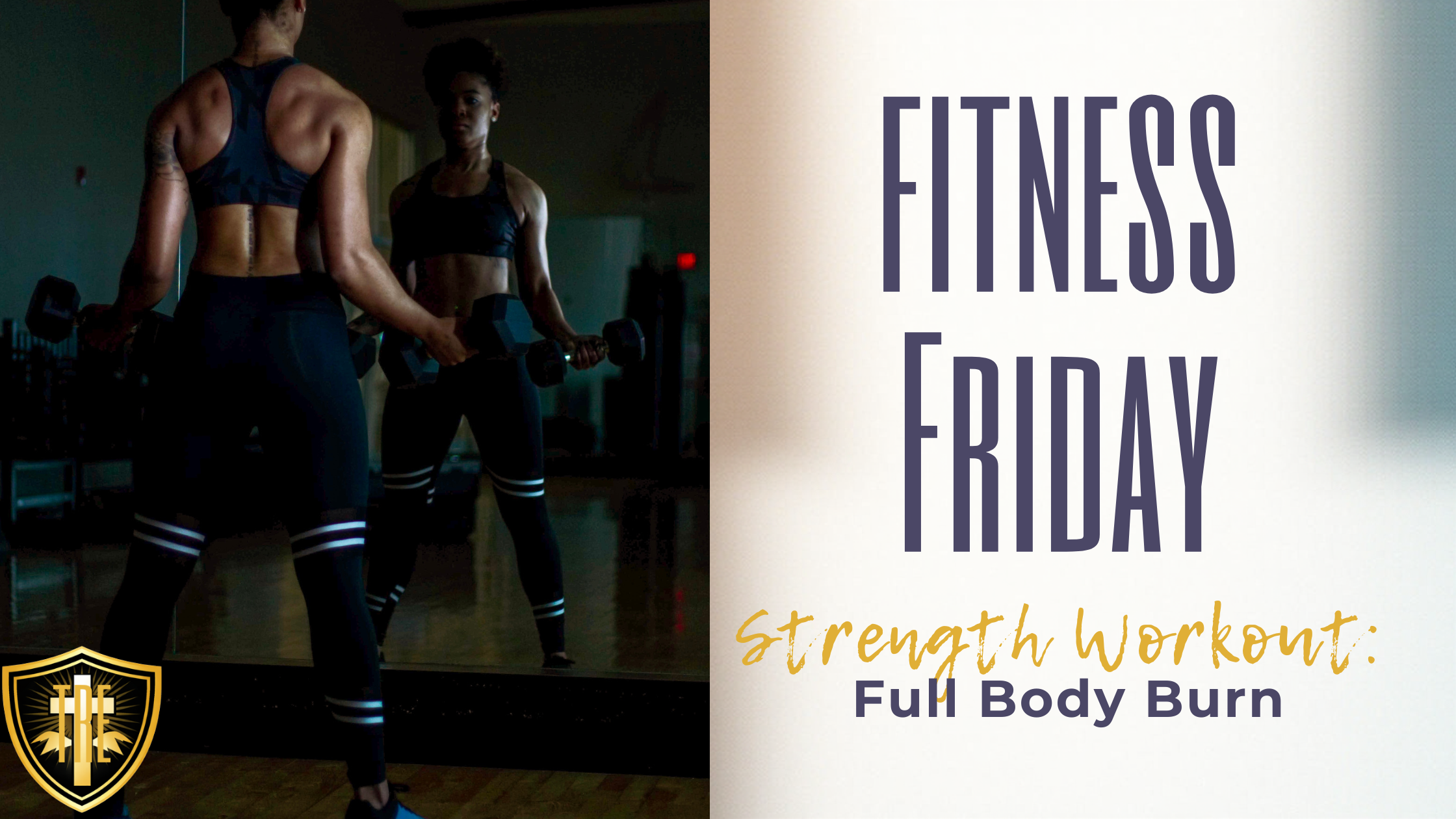
Strength Workout: Full Body Burn
Strength training is one of the most powerful things women can do for long-term wellness, energy, confidence, and sustainable fat loss.
Not because it is trendy.
Because muscle matters.
Strength training is one of the most powerful things women can do for long-term wellness, energy, confidence, and sustainable fat loss.
Not because it is trendy.
Because muscle matters.
Muscle supports metabolism, strength, balance, posture, independence, and the way your body handles everyday life. For women over 35, strength training becomes even more important because muscle naturally becomes harder to maintain as we age.
That does not mean you need to live in the gym or lift the heaviest weights in the room.
It means you need a simple, repeatable plan that trains your whole body and helps you build strength safely over time.
This full body strength workout is designed to help you build muscle, boost metabolism, improve functional strength, and create that “I did something good for myself” feeling.
The Workout Format
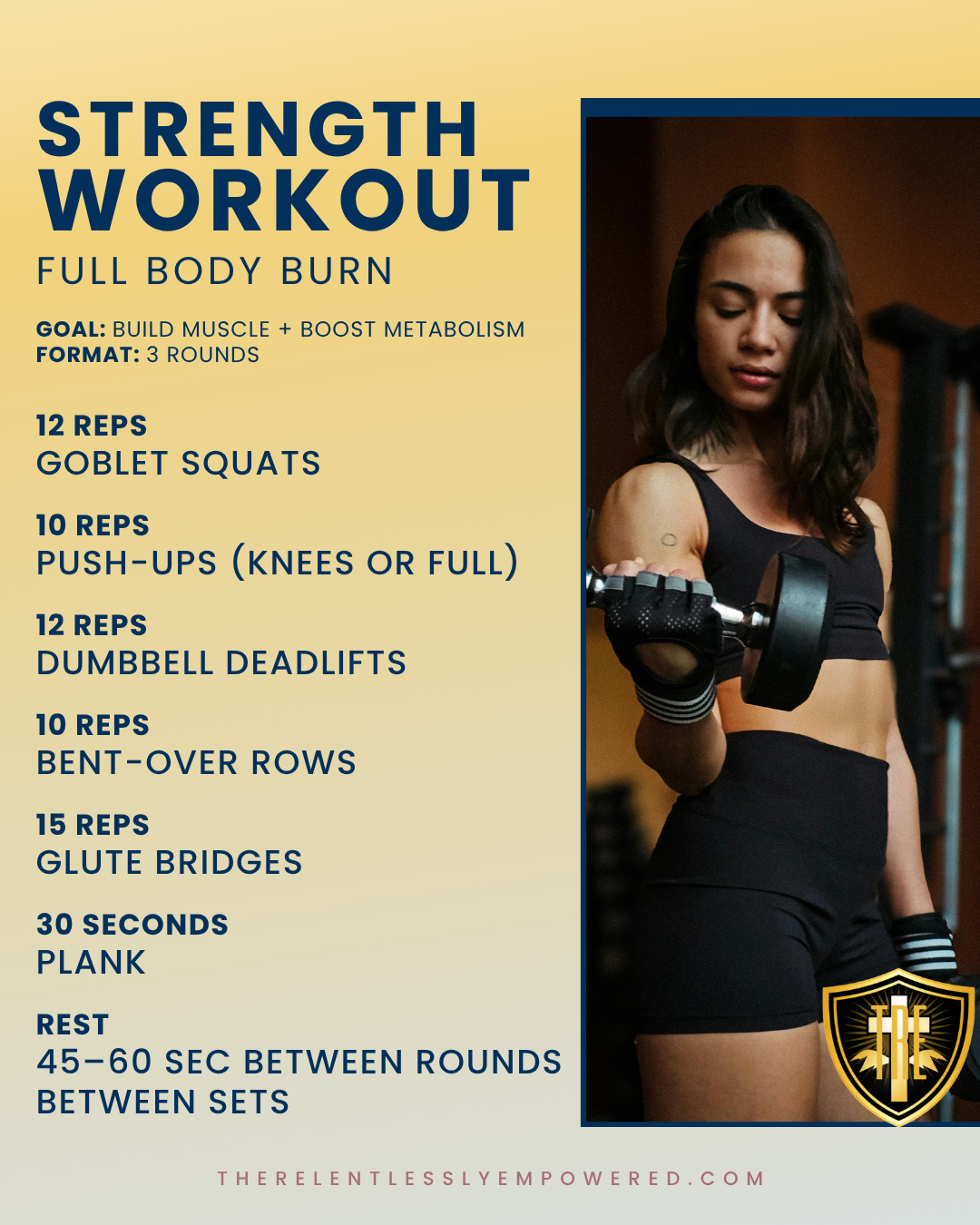
Goal: Build muscle and boost metabolism
Format: 3 rounds
Rest: 45–60 seconds between rounds or as needed
Exercises
12 reps goblet squats
10 reps push-ups, knees or full
12 reps dumbbell deadlifts
10 reps bent-over rows
15 reps glute bridges
30-second plank
Before starting, warm up for 5 minutes with marching, bodyweight squats, hip hinges, shoulder rolls, arm circles, and gentle core activation. Choose weights that challenge you but still allow you to move with clean form.
Why This Strength Workout Works
This routine trains the whole body.
Goblet squats target the legs, glutes, and core.
Push-ups strengthen the chest, shoulders, triceps, and core.
Dumbbell deadlifts train the hamstrings, glutes, back, and hips.
Bent-over rows strengthen the upper back and posture muscles.
Glute bridges activate the glutes and support hip strength.
Planks train deep core stability.
Together, these exercises create a balanced full-body workout that supports strength, metabolism, posture, and daily movement.
This is the type of workout that helps your body become more capable, not just smaller.
How to Do Goblet Squats
Goblet squats are a lower-body strength move performed while holding one dumbbell or kettlebell at your chest.
How to do it:
Stand with your feet about shoulder-width apart.
Hold one dumbbell vertically at your chest with both hands.
Keep your elbows close to your body.
Brace your core and keep your chest lifted.
Bend your knees and push your hips back like you are sitting into a chair.
Lower until your thighs are near parallel to the floor, or as low as comfortable.
Press through your heels and midfoot to stand back up.
Squeeze your glutes at the top.
Repeat for 12 reps.
Form tips:
Keep your knees tracking in the same direction as your toes.
Do not let your chest collapse forward.
Keep your weight balanced through your feet.
Move slowly and with control.
Modification:
Perform a bodyweight squat or squat to a chair.
Progression:
Use a heavier dumbbell or slow down the lowering phase.
How to Do Push-Ups
Push-ups strengthen the upper body and core. You can do them from your knees, toes, or an elevated surface.
How to do it:
Start in a plank position with your hands slightly wider than shoulder-width apart.
Keep your body in a straight line from head to heels, or from head to knees if modifying.
Brace your core.
Bend your elbows and lower your chest toward the floor.
Keep your elbows at about a 45-degree angle from your body.
Press through your hands to return to the starting position.
Repeat for 10 reps.
Form tips:
Do not let your hips sag.
Keep your neck neutral.
Lower with control.
Exhale as you press up.
Modification:
Do push-ups on your knees or with your hands elevated on a bench, counter, or wall.
Progression:
Perform full push-ups from your toes or add a slow tempo.
How to Do Dumbbell Deadlifts
Dumbbell deadlifts train the back of the body, especially the hamstrings, glutes, and hips.
How to do it:
Stand with your feet hip-width apart.
Hold a dumbbell in each hand in front of your thighs.
Keep your knees slightly bent.
Brace your core.
Hinge at your hips by pushing your hips back behind you.
Let the dumbbells travel down the front of your legs.
Keep your back flat and chest open.
Lower until you feel a stretch in your hamstrings, or until the weights reach mid-shin.
Press through your heels and squeeze your glutes to stand tall.
Repeat for 12 reps.
Form tips:
This is a hip hinge, not a squat.
Keep the weights close to your legs.
Do not round your back.
Think “hips back, chest proud.”
Modification:
Use lighter weights or practice the movement with no weights.
Progression:
Use heavier dumbbells or slow down the lowering phase.
How to Do Bent-Over Rows
Bent-over rows strengthen the upper back, shoulders, arms, and posture muscles.
How to do it:
Stand with your feet hip-width apart.
Hold a dumbbell in each hand.
Hinge at your hips and lean your torso forward.
Keep your back flat and core engaged.
Let the dumbbells hang below your shoulders.
Pull your elbows back toward your ribs.
Squeeze your shoulder blades together.
Lower the weights with control.
Repeat for 10 reps.
Form tips:
Do not shrug your shoulders.
Keep your neck long.
Avoid swinging the weights.
Pull with your back, not just your arms.
Modification:
Do one arm at a time with one hand supported on a chair or bench.
Progression:
Use heavier weights or pause at the top of each row.
How to Do Glute Bridges
Glute bridges strengthen the glutes, hamstrings, and hips.
How to do it:
Lie on your back with your knees bent and feet flat on the floor.
Place your feet hip-width apart.
Rest your arms by your sides.
Press your lower back gently toward the floor.
Push through your heels and lift your hips.
Squeeze your glutes at the top.
Lower your hips back down with control.
Repeat for 15 reps.
Form tips:
Do not overarch your lower back.
Keep your ribs down.
Push through your heels.
Pause briefly at the top.
Modification:
Move through a smaller range of motion.
Progression:
Place a dumbbell across your hips or do single-leg glute bridges.
How to Do a Plank
Planks train core stability, shoulder strength, and full-body control.
How to do it:
Start on your forearms or hands.
Extend your legs behind you.
Keep your body in a straight line.
Brace your core like you are preparing for a gentle punch to the stomach.
Keep your glutes engaged.
Hold for 30 seconds.
Form tips:
Do not let your hips sag.
Do not lift your hips too high.
Keep your neck neutral.
Breathe steadily.
Modification:
Drop to your knees or elevate your hands on a bench.
Progression:
Hold longer, add shoulder taps, or perform a high plank.
How to Structure the Workout
Complete all six exercises in order.
Rest 45–60 seconds after the plank.
Repeat for 3 total rounds.
Move slowly enough to maintain control but with enough focus to challenge your muscles.
This is not a race. Strength training works best when your form is intentional.
Choosing the Right Weight
Choose a weight that feels challenging for the final few reps but does not cause you to lose form.
If you can barely complete the movement, the weight is too heavy.
If you finish every set and feel like you could do 15 more reps, the weight may be too light.
The sweet spot is effort with control.
Cool Down
After the workout, spend 3–5 minutes cooling down.
Stretch your hips.
Stretch your hamstrings.
Stretch your chest and shoulders.
Breathe deeply.
Let your heart rate come down.
Your recovery is part of your training.
Final Thoughts
This full body strength workout is simple, but it is powerful.
You are training your legs, glutes, chest, back, arms, and core in one efficient session. You are building muscle, supporting metabolism, and creating a foundation for long-term strength.
Remember: strength is not just about how much weight you lift.
It is about showing up consistently for the body that carries you every day.
Intervals for Energy
Some days, your body does not need a long workout. It needs a short, focused burst of movement that wakes you up, elevates your heart rate, improves endurance, and helps you feel like you got your energy back.
That is where this cardio interval workout comes in.
Some days, your body does not need a long workout. It needs a short, focused burst of movement that wakes you up, elevates your heart rate, improves endurance, and helps you feel like you got your energy back.
That is where this cardio interval workout comes in.
This routine is designed to be simple, low-equipment, and flexible enough to do at home, at the gym, or in a small space. The goal is to elevate your heart rate, improve cardiovascular endurance, and help your body practice moving with more power, coordination, and confidence.
This is not about punishment. This is not about trying to “burn off” food. This is about building energy, stamina, and strength from the inside out.
For women over 35, cardio does not have to mean endless running, extreme jumping, or workouts that leave your joints angry for three days. A smart cardio workout can be joint-conscious, scalable, and still effective.
The Workout Format
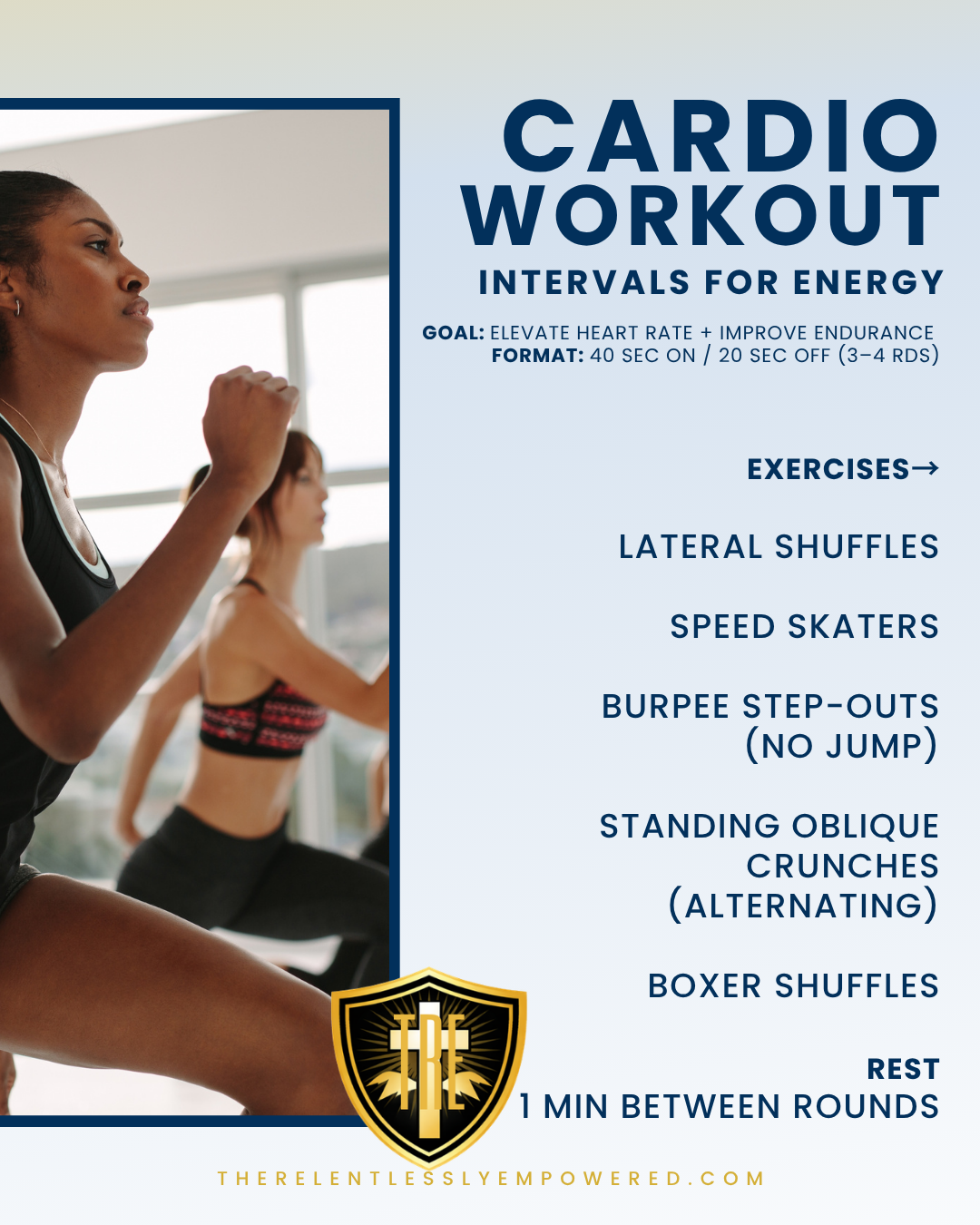
Goal: Elevate heart rate and improve endurance
Format: 40 seconds of work, 20 seconds of rest
Rounds: 3–4 rounds
Rest: 1 minute between rounds
Exercises
Lateral shuffles
Speed skaters
Burpee step-outs, no jump
Standing oblique crunches, alternating
Boxer shuffles
Before you begin, warm up for 3–5 minutes with gentle marching, arm circles, side steps, hip circles, and light bodyweight squats. If you have joint pain, balance concerns, dizziness, chest pain, or any medical condition, modify as needed and check with your healthcare provider before starting.
Why This Cardio Workout Works
This workout uses interval training, which means you alternate periods of higher effort with short recovery periods. That structure helps you work hard without needing to sustain the same intensity for a long time.
The 40 seconds on and 20 seconds off format gives you enough time to build effort while still offering regular rest. This can be especially helpful if you are rebuilding fitness, managing a busy schedule, or trying to improve endurance without feeling overwhelmed.
Each move also trains something slightly different.
Lateral shuffles improve side-to-side movement and agility.
Speed skaters build coordination, balance, and lower-body power.
Burpee step-outs increase heart rate without requiring jumping.
Standing oblique crunches train core control while keeping you upright.
Boxer shuffles improve footwork, rhythm, and stamina.
Together, these exercises create a full-body cardio session that supports energy, endurance, coordination, and confidence.
How to Do Lateral Shuffles
Lateral shuffles are a side-to-side cardio move that helps train agility, lower-body endurance, and coordination.
How to do it:
Stand with your feet about hip-width apart.
Bend your knees slightly and hinge your hips back just a little, like you are preparing to move quickly.
Keep your chest lifted and core engaged.
Step quickly to the right for 2–4 steps, depending on your space.
Then shuffle back to the left.
Keep your feet light and avoid crossing your legs.
Continue moving side to side for the full 40 seconds.
Form tips:
Stay low but comfortable.
Keep your knees soft.
Push off the outside foot to change direction.
Let your arms move naturally to help with balance.
Modification:
Instead of shuffling quickly, step side to side at a controlled pace. You can also reduce the number of steps and simply do one step right, one step left.
How to Do Speed Skaters
Speed skaters are a cardio move that mimics a skating motion. They train balance, coordination, glutes, legs, and cardiovascular endurance.
How to do it:
Stand tall with your feet hip-width apart.
Step your right foot out to the side and slightly behind you.
Let your left knee bend as your right leg crosses behind.
Reach your opposite arm across your body if comfortable.
Push through your left foot and step to the other side.
Repeat side to side in a smooth rhythm.
Form tips:
Keep your chest lifted.
Land softly.
Keep your knees tracking in the same direction as your toes.
Move with control instead of rushing.
Modification:
Remove the hop completely. Step side to side instead of jumping. Keep the range of motion smaller if balance is a concern.
Progression:
Add a small hop between sides or increase the distance of each step.
How to Do Burpee Step-Outs With No Jump
Burpee step-outs are a joint-conscious version of a burpee. They elevate your heart rate without requiring a jump or full push-up.
How to do it:
Stand with your feet hip-width apart.
Bend your knees and hinge at your hips.
Place your hands on the floor or on an elevated surface like a bench, chair, or step.
Step one foot back, then the other foot back, coming into a plank position.
Keep your core engaged.
Step one foot forward, then the other foot forward.
Stand tall and squeeze your glutes at the top.
Repeat for 40 seconds.
Form tips:
Do not let your hips sag in the plank.
Keep your hands under your shoulders.
Move at a pace you can control.
Stand fully upright at the top before repeating.
Modification:
Use a sturdy chair, bench, or countertop to reduce pressure on the wrists and make the move more accessible.
Progression:
Step back faster, add a squat at the top, or add a push-up if appropriate.
How to Do Standing Oblique Crunches
Standing oblique crunches train the side body, core control, balance, and coordination without needing to get on the floor.
How to do it:
Stand tall with your feet hip-width apart.
Place your hands lightly behind your head or keep them in front of your chest.
Shift your weight slightly to your left leg.
Lift your right knee up and out to the side.
Bring your right elbow toward your right knee by gently crunching through the side waist.
Lower your foot and return to standing.
Switch sides and repeat.
Continue alternating for 40 seconds.
Form tips:
Move with control.
Do not pull on your neck.
Keep your chest open.
Focus on bringing your ribcage and hip closer together.
Modification:
Keep your hands on your hips and lift the knee only as high as comfortable.
Progression:
Add a light dumbbell or increase your pace while maintaining good form.
How to Do Boxer Shuffles
Boxer shuffles are a light-footed cardio move that improves rhythm, coordination, and endurance.
How to do it:
Stand with your feet slightly wider than hip-width apart.
Bend your knees softly.
Bring your hands up like a boxer guarding the face.
Shift your weight quickly from one foot to the other.
Let your heels lift lightly as you move.
Keep your core engaged and your shoulders relaxed.
Continue for 40 seconds.
Form tips:
Stay light on your feet.
Keep your breathing steady.
Avoid locking your knees.
Keep your movements small and quick.
Modification:
March in place with soft knees and gentle arm movement.
Progression:
Add light punches while you shuffle.
How to Structure the Workout
Complete each exercise for 40 seconds, then rest for 20 seconds before moving to the next exercise.
After completing all five moves, rest for 1 minute.
Repeat for 3–4 total rounds.
If you are newer to cardio, start with 2 rounds and build from there. If you are more advanced, increase your intensity during the work intervals while keeping your form clean.
Cool Down
After your final round, cool down for 3–5 minutes.
Walk slowly in place.
Take deep breaths.
Stretch your calves, quads, hamstrings, hips, and shoulders.
Let your heart rate come down gradually.
Do not skip the cool down. Your body deserves the transition.
Final Thoughts
This cardio interval workout is a powerful reminder that movement does not have to be complicated to be effective.
You can elevate your heart rate, build endurance, improve coordination, and boost energy with just a few simple moves. The key is consistency, not perfection.
Start where you are. Modify what you need. Build as you go.
Your body is not asking you to punish it.
It is asking you to support it.