
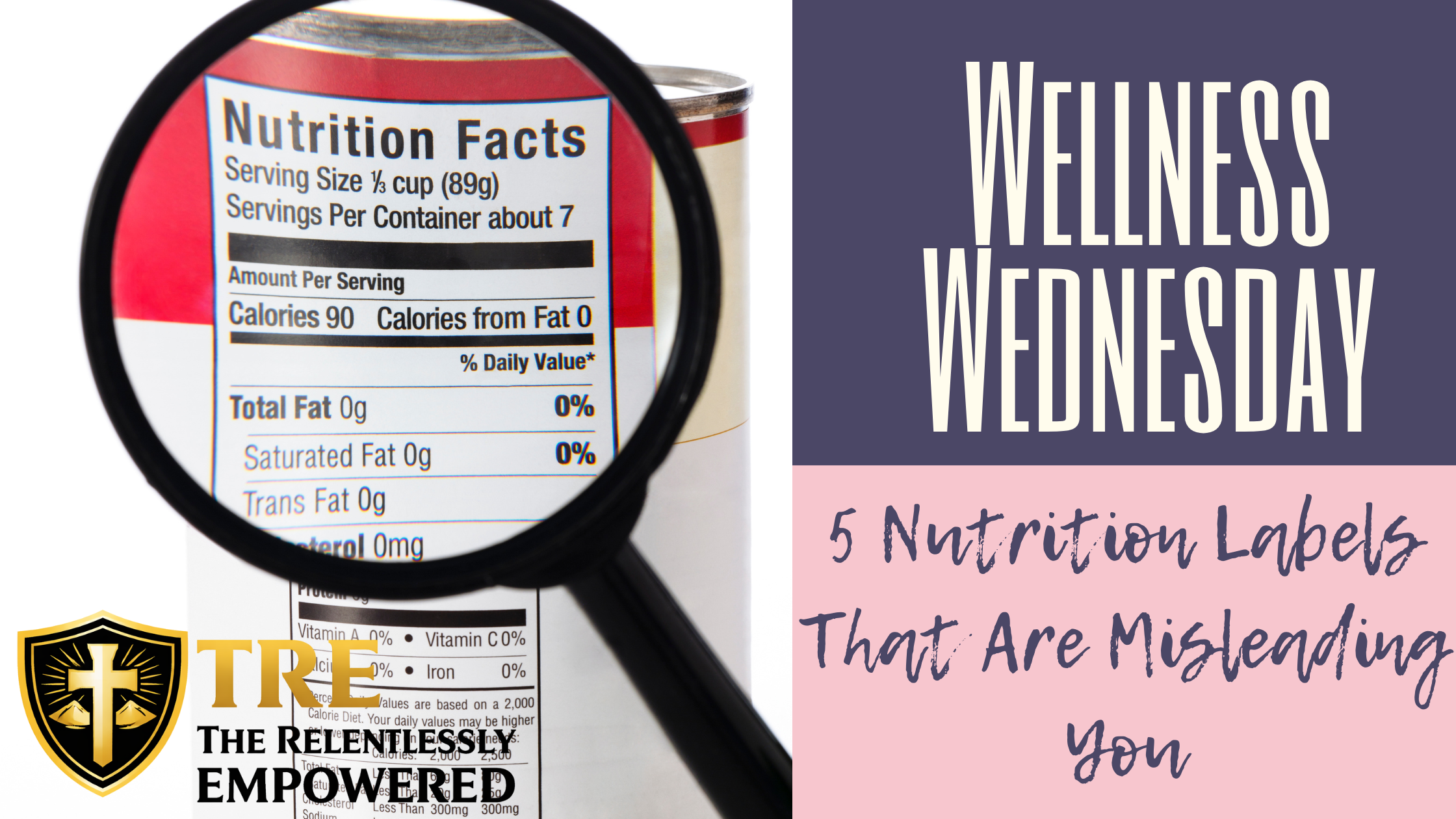
5 Nutrition Labels That Are Misleading You
Walk through any grocery store and you’ll see it everywhere:
“High Fiber.”
“Low Fat.”
“Gluten-Free.”
“All Natural.”
“No Sugar Added.”
At first glance, these labels sound healthy.
And honestly?
That’s exactly what food marketing is designed to do.
The problem is that many of these phrases create a “health halo” around foods that may still:
Walk through any grocery store and you’ll see it everywhere:
“High Fiber.”
“Low Fat.”
“Gluten-Free.”
“All Natural.”
“No Sugar Added.”
At first glance, these labels sound healthy.
And honestly?
That’s exactly what food marketing is designed to do.
The problem is that many of these phrases create a “health halo” around foods that may still:
spike blood sugar
increase cravings
disrupt digestion
contain highly processed ingredients
leave you unsatisfied and overeating later
This doesn’t mean every product with these labels is bad.
But it DOES mean you need to understand what these terms actually mean before assuming something supports your health goals.
Because sometimes the packaging sounds healthier than the product itself.
Let’s break down 5 nutrition labels that commonly mislead consumers—and what to look for instead.
1. “High Fiber”
Fiber matters.
A LOT.
Fiber helps:
stabilize blood sugar
support digestion
improve fullness
support gut health
regulate appetite
So when people see “High Fiber” on a package, they naturally assume:
“This must be healthy.”
But many “high fiber” processed foods are loaded with:
sugar alcohols
artificial sweeteners
highly refined ingredients
inflammatory oils
synthetic fibers added in isolation
Some products artificially boost fiber content while still functioning like ultra-processed snacks.
And in some people, sugar alcohols can trigger:
bloating
gas
digestive discomfort
diarrhea
increased cravings
What to Look For Instead
Instead of only focusing on fiber grams, ask:
What are the FIRST ingredients?
Is this minimally processed?
Does it contain protein or healthy fats?
Is the fiber naturally occurring?
Better fiber sources include:
🥑 avocado
🫘 beans
🥦 vegetables
🍓 berries
🥣 oats
🌾 quinoa
🌰 nuts and seeds
Whole-food fiber tends to support the body far better than heavily processed “fiber-enhanced” foods.
2. “Low Fat”
This one has confused people for decades.
For years, fat was blamed for weight gain.
So food companies removed fat from products…
…but often replaced it with:
more sugar
starches
fillers
artificial ingredients
And the result?
Many “low fat” foods actually spike blood sugar MORE aggressively.
Why?
Because fat slows digestion.
Without enough fat:
blood sugar rises faster
hunger returns quicker
cravings increase
satisfaction decreases
This is why many people eat a “low fat” snack…
and feel hungry again 30 minutes later.
Healthy Fats Are NOT the Enemy
Healthy fats support:
hormone health
satiety
brain function
nutrient absorption
blood sugar stability
Examples include:
🥑 avocado
🫒 olive oil
🥜 nuts
🐟 salmon
🥚 eggs
🌰 seeds
The goal isn’t “low fat.”
The goal is balanced nutrition.
3. “Gluten-Free”
This label is necessary and important for people with:
celiac disease
gluten intolerance
wheat sensitivity
But “gluten-free” does NOT automatically mean healthy.
Many gluten-free products are still highly processed and may contain:
refined starches
added sugars
inflammatory oils
low fiber
artificial additives
Some gluten-free breads, crackers, and snacks can spike blood sugar even faster than traditional versions.
Because removing gluten doesn’t magically make processed food nutritious.
What Actually Matters
Instead of focusing only on “gluten-free,” ask:
Is this minimally processed?
Does it contain protein and fiber?
Will this keep me full?
How does my body respond after eating it?
A gluten-free cookie is still a cookie.
A gluten-free donut is still a donut.
Labels don’t override food quality.
4. “Natural”
This one surprises people.
Because the term “natural” is largely unregulated in food marketing.
Which means companies can use it VERY loosely.
A product labeled “natural” may still contain:
processed sugars
syrups
preservatives
flavor enhancers
refined ingredients
The word creates a healthy image…
without necessarily meaning much nutritionally.
This is why reading the ingredient list matters more than the front label.
The Ingredient List Tells the Real Story
Generally speaking:
fewer ingredients = better
recognizable ingredients = better
minimally processed foods = better
Whole foods don’t need flashy marketing.
5. “No Sugar Added”
This one tricks people constantly.
“No sugar added” simply means no EXTRA sugar was added during production.
But the food may still contain:
fruit juice concentrates
purees
naturally high sugar levels
refined carbohydrate sources
Which means total sugar can still be very high.
For example:
dried fruit snacks
fruit spreads
smoothies
flavored yogurts
may still create significant blood sugar spikes.
What to Look At Instead
Always check:
✅ total sugar
✅ ingredient list
✅ serving size
✅ protein
✅ fiber
A food can technically have “no sugar added” while still functioning like a high-sugar food metabolically.
The Bigger Problem: Health Halos
Food marketing is designed to simplify decisions quickly.
And companies know certain words create trust.
That’s called a “health halo.”
When people see:
organic
natural
gluten-free
keto
high protein
low carb
low fat
they often assume:
“This must be healthy.”
But context matters.
Ingredient quality matters.
Blood sugar response matters.
Meal balance matters.
How your body FEELS after eating matters.
What You Should Focus On Instead
Instead of chasing labels…
focus on:
whole foods
protein
fiber
healthy fats
balanced meals
ingredient quality
blood sugar stability
A simple balanced meal often beats a heavily marketed “health food.”
A Simpler Way to Grocery Shop
Before buying something, ask:
1. Does this contain protein?
Protein helps stabilize hunger and cravings.
2. Does this contain natural fiber?
Fiber supports digestion and blood sugar balance.
3. Will this actually satisfy me?
If not, overeating later becomes more likely.
4. Is this highly processed?
More processing often means less satiety.
5. Would my great-grandmother recognize these ingredients?
Simple question.
Powerful filter.
Final Encouragement
You do NOT need to become obsessed with labels.
You just need awareness.
Because once you understand how food marketing works…
you stop making decisions based only on packaging.
And you start making choices based on:
nourishment
energy
stability
long-term wellness
That shift changes everything.
💛 Want help simplifying healthy eating without extremes, restriction, or confusion?
Explore the wellness tools, balanced meal plans, and healthy lifestyle resources available at HERE.

Why Sugar Cravings Feel Impossible to Stop (And How to Finally Break the Cycle)
Have you ever felt like sugar cravings completely take over your brain?
You tell yourself:
“This is the last time.”
But a few hours later…
you’re reaching for sweets again.
And after a while, it can start to feel frustrating, exhausting, and honestly a little defeating.
But here’s the truth most people never explain:
Sugar cravings are not usually about “lack of discipline.”
They are often rooted in biology.
Have you ever felt like sugar cravings completely take over your brain?
You tell yourself:
“This is the last time.”
But a few hours later…
you’re reaching for sweets again.
And after a while, it can start to feel frustrating, exhausting, and honestly a little defeating.
But here’s the truth most people never explain:
Sugar cravings are not usually about “lack of discipline.”
They are often rooted in biology.
Your body is responding to blood sugar changes, energy crashes, insulin shifts, and survival signals designed to keep you functioning.
Once you understand the cycle…
you stop blaming yourself.
And that understanding becomes the first step toward freedom.
Let’s break down exactly why sugar cravings feel so powerful—and how to finally interrupt the loop.
Step 1: You Eat Sugar or Refined Carbs
It usually starts innocently enough.
Maybe it’s:
pastries
chips
white bread
soda
sugary coffee drinks
cereal
crackers
sweets
refined snacks
These foods digest very quickly.
Which means glucose enters the bloodstream rapidly.
Within about 30–60 minutes:
⬆️ blood sugar spikes
⬆️ insulin rises
⬆️ dopamine increases
You may feel:
energized
happier
more alert
temporarily satisfied
This is often what people call a “sugar high.”
Your brain LOVES quick energy because sugar is the body’s fastest fuel source.
But the problem is what happens next.
Step 2: The Crash Hits
After the blood sugar spike comes the drop.
Insulin rushes in to pull sugar out of the bloodstream.
And when the spike is large…
the drop can become dramatic.
This is when you suddenly feel:
tired
shaky
foggy
irritable
anxious
unfocused
Your body interprets this as:
🚨 “We need fuel NOW.”
This is why cravings often feel urgent.
Your brain is trying to solve an energy emergency as quickly as possible.
And what food does your brain remember as the fastest fix?
Sugar.
This is why cravings are so difficult to “power through.”
You are not fighting a thought.
You are fighting biology.
Step 3: The Craving Returns
Now your brain wants quick relief.
Fast energy.
Immediate comfort.
And because sugar worked temporarily before…
your brain remembers it as the solution.
So the craving returns.
Not because you are weak.
But because your blood sugar has dropped below baseline and your body wants stability again.
This creates the loop:
🍩 sugar/refined carbs
⬆️ blood sugar spike
⬇️ crash
😩 fatigue + cravings
🍪 more sugar
🔁 repeat
Over time, this cycle can make cravings feel automatic.
Especially:
during stressful periods
when skipping meals
after poor sleep
during hormonal fluctuations
when eating highly processed foods regularly
Why Willpower Usually Fails
This part matters.
Many women think:
“I just need more discipline.”
But willpower struggles against survival signals.
When blood sugar crashes:
hunger hormones increase
stress hormones rise
the brain prioritizes fast energy
That’s why cravings can feel overpowering.
The goal is not stronger willpower.
The goal is creating more stable blood sugar patterns so the cravings stop screaming in the first place.
How to Break the Sugar Craving Loop
The good news?
You can absolutely reduce cravings naturally.
And it usually starts with stabilizing your meals.
1. Never Eat Carbs Alone
Pair carbohydrates with:
✅ protein
✅ healthy fats
✅ fiber
This slows digestion and helps prevent massive blood sugar spikes.
Examples:
apple + peanut butter
oatmeal + protein
rice + salmon + vegetables
sweet potato + chicken + avocado
Balanced meals create balanced energy.
2. Eat Consistently
Going too long without eating can trigger intense cravings later.
Try eating every 3–4 hours if cravings are severe.
This helps stabilize:
blood sugar
energy
mood
hunger hormones
Skipping meals often backfires.
Especially for women over 35 dealing with stress, hormone shifts, and busy schedules.
3. Choose Whole Food Carbs More Often
Not all carbs are the enemy.
Your body needs carbohydrates.
The difference is HOW they digest.
Whole food carbs digest more slowly and provide:
fiber
nutrients
longer-lasting energy
Better options include:
🥔 sweet potatoes
🥣 oats
🍎 fruit
🌾 quinoa
🫘 beans
🍚 brown rice
These foods support energy without the dramatic spike-and-crash cycle.
4. Prioritize Protein
Protein is one of the most powerful tools for appetite regulation.
It helps:
reduce cravings
stabilize blood sugar
increase fullness
support metabolism
preserve muscle mass
Aim to include protein at every meal.
Especially breakfast.
Many people notice fewer cravings throughout the day when they stop starting the morning with sugar alone.
5. Support Your Nervous System
Stress increases cravings.
Poor sleep increases cravings.
Burnout increases cravings.
Your body often seeks sugar when it feels overwhelmed because sugar provides quick dopamine and quick energy.
This is why sustainable wellness must include:
sleep
stress management
hydration
nourishment
nervous system support
Not just calorie counting.
The Real Goal Is Stability
The goal isn’t perfection.
The goal is stability.
Stable blood sugar.
Stable energy.
Stable habits.
Stable nourishment.
When your body feels safe and fueled consistently…
cravings usually become quieter.
Not overnight.
But gradually.
And that changes everything.
Final Encouragement
If sugar cravings have felt impossible to stop…
please know this:
Your body is not trying to sabotage you.
It is trying to protect you.
Understanding the cycle is the first step toward breaking it.
And small changes—done consistently—can completely transform your relationship with food, energy, and cravings over time.
💛 Want help building balanced meals that support fat loss, reduce cravings, and stabilize energy naturally?
Explore the wellness resources, meal plans, and healthy lifestyle tools available here.