


Why Sugar Cravings Feel Impossible to Stop (And How to Finally Break the Cycle)
Have you ever felt like sugar cravings completely take over your brain?
You tell yourself:
“This is the last time.”
But a few hours later…
you’re reaching for sweets again.
And after a while, it can start to feel frustrating, exhausting, and honestly a little defeating.
But here’s the truth most people never explain:
Sugar cravings are not usually about “lack of discipline.”
They are often rooted in biology.
Have you ever felt like sugar cravings completely take over your brain?
You tell yourself:
“This is the last time.”
But a few hours later…
you’re reaching for sweets again.
And after a while, it can start to feel frustrating, exhausting, and honestly a little defeating.
But here’s the truth most people never explain:
Sugar cravings are not usually about “lack of discipline.”
They are often rooted in biology.
Your body is responding to blood sugar changes, energy crashes, insulin shifts, and survival signals designed to keep you functioning.
Once you understand the cycle…
you stop blaming yourself.
And that understanding becomes the first step toward freedom.
Let’s break down exactly why sugar cravings feel so powerful—and how to finally interrupt the loop.
Step 1: You Eat Sugar or Refined Carbs
It usually starts innocently enough.
Maybe it’s:
pastries
chips
white bread
soda
sugary coffee drinks
cereal
crackers
sweets
refined snacks
These foods digest very quickly.
Which means glucose enters the bloodstream rapidly.
Within about 30–60 minutes:
⬆️ blood sugar spikes
⬆️ insulin rises
⬆️ dopamine increases
You may feel:
energized
happier
more alert
temporarily satisfied
This is often what people call a “sugar high.”
Your brain LOVES quick energy because sugar is the body’s fastest fuel source.
But the problem is what happens next.
Step 2: The Crash Hits
After the blood sugar spike comes the drop.
Insulin rushes in to pull sugar out of the bloodstream.
And when the spike is large…
the drop can become dramatic.
This is when you suddenly feel:
tired
shaky
foggy
irritable
anxious
unfocused
Your body interprets this as:
🚨 “We need fuel NOW.”
This is why cravings often feel urgent.
Your brain is trying to solve an energy emergency as quickly as possible.
And what food does your brain remember as the fastest fix?
Sugar.
This is why cravings are so difficult to “power through.”
You are not fighting a thought.
You are fighting biology.
Step 3: The Craving Returns
Now your brain wants quick relief.
Fast energy.
Immediate comfort.
And because sugar worked temporarily before…
your brain remembers it as the solution.
So the craving returns.
Not because you are weak.
But because your blood sugar has dropped below baseline and your body wants stability again.
This creates the loop:
🍩 sugar/refined carbs
⬆️ blood sugar spike
⬇️ crash
😩 fatigue + cravings
🍪 more sugar
🔁 repeat
Over time, this cycle can make cravings feel automatic.
Especially:
during stressful periods
when skipping meals
after poor sleep
during hormonal fluctuations
when eating highly processed foods regularly
Why Willpower Usually Fails
This part matters.
Many women think:
“I just need more discipline.”
But willpower struggles against survival signals.
When blood sugar crashes:
hunger hormones increase
stress hormones rise
the brain prioritizes fast energy
That’s why cravings can feel overpowering.
The goal is not stronger willpower.
The goal is creating more stable blood sugar patterns so the cravings stop screaming in the first place.
How to Break the Sugar Craving Loop
The good news?
You can absolutely reduce cravings naturally.
And it usually starts with stabilizing your meals.
1. Never Eat Carbs Alone
Pair carbohydrates with:
✅ protein
✅ healthy fats
✅ fiber
This slows digestion and helps prevent massive blood sugar spikes.
Examples:
apple + peanut butter
oatmeal + protein
rice + salmon + vegetables
sweet potato + chicken + avocado
Balanced meals create balanced energy.
2. Eat Consistently
Going too long without eating can trigger intense cravings later.
Try eating every 3–4 hours if cravings are severe.
This helps stabilize:
blood sugar
energy
mood
hunger hormones
Skipping meals often backfires.
Especially for women over 35 dealing with stress, hormone shifts, and busy schedules.
3. Choose Whole Food Carbs More Often
Not all carbs are the enemy.
Your body needs carbohydrates.
The difference is HOW they digest.
Whole food carbs digest more slowly and provide:
fiber
nutrients
longer-lasting energy
Better options include:
🥔 sweet potatoes
🥣 oats
🍎 fruit
🌾 quinoa
🫘 beans
🍚 brown rice
These foods support energy without the dramatic spike-and-crash cycle.
4. Prioritize Protein
Protein is one of the most powerful tools for appetite regulation.
It helps:
reduce cravings
stabilize blood sugar
increase fullness
support metabolism
preserve muscle mass
Aim to include protein at every meal.
Especially breakfast.
Many people notice fewer cravings throughout the day when they stop starting the morning with sugar alone.
5. Support Your Nervous System
Stress increases cravings.
Poor sleep increases cravings.
Burnout increases cravings.
Your body often seeks sugar when it feels overwhelmed because sugar provides quick dopamine and quick energy.
This is why sustainable wellness must include:
sleep
stress management
hydration
nourishment
nervous system support
Not just calorie counting.
The Real Goal Is Stability
The goal isn’t perfection.
The goal is stability.
Stable blood sugar.
Stable energy.
Stable habits.
Stable nourishment.
When your body feels safe and fueled consistently…
cravings usually become quieter.
Not overnight.
But gradually.
And that changes everything.
Final Encouragement
If sugar cravings have felt impossible to stop…
please know this:
Your body is not trying to sabotage you.
It is trying to protect you.
Understanding the cycle is the first step toward breaking it.
And small changes—done consistently—can completely transform your relationship with food, energy, and cravings over time.
💛 Want help building balanced meals that support fat loss, reduce cravings, and stabilize energy naturally?
Explore the wellness resources, meal plans, and healthy lifestyle tools available here.
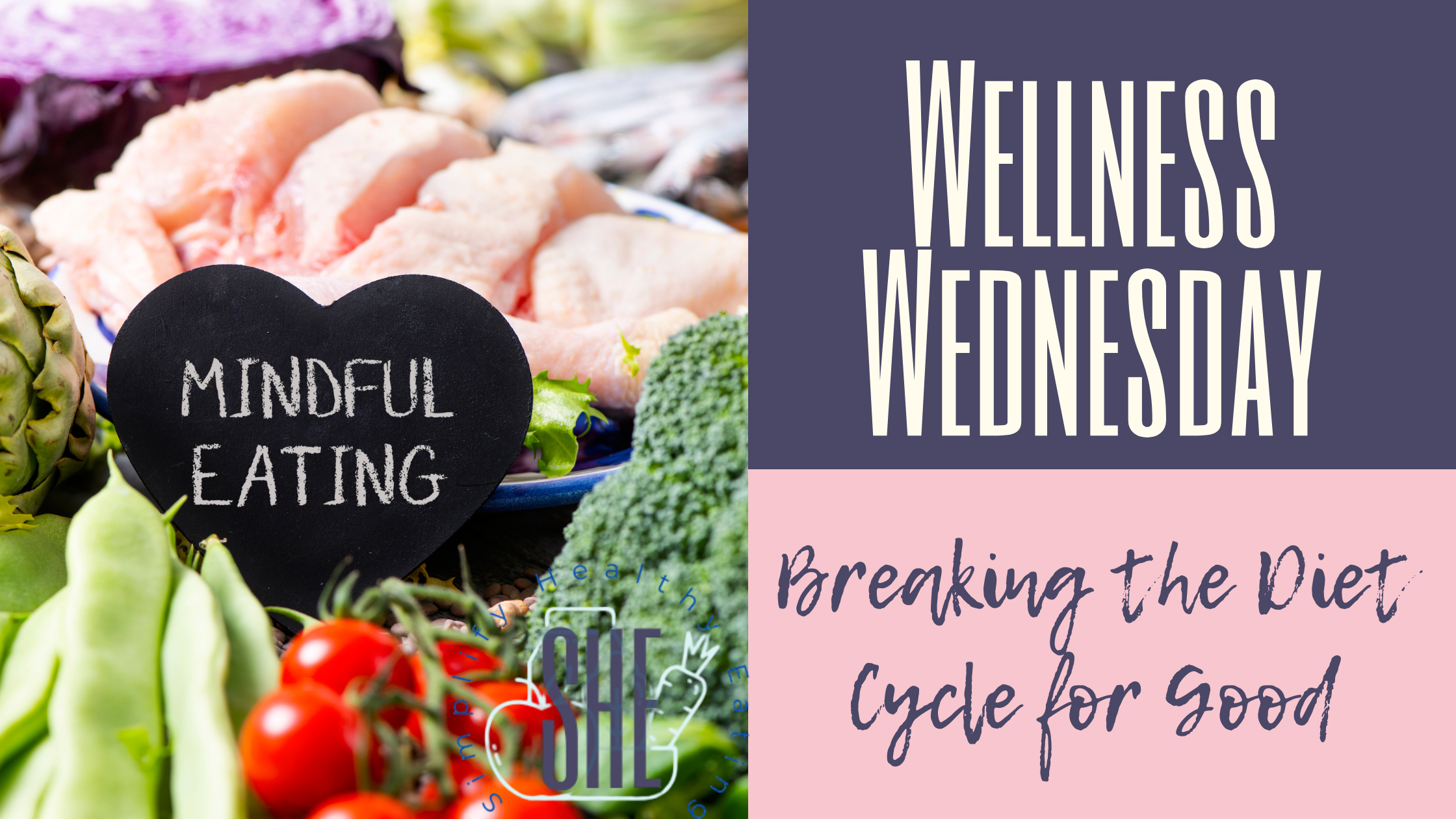
💫 Wellness Wednesday: Breaking the Diet Cycle for Good
If you’ve ever felt trapped in the endless cycle of dieting, restriction, and guilt — you’re not alone. This week, let’s talk about how to finally break free and reclaim peace with food and your body.
If you’ve ever felt trapped in the endless cycle of dieting, restriction, and guilt — you’re not alone. This week, let’s talk about how to finally break free and reclaim peace with food and your body.
🌿 Reflect ✨
The diet cycle thrives on fear — fear of gaining weight, fear of judgment, fear of losing control. But control doesn’t equal health; connection does. When you stop labeling foods as forbidden and start listening to your body’s needs, you heal the very relationship the diet cycle damages.
🌸 Reset 💖
Breaking the cycle isn’t about giving up discipline; it’s about redefining it. Discipline becomes devotion — a loving commitment to nourish yourself with awareness, balance, and grace. Real health is about harmony, not perfection.
💫 Takeaway 🌿
This week, give yourself permission to eat, rest, and enjoy without guilt. Freedom begins the moment you decide to trust your body more than diet culture.
✨ Explore More
For wellness guides and mindset journals, explore our FREEBIES section. Browse the store for affordable resources that help you heal your relationship with food and live empowered every day.

🌿 Monday Mindset: 5 Easy Tips for Mindful Eating
Eating mindfully means listening to what your body truly needs, instead of rushing through meals or letting guilt take the wheel. It’s an act of self-respect — and a form of spiritual wellness that says, “I honor my body as the vessel carrying my purpose.”
A new week brings another chance to slow down, breathe, and reconnect with your body.
Mindful eating isn’t about restriction or perfection — it’s about presence. When we approach food with gratitude, curiosity, and grace, we shift from “diet mode” to divine nourishment.
Eating mindfully means listening to what your body truly needs, instead of rushing through meals or letting guilt take the wheel. It’s an act of self-respect — and a form of spiritual wellness that says, “I honor my body as the vessel carrying my purpose.”
🌸 Reflect ✨
When was the last time you truly tasted your food? Felt gratitude for it? Or paused to notice how it made you feel afterward?
We live in such a distracted world that meals often happen between meetings, errands, or scrolling. But each bite is an invitation to return to presence.
Here are five simple tips to bring mindfulness to your plate — one meal at a time:
Pause before you eat.
Take a deep breath. Express gratitude for the nourishment before you. This small act centers your spirit and signals your body to relax.Check in with your hunger cues.
Are you truly hungry, or are you bored, stressed, or tired? Awareness helps you build a better relationship with your body’s wisdom.Eat without distractions.
Put away your phone, turn off the TV, and sit with your food. Presence transforms even the simplest meal into self-care.Savor each bite.
Notice the texture, flavor, and aroma. Slow down. Your body digests better when your mind isn’t in a hurry.Reflect afterward.
Ask yourself: How do I feel? Energized, grounded, sluggish, satisfied? This helps you choose foods that honor your well-being instead of punishing it.
🌿 Reset 💖
Mindful eating is less about what’s on your plate and more about how you receive it.
It’s about releasing shame, quieting comparison, and remembering that your worth isn’t defined by calories or carbs.
This week, let eating become an act of prayer — a moment to tune in and treat yourself with compassion. Food is fuel, but it’s also connection: to your body, your purpose, and the present moment.
When you eat with intention, you’ll start to crave more of what truly nourishes you — joy, peace, balance, and authenticity.
🌸 Takeaway 💫
Your plate is a reflection of your pace. Slow down enough to notice the beauty in every bite. Let go of judgment and replace it with gratitude.
Wellness isn’t found in a trend or a cleanse — it’s found in how you treat yourself day to day.
Choose mindfulness. Choose presence. Choose to nourish yourself with love this week.
✨ Explore More
Looking for more tools to simplify healthy eating and strengthen your wellness journey?
Explore our FREEBIES⬆️ section for meal guides, journals, and mindset resources.
Then, check out our store for low-cost digital products that help you eat well, heal naturally, and live empowered.

💖 Wellness Wednesday: Food Guilt is Stealing Your Joy
Your relationship with food should be one of peace, not punishment. Yet for so many of us, guilt sneaks in — every time we enjoy dessert, skip a salad, or crave something comforting. This week, let’s talk about reclaiming your joy from food guilt.
Your relationship with food should be one of peace, not punishment. Yet for so many of us, guilt sneaks in — every time we enjoy dessert, skip a salad, or crave something comforting. This week, let’s talk about reclaiming your joy from food guilt.
🌿 Reflect ✨
Food is not moral. It’s not good or bad, right or wrong — it’s nourishment, connection, and culture. Labeling food with guilt-based language keeps us stuck in cycles of shame and restriction. The truth is, you are not broken for enjoying food that brings comfort or pleasure. You’re human.
🌸 Reset 💖
When we eat with guilt, we disconnect from the body’s signals. But when we eat with curiosity, we reconnect with balance. Instead of asking, 'Did I eat perfectly today?' try asking, 'What does my body need right now?' That shift from judgment to awareness changes everything.
💫 Takeaway 🌿
You deserve to eat without shame. Food is meant to bring pleasure, energy, and gratitude — not anxiety. This week, choose curiosity over criticism. Every meal is a chance to practice self-compassion and joy.
✨ Explore More
Explore our FREEBIES section for mindset guides and healthy meal resources that help you build a peaceful relationship with food. Browse our store for affordable anti-inflammatory meal plans and journaling tools.

🧠 Wellness Wednesday: Understanding Cortisol – Friend or Foe?
You’re not “too emotional.” You’re not “too tired for no reason.” You might just be dealing with an out-of-whack cortisol curve.
Balance your stress. Fuel your body. Empower your mindset.
You’re not broken—you’re building.
When it comes to stress, we love to blame one little hormone: cortisol.
But here’s the truth—cortisol isn’t your enemy. In fact, your body needs it. So instead of trying to “cut it out,” what if we focused on balancing it?
Let’s break it down so you can stop fearing cortisol—and start managing it like a wellness boss.
💡 What Is Cortisol, Really?
Cortisol is your body’s primary stress hormone, but it also plays key roles in your survival and daily function. Think of it as your internal alarm clock, energy manager, and inflammation regulator.
Here’s what cortisol does right when it’s in balance:
Wakes you up and helps you feel alert in the morning
Regulates your blood pressure
Helps manage inflammation
Mobilizes energy for workouts or emergencies
Supports your immune response to perceived threats
👉🏽 Bottom line? Cortisol keeps you alive and functioning.
🚨 So When Does It Become a Problem?
The issue isn't cortisol itself—it's when your body keeps pumping it out all day, every day, even when there’s no real threat.
Whether it’s from:
constant deadlines
poor sleep
processed foods
overtraining
or unhealed trauma...
…chronic cortisol elevation can wreak havoc on your health.
Just like salt in cooking:
The right amount enhances the flavor of your life. But too much? It ruins the dish.
⚖️ Cortisol in Balance vs. Out of Whack
✅ When balanced:
Supports metabolism
Helps regulate inflammation
Boosts energy when needed
❌ When chronically elevated:
Disrupts sleep patterns
Promotes abdominal fat storage
Compromises immune function
It’s not about cutting cortisol out—it’s about creating a rhythm that supports your body’s natural cycles. And sis, you can absolutely do that.
🔄 How to Support Healthy Cortisol Levels (Naturally)
Here’s how to help your body regulate cortisol without extremes:
🧘🏽♀️ Practice daily mindfulness or journaling
🍽️ Fuel with anti-inflammatory meals and skip ultra-processed foods
🛌 Prioritize deep sleep and keep your bedtime consistent
🌿 Try adaptogens like ashwagandha, rhodiola, or holy basil (start with one!)
🚶🏽♀️ Move your body—but skip the overtraining
🌿 Tap Into Your Free Wellness Tools Right Here:
🎯 FREE 5-Day Relentless Mindset Challenge
Reset your mental habits. Rewire your response to stress.
🥗 FREE 3-Day Anti-Inflammatory Meal Plan
Start eating to calm inflammation, stabilize blood sugar, and support hormone balance.
👩🏽💻 Explore Our Wellness Store
Grab the full 30-Day Anti-Inflammatory Meal Plan, meal plan memberships, and mindset journals to help you stay consistent and build real resilience—from the inside out.
✨ Final Thought
You’re not “too emotional.” You’re not “too tired for no reason.” You might just be dealing with an out-of-whack cortisol curve.
Balance your stress. Fuel your body. Empower your mindset.
You’re not broken—you’re building.