

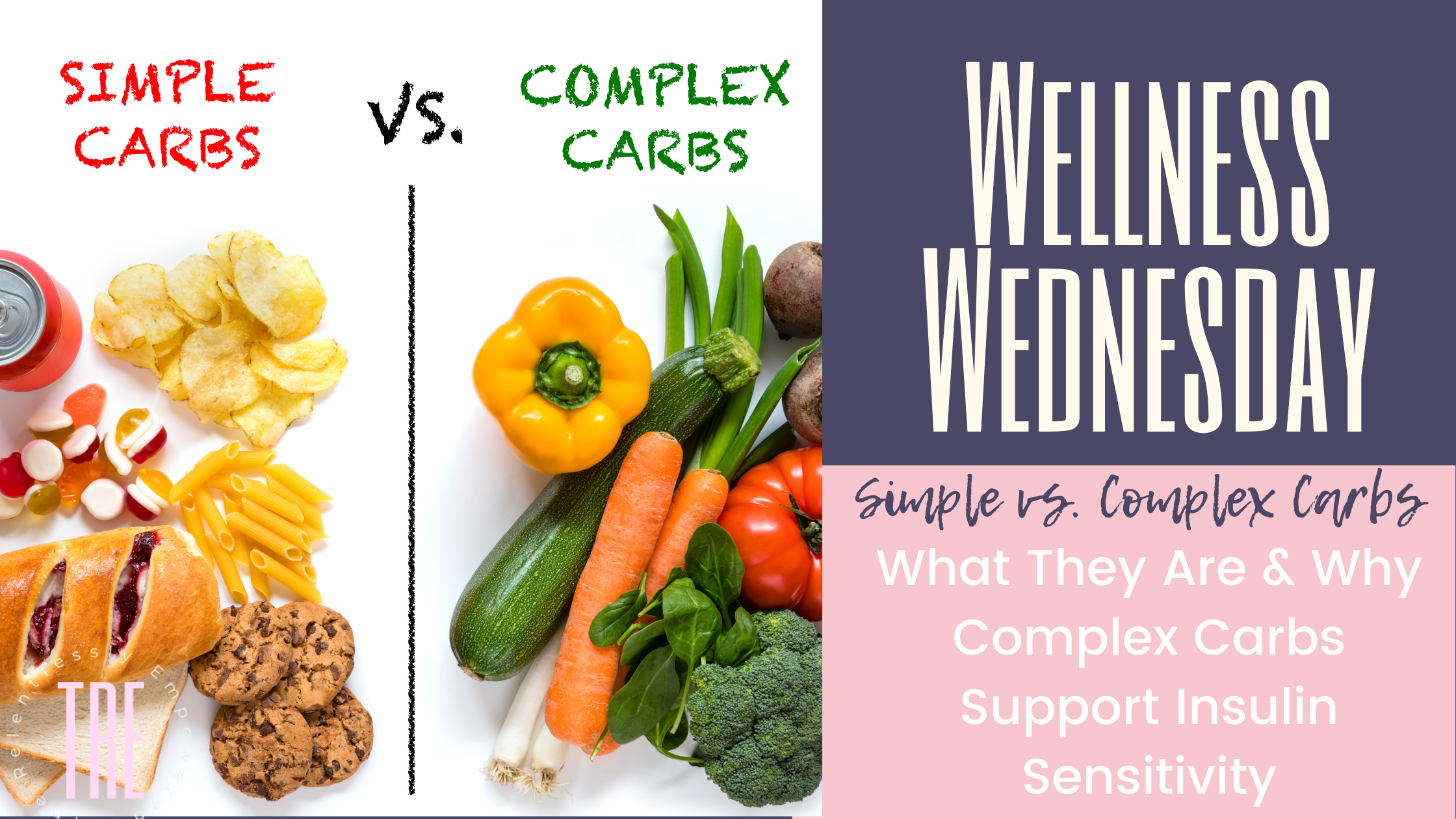
Simple vs. Complex Carbs — What They Are & Why Complex Carbs Support Insulin Sensitivity
Carbohydrates have gotten a bad reputation.
They’re often blamed for blood sugar issues, weight gain, fatigue, and cravings — but the truth is, not all carbs behave the same way in the body.
Understanding the difference between simple carbs and complex carbs can completely change how you fuel your body, support insulin sensitivity, and experience steady energy throughout the day.
Carbohydrates have gotten a bad reputation.
They’re often blamed for blood sugar issues, weight gain, fatigue, and cravings — but the truth is, not all carbs behave the same way in the body.
Understanding the difference between simple carbs and complex carbs can completely change how you fuel your body, support insulin sensitivity, and experience steady energy throughout the day.
This isn’t about cutting carbs — it’s about choosing carbs that work with your body instead of against it.
What Are Simple Carbs?
Simple carbohydrates break down quickly in the body. That fast digestion leads to rapid blood sugar spikes, followed by equally fast crashes.
They can feel energizing at first — but the energy doesn’t last.
Common Sources of Simple Carbs:
Table sugar
White bread and white pasta
Pastries and baked goods
Juice and sweetened drinks
Because they digest so rapidly, simple carbs often trigger:
Sharp insulin release
Increased cravings
Energy dips
Hunger returning soon after eating
👉 Fast spikes = more insulin, more cravings, and more crashes.
This doesn’t mean these foods are “bad” — but when they make up the bulk of your carbohydrate intake, they can strain insulin signaling over time.
What Are Complex Carbs?
Complex carbohydrates contain fiber, which slows digestion and allows glucose to enter the bloodstream gradually.
That slower release is exactly what supports blood sugar stability and insulin sensitivity.
Common Sources of Complex Carbs:
Whole grains (quinoa, oats, brown rice)
Beans and lentils
Sweet potatoes
Fruits like berries and apples
Vegetables
Instead of an energy surge followed by a crash, complex carbs provide:
Slow, steady energy
Fewer blood sugar spikes
Better appetite control
Longer-lasting fullness
👉 Steady release = better insulin response, fewer cravings, and sustained energy.
Why Complex Carbs Support Insulin Sensitivity
Insulin sensitivity refers to how effectively your cells respond to insulin. When cells respond well, glucose moves efficiently from the bloodstream into muscles and tissues where it can be used for energy.
Fiber-rich complex carbs help by:
Slowing glucose absorption
Reducing insulin spikes
Supporting gut health (which plays a major role in blood sugar regulation)
Improving metabolic flexibility
Over time, this supports:
More balanced hormones
Improved energy levels
Reduced cravings
Better long-term metabolic health
Think of complex carbs as insulin-supporting superfoods — not something to fear, but something to intentionally include.
Simple vs. Complex: The Big Picture
This isn’t about perfection or elimination.
It’s about awareness.
When simple carbs dominate the plate without fiber, protein, or fat, the body has to work harder to manage blood sugar. But when complex carbs are prioritized — especially when paired with protein and healthy fats — the body experiences calm, steady fuel.
A Helpful Reframe:
Not “good carbs” vs. “bad carbs”
But fast carbs vs. slow, steady carbs
And most days, your metabolism will thank you for choosing slow and steady.
How to Make Complex Carbs Work Even Better
You don’t need to overhaul your entire diet. Start with small, practical shifts:
Swap white grains for whole grains when possible
Add beans or lentils to meals you already eat
Pair fruit with protein or fat
Include vegetables at every meal
Focus on fiber first — not restriction
Consistency beats intensity every time.
Nourishing Your Body Without Fear
Carbohydrates are not the enemy.
The goal isn’t elimination — it’s education, balance, and intention.
When you understand how different carbs affect blood sugar and insulin, you’re empowered to make choices that support your energy, metabolism, and long-term health — without guilt or extremes.
🌿 Wellness Wednesday CTA
If you want simple, realistic ways to build balanced meals and support blood sugar without overwhelm:
👉 Explore the Simplify Healthy Eating tab on our website for FREE and low-cost resources designed to help you:
Understand food without fear
Build meals that support insulin sensitivity
Create steady energy throughout the day
Eat in a way that fits real life
Because healthy eating should feel supportive, not stressful.