
Sugar Cravings 101: What Your Brain Is Really Trying to Tell You
Ever feel like your brain suddenly screams for sugar?
One minute you’re fine…
and the next minute you’re standing in the kitchen searching for something sweet.
Cookies.
Candy.
Chocolate.
Ice cream.
Cereal.
Pastries.
And sometimes the craving feels so intense that it almost feels impossible to resist.
Why We Crave Sugar
Sugar is incredibly rewarding to the brain.
In fact, your brain LOVES quick energy.
When you eat sugar, your body rapidly converts it into glucose—the body’s preferred fast fuel source.
That quick burst of energy can temporarily make you feel:
energized
comforted
happier
calmer
more alert
And here’s why:
Sugar stimulates the release of “feel-good” chemicals like dopamine.
Dopamine is connected to:
pleasure
reward
motivation
habit formation
This is why sugary foods can feel emotionally comforting.
Your brain remembers:
“That felt good. Let’s do it again.”
Over time, repeated exposure creates stronger habit loops.
That’s why cravings can start feeling automatic.
Sugar Cravings Are Often About More Than Sugar
One of the biggest misconceptions is that cravings always mean:
“I just want sweets.”
But cravings can actually signal MANY different things happening inside the body.
Sometimes the craving isn’t even about sugar itself.
What Your Sugar Craving Might Really Mean
1. You’re Thirsty
Dehydration is one of the most overlooked craving triggers.
Your body can sometimes confuse thirst signals with hunger or sugar cravings.
This is why many cravings improve after:
drinking water
adding electrolytes
hydrating consistently throughout the day
Sometimes your body isn’t asking for cookies.
It’s asking for hydration.
2. You Need Rest
Poor sleep dramatically affects hunger hormones.
When you’re sleep deprived:
ghrelin (the hunger hormone) rises
leptin (the fullness hormone) decreases
Your body starts searching for QUICK energy.
And sugar provides fast fuel.
This is why exhaustion often increases cravings for:
sweets
carbs
processed snacks
caffeine
Your body is trying to compensate for low energy.
3. You’re Stressed
Stress changes everything.
When cortisol rises, the body often craves:
sugar
comfort foods
fast energy
highly palatable foods
Stress eating isn’t weakness.
It’s biology.
Your nervous system is looking for temporary relief.
Unfortunately, sugar often creates a short-term emotional “lift” followed by:
crashes
fatigue
more cravings
emotional eating cycles
4. You’re Actually Hungry
Sometimes cravings happen because you simply haven’t eaten enough.
Especially protein.
Or enough balanced meals.
When meals lack:
protein
fiber
healthy fats
blood sugar becomes less stable.
This can trigger:
energy crashes
irritability
intense cravings
overeating later
Many people try to “be good” all day…
then end up bingeing at night because their body is under-fueled.
5. You’re Running on Autopilot
Some cravings are habit-driven.
Not hunger-driven.
For example:
dessert every night
snacks during TV time
sweets during stressful work breaks
stopping for coffee and pastries every morning
The brain builds associations between:
places
emotions
routines
people
environments
Eventually the craving becomes automatic.
Not because your body NEEDS sugar…
but because your brain expects it.
Why Sugar Cravings Feel So Intense
Many people blame themselves for cravings.
But cravings are often rooted in:
biology
blood sugar regulation
stress responses
nervous system patterns
dopamine loops
habit reinforcement
That’s why “just use willpower” rarely works long term.
You can’t out-willpower a stressed nervous system, poor sleep, dehydration, or unstable blood sugar forever.
Real change comes from understanding the ROOT of the craving.
What to Do the Next Time a Craving Hits
Instead of immediately reacting…
pause first.
This simple pause creates awareness.
And awareness changes everything.
Step 1: Drink Water First
Before grabbing something sweet:
drink water.
Seriously.
Hydration helps more than most people realize.
Try:
💧 12–16 oz of water
💧 adding electrolytes
💧 sipping consistently throughout the day
You may notice the craving fades significantly.
Step 2: Eat a Balanced Snack
If you’re genuinely hungry, don’t ignore it.
But instead of reaching for pure sugar…
try pairing:
protein
fiber
healthy fats
Examples:
🥚 boiled eggs + fruit
🍎 apple + peanut butter
🥜 nuts + berries
🥣 Greek yogurt + chia seeds
🥕 veggies + hummus
Balanced snacks help stabilize energy instead of creating another blood sugar roller coaster.
Step 3: Take 3 Deep Breaths
This sounds simple…
but it works.
Deep breathing helps calm the nervous system.
Stress-driven cravings often become less intense when the body shifts out of “fight or flight” mode.
Your body may not need sugar.
It may need regulation.
Step 4: Wait 15 Minutes
Most cravings rise and fall like waves.
Not every craving needs immediate action.
Give yourself:
⏱️ 10–15 minutes
Sometimes the urge passes naturally once:
stress decreases
hydration improves
your nervous system settles
your attention shifts
Step 5: Ask Yourself What Triggered It
This is HUGE.
Pause and ask:
Am I stressed?
Am I tired?
Am I bored?
Did I skip meals?
Is this emotional?
Is this habit?
Am I actually hungry?
This question builds self-awareness instead of shame.
And awareness is how patterns begin to change.
You Don’t Need Perfection
Let’s be clear:
Having sugar sometimes is not failure.
Enjoying dessert does not mean you “blew it.”
The goal isn’t obsession.
The goal is understanding.
Because when you understand:
your triggers
your patterns
your biology
your habits
you stop feeling controlled by cravings.
And that changes your relationship with food completely.
Final Encouragement
Sugar cravings are incredibly common.
Especially in a world full of:
stress
sleep deprivation
processed foods
constant stimulation
emotional overload
So give yourself grace.
But also give yourself knowledge.
Because when you understand what your body is trying to communicate…
you can respond with intention instead of reacting automatically.
💛 Want support creating balanced meals and sustainable habits that help reduce cravings naturally?
Explore the wellness resources, meal plans, and healthy lifestyle tools available HERE.
5 Surprising Sugar Craving Triggers (That Have Nothing To Do With “Lack of Willpower”)
If you constantly crave sugar…
you are not weak.
You are not “addicted to junk food.”
And you definitely don’t just “need more discipline.”
Most sugar cravings are actually signals from the body.
Sometimes your body is asking for hydration.
Sometimes it’s asking for nourishment.
Sometimes it’s asking for rest.
And sometimes… your hormones, habits, and blood sugar patterns are secretly driving the cravings without you even realizing it.
Let’s break down 5 surprising sugar craving triggers that many women—especially women over 35—experience regularly.
If you constantly crave sugar…
you are not weak.
You are not “addicted to junk food.”
And you definitely don’t just “need more discipline.”
Most sugar cravings are actually signals from the body.
Sometimes your body is asking for hydration.
Sometimes it’s asking for nourishment.
Sometimes it’s asking for rest.
And sometimes… your hormones, habits, and blood sugar patterns are secretly driving the cravings without you even realizing it.
Let’s break down 5 surprising sugar craving triggers that many women—especially women over 35—experience regularly.
#1 Dehydration
One of the most overlooked causes of sugar cravings is simple dehydration.
Your body can sometimes confuse thirst with hunger because the signals come from similar areas of the brain.
That means:
you think you want cookies
your brain says “eat something sweet”
but your body may actually just need water
This is especially common:
in the afternoon
after coffee
after workouts
during stressful workdays
when you’re busy and forget to drink water
Before grabbing sweets, try this:
✅ Drink about 500mL (16–20 oz) of water
✅ Wait 10–15 minutes
✅ Reassess the craving
You may be surprised how often the craving disappears.
Hydration also supports:
digestion
metabolism
energy production
blood sugar regulation
appetite control
Even mild dehydration can increase fatigue—which often makes your brain look for quick energy from sugar.
#2 Artificial Sweeteners
This one surprises many people.
“Diet” foods and zero-calorie sweeteners can sometimes increase cravings instead of reducing them.
Why?
Because your brain tastes sweetness and expects energy (calories) to follow.
But when calories never arrive, your brain can become confused and continue seeking satisfaction.
This can lead to:
stronger cravings later
overeating
more snacking
feeling “never satisfied”
For some people, artificial sweeteners keep the “sweet taste habit” activated all day long.
That doesn’t mean everyone must avoid them completely.
But if you notice:
constant sweet cravings
grazing behavior
increased appetite after diet drinks
intense nighttime cravings
…it may be worth evaluating how many artificially sweetened products you consume daily.
Sometimes reducing overall sweetness—not just sugar—helps retrain the palate and stabilize cravings.
#3 Skipping Meals
Many women trying to lose weight accidentally trigger cravings by under-eating during the day.
Skipping meals may seem like a shortcut to fat loss…
…but it often backfires.
When blood sugar drops too low:
energy crashes
cortisol rises
the body starts searching for quick fuel
And guess what the brain wants fastest?
Sugar.
This creates the classic cycle:
🚫 skip breakfast
🚫 ignore hunger
🚫 survive on coffee
⬇️ blood sugar crash
🍪 intense cravings later
🍕 overeating at night
Your body is trying to protect you from low energy—not sabotage you.
One of the most powerful ways to reduce cravings is:
✅ eating balanced meals consistently
Focus on meals that include:
protein
fiber
healthy fats
This combination helps stabilize blood sugar and keeps you fuller longer.
For many women, eating within 1–2 hours of waking dramatically improves energy and reduces cravings later in the day.
#4 Hormonal Fluctuations
If your cravings intensify before your cycle…
that is not imaginary.
Hormonal shifts—especially changes in estrogen and serotonin—can increase cravings for carbohydrates and sugar.
This is biochemical.
Not weakness.
As serotonin levels shift before menstruation, the brain often seeks quick carbohydrates to temporarily boost mood and energy.
That’s why many women crave:
chocolate
sweets
chips
comfort foods
during certain phases of their cycle.
The goal isn’t perfection.
The goal is support.
Helpful strategies may include:
✅ prioritizing sleep
✅ stabilizing blood sugar
✅ eating enough protein
✅ increasing magnesium-rich foods
Magnesium-rich foods include:
leafy greens
pumpkin seeds
avocado
dark chocolate
almonds
When you understand your body, you stop fighting it—and start supporting it.
#5 Nutrient Deficiencies
Sometimes cravings are linked to what your body may be lacking.
Low intake of certain minerals—especially magnesium and chromium—may impact blood sugar regulation and appetite control.
Highly processed diets often leave people:
undernourished
low in micronutrients
constantly hungry
craving quick energy
Your body may not need more sugar.
It may need more nourishment.
That’s why whole foods matter so much.
Focus on:
🥗 leafy greens
🥑 healthy fats
🍳 protein
🫐 fiber-rich foods
🥜 mineral-rich foods
The more nutritionally balanced your meals become, the more stable your cravings often become too.
The Bigger Truth About Sugar Cravings
Sugar cravings are usually not just about sugar.
They are often connected to:
stress
blood sugar instability
sleep deprivation
hormones
dehydration
habits
emotional patterns
undernourishment
And when you address the root cause…
everything changes.
You stop feeling out of control around food.
You stop relying on willpower.
And you begin creating a healthier relationship with eating that actually feels sustainable.
Simple Ways to Reduce Sugar Cravings Naturally
Here are a few practical steps that can help immediately:
✅ Drink more water
✅ Stop skipping meals
✅ Prioritize protein at breakfast
✅ Build balanced meals
✅ Sleep more consistently
✅ Reduce ultra-processed foods
✅ Manage stress levels
✅ Increase fiber intake
✅ Eat enough healthy fats
✅ Become aware of emotional eating triggers
Small consistent habits create massive long-term change.
Final Encouragement
If you’ve been struggling with cravings lately…
your body may simply be trying to tell you something.
Listen to it with compassion instead of criticism.
Sustainable wellness isn’t built through restriction.
It’s built through understanding.
💛 Want help building balanced meals that naturally reduce cravings and support fat loss after 35?
Explore the FREE wellness resources and meal planning tools at here.
🌾 Monday Mindset: Partnering With Your Body — Learning to Trust Hunger Cues
Your body is always communicating. The challenge is, most of us have been conditioned to ignore it. Between diet culture, hustle culture, and constant noise, we’ve forgotten one sacred truth: your body already knows what it needs.
It’s a new week — a new opportunity to listen inward.
Your body is always communicating. The challenge is, most of us have been conditioned to ignore it. Between diet culture, hustle culture, and constant noise, we’ve forgotten one sacred truth: your body already knows what it needs.
Trusting your hunger cues isn’t a sign of weakness — it’s a return to wisdom. When you learn to partner with your body instead of control it, you experience freedom, balance, and peace with food again.
🌿 Reflect ✨
How many times have you felt hungry and second-guessed yourself?
Or told yourself, “I just ate, I shouldn’t be hungry”?
The truth is, hunger isn’t the enemy. It’s simply feedback — your body’s gentle reminder that energy is needed to function, think, and feel your best.
When we ignore hunger cues, we send the body mixed messages: that it can’t trust us to meet its needs. Over time, that leads to energy crashes, emotional eating, and disconnection from what we truly need.
Here’s how to rebuild that trust:
Recognize your hunger signals.
Hunger doesn’t always roar. Sometimes it’s a whisper — lightheadedness, fatigue, or irritability. Tune in early, not when you’re desperate.Ditch the guilt.
You’re allowed to eat when you’re hungry. Period. The body isn’t a clock; it’s a living system responding to your life and needs.Respond with nourishment, not punishment.
Choose foods that both satisfy and sustain you. Meals that include protein, fiber, and healthy fats help balance hormones and hunger.Stay curious.
Ask: “What is my body trying to tell me?” Is it physical hunger, or emotional hunger? Both deserve compassion — just different care.Celebrate your progress.
Reconnection takes time. Every time you choose to honor hunger instead of shame it, you’re healing your relationship with your body.
🌸 Reset 💖
Learning to trust your hunger is learning to trust yourself.
This week, shift from fear to faith — in your body’s design, your intuition, and your ability to make choices rooted in love, not control.
When you start listening instead of restricting, you’ll find balance becomes natural. Energy improves. Cravings fade. Peace replaces obsession.
It’s not about discipline — it’s about partnership.
💫 Takeaway 🌿
You were never meant to battle your body. You were meant to care for it.
When you slow down and listen, you’ll realize your body has always been on your side — waiting for you to trust it again.
So today, honor your hunger. Eat when you’re hungry. Rest when you’re tired.
It’s not laziness — it’s alignment.
✨ Explore More
Want more faith-inspired tools to simplify your nutrition and reconnect with your body?
Check out our FREE 3-Day Anti-Inflammatory Meal Plan and access our other FREEBIES⬆️— filled with practical guides, meal plans, and mindset journals — and browse our store for affordable resources that help you live empowered, one choice at a time.

🌿 Wellness Wednesday: Physical vs Emotional Hunger — Understanding Your Body’s Signals
Your body is always speaking; the question is, are you listening? This week, we’re learning how to tell the difference between physical and emotional hunger — and how both deserve compassion, not criticism.
Your body is always speaking; the question is, are you listening? This week, we’re learning how to tell the difference between physical and emotional hunger — and how both deserve compassion, not criticism.
🌿 Reflect ✨
Physical hunger builds gradually and comes with physical signs like a growling stomach, low energy, or lack of focus. Emotional hunger often appears suddenly, triggered by stress, sadness, or boredom. Both are valid experiences — but they ask for different kinds of care.
🌸 Reset 💖
When emotional hunger arises, pause and ask: 'What am I really hungry for right now?' It might be rest, connection, comfort, or creativity. When it’s physical hunger, respond with balanced nourishment — protein, fiber, and hydration. Listening deeply helps you meet real needs with real solutions.
💫 Takeaway 🌿
Your body’s cues are not inconveniences — they are invitations to reconnect. When you honor them with awareness and grace, you strengthen both your physical health and your emotional resilience.
✨ Explore More
Access our FREEBIES section filled with mindful eating guides and healthy living resources. Explore the store for practical, faith-inspired tools to support your wellness journey.

🍎 Recipe of the Day: Apple Fennel Salad with Citrus Dressing
Light, crisp, and refreshing — this Apple Fennel Salad is the taste of balance in a bowl. It’s sweet, tangy, and energizing, reminding us that health doesn’t have to be complicated to be beautiful.
Light, crisp, and refreshing — this Apple Fennel Salad is the taste of balance in a bowl. It’s sweet, tangy, and energizing, reminding us that health doesn’t have to be complicated to be beautiful.

🌿 Reflect ✨
So often we look for quick fixes when our bodies crave consistency. Choosing real, whole foods like these isn’t about perfection — it’s about intention. Every forkful offers something your body recognizes and your spirit appreciates.
🌸 Reset 💖
This salad is more than a meal — it’s a gentle reminder to eat from a place of gratitude, not guilt. When you fuel your body with foods that serve you, you’re practicing love in action.
💫 Takeaway 🌿
Your plate reflects your priorities — and this week, let nourishment be one of them. When you eat mindfully, you’re doing more than feeding yourself — you’re reminding your body that it’s worthy of care, peace, and health.
✨ Explore More
Explore the FREEBIES section for easy meal prep tools and mindset guides or visit our store for low-cost digital resources that simplify your healthy eating journey.

🌿 Wellness Wednesday: Do’s & Don’ts to Reduce Feeling Bloated
Bloating can be uncomfortable, frustrating, and sometimes even painful. The good news? You don’t have to accept it as part of daily life. By making small changes to how and when you eat, you can give your digestive system the support it needs to work smoothly. Let’s break down a few simple do’s and don’ts that can make all the difference in reducing bloating and improving gut health.
Bloating can be uncomfortable, frustrating, and sometimes even painful. The good news? You don’t have to accept it as part of daily life. By making small changes to how and when you eat, you can give your digestive system the support it needs to work smoothly. Let’s break down a few simple do’s and don’ts that can make all the difference in reducing bloating and improving gut health.
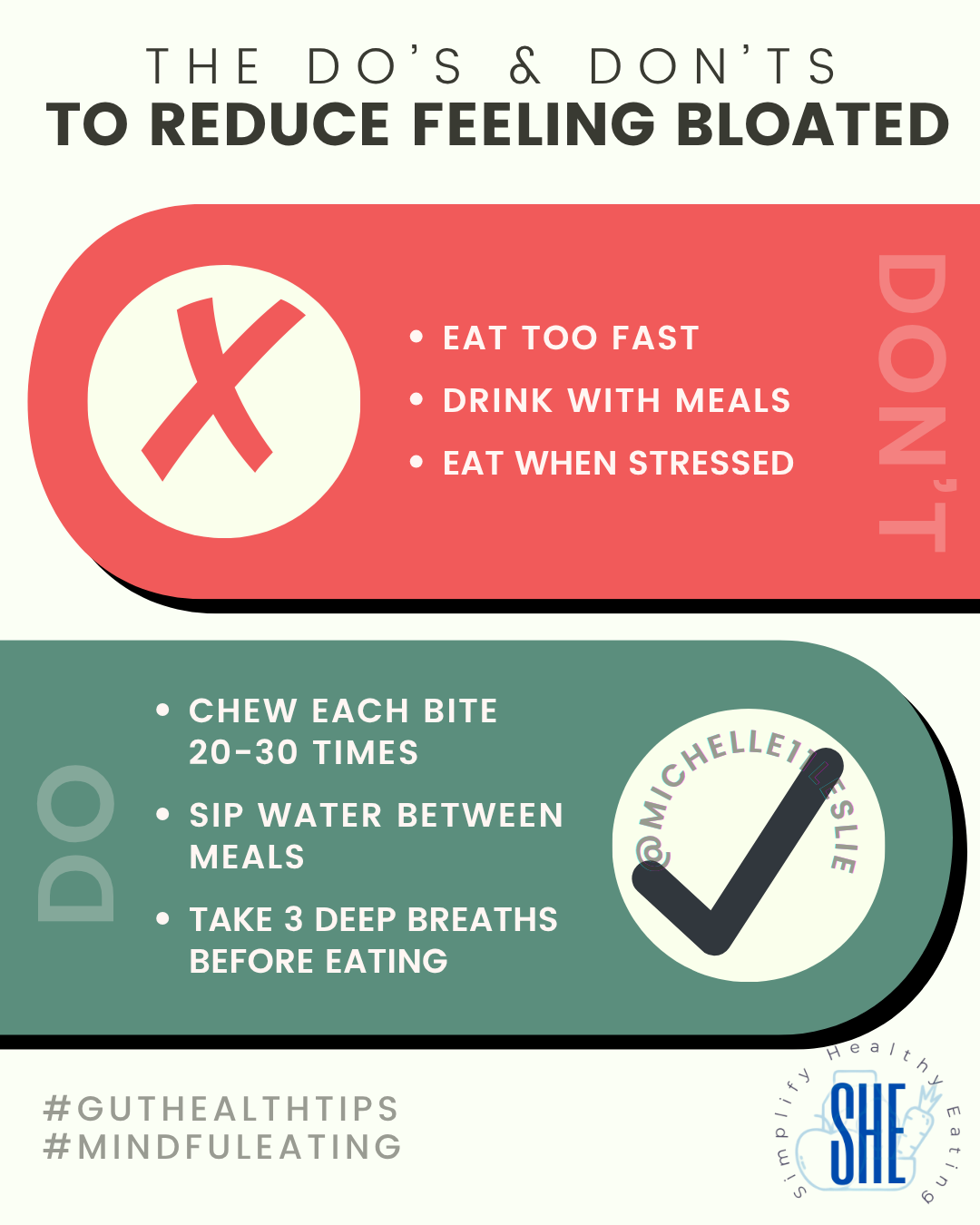
Do’s & don’ts for bloating: chew food, sip water between meals, breathe before eating; avoid eating fast or stressed.
🚫 Don’ts: Habits That Trigger Bloating
1. Eating Too Fast
When you rush through meals, you tend to swallow air along with your food. This air gets trapped in your digestive tract and can lead to uncomfortable bloating.
2. Drinking With Meals
Sipping water or other drinks during meals can dilute stomach acid, making digestion less efficient. This can leave you feeling heavy and bloated after eating.
3. Eating When Stressed
Stress puts your body in “fight or flight” mode, not “rest and digest.” Eating while anxious or overwhelmed can slow down digestion and lead to discomfort.
✅ Do’s: Habits That Soothe and Support Digestion
1. Chew Each Bite 20–30 Times
Chewing your food thoroughly breaks it down mechanically and mixes it with digestive enzymes in your saliva. This makes it easier for your stomach to process food and reduces bloating.
2. Sip Water Between Meals
Hydration is essential for gut health, but spacing out your water intake helps digestion. Aim to sip water between meals rather than gulping it down while you eat.
3. Take 3 Deep Breaths Before Eating
A quick mindfulness practice can shift your body into “rest and digest” mode. Taking a few deep breaths before meals calms your nervous system, reduces stress, and helps your body absorb nutrients more effectively.
🌸 Final Thought
Healthy digestion isn’t just about what you eat—it’s also about how you eat. By slowing down, being mindful, and giving your body the space it needs to do its job, you can enjoy meals without the bloat holding you back.
💡 Want more practical gut-health tips and recipes that support digestion? Explore our 30-Day Anti-Inflammatory Meal Plan or join the Simplify Healthy Eating Meal Plan Membership to take the guesswork out of nourishing your body.