

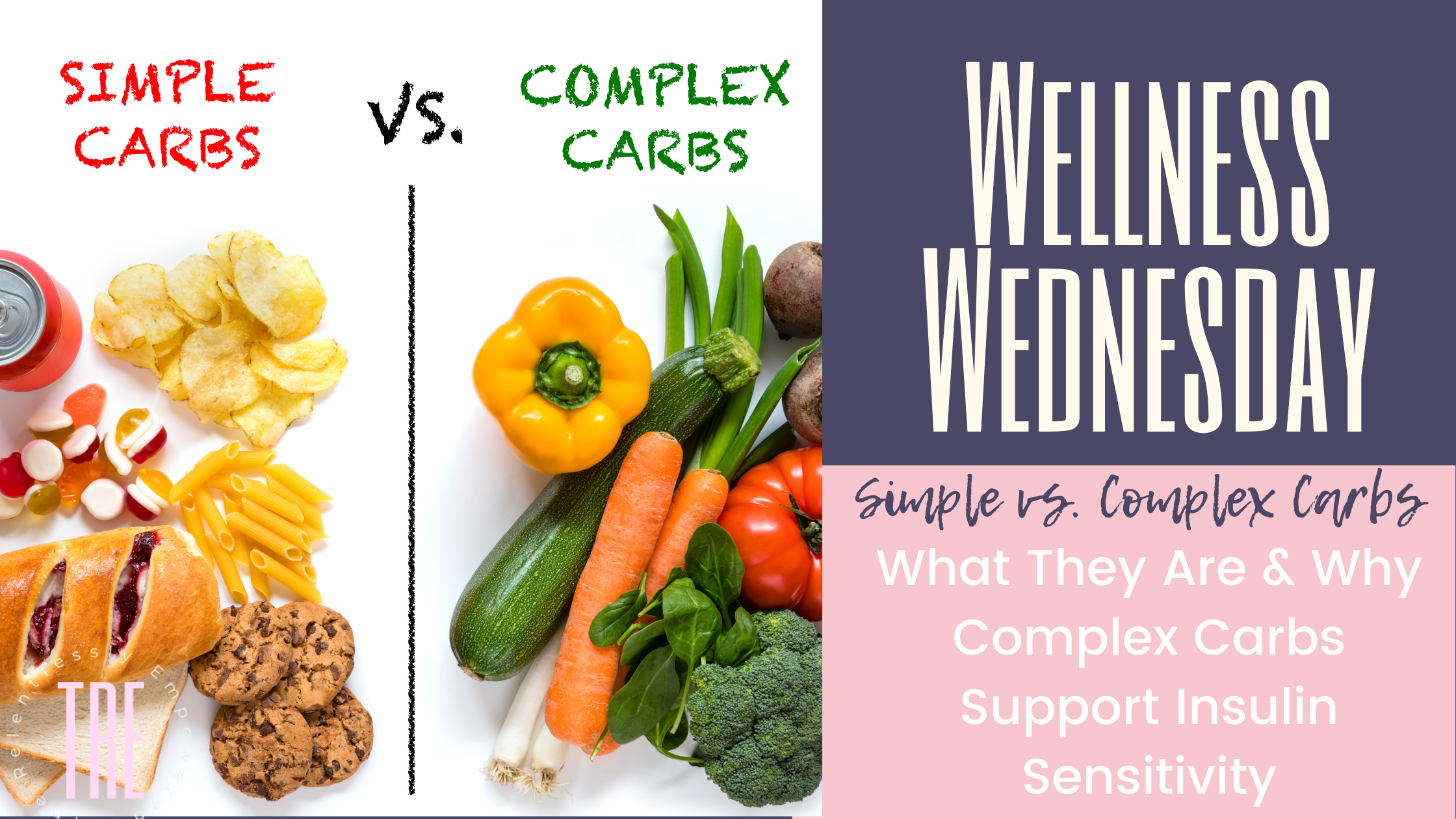
Simple vs. Complex Carbs — What They Are & Why Complex Carbs Support Insulin Sensitivity
Carbohydrates have gotten a bad reputation.
They’re often blamed for blood sugar issues, weight gain, fatigue, and cravings — but the truth is, not all carbs behave the same way in the body.
Understanding the difference between simple carbs and complex carbs can completely change how you fuel your body, support insulin sensitivity, and experience steady energy throughout the day.
Carbohydrates have gotten a bad reputation.
They’re often blamed for blood sugar issues, weight gain, fatigue, and cravings — but the truth is, not all carbs behave the same way in the body.
Understanding the difference between simple carbs and complex carbs can completely change how you fuel your body, support insulin sensitivity, and experience steady energy throughout the day.
This isn’t about cutting carbs — it’s about choosing carbs that work with your body instead of against it.
What Are Simple Carbs?
Simple carbohydrates break down quickly in the body. That fast digestion leads to rapid blood sugar spikes, followed by equally fast crashes.
They can feel energizing at first — but the energy doesn’t last.
Common Sources of Simple Carbs:
Table sugar
White bread and white pasta
Pastries and baked goods
Juice and sweetened drinks
Because they digest so rapidly, simple carbs often trigger:
Sharp insulin release
Increased cravings
Energy dips
Hunger returning soon after eating
👉 Fast spikes = more insulin, more cravings, and more crashes.
This doesn’t mean these foods are “bad” — but when they make up the bulk of your carbohydrate intake, they can strain insulin signaling over time.
What Are Complex Carbs?
Complex carbohydrates contain fiber, which slows digestion and allows glucose to enter the bloodstream gradually.
That slower release is exactly what supports blood sugar stability and insulin sensitivity.
Common Sources of Complex Carbs:
Whole grains (quinoa, oats, brown rice)
Beans and lentils
Sweet potatoes
Fruits like berries and apples
Vegetables
Instead of an energy surge followed by a crash, complex carbs provide:
Slow, steady energy
Fewer blood sugar spikes
Better appetite control
Longer-lasting fullness
👉 Steady release = better insulin response, fewer cravings, and sustained energy.
Why Complex Carbs Support Insulin Sensitivity
Insulin sensitivity refers to how effectively your cells respond to insulin. When cells respond well, glucose moves efficiently from the bloodstream into muscles and tissues where it can be used for energy.
Fiber-rich complex carbs help by:
Slowing glucose absorption
Reducing insulin spikes
Supporting gut health (which plays a major role in blood sugar regulation)
Improving metabolic flexibility
Over time, this supports:
More balanced hormones
Improved energy levels
Reduced cravings
Better long-term metabolic health
Think of complex carbs as insulin-supporting superfoods — not something to fear, but something to intentionally include.
Simple vs. Complex: The Big Picture
This isn’t about perfection or elimination.
It’s about awareness.
When simple carbs dominate the plate without fiber, protein, or fat, the body has to work harder to manage blood sugar. But when complex carbs are prioritized — especially when paired with protein and healthy fats — the body experiences calm, steady fuel.
A Helpful Reframe:
Not “good carbs” vs. “bad carbs”
But fast carbs vs. slow, steady carbs
And most days, your metabolism will thank you for choosing slow and steady.
How to Make Complex Carbs Work Even Better
You don’t need to overhaul your entire diet. Start with small, practical shifts:
Swap white grains for whole grains when possible
Add beans or lentils to meals you already eat
Pair fruit with protein or fat
Include vegetables at every meal
Focus on fiber first — not restriction
Consistency beats intensity every time.
Nourishing Your Body Without Fear
Carbohydrates are not the enemy.
The goal isn’t elimination — it’s education, balance, and intention.
When you understand how different carbs affect blood sugar and insulin, you’re empowered to make choices that support your energy, metabolism, and long-term health — without guilt or extremes.
🌿 Wellness Wednesday CTA
If you want simple, realistic ways to build balanced meals and support blood sugar without overwhelm:
👉 Explore the Simplify Healthy Eating tab on our website for FREE and low-cost resources designed to help you:
Understand food without fear
Build meals that support insulin sensitivity
Create steady energy throughout the day
Eat in a way that fits real life
Because healthy eating should feel supportive, not stressful.

High-Fiber On-the-Go Favorites for Balanced Blood Sugar & Steady Energy
One of the biggest myths in healthy eating is that it has to be complicated.
That if you don’t have time to cook, prep, or plan perfectly, balanced nutrition is out of reach.
But the truth is this: consistent nourishment is built in small, portable choices — especially when fiber is part of the equation.
High-Fiber On-the-Go Favorites for Balanced Blood Sugar & Steady Energy
One of the biggest myths in healthy eating is that it has to be complicated.
That if you don’t have time to cook, prep, or plan perfectly, balanced nutrition is out of reach.
But the truth is this: consistent nourishment is built in small, portable choices — especially when fiber is part of the equation.
Fiber plays a powerful role in blood sugar balance, digestion, fullness, and insulin sensitivity. And when life is busy (which it almost always is), having simple, fiber-rich options on hand can be the difference between steady energy and another crash.
This Wellness Wednesday, we’re highlighting high-fiber, on-the-go favorites that support blood sugar without stress, guilt, or overwhelm.
Because nourishment should travel with you.
Why Fiber Matters for Blood Sugar & Energy
Fiber slows digestion and glucose absorption, which means:
Fewer blood sugar spikes
More stable insulin response
Longer-lasting fullness
Reduced cravings and crashes
When paired with protein or healthy fats, fiber becomes one of the most effective tools for gentle metabolic support — especially for women navigating busy schedules.
Let’s walk through some easy, portable options you can rely on.
1. Fresh Fruit (Apples, Pears, Berries)
Fresh fruit is nature’s original grab-and-go snack.
Apples and pears are rich in soluble fiber, which helps slow sugar absorption, while berries provide fiber plus antioxidants with a lower glycemic impact.
No prep. No mess. No perfection required.
👉 Best tip:
Pair fruit with a protein or fat (nuts, yogurt, nut butter) for even better blood sugar balance.
2. Nuts & Seed Packs (Almonds, Pumpkin Seeds, Pistachios)
Nuts and seeds are shelf-stable, filling, and incredibly supportive for cravings.
They offer:
Fiber
Healthy fats
A small amount of protein
This combination helps prevent quick spikes and keeps hunger at bay longer than carb-only snacks.
👉 Best tip:
Stick to portioned packs or small handfuls to keep energy steady without mindless overeating.
3. Chia or Flax Snack Packs
Chia and flax seeds may be tiny, but they’re metabolic powerhouses.
They absorb liquid, slow digestion, and provide a concentrated source of fiber that supports gut health and blood sugar regulation.
👉 Easy ways to use them:
Sprinkle into yogurt cups
Add to smoothies
Stir into water on the go
Small habit. Big payoff.
4. Single-Serve Popcorn Bags
Popcorn often gets overlooked — but when air-popped or lightly salted, it’s a whole grain with fiber.
It satisfies the desire for crunch without the sugar crash of processed snacks.
👉 Best tip:
Look for minimal ingredients: popcorn, oil, salt. That’s it.
5. High-Fiber Protein Bars
Not all protein bars are created equal — but the right ones can be incredibly helpful on busy days.
Look for:
At least 4–6g fiber
Minimal added sugar
Recognizable ingredients
Brands like RX, KIND, Aloha, or No Sugar Co. can be useful tools when whole food options aren’t available.
👉 Best tip:
Think of bars as support, not a replacement for meals.
6. Roasted Chickpea or Lentil Snacks
These crunchy, savory snacks are packed with:
Fiber
Plant protein
Slow-digesting carbohydrates
They’re especially helpful if you crave something salty or crunchy in the afternoon.
👉 Best tip:
Watch flavored varieties for excess sodium or added sugars — simple is better.
7. Ready-to-Drink Kefir or Yogurt Cups
Fermented dairy options like kefir and yogurt support gut health while providing protein.
When paired with fiber (chia, flax, berries), they become a blood-sugar-friendly mini meal.
👉 Best tip:
Choose unsweetened or lightly sweetened versions whenever possible.
8. Veggie Snack Packs (Carrots, Snap Peas, Mini Peppers)
Vegetables may not always feel exciting — but they’re fiber-rich, hydrating, and incredibly supportive for metabolic health.
Pair them with hummus or guacamole cups for added fats and staying power.
👉 Best tip:
Pre-washed, pre-cut options count. Convenience supports consistency.
Nourishment That Moves With You
Healthy eating doesn’t require perfection, meal plans you can’t keep up with, or hours in the kitchen.
It requires preparedness, compassion, and simple choices that support your body instead of stressing it.
Fiber-rich, portable foods help stabilize blood sugar, reduce cravings, and keep your energy steady — even on your busiest days.
🌿 Wellness Wednesday CTA
If you’re ready to simplify how you nourish yourself daily:
👉 Explore the Simplify Healthy Eating tab on our website for practical tools, guides, and resources designed to help you:
Build balanced meals without overwhelm
Support blood sugar and energy naturally
Choose nourishment over restriction
Eat in a way that works for real life
Because healthy eating should feel supportive — not stressful.

Everyday Habits That Harm Insulin Sensitivity (Without You Realizing It)
When we talk about insulin resistance, it’s easy to assume it’s caused by one “bad” food choice or a lack of discipline.
But the truth is far more nuanced — and far more hopeful.
When we talk about insulin resistance, it’s easy to assume it’s caused by one “bad” food choice or a lack of discipline.
But the truth is far more nuanced — and far more hopeful.
Insulin sensitivity is influenced not just by what you eat, but how you live day to day. Small, seemingly harmless habits can quietly disrupt blood sugar balance over time, especially when life is busy, stressful, and overwhelming.
This Wellness Wednesday, we’re shining a light on common everyday habits that can harm insulin sensitivity — not to shame or overwhelm you, but to help you notice where gentle adjustments can make a powerful difference.
Because awareness is the first step toward nourishment.
1. Skipping Meals
Skipping meals is often framed as discipline or efficiency — especially in the name of productivity, fasting trends, or “being good.”
But for many bodies, skipping meals leads to blood sugar swings that actually increase insulin demand.
When you go long stretches without eating:
Blood sugar drops
Cortisol rises to compensate
When you finally eat, insulin spikes higher than needed
Over time, this pattern can make cells less responsive to insulin, increase cravings, and promote overeating later in the day.
👉 What your body needs:
Consistent nourishment. Regular meals help keep blood sugar steady, reduce stress hormones, and support insulin sensitivity — especially for women.
2. High-Stress Days (That Never Really End)
Stress isn’t just emotional — it’s biochemical.
Chronic stress keeps cortisol elevated, signaling the liver to release more glucose into the bloodstream. When this happens repeatedly, insulin has to work overtime to manage rising blood sugar levels.
The result?
Persistently elevated insulin
Reduced sensitivity in muscle and fat cells
Increased fatigue, cravings, and weight retention
And because stress often affects sleep, food choices, and movement, it can quietly compound the issue.
👉 What your body needs:
Stress support isn’t optional for metabolic health. Even small daily practices — breathing, walking, prayer, boundaries, rest — can dramatically improve insulin response.
3. Late-Night Eating
Your body operates on a circadian rhythm, and insulin sensitivity naturally declines in the evening.
When we eat late at night:
Blood sugar rises higher than it would earlier in the day
Insulin demand increases
Digestion and sleep quality suffer
Over time, this pattern promotes insulin resistance — even if the food itself isn’t “bad.”
👉 What your body needs:
Earlier, balanced dinners whenever possible — and grace when life happens. Supporting rhythm matters more than perfection.
4. Too Much Sitting
Modern life wasn’t designed with metabolic health in mind.
Prolonged sitting reduces muscle contractions, which are one of the body’s most powerful tools for glucose uptake. When muscles aren’t moving:
Less glucose is cleared from the blood
Insulin has to work harder
Sensitivity gradually declines
Even people who exercise regularly can experience this if most of the day is sedentary.
👉 What your body needs:
More movement throughout the day — not extreme workouts. Standing, stretching, walking, and gentle strength work all improve insulin sensitivity.
5. Processed Snacks & Sugary Drinks
Highly processed snacks and sugary beverages create rapid spikes in blood glucose and insulin due to their refined carbohydrate content.
When these spikes happen frequently:
Insulin signaling pathways become overloaded
Cells respond less effectively
Cravings increase, energy crashes follow
This cycle is exhausting — and incredibly common.
👉 What your body needs:
Food that nourishes instead of overwhelms. Whole foods, protein-balanced snacks, and hydration that supports rather than spikes blood sugar.
This Isn’t About Perfection — It’s About Patterns
If you recognize yourself in any of these habits, take a breath.
This isn’t a list of failures — it’s a map of opportunity.
Insulin sensitivity improves when we:
Eat consistently
Reduce chronic stress
Move our bodies gently and regularly
Support circadian rhythms
Choose nourishment over restriction
Small shifts, practiced daily, lead to meaningful change.
Nourishment Is a Daily Practice
At The Relentlessly Empowered, we believe health is built through simple, repeatable habits, not extremes.
You don’t need to overhaul your life — you need tools that meet you where you are.
If you’re ready to move from awareness to action:
👉 Explore The Fat Loss Formula for practical and supportive guidance designed to help you:
Eat consistently without overwhelm
Build balanced meals with ease
Support blood sugar, energy, and metabolic health
Nourish your body daily — not just “eat”
Because nourishment is how healing begins.