

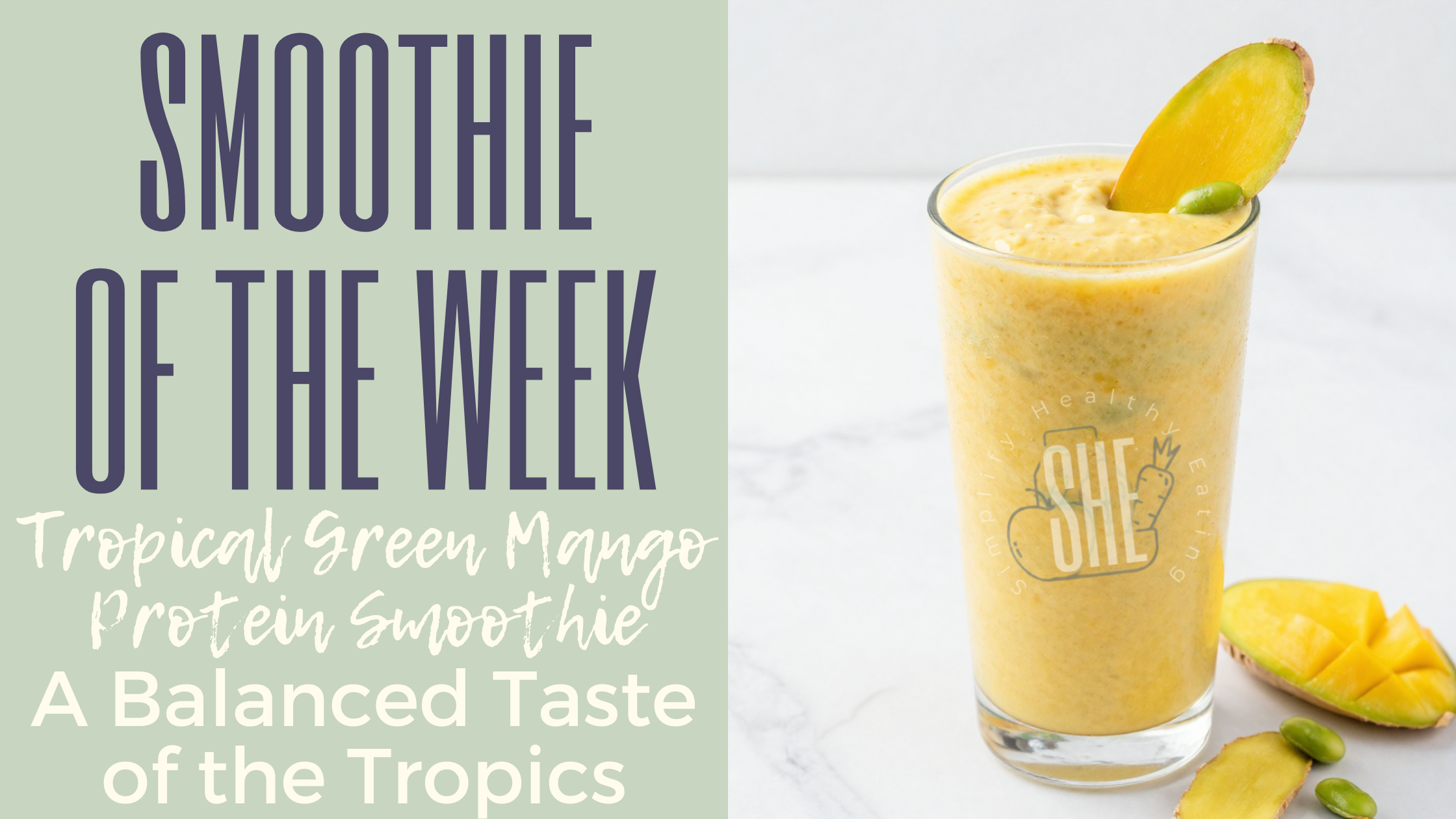
Tropical Green Mango Protein Smoothie: A Balanced Taste of the Tropics
Mango smoothies are delicious.
But I don't want you drinking mango, juice, and a little ice and calling it breakfast. 😂
We're going to give that mango some friends.
This Tropical Green Mango Smoothie combines naturally sweet mango with Greek yogurt, vanilla protein, spinach, flaxseed, avocado, and lime.
You get tropical flavor while also building in protein, fiber, healthy fats, and vegetables.
Mango smoothies are delicious.
But I don't want you drinking mango, juice, and a little ice and calling it breakfast. 😂
We're going to give that mango some friends.
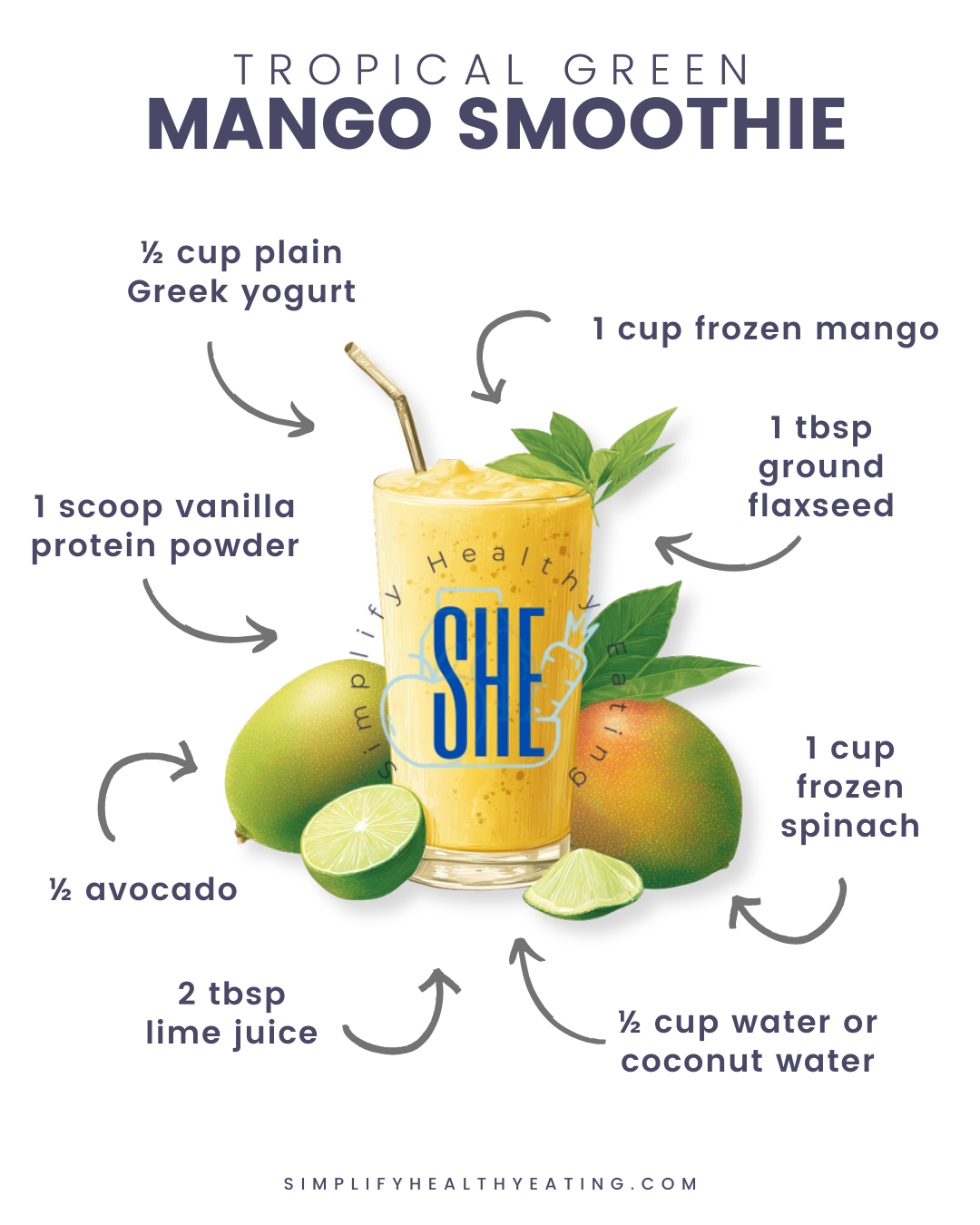
Tropical Green Mango Smoothie Recipe
This Tropical Green Mango Smoothie combines naturally sweet mango with Greek yogurt, vanilla protein, spinach, flaxseed, avocado, and lime.
You get tropical flavor while also building in protein, fiber, healthy fats, and vegetables.
Ingredients
½ cup plain Greek yogurt
1 cup frozen mango
1 tablespoon ground flaxseed
1 scoop vanilla protein powder
½ avocado
2 tablespoons lime juice
1 cup frozen spinach
½ cup water or unsweetened coconut water
Blend until smooth, adding additional liquid as needed.
Mango: Sweetness Plus Nutrition
Mango supplies natural sweetness along with vitamin C, vitamin A precursors, folate, and plant compounds.
And yes, mango contains sugar.
It is fruit.
That doesn't make mango unhealthy.
The better question is:
What are we pairing with it?
In this recipe, mango is surrounded by protein, fiber, and fat instead of being blended with additional juice and sweeteners.
That's a completely different meal structure.
Greek Yogurt
Plain Greek yogurt brings creaminess and additional protein.
Depending on the brand, it can also provide calcium and live bacterial cultures.
Choosing plain yogurt lets you control the sweetness instead of getting added sugar from both the mango and a flavored yogurt.
Protein Powder
The protein powder raises the total protein content enough to make the smoothie considerably more satisfying.
That's particularly useful at breakfast, when many people accidentally eat meals composed mostly of carbohydrates and then wonder why they're starving by 10:30.
Ground Flaxseed
Flaxseed contributes fiber and alpha-linolenic acid, a plant-based omega-3 fatty acid.
Use ground flax rather than whole flaxseed when possible because grinding allows the body better access to the nutrients inside the seed.
Avocado
Avocado gives the smoothie an almost milkshake-like texture.
It also supplies primarily monounsaturated fat, plus fiber, potassium, folate, and other nutrients.
This is one of the easiest ways to create creaminess without relying entirely on dairy or multiple bananas.
Spinach
Frozen spinach adds a meaningful serving of leafy greens without competing heavily with mango.
Spinach contributes folate, vitamin K, carotenoids, magnesium, and potassium.
And because mango has such a dominant tropical flavor, this is a particularly easy smoothie for people who swear they don't like green smoothies.
Lime
Lime brings acidity that brightens the sweetness of mango.
It also contributes vitamin C.
Sometimes making healthier food satisfying isn't about adding more sweetener.
It's about balancing flavors.
Acid is one of the easiest ways to do that.
Water or Coconut Water?
Either works.
Water keeps calories and sugar lower.
Unsweetened coconut water contributes potassium and carbohydrates and can be especially refreshing after activity.
Choose based on the rest of your day and your goals rather than assuming one is universally "better."
The TRE Takeaway
Mango isn't the problem.
Neither are carbohydrates.
The goal is to create a smoothie that doesn't rely on carbohydrates alone.
Pair fruit with protein.
Add fiber.
Include healthy fats.
Sneak in some vegetables.
That's how a tropical smoothie becomes a balanced meal rather than a glass of fruit juice wearing workout clothes.