
Why Is Fiber Important for Fat Loss?
When most women think about fat loss, they immediately think about calories.
Eat less.
Cut carbs.
Shrink the plate.
Skip the snack.
Push through hunger.
Be more disciplined.
But sustainable fat loss is not just about eating less.
When most women think about fat loss, they immediately think about calories.
Eat less.
Cut carbs.
Shrink the plate.
Skip the snack.
Push through hunger.
Be more disciplined.
But sustainable fat loss is not just about eating less.
It is about eating in a way that helps your body feel full, energized, supported, and consistent enough to keep going.
That is where fiber becomes powerful.
Fiber is one of the most underrated tools in a successful fat-loss phase because it helps with fullness, digestion, energy stability, blood sugar balance, gut health, and volume eating. And when fiber is combined with an appropriate calorie deficit, it can make the fat-loss process feel a whole lot less like punishment.
Because let’s be honest: nobody wants to be hungry all day.
And you do not have to be.
A high-fiber approach allows you to eat more nourishing foods while supporting your goals. Think vegetables, berries, oats, beans, lentils, whole grains, chia seeds, apples, sweet potatoes, and big colorful meals that actually hold you.
Fiber is not flashy, but it works.
So let’s talk about why fiber matters so much for fat loss and how to use it in a way that feels realistic.
What Is Fiber?
Fiber is a type of carbohydrate found in plant foods that your body does not fully digest.
That means it moves through the digestive system differently than other carbohydrates. Instead of being quickly broken down into sugar, fiber adds bulk, slows digestion, supports gut health, and helps keep meals more satisfying.
Fiber is found in foods like:
Vegetables
Fruits
Beans
Lentils
Oats
Whole grains
Nuts
Seeds
Chia seeds
Flaxseed
Sweet potatoes
Popcorn
Berries
There are two main types of fiber: soluble fiber and insoluble fiber.
Soluble fiber dissolves in water and forms a gel-like substance in the digestive tract. This can help slow digestion and support blood sugar balance.
Insoluble fiber does not dissolve in water. It adds bulk to stool and helps keep digestion moving.
Both types matter.
You do not need to obsess over which food has which type. The bigger goal is to eat a variety of fiber-rich foods consistently.
Reason 1: Fiber Helps You Feel Full Faster
One of the biggest reasons fiber supports fat loss is because it helps you feel full.
Fiber adds bulk to meals. That bulk helps create more volume in your stomach, which can send fullness signals to your brain.
This is why a large salad with chicken, beans, vegetables, avocado, and a flavorful dressing may feel more satisfying than a small handful of crackers, even if the calories are similar.
Your stomach responds to volume.
That matters because many women are trying to lose fat by making their meals smaller, but smaller meals often do not create enough satisfaction.
Then what happens?
You eat the tiny meal.
You feel proud for a short time.
Then hunger comes back loud.
Then cravings hit.
Then you snack your way through the afternoon.
Then you wonder why willpower disappeared.
But the problem was not willpower.
The problem was that the meal did not hold you.
Fiber-rich foods like vegetables, oatmeal, beans, berries, chia seeds, and lentils help create more satisfying meals. They give your body something to work with. They slow things down. They help you feel like you actually ate.
That is important for fat loss because the more satisfied you feel after meals, the easier it is to stay consistent.
Reason 2: Fiber Helps Keep Your Energy Stable
If your energy is up and down all day, your eating habits will usually follow.
Blood sugar spikes and crashes can leave you feeling tired, foggy, irritable, shaky, or desperate for something sweet. And once your energy crashes, it becomes much harder to make thoughtful choices.
That is another reason fiber matters.
Fiber helps slow down the digestion and absorption of carbohydrates. This can lead to a more gradual release of glucose into the bloodstream, which helps support steadier energy.
This does not mean carbs are bad.
Carbs are not the enemy.
The goal is to choose carbs that come with fiber and nutrients more often than highly processed, low-fiber options.
For example:
Oatmeal will generally support you differently than a sugary pastry.
A sweet potato will generally support you differently than candy.
Beans and lentils will generally support you differently than refined snack foods.
Berries will generally support you differently than a sugar-sweetened drink.
Again, this is not about perfection.
It is about building meals that help your body feel more stable.
When your energy feels stable, your cravings often become easier to manage. When cravings become easier to manage, consistency becomes easier. And when consistency becomes easier, fat loss becomes more sustainable.
Reason 3: Fiber Keeps Digestion Running Smoothly
Nobody wants to talk about constipation, but let’s be grown.
Digestive health matters.
When digestion is sluggish, you may feel bloated, uncomfortable, heavy, and frustrated. And when your body feels uncomfortable, it can affect your mood, your motivation, your confidence, and even the way you interpret progress.
Fiber helps keep things moving through your digestive system.
It adds bulk. It supports regular bowel movements. It helps the digestive tract do what it is designed to do.
But here is the important part: you want to increase fiber gradually.
Going from very little fiber to a lot of fiber overnight can make you feel bloated, gassy, and uncomfortable. That does not mean fiber is bad. It means your body may need time to adjust.
A better approach:
Add one high-fiber food at a time.
Drink enough water.
Pair fiber with protein.
Spread fiber across the day instead of cramming it into one meal.
Notice how your body responds.
Examples:
Add berries to breakfast.
Add spinach to eggs.
Add beans to lunch.
Add roasted vegetables to dinner.
Add chia seeds to yogurt.
Snack on popcorn instead of chips.
Choose oatmeal instead of a low-fiber cereal.
Small shifts add up.
Reason 4: Fiber Lets You Eat More With Fewer Calories
This is where fiber and volume eating work beautifully together.
Volume eating is all about choosing foods that give you more food volume for fewer calories while still providing nutrition and satisfaction.
Fiber-rich foods are perfect for this.
Think big salads, vegetable soups, stir-fries, roasted vegetables, berries, oatmeal, beans, lentils, popcorn, and Greek yogurt bowls with fruit and chia seeds.
These foods help fill the plate.
And a full plate matters emotionally too.
Because when you are used to dieting, a tiny plate can feel like punishment. It can trigger that “I’m restricted” feeling before you even finish eating.
But a high-fiber, high-volume plate can feel abundant.
You can eat a large bowl of vegetable soup.
You can eat a big salad with protein.
You can enjoy oatmeal with berries.
You can build a colorful stir-fry.
You can have roasted vegetables with chicken and sweet potato.
You can make a Greek yogurt bowl with berries, chia, and a sprinkle of granola.
That is not deprivation.
That is strategy.
This is why fiber is so helpful during fat loss. It helps you build meals that are lower in calorie density but higher in fullness, nutrients, and satisfaction.
Reason 5: Fiber Cultivates a Healthy Microbiome
Your gut is home to trillions of microbes, often referred to as the gut microbiome.
That microbiome plays an important role in digestion, immune function, metabolism, and overall health.
Fiber-rich foods help nourish the beneficial bacteria in your gut. In other words, fiber helps feed the ecosystem that supports your body.
This is one of the reasons I always remind women that wellness is not just about the scale.
Yes, fat loss may be a goal.
But your digestion matters.
Your energy matters.
Your mood matters.
Your inflammation matters.
Your cravings matter.
Your gut health matters.
Your long-term consistency matters.
Fiber supports the bigger picture.
And the bigger picture is where sustainable wellness lives.
How Much Fiber Should You Eat?
A good general goal for many adults is to work toward roughly 25–34 grams of fiber per day, depending on individual needs, health status, and overall intake.
But do not jump there overnight if your current fiber intake is low.
Start where you are.
If you only eat one serving of vegetables a day, start by adding one more.
If you never eat beans, add a small scoop to a salad or soup.
If breakfast is low-fiber, add berries or chia seeds.
If snacks are mostly processed, try popcorn, fruit, or vegetables with dip.
The goal is not perfection.
The goal is progress your body can tolerate.
If you have digestive conditions, diabetes, kidney disease, inflammatory bowel disease, or any condition that requires medical nutrition guidance, talk with your healthcare provider before making big changes.
Easy Ways to Add More Fiber Without Overthinking It
Here are simple ways to increase fiber in real life:
Add berries to Greek yogurt.
Add chia seeds to smoothies or pudding.
Choose oatmeal instead of low-fiber cereal.
Add beans or lentils to soups.
Add vegetables to eggs.
Use leafy greens as a base for bowls.
Snack on air-popped popcorn.
Add roasted vegetables to dinner.
Choose whole grains more often.
Add apple slices to a snack plate.
Use sweet potatoes as a filling carb source.
Add flaxseed to yogurt or oatmeal.
Keep frozen vegetables on hand for fast meals.
You do not need a complicated plan.
You need repeatable habits.
A Simple High-Fiber Meal Formula
Use this formula when building meals:
Protein + Fiber + Healthy Fat + Flavor
Protein helps preserve muscle and supports fullness.
Fiber helps support digestion, fullness, and blood sugar balance.
Healthy fat helps the meal feel satisfying.
Flavor helps you actually enjoy the meal.
Here are a few examples:
Greek yogurt + berries + chia seeds + almonds
Chicken + roasted vegetables + sweet potato + avocado
Turkey lentil soup + side salad
Salmon + cauliflower rice + edamame
Egg scramble + spinach + peppers + fruit
Oatmeal + protein powder + blueberries + flaxseed
Bean bowl + greens + salsa + Greek yogurt drizzle
These meals are not tiny. They are not bland. They are not built on punishment.
They are built on support.
Fiber and Fat Loss: The Mindset Shift
The biggest shift is this:
Fiber helps you stop fighting hunger and start building meals that work with your body.
For years, many women were taught to treat hunger like a character flaw.
But hunger is not a moral failure.
Sometimes hunger is a message.
Maybe your meal was too small.
Maybe it was too low in protein.
Maybe it was too low in fiber.
Maybe it did not have enough volume.
Maybe you waited too long to eat.
Maybe you are stressed, tired, or undernourished.
Instead of shaming hunger, learn from it.
Ask: what can I add to this meal to make it more supportive?
Can I add vegetables?
Can I add beans?
Can I add berries?
Can I add oats?
Can I add chia seeds?
Can I add lentils?
Can I add a side salad or broth-based soup?
That is how you move from restriction to strategy.
And strategy is what helps you stay consistent.
There’s Still Time to Join the 21-Day Happy Brain Challenge
If you are ready to reset your mindset, support your habits, and stop approaching wellness from a place of guilt and all-or-nothing thinking, there’s still time to join the FREE 21-Day Happy Brain Challenge.
This challenge is designed to help you create simple daily rhythms that support your mind, body, and wellness routine one step at a time.
Because healthy eating is not just about food.
It is also about your mindset.
Your habits.
Your stress response.
Your energy.
Your self-talk.
Your ability to keep going after an imperfect day.
Inside the challenge, you will receive daily encouragement and practical wellness support to help you feel more grounded, more intentional, and more consistent.
No pressure.
No perfection.
No shame.
There’s still time to join us inside the FREE 21-Day Happy Brain Challenge.
Get started today.
Volume Foods: Eat More, Weigh Less
One of the biggest mindset shifts in sustainable fat loss is this:
You do not always need less food. Sometimes you need more volume.
That may sound backwards if you were raised on diet culture advice that told you to shrink every portion, skip meals, avoid carbs, and “just be more disciplined.”
But here’s the truth: when your meals are too small, too low in protein, too low in fiber, or too low in water-rich foods, your body is going to keep asking for more.
That is not weakness.
That is biology.
One of the biggest mindset shifts in sustainable fat loss is this:
You do not always need less food. Sometimes you need more volume.
That may sound backwards if you were raised on diet culture advice that told you to shrink every portion, skip meals, avoid carbs, and “just be more disciplined.”
But here’s the truth: when your meals are too small, too low in protein, too low in fiber, or too low in water-rich foods, your body is going to keep asking for more.
That is not weakness.
That is biology.
Volume eating is a simple strategy that helps you build meals with more food volume for fewer calories while still supporting fullness, energy, blood sugar balance, and sustainable fat loss.
It is not about eating endless amounts of food.
It is not about ignoring calories.
It is not about living on lettuce and air.
It is about choosing more foods that help fill the plate, fill the stomach, and support the body without leaving you feeling deprived.
The formula is simple:
Protein + Fiber + Water Content = Fullness Success
Let’s walk through the best volume foods to add to your meals and how to use them in real life.
What Are Volume Foods?
Volume foods are foods that give you a lot of physical food for fewer calories.
These foods usually have one or more of the following qualities:
They are high in water.
They contain fiber.
They provide protein.
They take up more space on your plate.
They help you feel fuller longer.
They add texture, color, and nutrients to meals.
This is why vegetables, fruits, lean proteins, broth-based soups, potatoes, oatmeal, Greek yogurt, and air-popped popcorn can be so helpful.
They allow you to eat a satisfying amount of food without feeling like you are constantly restricting.
For women over 35, this matters because restriction often backfires. Tiny meals may look “good” at first, but if they leave you hungry, snacky, irritable, and craving sugar at night, they are not helping you build a sustainable system.
The goal is not to eat the least amount possible.
The goal is to eat in a way you can repeat.
Why Volume Eating Helps With Fat Loss
Fat loss requires consistency. And consistency is much easier when your meals actually satisfy you.
That is where volume eating shines.
When you build meals with high-volume foods, you can often eat a larger, more satisfying plate while still keeping the meal supportive of your goals.
Think about the difference between:
A small handful of chips vs. a big bowl of air-popped popcorn with a few almonds.
A tiny granola bar vs. Greek yogurt with berries and chia seeds.
A small pasta bowl vs. half pasta, half zucchini noodles with roasted vegetables and protein.
A little sandwich alone vs. lettuce wraps with a massive side salad.
Two scoops of ice cream vs. frozen berries topped with a smaller scoop of ice cream.
The second option usually gives you more volume, more fiber, more nutrients, and more satisfaction.
That is not punishment.
That is strategy.
Volume Food Category 1: Vegetables
Vegetables are volume superstars because many of them are low in calories, high in water, full of fiber, and easy to add to almost any meal.
The carousel highlights these vegetable options:
Broccoli: about 30 calories per cup
Cucumber: about 16 calories per cup
Mushrooms: about 15 calories per cup
Leafy greens: about 10–20 calories per cup
Tomatoes: about 32 calories per cup
Bell peppers: about 30 calories per cup
These are the foods that can help you make your plate bigger without making the meal feel heavy.
How to Use More Vegetables
Add broccoli to stir-fries, pasta bowls, omelets, soups, or sheet pan meals.
Use cucumber in salads, wraps, snack plates, or Greek-style bowls.
Add mushrooms to eggs, turkey burgers, pasta sauce, cauliflower rice bowls, or veggie skillets.
Use leafy greens as a base for salads, wraps, smoothies, or dinner bowls.
Add tomatoes to salads, cottage cheese bowls, eggs, sandwiches, wraps, or salsa.
Use bell peppers in fajita bowls, egg scrambles, salads, stuffed peppers, or snack plates with hummus.
The goal is not to force yourself to eat plain vegetables you hate.
The goal is to find easy ways to add vegetables to meals you already enjoy.
A simple rule: fill half your plate with volume superstars.
That one habit can change the way your meals feel.
Volume Food Category 2: Fruits
Fruit is another powerful volume food category, especially for women who struggle with sweet cravings.
Instead of trying to “white-knuckle” your way through cravings, fruit can help you satisfy your desire for sweetness while also adding fiber, hydration, color, and nutrients.
The carousel highlights these fruit options:
Strawberries: about 50 calories per cup
Apple: about 95 calories per medium apple
Watermelon: about 46 calories per cup
Blueberries: about 85 calories per cup
Orange: about 62 calories per medium orange
Fruit can be especially helpful because it gives you sweetness and volume together.
That matters because cravings are not always about lack of discipline. Sometimes your body wants energy. Sometimes your brain wants pleasure. Sometimes your routine needs a better option.
How to Use More Fruit
Add berries to Greek yogurt, oatmeal, chia pudding, smoothies, or cottage cheese.
Slice apples and pair them with Greek yogurt dip, peanut butter powder, or a small amount of nut butter.
Use watermelon as a refreshing snack when you want something sweet and hydrating.
Add blueberries to protein pancakes, yogurt bowls, oatmeal, or salads.
Eat oranges with a protein source, like boiled eggs, Greek yogurt, or turkey slices, for a more balanced snack.
Fruit becomes even more powerful when you pair it with protein or healthy fat.
That might look like:
Greek yogurt with strawberries.
Apple slices with cottage cheese.
Blueberries with chia pudding.
Orange slices with boiled eggs.
Watermelon with a protein smoothie.
Sweet cravings do not always need to become a battle.
Sometimes they need a better structure.
Volume Food Category 3: Protein Sources
Protein is one of the most important pieces of a satisfying plate.
When meals are too low in protein, you may feel hungry again quickly. You may also struggle with cravings, energy dips, and difficulty staying consistent.
The carousel highlights these protein sources:
Egg whites: about 17 calories per egg white
Chicken breast: about 165 calories per 100 grams
White fish: about 100 calories per 100 grams
Greek yogurt: about 100 calories per 6 ounces
These protein sources work well because they give you a lot of protein without being overly calorie-dense.
That means they can help you build satisfying meals while still supporting fat loss goals.
Why Protein Matters
Protein helps increase satiety, meaning it helps you feel full and satisfied after meals.
Protein also supports muscle, which is especially important for women over 35. As we age, muscle becomes even more important for strength, metabolism, mobility, and long-term health.
This is why sustainable fat loss is not just about making the scale go down.
It is about preserving the body that carries you.
A plate without protein often does not hold you very long.
A plate with protein, fiber, and volume is much more supportive.
How to Use More Protein
Add egg whites to whole eggs for a higher-protein breakfast scramble.
Use chicken breast in salads, wraps, bowls, soups, or meal prep containers.
Add white fish to tacos, cauliflower rice bowls, salads, or roasted vegetable plates.
Use Greek yogurt in breakfast bowls, smoothies, dips, dressings, parfaits, or high-protein desserts.
A practical breakfast idea:
Greek yogurt + berries + chia seeds + a sprinkle of granola.
A practical lunch idea:
Chicken lettuce wraps + massive side salad.
A practical dinner idea:
White fish + roasted vegetables + potatoes or cauliflower rice.
A practical snack idea:
Greek yogurt with fruit or cucumber slices with Greek yogurt dip.
Protein does not have to be complicated. It just needs to be included consistently.
Volume Food Category 4: Carb Sources
Carbs are not the enemy.
Let’s say that again: carbs are not the enemy.
The problem is usually not carbs themselves. The problem is choosing processed, low-fiber carbs that do not keep you full, then wondering why cravings show up later.
The carousel highlights these fiber-rich carb sources:
Oatmeal: about 150 calories per cooked cup
Sweet potato: about 114 calories per medium sweet potato
Air-popped popcorn: about 30 calories per cup
Potatoes: about 130 calories per medium potato
These foods can be much more filling than many processed alternatives because they offer more volume, fiber, water content, and satisfaction.
Why These Carbs Work
Oatmeal is warm, filling, and easy to build into a balanced breakfast with protein and fruit.
Sweet potatoes are satisfying, naturally sweet, and pair well with lean proteins and vegetables.
Air-popped popcorn is a high-volume snack that gives you crunch without disappearing in two bites.
Potatoes are filling, versatile, and often unfairly demonized in diet culture.
The key is not to remove carbs.
The key is to choose carbs that support your body and pair them wisely.
A plain bowl of oatmeal may not hold you long enough by itself. But oatmeal with protein powder, Greek yogurt, berries, and chia seeds becomes much more satisfying.
A potato by itself may be fine, but a potato with chicken, vegetables, and Greek yogurt-based sauce becomes a balanced meal.
Popcorn alone may be light, but popcorn with a small handful of almonds or a protein drink can make a stronger snack.
Carbs work best when they are part of a complete plate.
Volume Eating Hacks You Can Use This Week
Volume eating does not have to be complicated. You do not need a brand-new diet. You do not need to throw away everything in your kitchen.
You can start with simple, repeatable habits.
Hack 1: Add Extra Veggies to Everything
Add spinach to eggs.
Add mushrooms to ground turkey.
Add peppers to bowls.
Add zucchini to pasta.
Add broccoli to stir-fry.
Add greens to wraps.
Add tomatoes to breakfast plates.
Vegetables are one of the easiest ways to increase food volume and nutrients.
Hack 2: Choose Foods With High Water Content
Water-rich foods help add volume and freshness to meals.
Think cucumbers, watermelon, oranges, berries, tomatoes, zucchini, leafy greens, soups, and broth-based meals.
These foods can help your plate feel more abundant without making it feel heavy.
Hack 3: Start Meals With Broth-Based Soup or Salad
Starting a meal with soup or salad can help you add volume before the main course.
A broth-based vegetable soup or a large salad with lean protein and colorful vegetables can help you feel more satisfied and intentional at mealtime.
This is especially helpful if you tend to arrive at meals overly hungry.
Hack 4: Bulk Up Smoothies With Ice and Zucchini
Smoothies can be tricky because they can become calorie-dense without feeling filling.
One way to increase volume is to add ice, frozen zucchini, cauliflower rice, spinach, or berries.
Frozen zucchini blends smoothly and adds volume without a strong taste. It is a great option for women who want a thicker smoothie without relying on extra banana, nut butter, or sweeteners.
Hack 5: Try Cauliflower Rice Instead of Regular Rice
Cauliflower rice is not about pretending regular rice is bad.
It is about having options.
You can use cauliflower rice when you want a lighter base, or you can mix half cauliflower rice with half regular rice for more volume and satisfaction.
That gives you the best of both worlds: comfort plus volume.
Hack 6: Use Zucchini or Spaghetti Squash for Noodles
Again, pasta is not bad.
But if you want more food volume, mixing pasta with zucchini noodles or spaghetti squash can help you build a bigger bowl with more vegetables.
Try half pasta and half zucchini noodles with roasted vegetables and protein.
That one swap can make dinner feel more abundant and supportive.
The Volume Eating Formula
Here is the formula to remember:
Protein + Fiber + Water Content = Fullness Success
Protein helps keep you satisfied.
Fiber supports fullness and digestion.
Water-rich foods add volume and freshness.
When those three things show up consistently, your meals start working with your body instead of against it.
This is what helps you stop relying on willpower alone.
Because willpower is not a meal plan.
Support is.
A Sample Volume Eating Day
Here is what this could look like in real life.
Breakfast
Greek yogurt with strawberries, blueberries, chia seeds, and a sprinkle of granola.
This gives you protein, fiber, fruit, crunch, and sweetness.
Lunch
Chicken lettuce wraps with cucumbers, tomatoes, peppers, and a massive side salad.
This gives you protein, volume, hydration, and texture.
Snack
A giant bowl of air-popped popcorn with a small handful of almonds.
This gives you crunch, volume, healthy fat, and satisfaction.
Dinner
Half pasta, half zucchini noodles with roasted vegetables and chicken or white fish.
This gives you comfort, protein, vegetables, and fullness.
Dessert
Frozen berries with Greek yogurt or a small scoop of ice cream.
This gives you sweetness, volume, and a more balanced way to enjoy dessert.
That is not restrictive.
That is realistic.
Why This Matters for Women Over 35
Women over 35 often need more support, not more punishment.
Your body may be navigating stress, hormonal shifts, muscle loss, blood sugar changes, inflammation, burnout, caregiving, work pressure, and emotional load.
So when you try to survive on tiny meals, your body may push back harder.
Volume eating can help because it allows you to create meals that feel nourishing, filling, and supportive.
This is not just about weight loss.
It is about energy.
It is about consistency.
It is about reducing cravings.
It is about feeling less controlled by food.
It is about learning how to build plates that support the life you are actually living.
Because a plan that only works when life is perfect is not a real plan.
Save This for Your Next Grocery Trip
Your next grocery shop can be a whole lot smarter when you shop with volume in mind.
Add these to your list:
Broccoli
Cucumbers
Mushrooms
Leafy greens
Tomatoes
Bell peppers
Strawberries
Apples
Watermelon
Blueberries
Oranges
Egg whites
Chicken breast
White fish
Greek yogurt
Oatmeal
Sweet potatoes
Air-popped popcorn
Potatoes
Zucchini
Cauliflower rice
Spaghetti squash
Broth-based soup ingredients
Frozen berries
This list gives you options for breakfast, lunch, dinner, snacks, and dessert.
And that is the point.
Healthy eating gets easier when your environment supports your goals.
There’s Still Time to Join the 21-Day Happy Brain Challenge
If you have been trying to build healthier habits but keep getting stuck in stress, cravings, inconsistency, or all-or-nothing thinking, there’s still time to join the FREE 21-Day Happy Brain Challenge.
This challenge is designed to help you reset your mindset, support your daily wellness rhythm, and take simple steps toward feeling more grounded and consistent.
Because healthy eating is not just about what you put on the plate.
It is also about how you think, how you respond to cravings, how you speak to yourself, and how you build habits that feel sustainable.
Inside the challenge, you will receive simple daily encouragement and practical wellness support to help you show up for yourself one step at a time.
No shame.
No pressure.
No perfection.
There’s still time to join us inside the FREE 21-Day Happy Brain Challenge.
Get started today.
5 Journal Prompts for Volume Eating & Food Freedom
There is a difference between eating less and eating well.
And honestly? A lot of us were never taught that.
We were taught to shrink the plate, skip the snack, cut the carbs, ignore hunger, drink more water, and “be disciplined.” We were taught that if we felt full, we probably did something wrong. We were taught that the smaller the portion, the better the choice.
There is a difference between eating less and eating well.
And honestly? A lot of us were never taught that.
We were taught to shrink the plate, skip the snack, cut the carbs, ignore hunger, drink more water, and “be disciplined.” We were taught that if we felt full, we probably did something wrong. We were taught that the smaller the portion, the better the choice.
But for many women, especially women over 35 who are juggling stress, hormones, work, caregiving, fatigue, emotional eating, and years of diet culture, restriction does not create peace.
It creates a cycle.
You eat too little.
You feel proud for a few hours.
Then your body gets loud.
The cravings kick in.
You overeat later.
Then guilt shows up.
Then you promise to “do better tomorrow.”
That is not food freedom.
That is food fear dressed up as discipline.
Volume eating offers a different approach. It is not about eating endlessly or ignoring your body’s needs. It is about learning how to build full, nourishing, satisfying meals with foods that give your body what it actually needs: protein, fiber, water, color, texture, nutrients, and satisfaction.
But before the plate changes, the mindset has to change too.
That is where journaling becomes powerful.
Journaling helps you slow down long enough to notice the beliefs that are driving your food choices. Because sometimes the issue is not that you do not know what to eat. Sometimes the issue is that your thoughts around food are still rooted in restriction, guilt, fear, and punishment.
So today, let’s walk through five journal prompts to help you reset your mindset around volume eating and food freedom.
Prompt 1: Where Have I Been Confusing Eating Less With Eating Well?
This is a big one.
For many women, “healthy eating” has been reduced to “how little can I eat and still make it through the day?”
A small breakfast feels responsible.
A skipped lunch feels disciplined.
A tiny salad feels like progress.
A low-calorie snack feels like control.
But eating less is not automatically eating well.
Eating well means your body is actually being supported.
It means your meals help stabilize your energy. It means you are getting enough protein to support muscle. It means you are eating enough fiber to support fullness and digestion. It means your plate has color, nutrients, and enough food to carry you through your real life.
Because let’s be honest: your body is not just sitting around all day waiting to be smaller.
Your body is working. Thinking. Moving. Healing. Processing stress. Managing hormones. Supporting your brain. Carrying you through meetings, errands, responsibilities, workouts, family needs, and everything else on your plate.
So when you journal through this prompt, ask yourself:
Where did I learn that less food means better discipline?
When do I feel proud of myself for eating too little?
What happens later in the day when I under-eat?
Am I truly nourished, or am I just trying to feel in control?
This is not about judging yourself. It is about telling the truth.
Because once you realize that eating less has not always been the same as eating well, you can begin building a better relationship with your plate.
Prompt 2: How Does My Body Feel After a High-Volume Meal vs. a Restrictive One?
Your body gives you feedback all day long.
The problem is, many of us were trained to ignore it.
We ignore hunger until it becomes a craving.
We ignore fatigue until we crash.
We ignore fullness because we are afraid of it.
We ignore satisfaction because we think we are supposed to suffer.
But your body is not trying to sabotage you. It is trying to communicate.
A restrictive meal may look “good” on paper, but how does it feel in your body?
Do you feel satisfied?
Do you feel calm?
Do you feel energized?
Do you feel clear-headed?
Can you move on with your day without obsessing over food?
Or do you feel distracted, irritable, shaky, tired, snacky, and mentally stuck on what you are going to eat next?
Now compare that with a high-volume, balanced meal.
A high-volume meal might include lean protein, lots of vegetables, fruit, beans, potatoes, whole grains, soup, salad, or other fiber-rich foods that help your body feel full and supported.
It does not have to be fancy.
It could be a big breakfast bowl with eggs, sautéed vegetables, avocado, and fruit.
It could be a hearty salad with chicken, beans, roasted vegetables, and a flavorful dressing.
It could be soup with lean protein, vegetables, and a side of whole-grain toast.
It could be a smoothie bowl with Greek yogurt, berries, chia seeds, and protein.
The question is not, “Was this meal small enough?”
The question is, “Did this meal support me?”
Use your journal to compare the difference.
How do I feel physically after eating a restrictive meal?
How do I feel emotionally after eating a restrictive meal?
How do I feel after a full, balanced, high-volume meal?
Which meals help me feel peaceful instead of preoccupied?
That awareness can help you stop choosing meals based on fear and start choosing meals based on support.
Prompt 3: What Beliefs About Food Portion Size Am I Still Carrying That Aren’t Serving Me?
Some of our food beliefs are not even ours.
They came from diet programs.
They came from family comments.
They came from magazines.
They came from social media.
They came from watching other women apologize for being hungry.
They came from years of being told that smaller is always better.
So now, when you sit down to eat a full plate, you may feel uncomfortable before you even take the first bite.
Not because the food is wrong.
But because an old belief got activated.
Maybe you believe:
“I should not need this much food.”
“Eating a full plate means I lack control.”
“Carbs will make me gain weight.”
“I have to earn this meal.”
“If I am full, I overdid it.”
“I should always leave the table a little hungry.”
“Women are supposed to eat small portions.”
Whew.
That is a lot to carry.
And it gets heavy.
This prompt helps you separate old programming from present-day wisdom. Because the truth is, a full plate does not mean you are failing. A full plate can be an act of care, especially when it is built with foods that nourish your body.
Portion size should not be driven by shame. It should be guided by your body’s needs, your goals, your hunger, your activity level, your health priorities, and your ability to stay consistent.
Journal through this honestly:
What did I learn about portion sizes growing up?
Do I feel guilty when my plate looks full?
Do I compare my portions to other people’s plates?
What food rules am I still following that no longer serve me?
What would I believe about food if I trusted my body more?
You may find that the issue is not the plate.
It is the story you have been telling yourself about the plate.
Prompt 4: What Would It Feel Like to Eat a Full, Satisfying Plate — Without Guilt?
Take a moment and really imagine this.
You sit down to a meal that is colorful, filling, balanced, and satisfying.
There is protein on the plate.
There is fiber.
There are vegetables.
There is flavor.
There is enough food.
And instead of guilt, you feel peace.
No calculating.
No punishing.
No bargaining.
No “I’ll make up for this tomorrow.”
No shrinking yourself to prove you are worthy of results.
Just nourishment.
For some women, that may feel emotional. Because food guilt has been around for so long that peace at the plate feels unfamiliar.
But unfamiliar does not mean wrong.
It just means you are practicing something new.
Food freedom does not mean eating without structure. It means eating without shame.
It means you can have goals and still feed your body.
It means you can want fat loss and still eat enough.
It means you can enjoy food without feeling like you failed.
It means you can build a full plate without turning it into a moral decision.
Because food is not a character test.
It is nourishment. It is fuel. It is support. It is also allowed to be enjoyable.
When you journal this prompt, let yourself answer without filtering.
What would change if I stopped feeling guilty for being full?
How would my meals feel if I trusted myself more?
What would it feel like to eat enough earlier in the day?
How would my evening cravings change if I stopped under-eating?
What kind of peace am I actually craving around food?
Sometimes the thing we are craving is not more snacks.
Sometimes we are craving permission.
Permission to eat.
Permission to be satisfied.
Permission to stop fighting our bodies.
Permission to build a plate that actually supports us.
Prompt 5: What Is One Volume Eating Swap I Can Make This Week That Would Feel Easy and Sustainable?
This is where we take the reflection and turn it into action.
Because food freedom is not built by thinking about change forever.
It is built one practical choice at a time.
The key word here is sustainable.
Not extreme.
Not overwhelming.
Not a complete kitchen makeover.
Not a brand-new identity by Monday morning.
Just one swap.
Maybe you add a big handful of spinach or peppers to your eggs.
Maybe you add roasted vegetables to your lunch bowl.
Maybe you swap a tiny snack for Greek yogurt with berries and chia seeds.
Maybe you add a side salad to dinner instead of trying to eat a smaller dinner.
Maybe you make a vegetable-based soup to pair with your meals.
Maybe you add beans or lentils to a salad for more fiber and fullness.
Maybe you stop skipping breakfast and build a protein-rich plate instead.
Volume eating becomes easier when it feels doable.
This is not about perfection. This is about creating meals that help your body feel safe, satisfied, and supported.
Use your journal to choose one small step:
What meal leaves me the hungriest right now?
Where can I add more fiber, color, or protein?
What is one easy volume eating swap I can make this week?
What foods do I actually enjoy that also help me feel full?
How can I make this change simple enough to repeat?
That last question matters.
Because if you cannot repeat it, it is not your system yet.
And what we are building here is not another diet.
We are building a way of eating that supports your real life.
Volume Eating Is Not About Eating Perfectly
Volume eating is not a magic trick. It is not a new set of rules to obsess over. It is not about forcing yourself to eat foods you hate or turning every meal into a math problem.
It is simply a way to help your body feel more satisfied by choosing more foods that provide volume, nutrients, and fullness.
It can help you move away from the restriction mindset and toward a more supportive way of eating.
For women who have spent years trying to shrink their portions, this can feel like a major mindset shift.
But it is a necessary one.
Because your body was not created to be punished into wellness.
Your body deserves care.
Your body deserves nourishment.
Your body deserves consistency.
Your body deserves meals that support your energy, your brain, your mood, your metabolism, and your peace.
And you deserve to stop being afraid of a full plate.
A Gentle Food Freedom Practice for This Week
Here is a simple practice to try:
Choose one meal this week and build it with volume in mind.
Start with protein.
Add vegetables or fruit.
Add a fiber-rich carbohydrate.
Add a healthy fat.
Add flavor you actually enjoy.
Then notice how you feel afterward.
Not with judgment.
With curiosity.
Ask yourself:
Did this meal satisfy me?
Did I feel calmer around food afterward?
Did I have fewer cravings later?
Did I feel more energized?
Did I enjoy the meal?
Did this feel like something I could repeat?
That is how you begin rebuilding trust with your body.
One meal.
One thought.
One journal prompt.
One new pattern at a time.
If this conversation is hitting home for you, there’s still time to join the FREE 21-Day Happy Brain Challenge.
This challenge is for the woman who is tired of trying to build healthy habits from a place of stress, guilt, burnout, and all-or-nothing thinking.
Over 21 days, we will focus on simple mindset shifts, daily wellness rhythms, and practical encouragement to help you feel more grounded, more consistent, and more supported in your health journey.
Because sustainable wellness is not just about what is on your plate.
It is also about what is happening in your mind.
So if you have been saying, “I need to get back on track,” this is your reminder: you do not have to wait for a perfect Monday. You do not have to have it all figured out. You do not have to start from shame.
There’s still time to join us.
Come take the next step inside the FREE 21-Day Happy Brain Challenge and give yourself permission to reset your mindset, nourish your body, and rebuild habits that actually feel sustainable.
Why “Eat Less, Move More” Is Failing You
For years, women have been told the same thing:
Eat less. Move more.
And on the surface, it sounds simple enough.
Cut back on food.
Burn more calories.
Push harder.
Be more disciplined.
Stop making excuses.
But let’s tell the truth: if that advice worked as simply as people make it sound, most women would not still be exhausted, frustrated, hungry, and wondering why their bodies feel like they are fighting them every step of the way.
For years, women have been told the same thing:
Eat less. Move more.
And on the surface, it sounds simple enough.
Cut back on food.
Burn more calories.
Push harder.
Be more disciplined.
Stop making excuses.
But let’s tell the truth: if that advice worked as simply as people make it sound, most women would not still be exhausted, frustrated, hungry, and wondering why their bodies feel like they are fighting them every step of the way.
Here is the real issue.
“Eat less, move more” is not always bad advice.
It is incomplete advice.
And incomplete advice can backfire.
Because when women hear “eat less,” many do not interpret that as “build balanced meals with the right calorie range, enough protein, enough fiber, enough nutrients, and enough food volume.”
They interpret it as:
Skip breakfast.
Eat a tiny lunch.
Avoid carbs.
Push through hunger.
Drink coffee instead of eating.
Save calories all day.
Punish yourself after overeating.
Earn your food through exercise.
And that is where the cycle begins.
You eat less. You feel proud for a minute. Then your body gets louder. Hunger increases. Cravings intensify. Energy drops. Your mood gets shaky. Your patience gets thin. By the end of the day, you are standing in the kitchen wondering why willpower disappeared.
That is not because you are weak.
That is because your body is not a machine.
Your body is biology.
The Problem With “Eat Less” Advice
The problem with telling women to “eat less” is that most women are already trying to survive on too little support.
Too little rest.
Too little recovery.
Too little protein.
Too little hydration.
Too little peace.
Too little margin.
Too little nourishment.
Then we add “eat less” on top of an already depleted life and expect the body to cooperate.
No ma’am.
For many women, especially women over 35 who are navigating stress, hormones, work, caregiving, emotional load, inflammation, blood sugar changes, and years of diet culture, simply eating less can create more problems than progress.
Because under-eating does not just reduce food.
It can increase hunger.
It can increase cravings.
It can make you more food-focused.
It can make your body feel unsafe.
It can make consistency harder.
And when consistency gets harder, women blame themselves.
But the issue is often not a character problem.
It is a strategy problem.
When You Eat Less Food, Hunger Can Get Louder
Your body has systems designed to keep you alive.
So when you drastically reduce food or consistently under-eat, your body notices.
Hunger hormones can increase. Satiety signals can feel weaker. Your brain starts paying more attention to food. Your body starts looking for energy.
This is why you can have a “good” morning, eat a tiny breakfast, stay busy all day, and then feel like a completely different person by evening.
You did not suddenly lose your values at 8 p.m.
Your body finally demanded attention.
That is why so many women feel like they are disciplined all day and “out of control” at night.
But what if the night eating is not the real problem?
What if the real problem started at breakfast?
What if it started when you skipped lunch?
What if it started when you drank coffee instead of building a balanced plate?
What if it started when you tried to white-knuckle hunger instead of feeding your body in a way that actually supported your goals?
That is why “eat less” without context can be dangerous to your consistency.
Because you cannot keep ignoring biology and expect peace.
Your Stomach Measures Volume, Not Calories
This is one of the most important mindset shifts in volume eating:
Your stomach does not count calories the way an app does.
Your stomach responds to volume, stretch, digestion, texture, and the signals your meal sends to your body.
That is why a small, calorie-dense snack can leave you hungry while a large bowl filled with lean protein, vegetables, fruit, fiber-rich carbs, and healthy fats can feel deeply satisfying.
Think about it.
A small handful of trail mix may have a lot of calories, but it may not create much volume in your stomach.
A huge salad with chicken, beans, vegetables, avocado, and a flavorful dressing may take up more space and leave you feeling more satisfied.
A tiny granola bar may be quick, but a Greek yogurt bowl with berries, chia seeds, and a sprinkle of granola may keep you full longer.
This is not about labeling foods as good or bad.
It is about understanding food behavior.
Some foods give you a lot of calories in a small amount of volume. Other foods give you a lot of volume, fiber, water, and nutrients for fewer calories.
That is where smarter plates come in.
Small Meals Can Still Leave You Hungry
Many women have been trained to believe that a small meal means they are “doing good.”
But a small meal does not always mean a supportive meal.
A small plate can leave you hungry.
A small meal can leave you distracted.
A small lunch can set up evening cravings.
A small breakfast can make the whole day harder.
And then you end up thinking, “What is wrong with me? I just ate.”
But hunger after a small, dense, low-volume meal is not weakness.
It is feedback.
Your body may be telling you that the meal did not have enough protein. It may not have had enough fiber. It may not have had enough water-rich foods. It may not have had enough actual volume to create satisfaction.
This is especially important if you are working toward sustainable fat loss.
Because the goal is not to eat the smallest meal possible.
The goal is to eat meals that help you stay consistent.
Consistency comes from meals that hold you.
Under-Eating Can Trigger a Survival Response
Your body is not trying to ruin your progress.
It is trying to protect you.
When food intake gets too low for too long, the body can adapt. Energy expenditure may decrease. You may feel colder, more tired, less motivated to move, and more preoccupied with food. Hunger can increase. Your body may become more efficient because it senses scarcity.
That is not your body betraying you.
That is your body doing what it was designed to do: survive.
This is why extreme restriction often backfires.
You may lose weight at first, but the cost can be cravings, low energy, food obsession, mood swings, and eventually rebound eating.
Then the cycle repeats.
Restrict.
Overeat.
Feel guilty.
Restart.
Restrict harder.
Crash again.
That cycle is exhausting.
And for many women, it creates more shame than results.
Willpower Is Not the Problem — Biology Is
Let’s release this today:
You cannot white-knuckle hunger forever.
You cannot out-discipline an underfed body forever.
You cannot shame your way into consistency.
Willpower may help you for a moment, but it cannot carry a plan that does not support your biology.
That is why the answer is not always “try harder.”
Sometimes the answer is:
Eat earlier.
Eat enough.
Add protein.
Add fiber.
Add vegetables.
Add fruit.
Add volume.
Add hydration.
Add structure.
Not more punishment.
More support.
There is a difference.
When your meals are built to support fullness and energy, you do not have to rely on willpower as much. You are not fighting your body all day. You are working with it.
That is a completely different wellness experience.
The Fix: Eat More Food, Not Less
Now let’s be clear.
“Eat more food” does not mean eat more of everything without intention.
It means eat more of the foods that help you feel full, nourished, and supported while still aligning with your goals.
More vegetables.
More lean proteins.
More high-fiber carbs.
More berries.
More broth-based soups.
More Greek yogurt.
More salads with substance.
More roasted vegetables.
More beans and lentils.
More zucchini noodles mixed into pasta.
More cauliflower rice added to bowls.
More foods that provide volume and nutrition.
The fix is not always a smaller plate.
Sometimes the fix is a smarter plate.
A plate that gives your body enough food to feel safe, enough protein to feel satisfied, enough fiber to support digestion, enough color to nourish your cells, and enough flavor to make the meal enjoyable.
Because if your meals are bland, tiny, and miserable, you are not building a lifestyle.
You are building a countdown to the next binge.
Change What’s on the Plate
Instead of asking, “How little can I eat?” ask, “How can I make this plate more supportive?”
That question changes everything.
If breakfast is not holding you, add Greek yogurt, eggs, berries, protein, or chia seeds.
If lunch leaves you snacky, add more vegetables, a bigger salad, beans, lean protein, or healthy fat.
If dinner feels too heavy, try half pasta and half zucchini noodles with roasted vegetables and protein.
If snacks disappear too fast, pair high-volume options like popcorn, fruit, or vegetables with something satisfying like nuts, hummus, yogurt, or cheese.
If dessert feels like an all-or-nothing battle, try frozen berries with a smaller scoop of ice cream or Greek yogurt with fruit and dark chocolate.
Healthy eating does not have to be extreme.
It can be strategic.
The goal is to build meals that support your body instead of forcing your body to survive your meals.
Why This Matters for Women Over 35
Women over 35 are often dealing with more than food.
Stress is higher.
Sleep may be inconsistent.
Hormones may be shifting.
Responsibilities are heavier.
Recovery matters more.
Muscle matters more.
Blood sugar stability matters more.
Inflammation matters more.
Mindset matters more.
So when the only advice is “eat less and move more,” it ignores the full picture.
Yes, movement matters.
Yes, nutrition matters.
Yes, portions matter.
But so do hormones, stress, sleep, muscle, nervous system health, protein, fiber, consistency, and emotional wellness.
That is why The Relentlessly Empowered approach is not rooted in punishment.
It is rooted in systems.
Faith. Mindset. Nutrition. Movement. Self-awareness. Structure. Support.
Because sustainable wellness is not built through shame.
It is built through alignment.
A Better Way to Think About Fat Loss
Fat loss does not require you to hate your body.
It does not require you to starve.
It does not require you to prove your worth by how little you can eat.
A better question is:
What habits can I repeat without losing myself?
That is where real change begins.
Can you build a breakfast that supports your morning?
Can you eat enough at lunch to avoid the afternoon crash?
Can you create dinner plates that include protein, fiber, and volume?
Can you move your body in a way that builds strength instead of punishment?
Can you sleep, hydrate, pray, journal, and regulate your stress?
Can you stop treating your body like the enemy?
Because your body is not the problem.
The problem is the old system that taught you to ignore your body until it screamed.
A Simple Plate Formula to Start With
Try this formula this week:
Start with protein.
Add high-volume vegetables or fruit.
Add a fiber-rich carb if needed.
Add healthy fat for satisfaction.
Add flavor so you actually enjoy it.
That might look like:
Greek yogurt, berries, chia seeds, and granola.
Chicken lettuce wraps with a huge salad.
Turkey lentil soup with roasted vegetables.
Salmon with cauliflower rice and edamame.
Half pasta, half zucchini noodles with chicken and roasted vegetables.
Frozen berries with Greek yogurt or a small scoop of ice cream.
Simple. Supportive. Repeatable.
That is the goal.
Not perfect.
Repeatable.
There’s Still Time to Join the 21-Day Happy Brain Challenge
If you have been trying to build healthier habits from a place of stress, guilt, food fear, or all-or-nothing thinking, there’s still time to join the FREE 21-Day Happy Brain Challenge.
This challenge is designed to help you reset your mindset, support your daily wellness rhythm, and start creating habits that feel doable.
Because your brain matters in this journey.
The thoughts you think about your body matter.
The way you respond to hunger matters.
The way you handle cravings matters.
The way you talk to yourself after a hard day matters.
The way you build routines matters.
Inside the challenge, you will receive simple daily encouragement and practical wellness support to help you feel more grounded, more intentional, and more consistent.
No shame.
No perfection.
No pressure.
Just one step at a time.
There’s still time to join us inside the FREE 21-Day Happy Brain Challenge.
Get started today.
5 Easy Swaps to Eat More Food for Fewer Calories
Let’s be honest: most women do not struggle because they “don’t know” they should eat healthier.
They struggle because healthy eating has been presented like a punishment.
Tiny portions.
Bland meals.
Dry chicken.
Sad salads.
No snacks.
No dessert.
No joy.
And then we wonder why it is hard to stay consistent.
Let’s be honest: most women do not struggle because they “don’t know” they should eat healthier.
They struggle because healthy eating has been presented like a punishment.
Tiny portions.
Bland meals.
Dry chicken.
Sad salads.
No snacks.
No dessert.
No joy.
And then we wonder why it is hard to stay consistent.
The truth is, if your healthy eating plan makes you feel deprived, hungry, irritated, and obsessed with your next meal, it is probably not sustainable.
That is where smart food swaps come in.
Not swaps that make you feel punished.
Not swaps that remove all pleasure.
Not swaps that turn every meal into diet culture nonsense.
Smart swaps.
The kind that help you eat more volume, feel more satisfied, and still support your goals.
This is one of the main reasons I love volume eating as a strategy. It helps you stop thinking, “How little can I eat?” and start asking, “How can I build a plate that gives my body what it needs?”
Because sometimes the answer is not less food.
Sometimes the answer is more of the right foods.
More protein.
More fiber.
More fruits and vegetables.
More hydration.
More texture.
More color.
More satisfaction.
The goal is not to trick yourself into eating less. The goal is to build meals that support your body, your energy, your mindset, and your real life.
So let’s talk about five easy swaps that allow you to eat more food for fewer calories while still feeling satisfied.
Why Volume Eating Works
Volume eating is a simple concept: choose foods that give you more physical volume for fewer calories while still supporting nutrition and satisfaction.
This usually means building meals around foods like vegetables, fruits, lean proteins, Greek yogurt, broth-based soups, air-popped popcorn, berries, zucchini noodles, salads, and other high-fiber or water-rich foods.
But let me be clear: volume eating is not about eating air and pretending you are full.
It is about building smarter plates.
A plate that includes protein helps support fullness and muscle.
A plate that includes fiber helps support digestion and satisfaction.
A plate that includes fruits and vegetables gives your body nutrients and volume.
A plate that includes healthy fats helps the meal feel complete.
This matters because many women over 35 have spent years trying to shrink portions instead of learning how to build meals that actually hold them.
And when meals do not hold you, cravings get louder.
You may eat a small breakfast and feel “good” for two hours, then snack your way through the afternoon. You may eat a tiny lunch, then feel ravenous by dinner. You may avoid dessert all week, then feel out of control once you finally have it.
That is not weakness.
That is a system problem.
These swaps help create a better system.
Swap 1: Breakfast
Instead of Granola with Yogurt, Try Greek Yogurt with Berries and a Sprinkle of Granola
Granola can be delicious, but it is also very easy to overdo without realizing it. A bowl of granola with a little yogurt can become calorie-dense quickly while not always giving you the amount of protein or volume you need to stay full.
A smarter swap is to flip the ratio.
Instead of making granola the main event, make Greek yogurt and berries the foundation, then use granola as the topping.
This gives you a breakfast that feels fuller, looks bigger, and often supports your body better.
Greek yogurt brings protein and creaminess.
Berries add volume, fiber, color, and natural sweetness.
A sprinkle of granola adds crunch and satisfaction without taking over the whole bowl.
This is the kind of breakfast that can help you start the day with more structure.
And for busy women, that matters.
Because when breakfast is too small or too low in protein, the rest of the day can turn into a snack hunt. You may find yourself reaching for random foods, not because you lack discipline, but because breakfast did not give your body enough support.
Try this instead:
Start with plain or lightly sweetened Greek yogurt. Add strawberries, blueberries, raspberries, or blackberries. Add cinnamon or vanilla extract if you want more flavor. Then finish with a small sprinkle of granola for crunch.
You still get the granola experience, but now the bowl is working harder for you.
This is not restriction.
This is strategy.
Swap 2: Lunch
Instead of a Sandwich with Chips, Try Lettuce Wraps and a Massive Side Salad
A sandwich with chips is quick, familiar, and easy. There is nothing morally wrong with it.
But for many people, that combo can leave them wanting more because it may not provide enough volume, fiber, or produce to feel truly satisfying.
A great swap is to turn the sandwich into lettuce wraps and add a massive side salad.
This does a few things.
First, it increases volume. Lettuce wraps allow you to enjoy the fillings without relying on bread as the main structure. Then the side salad adds color, crunch, fiber, hydration, and more food on the plate.
Second, it gives you more opportunity to add nutrients. You can include lean turkey, chicken, tuna, eggs, hummus, beans, avocado, peppers, cucumbers, tomatoes, shredded carrots, cabbage, or greens.
Third, it helps lunch feel less like “diet food” and more like a full plate.
That matters because small lunches often create evening problems.
If you under-eat at lunch, you may be more likely to over-snack in the afternoon or feel out of control at dinner. A higher-volume lunch can help you feel more grounded and satisfied.
Try this:
Use romaine leaves, butter lettuce, or collard greens as your wrap. Add protein like chicken, turkey, tuna, tofu, or eggs. Add crunchy vegetables and a flavorful sauce or dressing. Then build a big side salad with greens, cucumbers, tomatoes, carrots, peppers, and a small amount of healthy fat like avocado, seeds, or olive-oil-based dressing.
The goal is not to remove joy.
The goal is to build a lunch that gives you more volume, more fiber, and more staying power.
Swap 3: Snack
Instead of Trail Mix Alone, Try a Giant Bowl of Popcorn with a Small Handful of Almonds
Trail mix can be a great snack, but it is also very calorie-dense. Nuts, dried fruit, chocolate pieces, and seeds can add up quickly in a small portion.
Again, this does not make trail mix “bad.”
It just means it may not always be the best choice when you want a bigger, more satisfying snack.
A smart swap is to pair a giant bowl of popcorn with a small handful of almonds.
Popcorn gives you volume and crunch.
Almonds give you healthy fat, texture, and satisfaction.
Together, this snack gives you more to eat while still feeling balanced.
This is especially helpful if you are someone who likes to snack while working, watching a show, or winding down in the evening. Sometimes you want the experience of eating something crunchy. A tiny handful of trail mix may be gone in two minutes, leaving you wanting more.
A bowl of popcorn gives you that crunchy snack experience with more volume.
Then the almonds help the snack feel more complete.
Try this:
Choose air-popped popcorn or a lightly seasoned popcorn option. Add cinnamon for a sweet vibe, chili lime seasoning for a savory vibe, or nutritional yeast for a cheesy flavor. Pair it with a small handful of almonds or another nut you enjoy.
This swap works because it honors the desire for a snack while making the snack more satisfying.
Healthy eating becomes easier when you stop pretending cravings do not exist and start building better options around them.
Swap 4: Dinner
Instead of a Pasta Bowl, Try Half Pasta, Half Zucchini Noodles with Roasted Veggies
This is one of my favorite swaps because it does not require you to give up pasta.
You do not have to go from a full bowl of pasta to a bowl of plain vegetables and sadness.
Instead, try half pasta and half zucchini noodles with roasted veggies.
This keeps the comfort of pasta while adding more volume, fiber, and nutrients.
The pasta gives you familiarity and satisfaction.
The zucchini noodles add volume and a lighter texture.
The roasted veggies bring flavor, color, and fullness.
This is a great example of what I call an “add more” strategy.
Instead of only focusing on what to remove, focus on what to add.
Add more vegetables.
Add more fiber.
Add more color.
Add more protein if needed.
Add more volume.
A dinner like this can feel abundant instead of restrictive.
And that matters because dinner is often the meal where people feel the most tired and the most tempted to throw the whole plan away. If your dinner feels too small or too strict, consistency becomes harder.
Try this:
Cook your favorite pasta. Lightly sauté zucchini noodles so they do not become watery. Roast vegetables like peppers, onions, mushrooms, eggplant, broccoli, or zucchini. Combine everything with a flavorful sauce. Add a protein like chicken, shrimp, ground turkey, salmon, tofu, or beans.
You still get the pasta bowl.
You just make it smarter.
This is how we stop making healthy eating feel like punishment and start making it feel practical.
Swap 5: Dessert
Instead of 2 Scoops of Ice Cream, Try ¾ Scoop Over a Huge Bowl of Frozen Berries
Dessert does not have to be all-or-nothing.
This is where a lot of women get stuck.
They either avoid dessert completely and feel deprived, or they have dessert and feel like they “failed.”
But food freedom lives in the middle.
A smart dessert swap is to use a smaller portion of ice cream over a huge bowl of frozen berries.
This gives you the sweetness and creaminess of ice cream while adding more volume, fiber, color, and natural sweetness from the berries.
The berries make the bowl feel big and satisfying.
The ice cream makes it feel like dessert.
Together, they create a balanced option that does not require guilt.
This is not about making dessert “perfect.” It is about creating a dessert that supports your goals and your life.
Try this:
Add frozen berries to a bowl and let them soften for a few minutes. Top with a smaller scoop of vanilla, chocolate, or your favorite ice cream. Add cinnamon, a few chopped nuts, or a drizzle of melted dark chocolate if you want to make it feel extra special.
You can also use Greek yogurt or whipped cottage cheese if you want a higher-protein version.
But the point is this: you can enjoy dessert without turning it into a shame spiral.
One of the biggest parts of sustainable wellness is learning how to include foods you enjoy in a way that still supports your body.
Your Next Grocery Shop Just Got Smarter
The best part about these swaps is that they do not require complicated ingredients.
You can build them with everyday grocery staples:
Greek yogurt
Berries
Granola
Lettuce
Salad vegetables
Lean protein
Popcorn
Almonds
Pasta
Zucchini
Roasted vegetables
Frozen berries
Ice cream
That is why this approach works.
It is simple. It is repeatable. It is realistic.
You are not trying to become a whole new person by Monday. You are just making your next grocery shop a little smarter.
And that is where consistency begins.
A smarter grocery list creates smarter choices. Smarter choices create better meals. Better meals support better energy, fewer cravings, and more confidence.
It is not about perfection.
It is about building a system that helps you show up for yourself.
The Mindset Shift: More Food Does Not Mean Less Progress
A lot of women hear “eat more food” and immediately panic.
But more food does not automatically mean more calories. And fewer calories does not automatically mean better nutrition.
What matters is the structure of the meal.
You can eat a tiny portion of calorie-dense food and still feel hungry. You can also eat a large, colorful, protein-and-fiber-rich plate and feel satisfied while still supporting your goals.
That is the beauty of volume eating.
It helps you stop fearing a full plate and start building one with intention.
Because your body does not need punishment.
Your body needs support.
And support looks like meals that nourish you, satisfy you, and help you stay consistent.
Try This Simple Food Swap Practice This Week
Choose one meal or snack from the list and try the swap this week.
Do not overhaul your whole life.
Just choose one:
Greek yogurt with berries and a sprinkle of granola.
Lettuce wraps with a massive side salad.
Popcorn with a small handful of almonds.
Half pasta, half zucchini noodles with roasted veggies.
Frozen berries with a smaller scoop of ice cream.
After you try it, pay attention to how your body feels.
Did you feel more satisfied?
Did you have more energy?
Did you feel less snacky later?
Did the meal feel easier to repeat?
Did it help you feel supported instead of restricted?
That is how you start learning your body.
And that awareness is powerful.
There’s Still Time to Join the 21-Day Happy Brain Challenge
If you are working on healthier eating, better habits, fewer cravings, and a more supportive mindset, there’s still time to join the FREE 21-Day Happy Brain Challenge.
This challenge is designed to help you reset the way you think, eat, move, and show up for yourself one simple step at a time.
Because healthy eating is not just about what is on your plate.
It is also about your mindset.
It is about learning how to stop operating from guilt, shame, stress, and all-or-nothing thinking.
Inside the challenge, you will receive simple daily encouragement and practical wellness support to help you feel more grounded, more intentional, and more consistent.
No pressure.
No perfection.
No shame.
Just one step at a time.
There’s still time to join us inside the FREE 21-Day Happy Brain Challenge.
Get started today.
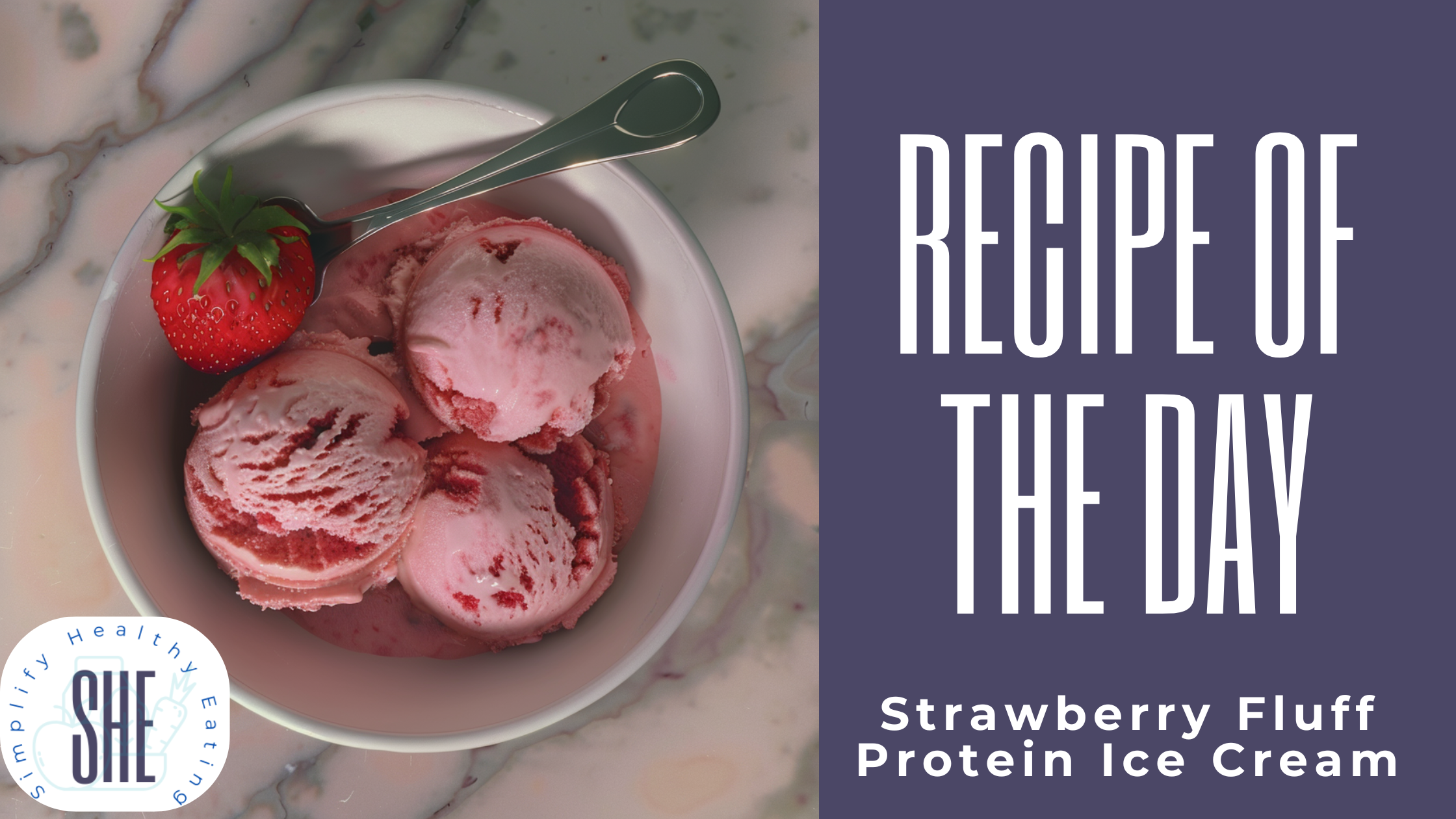
Strawberry Fluff Protein Ice Cream: A Healthier Dessert That Supports Your Goals
One of the biggest reasons many people struggle with consistency is because they believe healthy eating means giving up dessert completely.
But sustainable wellness is rarely built through extreme restriction.
It’s built through balance.
This Strawberry Fluff Protein Ice Cream is a perfect example of how healthier alternatives can help satisfy cravings while still supporting your wellness goals.
One of the biggest reasons many people struggle with consistency is because they believe healthy eating means giving up dessert completely.
But sustainable wellness is rarely built through extreme restriction.
It’s built through balance.
This Strawberry Fluff Protein Ice Cream is a perfect example of how healthier alternatives can help satisfy cravings while still supporting your wellness goals.
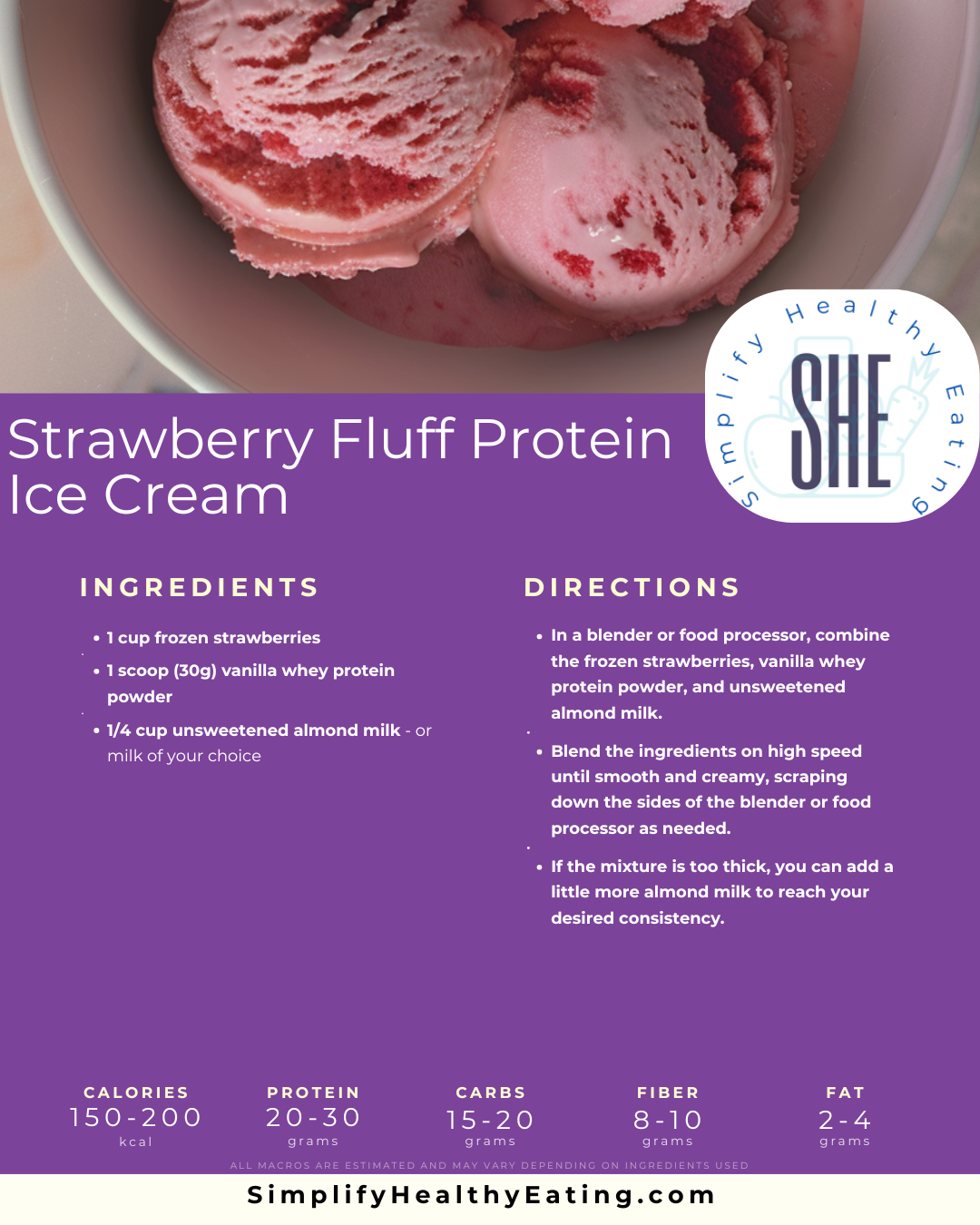
Why Restriction Often Backfires
When people feel deprived, cravings often increase.
That can lead to:
Overeating later
Binge-restrict cycles
Feeling “off track”
Frustration around food
Balanced alternatives help create sustainability.
And sustainability is what creates long-term success.
Strawberries Add Natural Sweetness and Fiber
Strawberries are naturally rich in:
✨ Vitamin C
✨ Antioxidants
✨ Fiber
Fiber helps support fullness and slows digestion, which can help reduce the quick energy crashes often associated with sugary desserts.
Using fruit as a natural sweetener can help create desserts that feel satisfying without excessive added sugars.
Protein Helps Make Desserts More Filling
Adding protein to desserts changes the experience completely.
Protein helps support:
✔️ Fullness
✔️ Muscle recovery
✔️ Stable energy
✔️ Reduced cravings later
Many traditional desserts are low in protein and easy to overeat because they don’t create much satiety.
This recipe provides a more balanced approach.
Almond Milk Keeps It Lighter
Unsweetened almond milk helps create a creamy texture while keeping the recipe lighter overall.
This allows the dessert to feel indulgent without becoming excessively heavy.
Healthy Eating Should Include Enjoyment
Healthy eating that feels miserable rarely lasts.
That’s why finding balanced swaps matters.
Recipes like this help create a lifestyle where:
💛 You can enjoy dessert
💛 You can satisfy cravings
💛 You can stay aligned with your goals
💛 You can stop viewing food as “all or nothing”
Because true wellness includes flexibility, balance, and sustainability.
Not perfection.