
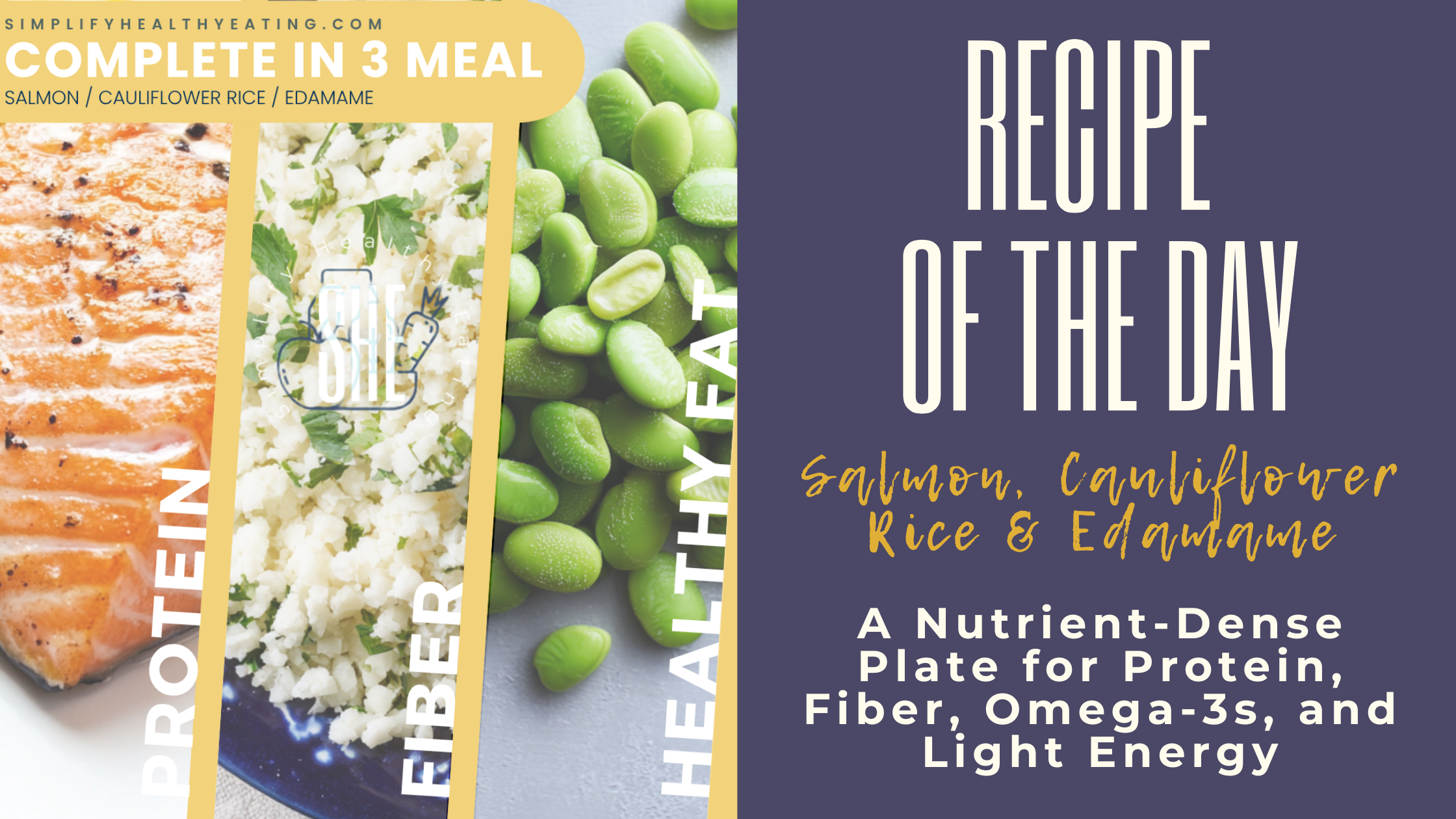
A Nutrient-Dense Plate for Protein, Fiber, Omega-3s, and Light Energy
A Nutrient-Dense Plate for Protein, Fiber, Omega-3s, and Light Energy
This “Complete in 3” meal is a beautiful example of how healthy eating can be simple and powerful at the same time.
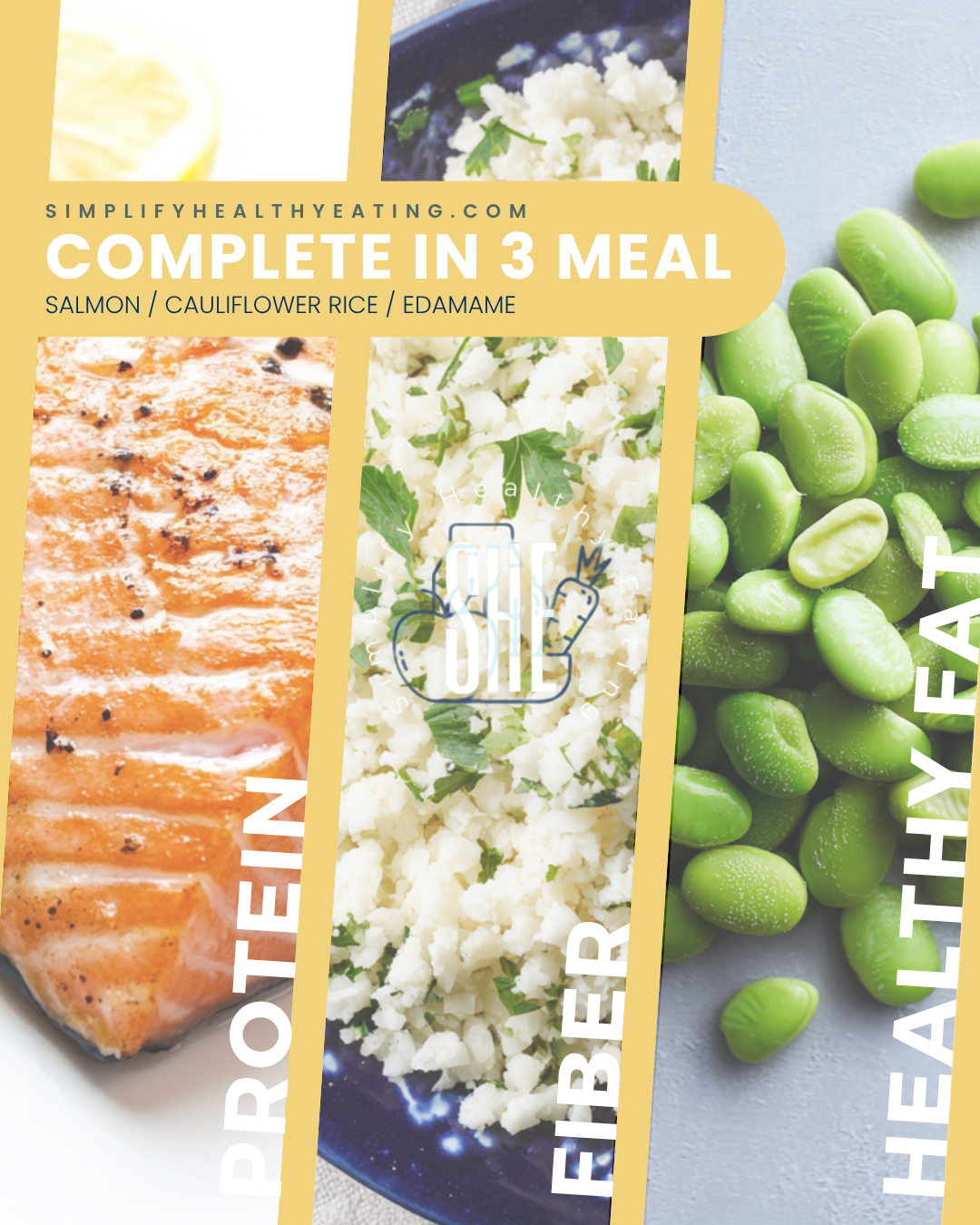
The combination is salmon, cauliflower rice, and edamame.
It is light but still satisfying. It is simple but still nutrient-dense. It gives you protein, fiber, omega-3 fats, and plant-based support in one easy plate.
This is the kind of meal that works well for busy women who want to feel energized instead of weighed down, full instead of stuffed, and nourished instead of restricted.
This “Complete in 3” meal is a beautiful example of how healthy eating can be simple and powerful at the same time.
The combination is salmon, cauliflower rice, and edamame.
It is light but still satisfying. It is simple but still nutrient-dense. It gives you protein, fiber, omega-3 fats, and plant-based support in one easy plate.
This is the kind of meal that works well for busy women who want to feel energized instead of weighed down, full instead of stuffed, and nourished instead of restricted.
Ingredient 1: Salmon for Protein and Omega-3 Fats
Salmon is the star of this plate.
It gives you high-quality protein, but it also brings something many other protein sources do not: long-chain omega-3 fatty acids.
Omega-3 fats matter because they support heart health and are involved in many functions throughout the body. Harvard’s Nutrition Source notes that fish and seafood are major sources of long-chain omega-3 fats and are also rich in nutrients such as vitamin D and selenium, high in protein, and low in saturated fat. (The Nutrition Source)
Salmon is especially helpful in a wellness-focused meal because it feels satisfying without requiring a heavy sauce or complicated recipe. You can season it simply with lemon, garlic, black pepper, dill, paprika, or a light glaze.
For women over 35, salmon can be a helpful part of a balanced eating rhythm because it supports protein intake while adding healthy fats that help the meal feel complete.
This is important because fat loss meals should not feel like punishment. They should feel like support.
Ingredient 2: Cauliflower Rice for Volume and a Lighter Base
Cauliflower rice is the fiber and volume base of this meal.
It is not about pretending cauliflower is rice. Rice can absolutely have a place in a balanced diet. But cauliflower rice is useful when you want a lighter, vegetable-forward base that adds volume without making the meal feel heavy.
It gives you more food on the plate, more texture, and more opportunity to add flavor.
You can sauté cauliflower rice with garlic, green onion, lemon, parsley, or a little olive oil. You can make it Mediterranean-style, Asian-inspired, spicy, or herb-forward depending on the salmon seasoning.
Cauliflower also brings vitamin C and fiber. USDA SNAP-Ed lists one cup of chopped cauliflower as providing 27 calories, 2 grams of fiber, and 57 milligrams of vitamin C. (SNAP-Ed Connection)
That makes cauliflower rice a smart add-in for women who want more vegetables without feeling like they are eating another plain salad.
Ingredient 3: Edamame for Plant Protein, Fiber, and Texture
Edamame adds plant-based protein, fiber, and a satisfying bite.
This ingredient is what makes the meal feel more complete. Salmon gives you protein and omega-3 fats. Cauliflower rice gives you volume. Edamame adds that extra layer of fullness and texture.
Edamame is also easy. You can buy it frozen, steam it quickly, and toss it into bowls, salads, soups, stir-fries, or snack plates.
One cup of cooked edamame is commonly reported through USDA-based nutrition data as providing about 18 grams of protein and about 8 grams of fiber, making it a strong plant-based addition to meals. (Verywell Fit)
That combination of protein and fiber is powerful for satisfaction. When meals include both, they tend to feel more grounded and steady.
Why This Meal Supports Energy Without the Crash
This plate works because it is balanced without being complicated.
Salmon gives protein and healthy fats.
Cauliflower rice gives fiber, volume, and vitamin C.
Edamame gives plant protein, fiber, and texture.
That combination helps create a meal that supports fullness and energy. It is also easy to meal prep because the components can be cooked separately and assembled quickly.
For example, you can bake several salmon filets, prep cauliflower rice, steam edamame, and build bowls throughout the week. Add a drizzle of tahini lemon sauce, salsa verde, low-sugar teriyaki, or Greek yogurt dill sauce and it feels like a new meal every time.
Make It Even Better
Add cucumber, shredded carrots, cabbage, or greens for extra crunch.
Add avocado if you want more healthy fat.
Add brown rice or quinoa if you need more carbohydrate for energy.
Add sesame seeds, green onion, or fresh herbs for flavor.
Use cauliflower rice as half the base and regular rice as the other half if you want the best of both worlds.
This is what makes “Complete in 3” meals so useful. You are not locked into one rigid recipe. You are learning how to build a plate.
And once you know how to build a plate, healthy eating gets a lot less overwhelming.
References
Anderson, J. (2024, June 4). Edamame nutrition facts and health benefits. Verywell Fit. https://www.verywellfit.com/edamame-nutrition-facts-4583022
Harvard T.H. Chan School of Public Health. (n.d.). Fish: Friend or foe? The Nutrition Source. https://nutritionsource.hsph.harvard.edu/fish/
SNAP-Ed Connection. (n.d.). Cauliflower. U.S. Department of Agriculture. https://snaped.fns.usda.gov/resources/nutrition-education-materials/seasonal-produce-guide/cauliflower
Why This Simple Plate Works: Protein, Fiber & Healthy Fat in One Meal
One of the biggest reasons healthy eating feels complicated is because people think every meal has to be a full production.
A new recipe.
A long grocery list.
A complicated prep schedule.
A dozen ingredients.
A sink full of dishes.
But sometimes the most sustainable meals are the ones that follow a simple structure: protein + fiber + healthy fat.
One of the biggest reasons healthy eating feels complicated is because people think every meal has to be a full production.
A new recipe.
A long grocery list.
A complicated prep schedule.
A dozen ingredients.
A sink full of dishes.
But sometimes the most sustainable meals are the ones that follow a simple structure: protein + fiber + healthy fat.
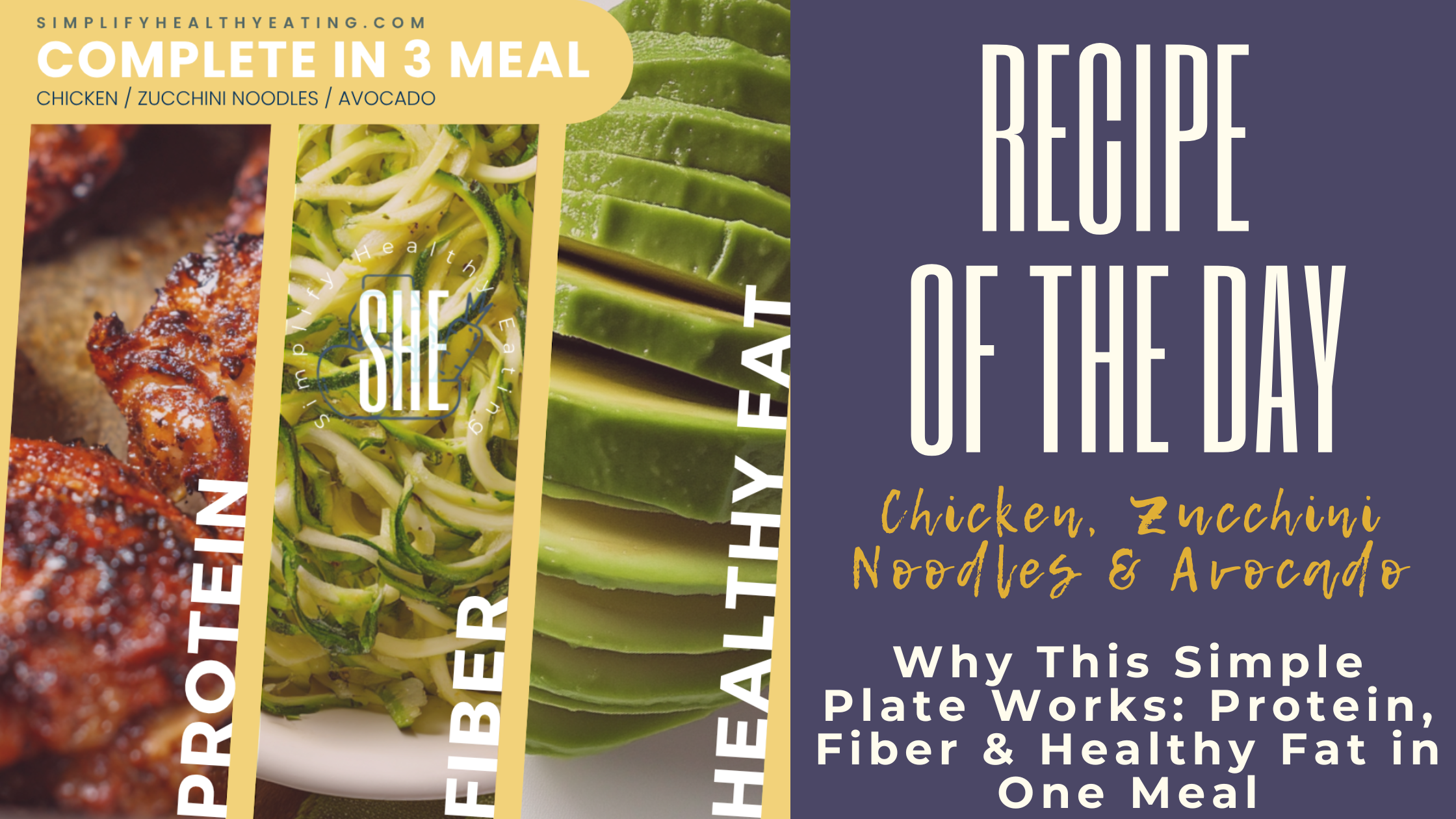
That is exactly why this “Complete in 3” meal works so well: chicken, zucchini noodles, and avocado.
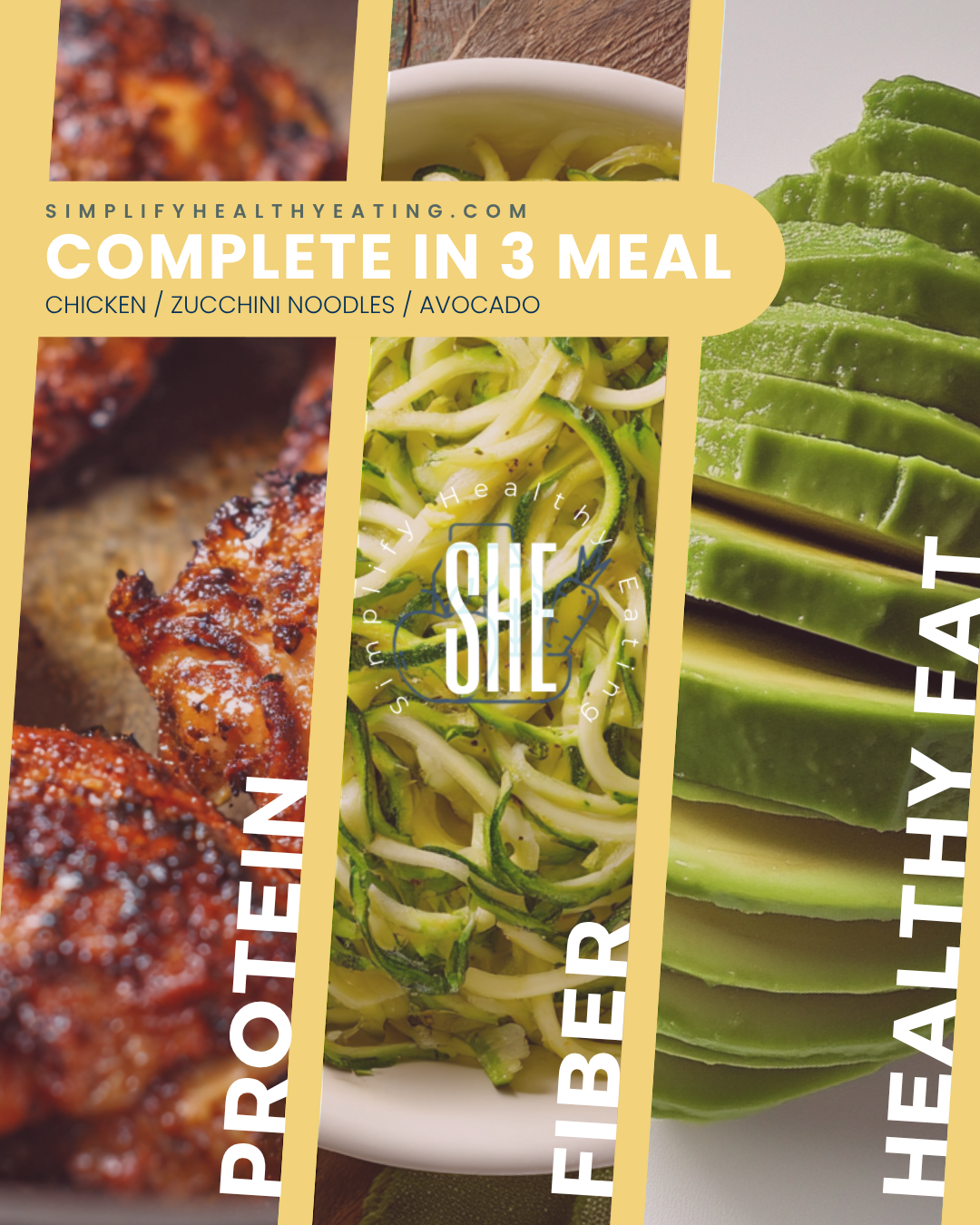
It is simple, satisfying, blood-sugar friendly, and easy to customize. It gives your body the kind of balanced support that helps you feel full without feeling heavy, nourished without feeling restricted, and consistent without needing a brand-new meal plan every Monday.
Ingredient 1: Chicken for Protein and Muscle Support
Chicken is the protein anchor of this meal.
Protein matters because it helps support muscle, fullness, tissue repair, and overall body function. It is especially important for women over 35 because muscle becomes more valuable as we age. The goal is not just “eat less.” The goal is to build meals that help your body feel supported while you pursue sustainable fat loss, energy, and strength.
Chicken is also versatile. You can grill it, bake it, shred it, air fry it, season it spicy, keep it simple, or meal prep it ahead of time. That makes it one of those practical protein options for busy women who need healthy meals without starting from scratch every day.
Protein also helps make meals more satisfying. When your plate is mostly low-protein, high-carb, or snack-based, you may notice hunger showing up again quickly. Adding chicken gives the meal more staying power and helps prevent that “I just ate, why am I still hungry?” feeling.
Harvard’s Nutrition Source describes protein as an essential macronutrient and lists chicken among common protein foods that can fit into a healthy eating pattern. (The Nutrition Source)
Ingredient 2: Zucchini Noodles for Volume, Fiber, and Hydration
Zucchini noodles, also called zoodles, bring the volume.
This matters because many women are trying to eat smaller portions when what their bodies actually need is a smarter plate. Zucchini noodles allow you to create a bigger, more satisfying meal while adding vegetables, texture, and freshness.
Zucchini is naturally light, hydrating, and easy to pair with sauces, proteins, and seasonings. It gives you the feel of a noodle-style meal without making the plate feel heavy. That does not mean traditional pasta is “bad.” It simply means zoodles can be a useful option when you want more volume, more vegetables, and a lighter base.
Zucchini also contributes dietary fiber and vitamin C. USDA SNAP-Ed lists zucchini as providing fiber and vitamin C, along with being naturally low in fat and free from added sugars. (SNAP-Ed Connection)
Fiber is one of the keys to making this meal work. Fiber helps slow digestion, supports fullness, and may help reduce sharp blood sugar swings after eating. Harvard’s Nutrition Source explains that soluble fiber attracts water in the gut and forms a gel-like substance that slows digestion, which may help reduce hunger and help prevent blood glucose surges. (The Nutrition Source)
Ingredient 3: Avocado for Healthy Fat and Satisfaction
Avocado brings the healthy fat.
This is the ingredient that helps the meal feel satisfying instead of “diet-y.” One of the biggest mistakes women make when trying to lose fat is cutting meals down so far that they remove the very foods that help them feel satisfied.
Healthy fat matters because it adds flavor, texture, and satiety. Avocado makes this meal feel more complete. It pairs beautifully with seasoned chicken and zucchini noodles, especially if you add lime, garlic, cilantro, crushed red pepper, or a light vinaigrette.
Avocados contain fiber and mostly unsaturated fat. Harvard’s Nutrition Source notes that avocados are a good source of fiber and contain more healthy fat than carbohydrate, making them a satisfying addition to healthful meal plans. (The Nutrition Source)
That is important because the goal is not to avoid fat. The goal is to choose fats that support the meal and help you stay consistent.
Why This Meal Supports Sustainable Fat Loss
This plate works because it is not built on restriction.
It is built on structure.
Chicken gives you protein.
Zucchini noodles give you volume and fiber.
Avocado gives you healthy fat and satisfaction.
Together, these ingredients create a meal that can support fullness, cravings, energy, and consistency. That is the heart of sustainable fat loss: meals that make sense for your body and your real life.
This meal is also easy to adjust. Need more energy? Add a small serving of brown rice, quinoa, beans, or roasted sweet potato. Want more flavor? Add salsa, pesto, lemon garlic sauce, or a Greek yogurt-based dressing. Need more volume? Add spinach, peppers, mushrooms, or cucumber.
The structure is simple, but the options are endless.
Simple Ways to Prepare It
Season chicken with garlic powder, paprika, black pepper, onion powder, and a squeeze of lemon.
Sauté zucchini noodles lightly so they stay firm instead of watery.
Top with sliced avocado right before serving.
Add a sprinkle of hemp seeds, fresh herbs, salsa, or a drizzle of olive oil if desired.
This is the kind of meal that proves healthy eating does not have to be complicated. Sometimes the best thing you can do is build a plate that checks the boxes: protein, fiber, healthy fat, flavor, and satisfaction.
References
Harvard T.H. Chan School of Public Health. (n.d.). Protein. The Nutrition Source. https://nutritionsource.hsph.harvard.edu/what-should-you-eat/protein/
Harvard T.H. Chan School of Public Health. (2022, April). Fiber. The Nutrition Source. https://nutritionsource.hsph.harvard.edu/carbohydrates/fiber/
Harvard T.H. Chan School of Public Health. (2022, April). Avocados. The Nutrition Source. https://nutritionsource.hsph.harvard.edu/avocados/
SNAP-Ed Connection. (n.d.). Zucchini. U.S. Department of Agriculture. https://snaped.fns.usda.gov/resources/nutrition-education-materials/seasonal-produce-guide/zucchini