

Why Is Fiber Important for Fat Loss?
When most women think about fat loss, they immediately think about calories.
Eat less.
Cut carbs.
Shrink the plate.
Skip the snack.
Push through hunger.
Be more disciplined.
But sustainable fat loss is not just about eating less.
When most women think about fat loss, they immediately think about calories.
Eat less.
Cut carbs.
Shrink the plate.
Skip the snack.
Push through hunger.
Be more disciplined.
But sustainable fat loss is not just about eating less.
It is about eating in a way that helps your body feel full, energized, supported, and consistent enough to keep going.
That is where fiber becomes powerful.
Fiber is one of the most underrated tools in a successful fat-loss phase because it helps with fullness, digestion, energy stability, blood sugar balance, gut health, and volume eating. And when fiber is combined with an appropriate calorie deficit, it can make the fat-loss process feel a whole lot less like punishment.
Because let’s be honest: nobody wants to be hungry all day.
And you do not have to be.
A high-fiber approach allows you to eat more nourishing foods while supporting your goals. Think vegetables, berries, oats, beans, lentils, whole grains, chia seeds, apples, sweet potatoes, and big colorful meals that actually hold you.
Fiber is not flashy, but it works.
So let’s talk about why fiber matters so much for fat loss and how to use it in a way that feels realistic.
What Is Fiber?
Fiber is a type of carbohydrate found in plant foods that your body does not fully digest.
That means it moves through the digestive system differently than other carbohydrates. Instead of being quickly broken down into sugar, fiber adds bulk, slows digestion, supports gut health, and helps keep meals more satisfying.
Fiber is found in foods like:
Vegetables
Fruits
Beans
Lentils
Oats
Whole grains
Nuts
Seeds
Chia seeds
Flaxseed
Sweet potatoes
Popcorn
Berries
There are two main types of fiber: soluble fiber and insoluble fiber.
Soluble fiber dissolves in water and forms a gel-like substance in the digestive tract. This can help slow digestion and support blood sugar balance.
Insoluble fiber does not dissolve in water. It adds bulk to stool and helps keep digestion moving.
Both types matter.
You do not need to obsess over which food has which type. The bigger goal is to eat a variety of fiber-rich foods consistently.
Reason 1: Fiber Helps You Feel Full Faster
One of the biggest reasons fiber supports fat loss is because it helps you feel full.
Fiber adds bulk to meals. That bulk helps create more volume in your stomach, which can send fullness signals to your brain.
This is why a large salad with chicken, beans, vegetables, avocado, and a flavorful dressing may feel more satisfying than a small handful of crackers, even if the calories are similar.
Your stomach responds to volume.
That matters because many women are trying to lose fat by making their meals smaller, but smaller meals often do not create enough satisfaction.
Then what happens?
You eat the tiny meal.
You feel proud for a short time.
Then hunger comes back loud.
Then cravings hit.
Then you snack your way through the afternoon.
Then you wonder why willpower disappeared.
But the problem was not willpower.
The problem was that the meal did not hold you.
Fiber-rich foods like vegetables, oatmeal, beans, berries, chia seeds, and lentils help create more satisfying meals. They give your body something to work with. They slow things down. They help you feel like you actually ate.
That is important for fat loss because the more satisfied you feel after meals, the easier it is to stay consistent.
Reason 2: Fiber Helps Keep Your Energy Stable
If your energy is up and down all day, your eating habits will usually follow.
Blood sugar spikes and crashes can leave you feeling tired, foggy, irritable, shaky, or desperate for something sweet. And once your energy crashes, it becomes much harder to make thoughtful choices.
That is another reason fiber matters.
Fiber helps slow down the digestion and absorption of carbohydrates. This can lead to a more gradual release of glucose into the bloodstream, which helps support steadier energy.
This does not mean carbs are bad.
Carbs are not the enemy.
The goal is to choose carbs that come with fiber and nutrients more often than highly processed, low-fiber options.
For example:
Oatmeal will generally support you differently than a sugary pastry.
A sweet potato will generally support you differently than candy.
Beans and lentils will generally support you differently than refined snack foods.
Berries will generally support you differently than a sugar-sweetened drink.
Again, this is not about perfection.
It is about building meals that help your body feel more stable.
When your energy feels stable, your cravings often become easier to manage. When cravings become easier to manage, consistency becomes easier. And when consistency becomes easier, fat loss becomes more sustainable.
Reason 3: Fiber Keeps Digestion Running Smoothly
Nobody wants to talk about constipation, but let’s be grown.
Digestive health matters.
When digestion is sluggish, you may feel bloated, uncomfortable, heavy, and frustrated. And when your body feels uncomfortable, it can affect your mood, your motivation, your confidence, and even the way you interpret progress.
Fiber helps keep things moving through your digestive system.
It adds bulk. It supports regular bowel movements. It helps the digestive tract do what it is designed to do.
But here is the important part: you want to increase fiber gradually.
Going from very little fiber to a lot of fiber overnight can make you feel bloated, gassy, and uncomfortable. That does not mean fiber is bad. It means your body may need time to adjust.
A better approach:
Add one high-fiber food at a time.
Drink enough water.
Pair fiber with protein.
Spread fiber across the day instead of cramming it into one meal.
Notice how your body responds.
Examples:
Add berries to breakfast.
Add spinach to eggs.
Add beans to lunch.
Add roasted vegetables to dinner.
Add chia seeds to yogurt.
Snack on popcorn instead of chips.
Choose oatmeal instead of a low-fiber cereal.
Small shifts add up.
Reason 4: Fiber Lets You Eat More With Fewer Calories
This is where fiber and volume eating work beautifully together.
Volume eating is all about choosing foods that give you more food volume for fewer calories while still providing nutrition and satisfaction.
Fiber-rich foods are perfect for this.
Think big salads, vegetable soups, stir-fries, roasted vegetables, berries, oatmeal, beans, lentils, popcorn, and Greek yogurt bowls with fruit and chia seeds.
These foods help fill the plate.
And a full plate matters emotionally too.
Because when you are used to dieting, a tiny plate can feel like punishment. It can trigger that “I’m restricted” feeling before you even finish eating.
But a high-fiber, high-volume plate can feel abundant.
You can eat a large bowl of vegetable soup.
You can eat a big salad with protein.
You can enjoy oatmeal with berries.
You can build a colorful stir-fry.
You can have roasted vegetables with chicken and sweet potato.
You can make a Greek yogurt bowl with berries, chia, and a sprinkle of granola.
That is not deprivation.
That is strategy.
This is why fiber is so helpful during fat loss. It helps you build meals that are lower in calorie density but higher in fullness, nutrients, and satisfaction.
Reason 5: Fiber Cultivates a Healthy Microbiome
Your gut is home to trillions of microbes, often referred to as the gut microbiome.
That microbiome plays an important role in digestion, immune function, metabolism, and overall health.
Fiber-rich foods help nourish the beneficial bacteria in your gut. In other words, fiber helps feed the ecosystem that supports your body.
This is one of the reasons I always remind women that wellness is not just about the scale.
Yes, fat loss may be a goal.
But your digestion matters.
Your energy matters.
Your mood matters.
Your inflammation matters.
Your cravings matter.
Your gut health matters.
Your long-term consistency matters.
Fiber supports the bigger picture.
And the bigger picture is where sustainable wellness lives.
How Much Fiber Should You Eat?
A good general goal for many adults is to work toward roughly 25–34 grams of fiber per day, depending on individual needs, health status, and overall intake.
But do not jump there overnight if your current fiber intake is low.
Start where you are.
If you only eat one serving of vegetables a day, start by adding one more.
If you never eat beans, add a small scoop to a salad or soup.
If breakfast is low-fiber, add berries or chia seeds.
If snacks are mostly processed, try popcorn, fruit, or vegetables with dip.
The goal is not perfection.
The goal is progress your body can tolerate.
If you have digestive conditions, diabetes, kidney disease, inflammatory bowel disease, or any condition that requires medical nutrition guidance, talk with your healthcare provider before making big changes.
Easy Ways to Add More Fiber Without Overthinking It
Here are simple ways to increase fiber in real life:
Add berries to Greek yogurt.
Add chia seeds to smoothies or pudding.
Choose oatmeal instead of low-fiber cereal.
Add beans or lentils to soups.
Add vegetables to eggs.
Use leafy greens as a base for bowls.
Snack on air-popped popcorn.
Add roasted vegetables to dinner.
Choose whole grains more often.
Add apple slices to a snack plate.
Use sweet potatoes as a filling carb source.
Add flaxseed to yogurt or oatmeal.
Keep frozen vegetables on hand for fast meals.
You do not need a complicated plan.
You need repeatable habits.
A Simple High-Fiber Meal Formula
Use this formula when building meals:
Protein + Fiber + Healthy Fat + Flavor
Protein helps preserve muscle and supports fullness.
Fiber helps support digestion, fullness, and blood sugar balance.
Healthy fat helps the meal feel satisfying.
Flavor helps you actually enjoy the meal.
Here are a few examples:
Greek yogurt + berries + chia seeds + almonds
Chicken + roasted vegetables + sweet potato + avocado
Turkey lentil soup + side salad
Salmon + cauliflower rice + edamame
Egg scramble + spinach + peppers + fruit
Oatmeal + protein powder + blueberries + flaxseed
Bean bowl + greens + salsa + Greek yogurt drizzle
These meals are not tiny. They are not bland. They are not built on punishment.
They are built on support.
Fiber and Fat Loss: The Mindset Shift
The biggest shift is this:
Fiber helps you stop fighting hunger and start building meals that work with your body.
For years, many women were taught to treat hunger like a character flaw.
But hunger is not a moral failure.
Sometimes hunger is a message.
Maybe your meal was too small.
Maybe it was too low in protein.
Maybe it was too low in fiber.
Maybe it did not have enough volume.
Maybe you waited too long to eat.
Maybe you are stressed, tired, or undernourished.
Instead of shaming hunger, learn from it.
Ask: what can I add to this meal to make it more supportive?
Can I add vegetables?
Can I add beans?
Can I add berries?
Can I add oats?
Can I add chia seeds?
Can I add lentils?
Can I add a side salad or broth-based soup?
That is how you move from restriction to strategy.
And strategy is what helps you stay consistent.
There’s Still Time to Join the 21-Day Happy Brain Challenge
If you are ready to reset your mindset, support your habits, and stop approaching wellness from a place of guilt and all-or-nothing thinking, there’s still time to join the FREE 21-Day Happy Brain Challenge.
This challenge is designed to help you create simple daily rhythms that support your mind, body, and wellness routine one step at a time.
Because healthy eating is not just about food.
It is also about your mindset.
Your habits.
Your stress response.
Your energy.
Your self-talk.
Your ability to keep going after an imperfect day.
Inside the challenge, you will receive daily encouragement and practical wellness support to help you feel more grounded, more intentional, and more consistent.
No pressure.
No perfection.
No shame.
There’s still time to join us inside the FREE 21-Day Happy Brain Challenge.
Get started today.
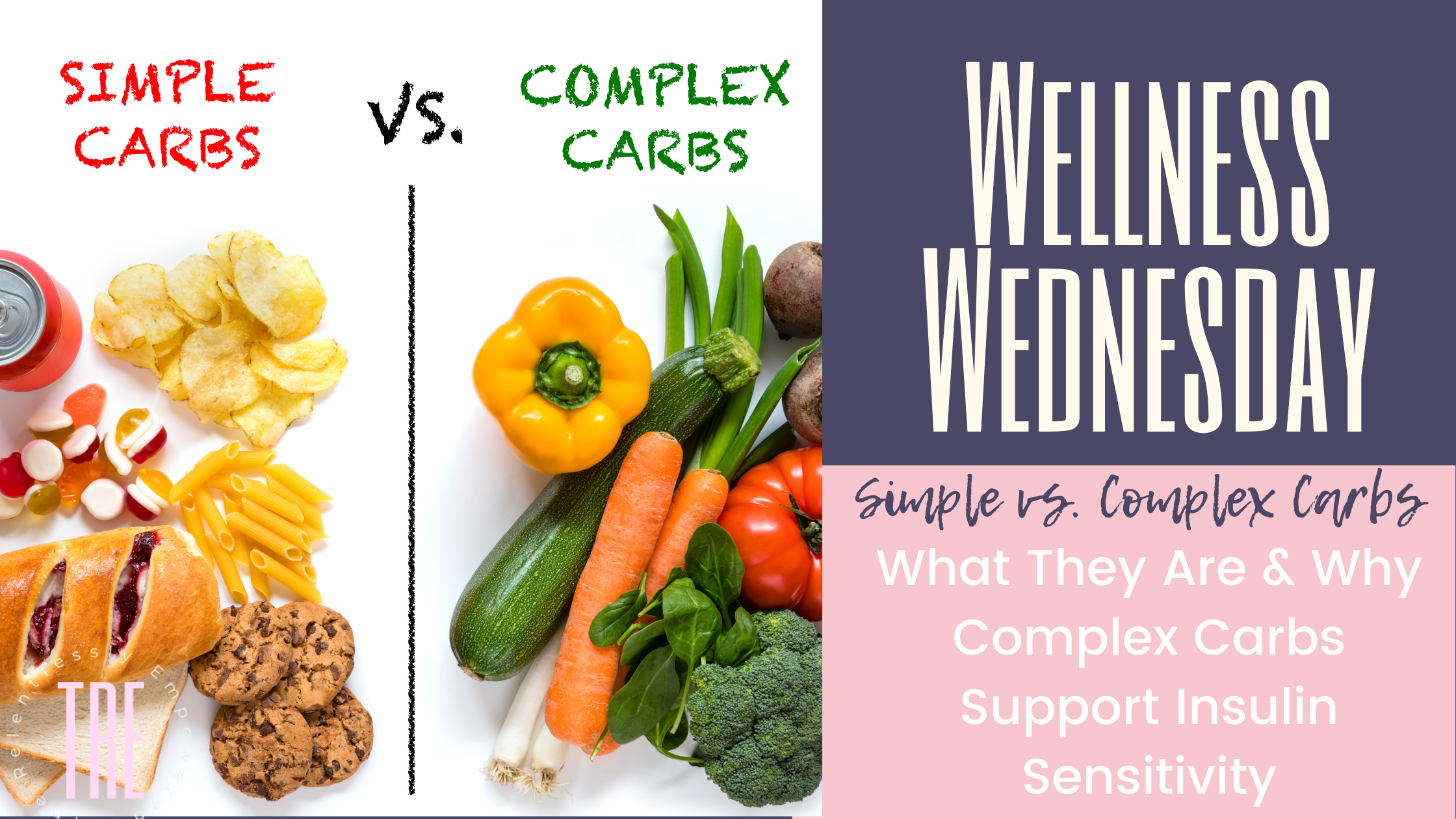
Simple vs. Complex Carbs — What They Are & Why Complex Carbs Support Insulin Sensitivity
Carbohydrates have gotten a bad reputation.
They’re often blamed for blood sugar issues, weight gain, fatigue, and cravings — but the truth is, not all carbs behave the same way in the body.
Understanding the difference between simple carbs and complex carbs can completely change how you fuel your body, support insulin sensitivity, and experience steady energy throughout the day.
Carbohydrates have gotten a bad reputation.
They’re often blamed for blood sugar issues, weight gain, fatigue, and cravings — but the truth is, not all carbs behave the same way in the body.
Understanding the difference between simple carbs and complex carbs can completely change how you fuel your body, support insulin sensitivity, and experience steady energy throughout the day.
This isn’t about cutting carbs — it’s about choosing carbs that work with your body instead of against it.
What Are Simple Carbs?
Simple carbohydrates break down quickly in the body. That fast digestion leads to rapid blood sugar spikes, followed by equally fast crashes.
They can feel energizing at first — but the energy doesn’t last.
Common Sources of Simple Carbs:
Table sugar
White bread and white pasta
Pastries and baked goods
Juice and sweetened drinks
Because they digest so rapidly, simple carbs often trigger:
Sharp insulin release
Increased cravings
Energy dips
Hunger returning soon after eating
👉 Fast spikes = more insulin, more cravings, and more crashes.
This doesn’t mean these foods are “bad” — but when they make up the bulk of your carbohydrate intake, they can strain insulin signaling over time.
What Are Complex Carbs?
Complex carbohydrates contain fiber, which slows digestion and allows glucose to enter the bloodstream gradually.
That slower release is exactly what supports blood sugar stability and insulin sensitivity.
Common Sources of Complex Carbs:
Whole grains (quinoa, oats, brown rice)
Beans and lentils
Sweet potatoes
Fruits like berries and apples
Vegetables
Instead of an energy surge followed by a crash, complex carbs provide:
Slow, steady energy
Fewer blood sugar spikes
Better appetite control
Longer-lasting fullness
👉 Steady release = better insulin response, fewer cravings, and sustained energy.
Why Complex Carbs Support Insulin Sensitivity
Insulin sensitivity refers to how effectively your cells respond to insulin. When cells respond well, glucose moves efficiently from the bloodstream into muscles and tissues where it can be used for energy.
Fiber-rich complex carbs help by:
Slowing glucose absorption
Reducing insulin spikes
Supporting gut health (which plays a major role in blood sugar regulation)
Improving metabolic flexibility
Over time, this supports:
More balanced hormones
Improved energy levels
Reduced cravings
Better long-term metabolic health
Think of complex carbs as insulin-supporting superfoods — not something to fear, but something to intentionally include.
Simple vs. Complex: The Big Picture
This isn’t about perfection or elimination.
It’s about awareness.
When simple carbs dominate the plate without fiber, protein, or fat, the body has to work harder to manage blood sugar. But when complex carbs are prioritized — especially when paired with protein and healthy fats — the body experiences calm, steady fuel.
A Helpful Reframe:
Not “good carbs” vs. “bad carbs”
But fast carbs vs. slow, steady carbs
And most days, your metabolism will thank you for choosing slow and steady.
How to Make Complex Carbs Work Even Better
You don’t need to overhaul your entire diet. Start with small, practical shifts:
Swap white grains for whole grains when possible
Add beans or lentils to meals you already eat
Pair fruit with protein or fat
Include vegetables at every meal
Focus on fiber first — not restriction
Consistency beats intensity every time.
Nourishing Your Body Without Fear
Carbohydrates are not the enemy.
The goal isn’t elimination — it’s education, balance, and intention.
When you understand how different carbs affect blood sugar and insulin, you’re empowered to make choices that support your energy, metabolism, and long-term health — without guilt or extremes.
🌿 Wellness Wednesday CTA
If you want simple, realistic ways to build balanced meals and support blood sugar without overwhelm:
👉 Explore the Simplify Healthy Eating tab on our website for FREE and low-cost resources designed to help you:
Understand food without fear
Build meals that support insulin sensitivity
Create steady energy throughout the day
Eat in a way that fits real life
Because healthy eating should feel supportive, not stressful.