
A Nutrient-Dense Plate for Protein, Fiber, Omega-3s, and Light Energy
A Nutrient-Dense Plate for Protein, Fiber, Omega-3s, and Light Energy
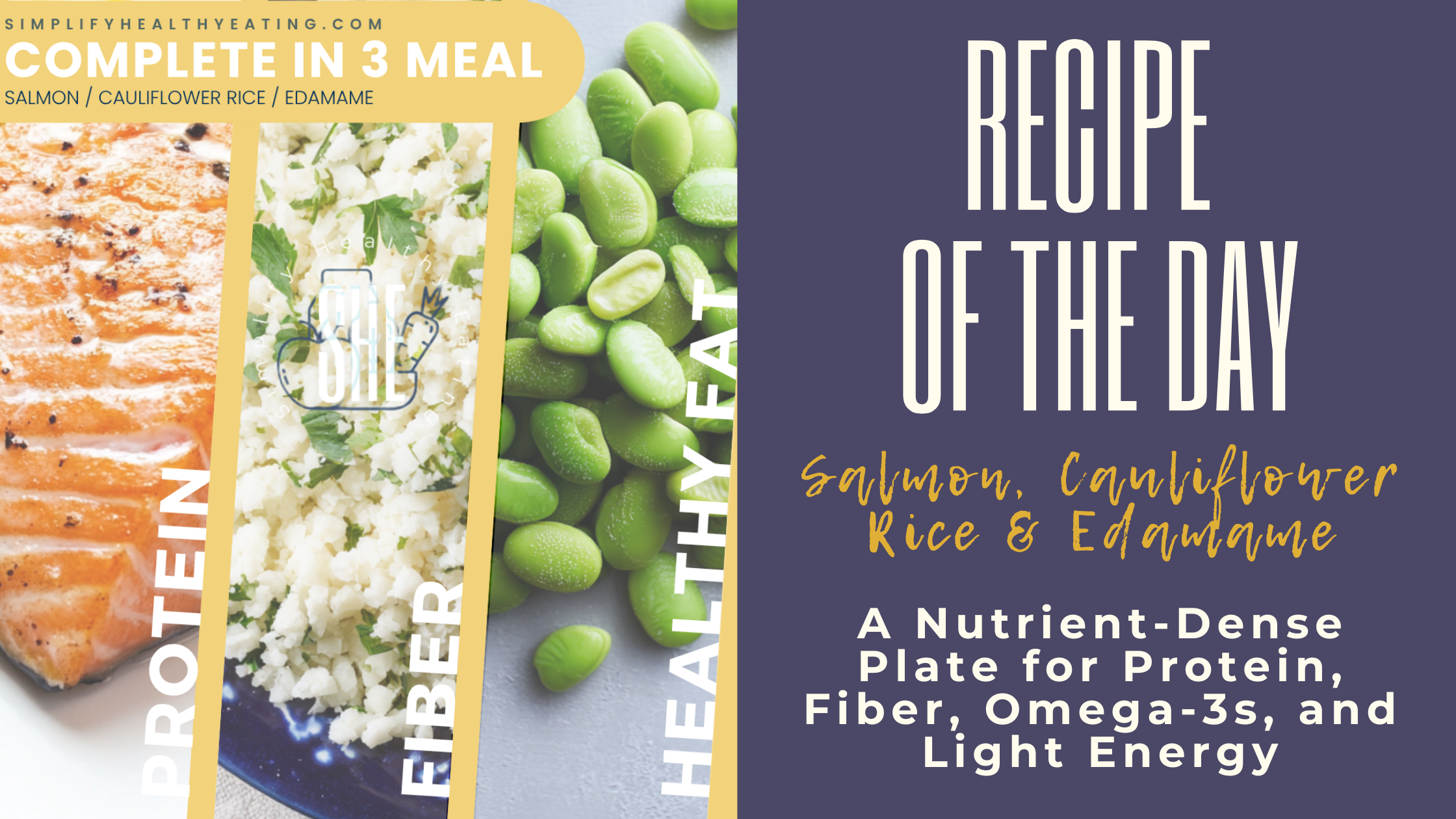
This “Complete in 3” meal is a beautiful example of how healthy eating can be simple and powerful at the same time.
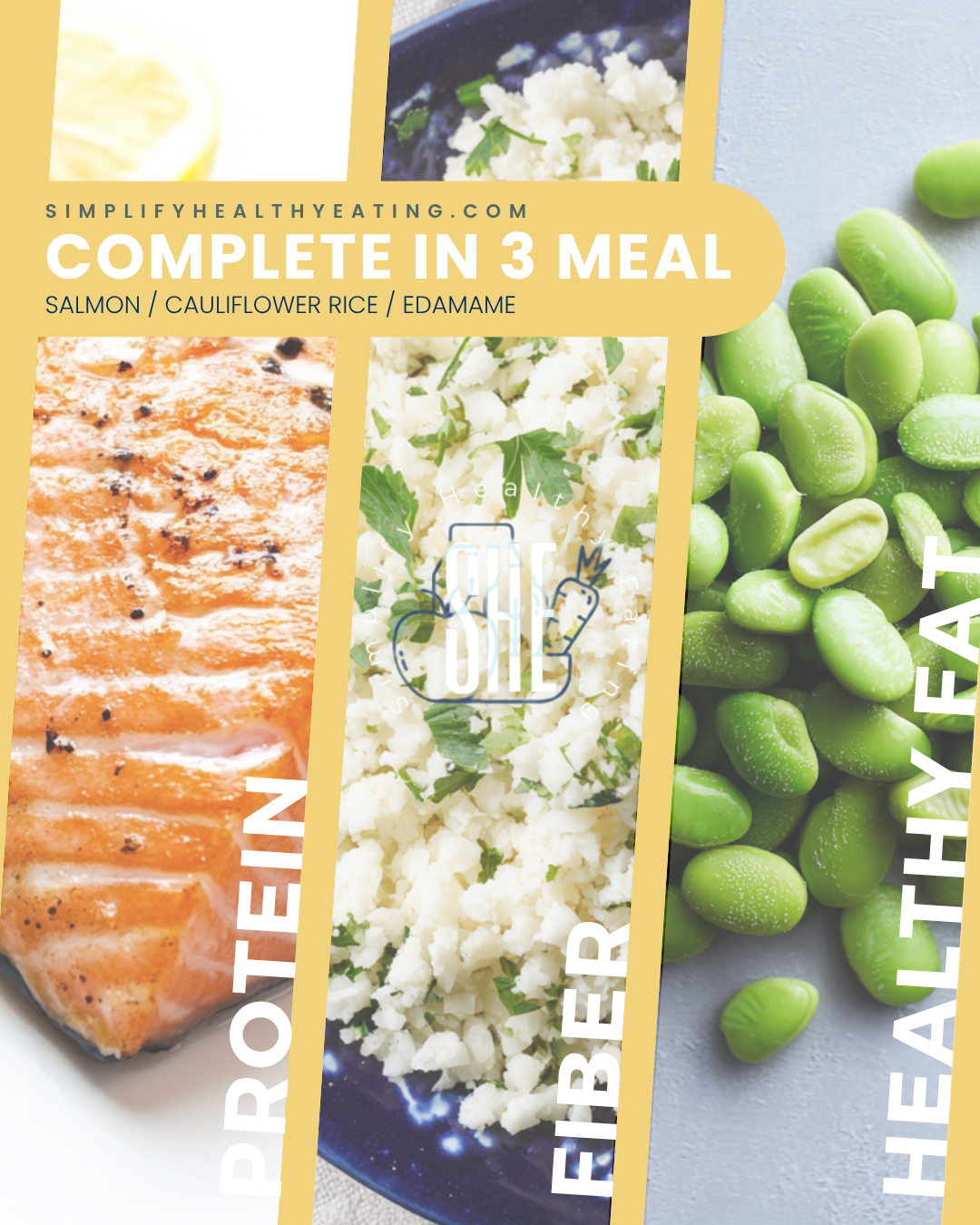
The combination is salmon, cauliflower rice, and edamame.
It is light but still satisfying. It is simple but still nutrient-dense. It gives you protein, fiber, omega-3 fats, and plant-based support in one easy plate.
This is the kind of meal that works well for busy women who want to feel energized instead of weighed down, full instead of stuffed, and nourished instead of restricted.
This “Complete in 3” meal is a beautiful example of how healthy eating can be simple and powerful at the same time.
The combination is salmon, cauliflower rice, and edamame.
It is light but still satisfying. It is simple but still nutrient-dense. It gives you protein, fiber, omega-3 fats, and plant-based support in one easy plate.
This is the kind of meal that works well for busy women who want to feel energized instead of weighed down, full instead of stuffed, and nourished instead of restricted.
Ingredient 1: Salmon for Protein and Omega-3 Fats
Salmon is the star of this plate.
It gives you high-quality protein, but it also brings something many other protein sources do not: long-chain omega-3 fatty acids.
Omega-3 fats matter because they support heart health and are involved in many functions throughout the body. Harvard’s Nutrition Source notes that fish and seafood are major sources of long-chain omega-3 fats and are also rich in nutrients such as vitamin D and selenium, high in protein, and low in saturated fat. (The Nutrition Source)
Salmon is especially helpful in a wellness-focused meal because it feels satisfying without requiring a heavy sauce or complicated recipe. You can season it simply with lemon, garlic, black pepper, dill, paprika, or a light glaze.
For women over 35, salmon can be a helpful part of a balanced eating rhythm because it supports protein intake while adding healthy fats that help the meal feel complete.
This is important because fat loss meals should not feel like punishment. They should feel like support.
Ingredient 2: Cauliflower Rice for Volume and a Lighter Base
Cauliflower rice is the fiber and volume base of this meal.
It is not about pretending cauliflower is rice. Rice can absolutely have a place in a balanced diet. But cauliflower rice is useful when you want a lighter, vegetable-forward base that adds volume without making the meal feel heavy.
It gives you more food on the plate, more texture, and more opportunity to add flavor.
You can sauté cauliflower rice with garlic, green onion, lemon, parsley, or a little olive oil. You can make it Mediterranean-style, Asian-inspired, spicy, or herb-forward depending on the salmon seasoning.
Cauliflower also brings vitamin C and fiber. USDA SNAP-Ed lists one cup of chopped cauliflower as providing 27 calories, 2 grams of fiber, and 57 milligrams of vitamin C. (SNAP-Ed Connection)
That makes cauliflower rice a smart add-in for women who want more vegetables without feeling like they are eating another plain salad.
Ingredient 3: Edamame for Plant Protein, Fiber, and Texture
Edamame adds plant-based protein, fiber, and a satisfying bite.
This ingredient is what makes the meal feel more complete. Salmon gives you protein and omega-3 fats. Cauliflower rice gives you volume. Edamame adds that extra layer of fullness and texture.
Edamame is also easy. You can buy it frozen, steam it quickly, and toss it into bowls, salads, soups, stir-fries, or snack plates.
One cup of cooked edamame is commonly reported through USDA-based nutrition data as providing about 18 grams of protein and about 8 grams of fiber, making it a strong plant-based addition to meals. (Verywell Fit)
That combination of protein and fiber is powerful for satisfaction. When meals include both, they tend to feel more grounded and steady.
Why This Meal Supports Energy Without the Crash
This plate works because it is balanced without being complicated.
Salmon gives protein and healthy fats.
Cauliflower rice gives fiber, volume, and vitamin C.
Edamame gives plant protein, fiber, and texture.
That combination helps create a meal that supports fullness and energy. It is also easy to meal prep because the components can be cooked separately and assembled quickly.
For example, you can bake several salmon filets, prep cauliflower rice, steam edamame, and build bowls throughout the week. Add a drizzle of tahini lemon sauce, salsa verde, low-sugar teriyaki, or Greek yogurt dill sauce and it feels like a new meal every time.
Make It Even Better
Add cucumber, shredded carrots, cabbage, or greens for extra crunch.
Add avocado if you want more healthy fat.
Add brown rice or quinoa if you need more carbohydrate for energy.
Add sesame seeds, green onion, or fresh herbs for flavor.
Use cauliflower rice as half the base and regular rice as the other half if you want the best of both worlds.
This is what makes “Complete in 3” meals so useful. You are not locked into one rigid recipe. You are learning how to build a plate.
And once you know how to build a plate, healthy eating gets a lot less overwhelming.
References
Anderson, J. (2024, June 4). Edamame nutrition facts and health benefits. Verywell Fit. https://www.verywellfit.com/edamame-nutrition-facts-4583022
Harvard T.H. Chan School of Public Health. (n.d.). Fish: Friend or foe? The Nutrition Source. https://nutritionsource.hsph.harvard.edu/fish/
SNAP-Ed Connection. (n.d.). Cauliflower. U.S. Department of Agriculture. https://snaped.fns.usda.gov/resources/nutrition-education-materials/seasonal-produce-guide/cauliflower
A Cozy, Filling Meal That Supports Protein, Fiber, and Real-Life Consistency
Ground turkey gives this meal its protein foundation.
Depending on the lean percentage you choose, ground turkey can be a practical protein option for meal prep. It cooks quickly, absorbs flavor well, and works in soups, bowls, lettuce wraps, stuffed peppers, skillets, and casseroles.
Protein is important because it helps support muscle, appetite control, and meal satisfaction. A meal that includes protein tends to feel more complete than a meal built only on starch or vegetables.
Some meals just feel like comfort.
Warm.
Hearty.
Simple.
Filling.
Easy to batch cook.
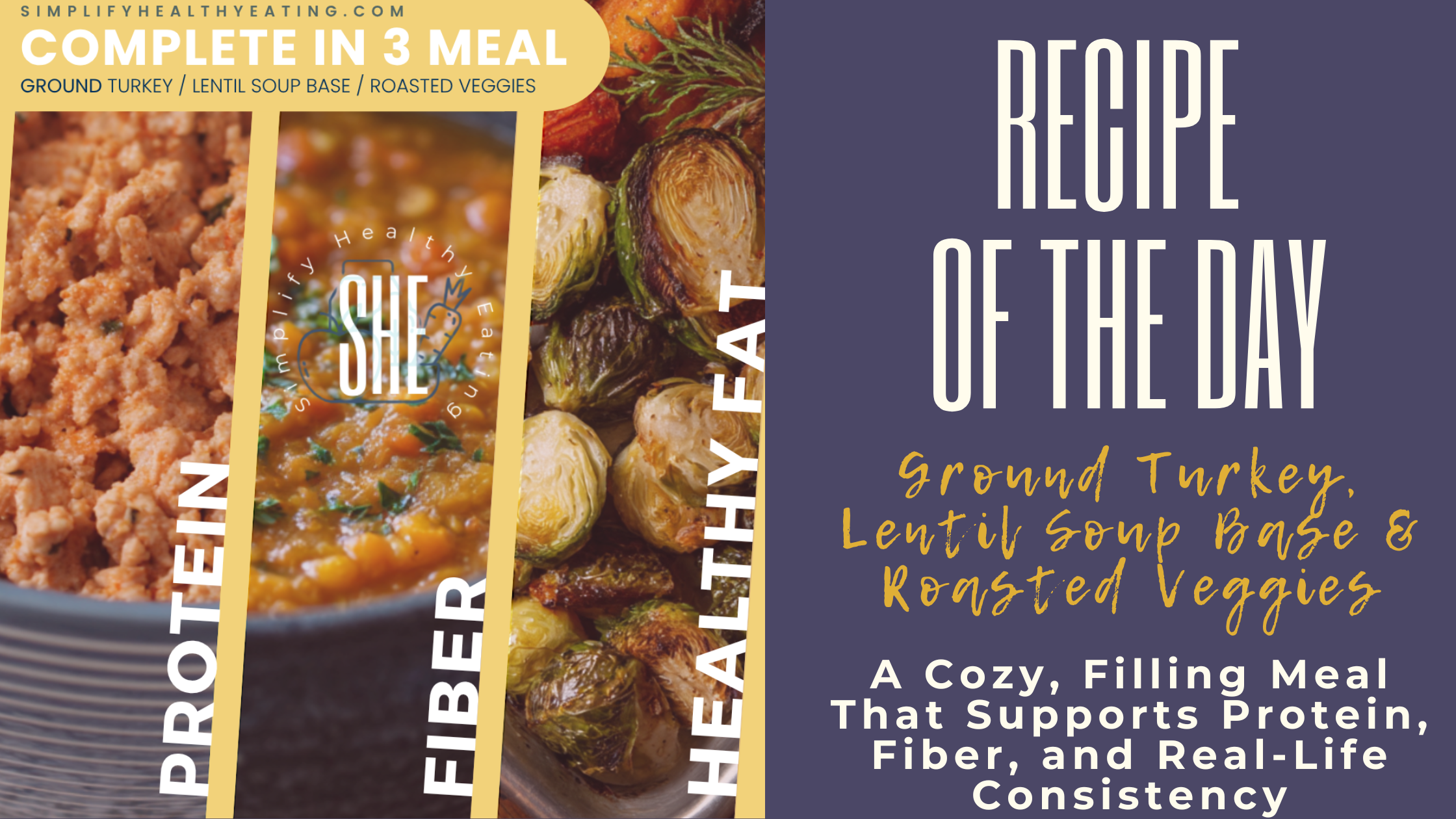
That is what makes this “Complete in 3” meal so practical: ground turkey, lentil soup base, and roasted veggies.
This is the kind of meal that works beautifully for busy women who want healthy eating to feel less like a diet and more like a system. You can make it in bulk, reheat it easily, change the seasoning profile, and turn it into several meals throughout the week.
The magic is in the structure: protein + fiber + vegetables.
It supports fullness, energy, digestion, and blood sugar balance without requiring perfection.
Ingredient 1: Ground Turkey for Lean Protein
Ground turkey gives this meal its protein foundation.
Depending on the lean percentage you choose, ground turkey can be a practical protein option for meal prep. It cooks quickly, absorbs flavor well, and works in soups, bowls, lettuce wraps, stuffed peppers, skillets, and casseroles.
Protein is important because it helps support muscle, appetite control, and meal satisfaction. A meal that includes protein tends to feel more complete than a meal built only on starch or vegetables.
For women over 35, protein becomes even more important because muscle support is closely tied to strength, metabolism, mobility, and long-term health. That does not mean every meal has to be extremely high in protein. It simply means protein should have a seat at the plate.
The American Heart Association encourages choosing healthy protein sources, including fish, seafood, beans, lentils, nuts, seeds, soy, low-fat dairy, and lean or skinless poultry when meat is included. (www.heart.org)
Ground turkey also gives you flexibility. You can season it Italian-style with basil, oregano, and garlic. You can make it smoky with paprika and cumin. You can add ginger, garlic, and coconut aminos for an Asian-inspired bowl. Or you can stir it into lentil soup for a cozy, protein-forward meal.
Ingredient 2: Lentil Soup Base for Fiber, Plant Protein, and Fullness
Lentils are the quiet powerhouse in this meal.
They bring fiber, plant-based protein, texture, and slow-digesting carbohydrates. That combination helps make a meal feel hearty without depending on heavy sauces or overly processed ingredients.
This is especially helpful for women who are trying to avoid the “I ate, but I’m still not satisfied” problem. Lentils give the meal body. They help it feel like comfort food while still supporting your wellness goals.
Fiber-rich foods can help with fullness, blood sugar control, and digestive health. The CDC notes that fiber helps maintain digestive health, helps us feel fuller longer, helps control blood sugar, and can help lower cholesterol levels. (CDC)
That is why a lentil soup base works so beautifully here. You are not just adding liquid to stretch the meal. You are adding a nutrient-dense foundation that supports fullness and structure.
Lentils also pair well with ground turkey because they create a balanced protein blend: animal protein plus plant-based protein and fiber. That gives the meal more staying power than turkey alone.
Ingredient 3: Roasted Veggies for Volume, Color, and Nutrients
Roasted vegetables are where the flavor comes alive.
Brussels sprouts, carrots, onions, peppers, zucchini, cauliflower, broccoli, mushrooms, or sweet potatoes can all work here. Roasting vegetables brings out natural sweetness and adds texture, which makes the meal more enjoyable.
That matters because healthy eating has to taste good if you want it to last.
Roasted vegetables also add volume. Instead of eating a small bowl and hoping it holds you, you can build a fuller plate with fiber-rich, colorful vegetables that support satisfaction.
This is where many women need a mindset shift. A bigger plate does not automatically mean a “bad” plate. When your plate is built with protein, fiber, and vegetables, it can help you feel more nourished and less likely to snack constantly later.
The American Heart Association includes a wide variety of vegetables and fruits as part of a heart-healthy dietary pattern. (www.heart.org)
Why This Meal Works for Blood Sugar Balance
This meal has three things that help slow the “eat-crash-crave” cycle:
Protein from ground turkey.
Fiber from lentils and vegetables.
Volume from the soup base and roasted produce.
Fiber slows digestion, which can help create a steadier rise in blood sugar after meals. Harvard’s Nutrition Source explains that high-fiber foods slow the rate of digestion and can cause a more gradual, lower rise in blood sugar. (The Nutrition Source)
That is one reason this meal can be especially helpful for women who struggle with afternoon crashes, evening cravings, or feeling hungry soon after eating.
Simple Ways to Use This Meal
Serve it as a hearty bowl with roasted vegetables on top.
Spoon it over cauliflower rice or brown rice.
Use it as a stuffed pepper filling.
Add greens like spinach or kale at the end.
Turn leftovers into a turkey-lentil vegetable soup.
Top with avocado, Greek yogurt, fresh herbs, or pumpkin seeds.
This is the kind of recipe structure that helps you stop asking, “What am I supposed to eat?” every day. It becomes a repeatable framework.
And repeatable frameworks are how healthy eating becomes simpler.
References
American Heart Association. (2026, March 31). The American Heart Association diet and lifestyle recommendations. https://www.heart.org/en/healthy-living/healthy-eating/eat-smart/nutrition-basics/aha-diet-and-lifestyle-recommendations
Centers for Disease Control and Prevention. (2026, March 2). Healthy eating tips. https://www.cdc.gov/nutrition/features/healthy-eating-tips.html
Harvard T.H. Chan School of Public Health. (n.d.). Carbohydrates and blood sugar. The Nutrition Source. https://nutritionsource.hsph.harvard.edu/carbohydrates/carbohydrates-and-blood-sugar/