

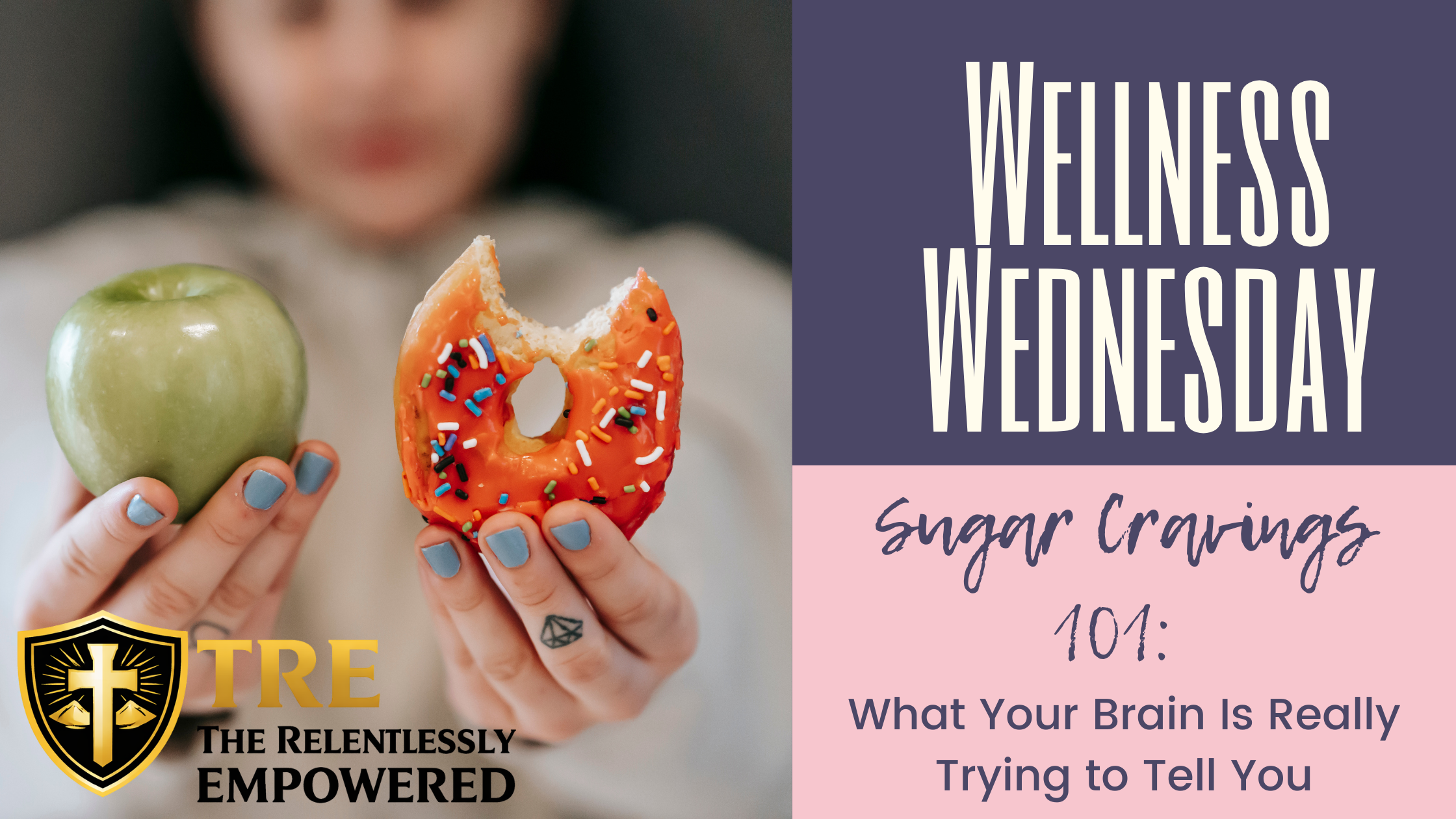
Sugar Cravings 101: What Your Brain Is Really Trying to Tell You
Ever feel like your brain suddenly screams for sugar?
One minute you’re fine…
and the next minute you’re standing in the kitchen searching for something sweet.
Cookies.
Candy.
Chocolate.
Ice cream.
Cereal.
Pastries.
And sometimes the craving feels so intense that it almost feels impossible to resist.
Why We Crave Sugar
Sugar is incredibly rewarding to the brain.
In fact, your brain LOVES quick energy.
When you eat sugar, your body rapidly converts it into glucose—the body’s preferred fast fuel source.
That quick burst of energy can temporarily make you feel:
energized
comforted
happier
calmer
more alert
And here’s why:
Sugar stimulates the release of “feel-good” chemicals like dopamine.
Dopamine is connected to:
pleasure
reward
motivation
habit formation
This is why sugary foods can feel emotionally comforting.
Your brain remembers:
“That felt good. Let’s do it again.”
Over time, repeated exposure creates stronger habit loops.
That’s why cravings can start feeling automatic.
Sugar Cravings Are Often About More Than Sugar
One of the biggest misconceptions is that cravings always mean:
“I just want sweets.”
But cravings can actually signal MANY different things happening inside the body.
Sometimes the craving isn’t even about sugar itself.
What Your Sugar Craving Might Really Mean
1. You’re Thirsty
Dehydration is one of the most overlooked craving triggers.
Your body can sometimes confuse thirst signals with hunger or sugar cravings.
This is why many cravings improve after:
drinking water
adding electrolytes
hydrating consistently throughout the day
Sometimes your body isn’t asking for cookies.
It’s asking for hydration.
2. You Need Rest
Poor sleep dramatically affects hunger hormones.
When you’re sleep deprived:
ghrelin (the hunger hormone) rises
leptin (the fullness hormone) decreases
Your body starts searching for QUICK energy.
And sugar provides fast fuel.
This is why exhaustion often increases cravings for:
sweets
carbs
processed snacks
caffeine
Your body is trying to compensate for low energy.
3. You’re Stressed
Stress changes everything.
When cortisol rises, the body often craves:
sugar
comfort foods
fast energy
highly palatable foods
Stress eating isn’t weakness.
It’s biology.
Your nervous system is looking for temporary relief.
Unfortunately, sugar often creates a short-term emotional “lift” followed by:
crashes
fatigue
more cravings
emotional eating cycles
4. You’re Actually Hungry
Sometimes cravings happen because you simply haven’t eaten enough.
Especially protein.
Or enough balanced meals.
When meals lack:
protein
fiber
healthy fats
blood sugar becomes less stable.
This can trigger:
energy crashes
irritability
intense cravings
overeating later
Many people try to “be good” all day…
then end up bingeing at night because their body is under-fueled.
5. You’re Running on Autopilot
Some cravings are habit-driven.
Not hunger-driven.
For example:
dessert every night
snacks during TV time
sweets during stressful work breaks
stopping for coffee and pastries every morning
The brain builds associations between:
places
emotions
routines
people
environments
Eventually the craving becomes automatic.
Not because your body NEEDS sugar…
but because your brain expects it.
Why Sugar Cravings Feel So Intense
Many people blame themselves for cravings.
But cravings are often rooted in:
biology
blood sugar regulation
stress responses
nervous system patterns
dopamine loops
habit reinforcement
That’s why “just use willpower” rarely works long term.
You can’t out-willpower a stressed nervous system, poor sleep, dehydration, or unstable blood sugar forever.
Real change comes from understanding the ROOT of the craving.
What to Do the Next Time a Craving Hits
Instead of immediately reacting…
pause first.
This simple pause creates awareness.
And awareness changes everything.
Step 1: Drink Water First
Before grabbing something sweet:
drink water.
Seriously.
Hydration helps more than most people realize.
Try:
💧 12–16 oz of water
💧 adding electrolytes
💧 sipping consistently throughout the day
You may notice the craving fades significantly.
Step 2: Eat a Balanced Snack
If you’re genuinely hungry, don’t ignore it.
But instead of reaching for pure sugar…
try pairing:
protein
fiber
healthy fats
Examples:
🥚 boiled eggs + fruit
🍎 apple + peanut butter
🥜 nuts + berries
🥣 Greek yogurt + chia seeds
🥕 veggies + hummus
Balanced snacks help stabilize energy instead of creating another blood sugar roller coaster.
Step 3: Take 3 Deep Breaths
This sounds simple…
but it works.
Deep breathing helps calm the nervous system.
Stress-driven cravings often become less intense when the body shifts out of “fight or flight” mode.
Your body may not need sugar.
It may need regulation.
Step 4: Wait 15 Minutes
Most cravings rise and fall like waves.
Not every craving needs immediate action.
Give yourself:
⏱️ 10–15 minutes
Sometimes the urge passes naturally once:
stress decreases
hydration improves
your nervous system settles
your attention shifts
Step 5: Ask Yourself What Triggered It
This is HUGE.
Pause and ask:
Am I stressed?
Am I tired?
Am I bored?
Did I skip meals?
Is this emotional?
Is this habit?
Am I actually hungry?
This question builds self-awareness instead of shame.
And awareness is how patterns begin to change.
You Don’t Need Perfection
Let’s be clear:
Having sugar sometimes is not failure.
Enjoying dessert does not mean you “blew it.”
The goal isn’t obsession.
The goal is understanding.
Because when you understand:
your triggers
your patterns
your biology
your habits
you stop feeling controlled by cravings.
And that changes your relationship with food completely.
Final Encouragement
Sugar cravings are incredibly common.
Especially in a world full of:
stress
sleep deprivation
processed foods
constant stimulation
emotional overload
So give yourself grace.
But also give yourself knowledge.
Because when you understand what your body is trying to communicate…
you can respond with intention instead of reacting automatically.
💛 Want support creating balanced meals and sustainable habits that help reduce cravings naturally?
Explore the wellness resources, meal plans, and healthy lifestyle tools available HERE.

Blood Sugar & Your Mood: The Hidden Connection You Need to Know
Have you ever wondered why your mood can shift so quickly from calm to irritated… focused to foggy… or energized to completely drained?
It’s not “just life.”
It’s not a lack of willpower.
And it’s definitely not “you being dramatic.”
Have you ever wondered why your mood can shift so quickly from calm to irritated… focused to foggy… or energized to completely drained?
It’s not “just life.”
It’s not a lack of willpower.
And it’s definitely not “you being dramatic.”
There is a very real, very measurable connection between your blood sugar levels and your emotional well-being — and most people have no idea it’s happening.
Your brain runs almost exclusively on glucose. When that glucose is unstable, inconsistent, or constantly spiking and crashing, your mood ends up riding the same rollercoaster.
Let’s break it all down so you can recognize the signs, understand what’s happening in your body, and take simple steps to support your mood, energy, and emotional resilience — every single day.
High Blood Sugar: What It Feels Like in Real Life
Most people don’t realize their “bad mood” has a physical cause — but an elevated blood sugar spike often shows up with these common signals:
✨ Initial Energy Spike
You feel great at first.
More alert. More awake. A sudden rush of “let’s get this day moving.”
But it never lasts.
✨ Difficulty Concentrating
Your brain hits the gas pedal… then immediately loses control.
Focus becomes harder. Tasks feel overwhelming. You may even feel mentally scattered or overstimulated.
✨ Irritability & Mood Swings
When glucose floods your bloodstream, your body scrambles to bring it back down.
This hormonal tug-of-war makes emotions feel unpredictable — quick anger, frustration, sensitivity, or anxiety.
✨ The Inevitable Crash
What goes up must come down.
When blood sugar drops sharply after a spike, it takes your mood and energy down with it. And often, cravings show up right behind it.
Low Blood Sugar: The Other Side of the Mood Puzzle
On the opposite end of the spectrum, low blood sugar can feel scary and overwhelming — because your brain is suddenly running low on fuel.
Here’s how low glucose commonly shows up:
💥 Sudden Fatigue & Weakness
Your energy plummets out of nowhere. Even simple tasks feel heavy or exhausting.
💥 Anxiety or Panic Feelings
Many people mistake low blood sugar symptoms for a panic attack.
Shakiness, nervousness, racing thoughts, or a sense of doom are all tied to glucose dropping too low.
💥 Intense Food Cravings
Your brain has one mission: GET MORE GLUCOSE.
This is why cravings feel urgent and almost impossible to ignore.
💥 Brain Fog & Confusion
Your thinking becomes cloudy and slow.
Decision-making becomes harder.
You feel disconnected or out of it.
This is not “you being off.”
It’s your brain struggling to function without the fuel it needs.
The Mood Rollercoaster: How Sugar Spikes Create Emotional Chaos
If your blood sugar is constantly spiking and crashing, your mood will follow the same unpredictable rhythm.
Here’s why:
Your Brain Needs Steady Glucose
Your mood and emotional regulation depend on consistent fuel.
Without it, the body produces stress hormones — cortisol and adrenaline — which heighten anxiety, irritability, and emotional sensitivity.
Unstable Blood Sugar = Unstable Mood
The emotional highs and lows mimic a rollercoaster:
One minute you feel energized
The next you're drained
Then you’re anxious
Then you’re craving
Then you’re frustrated
You’re not “too sensitive.”
You’re not “moody.”
Your brain is riding the biochemical wave of glucose imbalance.
This Cycle Impacts Everything
Unsteady blood sugar affects:
Sleep
Focus
Productivity
Hormones
Appetite
Stress response
Relationships
Overall well-being
Your mood deserves better — and the good news is you CAN stabilize this cycle with simple daily habits.
Break the Cycle: Simple Daily Habits That Support Mood & Blood Sugar
You don’t need a complicated diet.
You don’t need restriction.
You just need balanced nourishment and consistent habits.
Here’s what works:
1️⃣ Eat Protein With Every Meal
Protein slows glucose absorption and keeps your blood sugar stable.
This means smoother mood, fewer cravings, and longer-lasting energy.
Try: eggs, Greek yogurt, chicken, turkey, salmon, tofu, cottage cheese, beans, or lean beef.
2️⃣ Choose Fiber-Rich Carbs Over Simple Sugars
Fiber is your blood sugar’s best friend.
It slows digestion, nourishes your gut, and keeps glucose steady.
Choose:
Whole fruits
Vegetables
Whole grains
Beans
Oats
Lentils
Avoid: pastries, candy, soda, white flour products, and sugary cereals.
3️⃣ Never Skip Meals
Skipping meals leads to:
Low blood sugar
Mood swings
Intense cravings
Binge eating
Hormonal imbalance
Even small balanced meals keep your brain fueled consistently.
4️⃣ Your Mood Will Thank You
When your blood sugar stabilizes, you’ll notice:
Fewer emotional dips
More patience
Better focus
More energy
Reduced anxiety
More consistent motivation
Food is not just fuel — it is chemistry.
And chemistry determines how you feel.
You Don’t Have to Do This Alone — Your TRE Resources Are Here for You
If you’re ready to support your mood, your energy, and your long-term health through simple, sustainable nutrition…
You already have a full library of resources waiting for you inside The Relentlessly Empowered Store.
Explore:
✨ FREE wellness tools
✨ Low-cost guides and planners
✨ Anti-inflammatory meal plans
✨ Mocktail recipe books
✨ Journals for mindset and emotional resilience
✨ Meal planning resources
✨ Faith-based devotionals
✨ And more
You don’t have to guess your way through your wellness journey.
You just need the right tools — and you’ve already built a home for them.
👉 Browse all FREE & low-cost resources at TheRelentlesslyEmpowered.com
and take the next empowered step toward a healthier, steadier, more intentional you.