

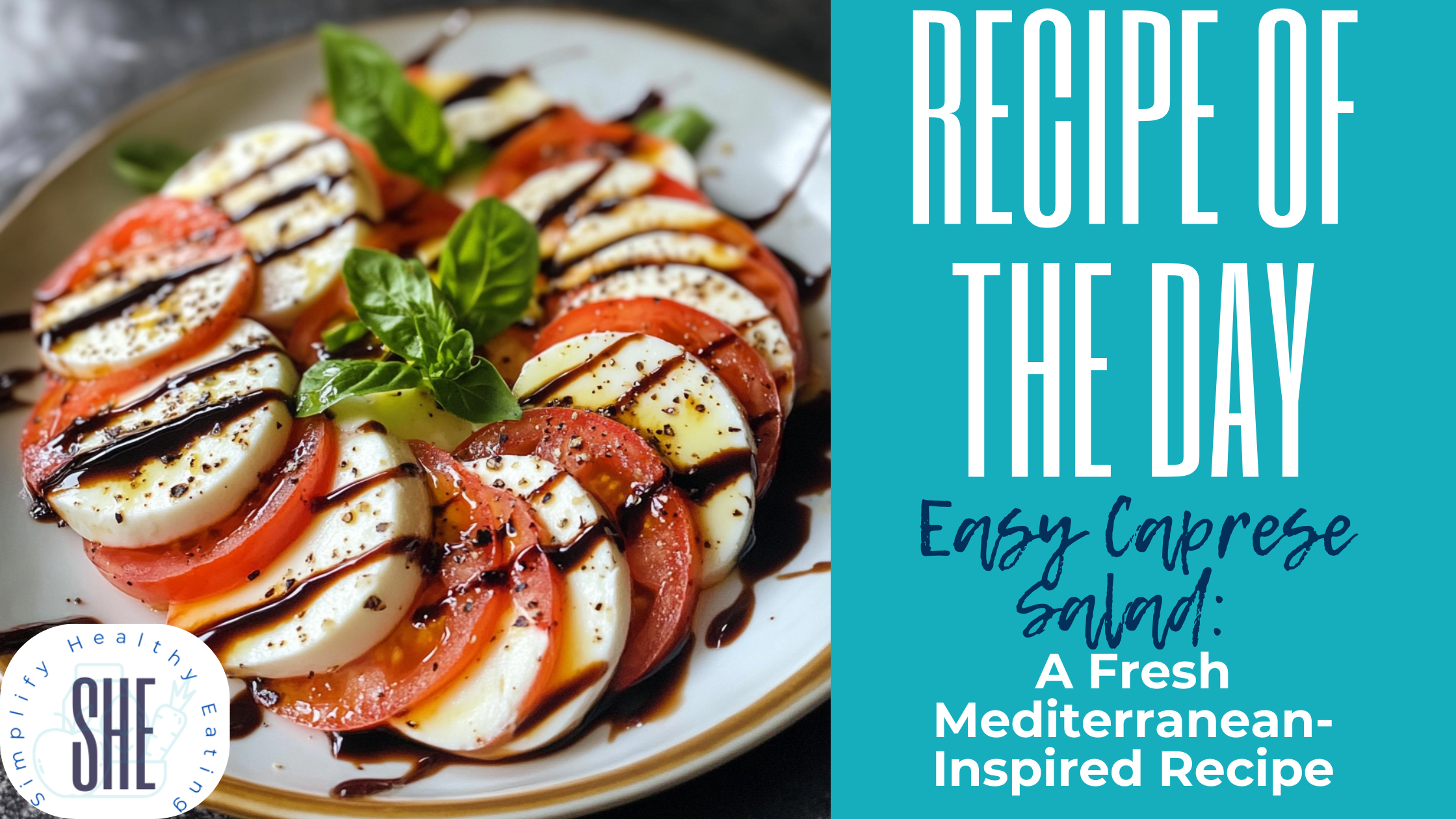
Easy Caprese Salad: A Fresh Mediterranean-Inspired Recipe
Make an easy Caprese salad with tomatoes, mozzarella, basil, olive oil and balsamic glaze, plus ideas for creating a balanced meal.
This Easy Caprese Salad uses ripe tomatoes, fresh mozzarella, basil, extra-virgin olive oil and balsamic glaze to create a colorful dish in minutes.
Caprese supplies protein, calcium, unsaturated fat and nutrient-rich tomatoes. With only an estimated one to three grams of fiber, however, it may work better as a light meal or side than as a stand-alone, long-lasting lunch.
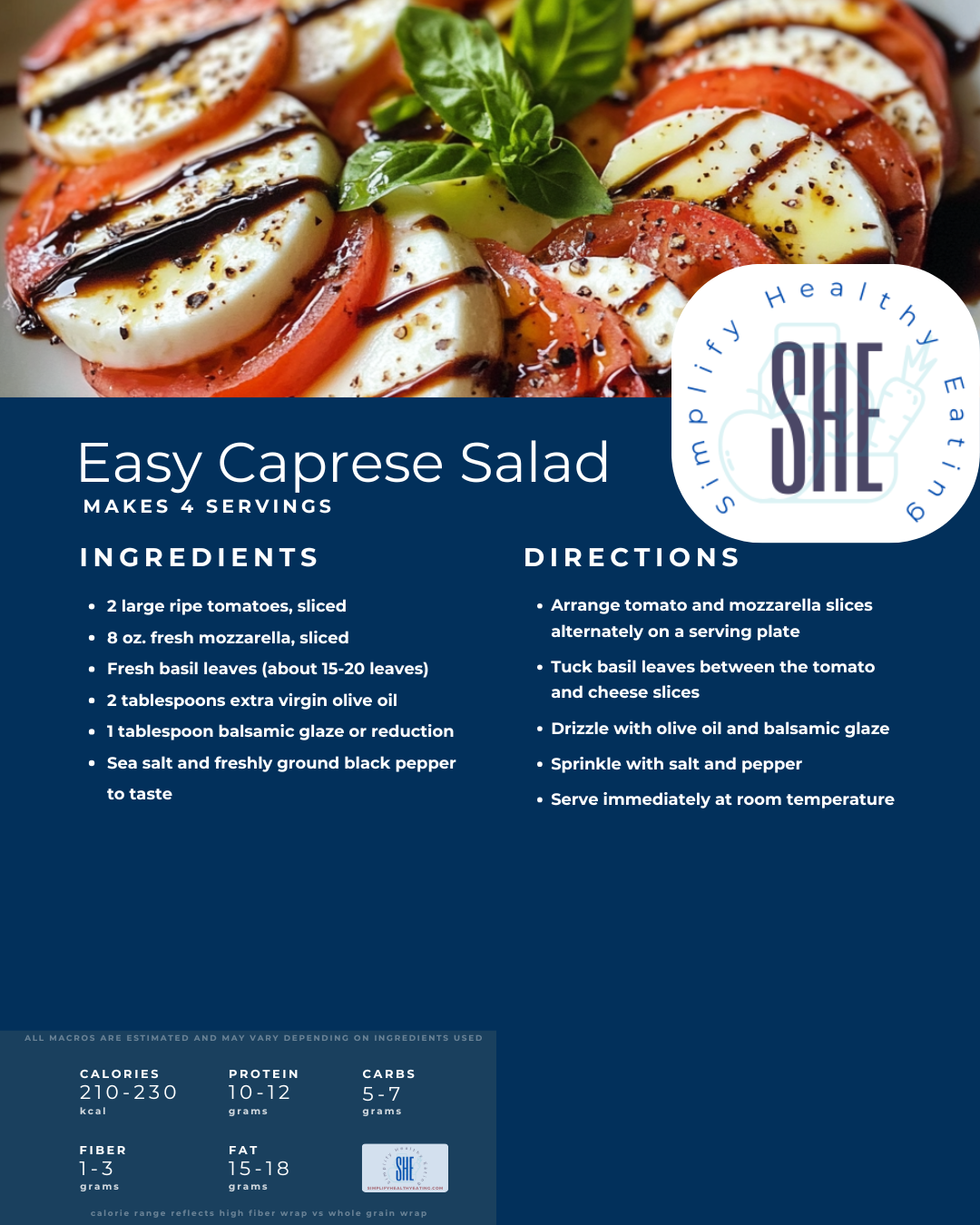
Easy Caprese salad with tomatoes, fresh mozzarella, basil, olive oil, pepper and balsamic glaze.
Ingredient benefits
Tomatoes provide vitamin C, potassium, folate and lycopene. Fresh mozzarella contributes protein and calcium. Basil adds fragrance and flavor without a heavy sauce.
Extra-virgin olive oil provides predominantly unsaturated fat. Balsamic glaze adds sweetness and acidity, but its added-sugar content varies by brand.
Recipe ingredients
· 2 large ripe tomatoes, sliced
· 8 ounces fresh mozzarella, sliced
· 15–20 fresh basil leaves
· 2 tablespoons extra-virgin olive oil
· 1 tablespoon balsamic glaze or reduction
· Sea salt and freshly ground black pepper
Directions
1. Alternate tomato and mozzarella slices on a plate.
2. Tuck basil leaves between the slices.
3. Drizzle with olive oil and balsamic glaze.
4. Season with salt and pepper.
5. Serve immediately at room temperature.
Estimated nutrition
Nutrient
Estimated per serving
Calories
210–230 kcal
Protein
10–12 g
Carbohydrates
5–7 g
Fiber
1–3 g
Fat
15–18 g
Make it a more balanced meal
· Add chickpeas, lentils or white beans
· Add grilled chicken, shrimp, salmon or tofu
· Serve with whole-grain bread, quinoa or farro
· Add mixed greens, cucumber or roasted vegetables
· Add fruit, nuts or seeds
One salad cannot prevent or cure inflammation. The benefit comes from an overall pattern centered on vegetables, legumes, whole grains, nuts, seeds, seafood and unsaturated fats.
Next step: Download TRE’s FREE 3-Day Anti-Inflammatory Meal Plan for more colorful, realistic meals without complicated rules.
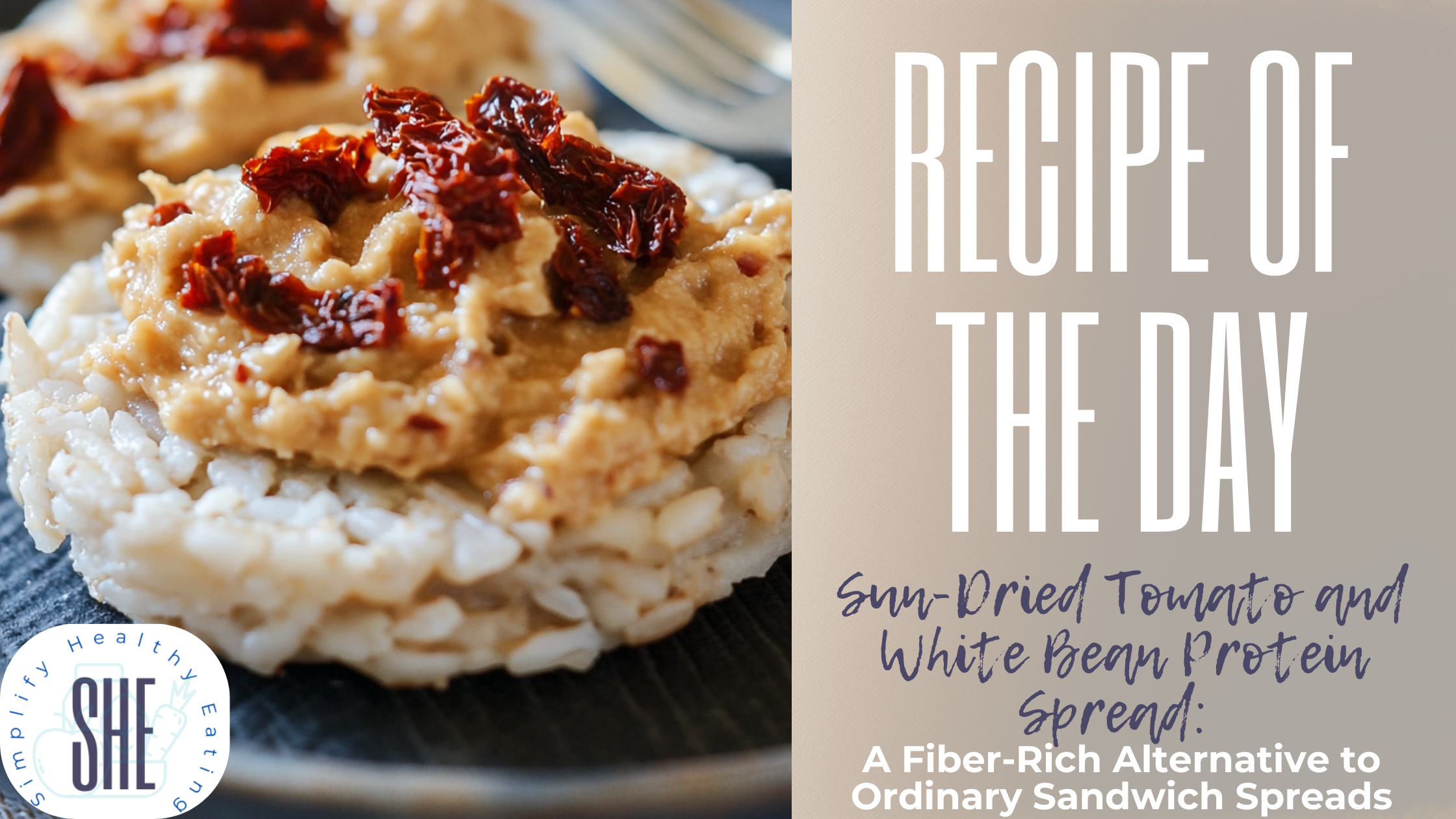
Sun-Dried Tomato and White Bean Protein Spread: A Fiber-Rich Alternative to Ordinary Sandwich Spreads
Make a creamy sun-dried tomato and white bean spread with feta and Italian herbs for a plant-protein, high-fiber snack or easy lunch.
Healthy eating becomes much easier when a few versatile foods are ready in the refrigerator.
This Sun-Dried Tomato and White Bean Protein Spread can be mashed together in minutes and used on brown-rice cakes, whole-grain toast, wraps, crackers, cucumber slices, or as part of a snack plate.
White beans create a creamy base while providing plant protein and fiber. Sun-dried tomatoes add concentrated savory flavor, feta contributes tang, and Italian seasoning ties the ingredients together.
It is simple, but it does not taste like a compromise.
Why White Beans Make an Excellent Spread
Beans are often treated only as a side dish, but their texture makes them useful in sauces, dips, fillings, and sandwich spreads.
Dry beans are pulses—edible seeds from the legume family—and naturally provide both plant protein and fiber. (USA Pulses)
Using beans in a spread can help you:
Add plant protein to a snack or lunch
Increase dietary fiber
Create a creamy texture without relying entirely on mayonnaise
Prepare several servings inexpensively
Build a meatless meal that still feels substantial
Use pantry ingredients when fresh groceries are limited
Ingredient Benefits
White beans
Cannellini and great northern beans have a mild flavor and soft texture, making them easy to mash.
They contribute plant protein, complex carbohydrates, and fiber. Dietary fiber has several health functions, although its effect on immediate fullness varies by fiber type and individual response. (PubMed)
Beans also make this spread more substantial than a condiment made primarily from oil.
Sun-dried tomatoes
Sun-dried tomatoes add intense tomato flavor, which means a relatively small amount can influence the entire recipe.
Tomatoes contain lycopene and other carotenoids. Research on isolated lycopene and cardiovascular outcomes has produced mixed results, so sun-dried tomatoes should be appreciated as a flavorful whole-food ingredient—not marketed as a cure or guaranteed disease-prevention strategy. (PubMed)
Products packed in oil can be high in sodium and calories. Drain them lightly and use the measured tablespoon of oil called for in the recipe.
Feta cheese
Feta adds creaminess, tang, and a small amount of protein and calcium. Because its flavor is strong, a quarter cup can season the entire spread.
Rinse canned beans and check the feta and tomato labels when managing sodium intake.
Oil from the sun-dried tomato jar
The oil helps bind the ingredients and carries the herb and tomato flavors throughout the spread.
Measuring it is important because oil is calorie-dense. One tablespoon may be enough to improve texture without overwhelming the beans.
Italian seasoning
Italian seasoning adds flavor without requiring several separate herb containers. It commonly includes oregano, basil, thyme, rosemary, or marjoram.
Seasonings can make minimally processed foods feel more satisfying without relying solely on additional salt.
Brown-rice cakes
Rice cakes create a crisp contrast to the creamy spread. They provide carbohydrates, and the number used can be adjusted according to hunger and the role of the dish.
For more fiber or a denser meal, use whole-grain bread, a high-fiber wrap, or seed crackers.
Sun-Dried Tomato and White Bean Protein Spread Recipe
Makes 2 servings
Ingredients
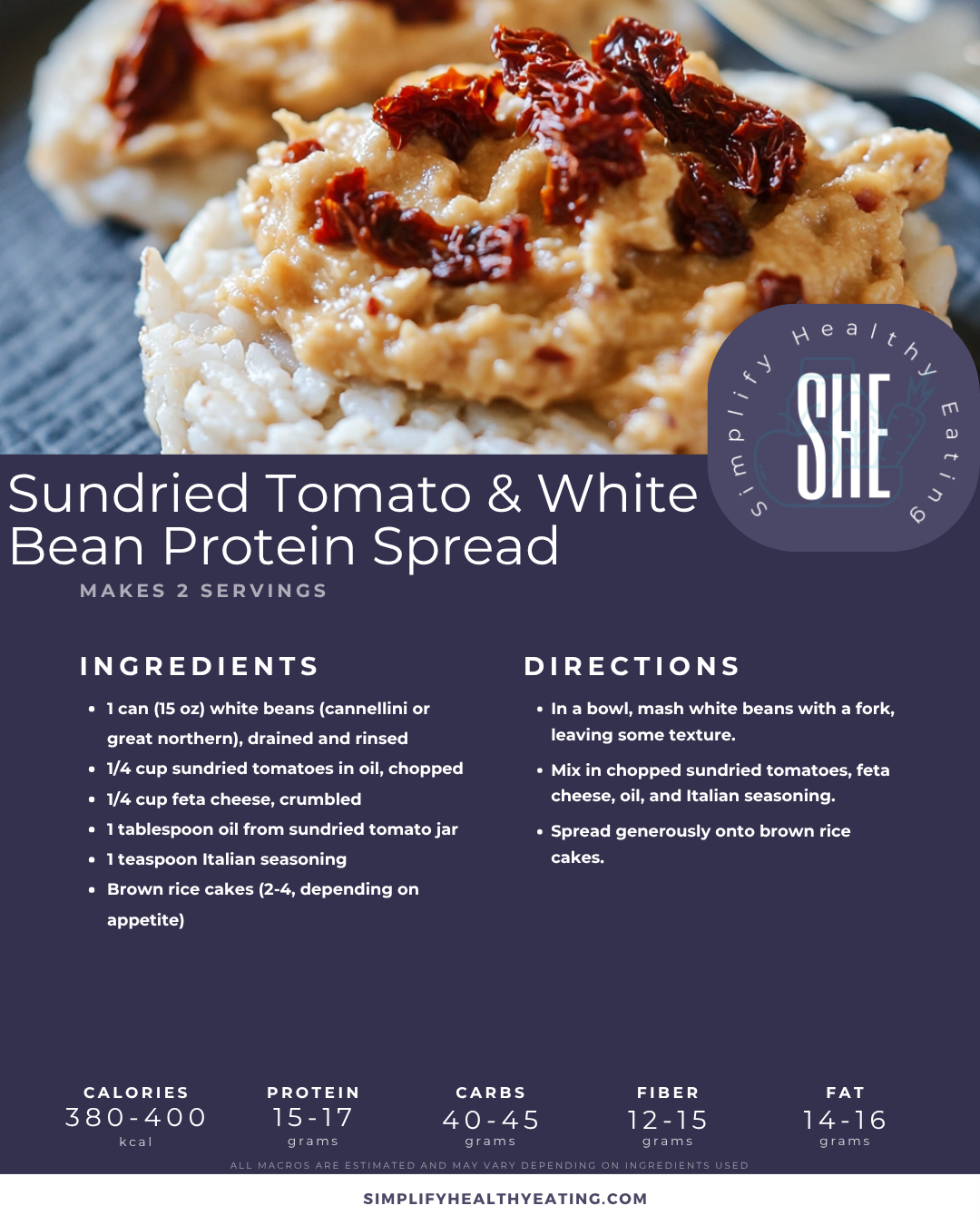
1 can, approximately 15 ounces, white beans such as cannellini or great northern beans, drained and rinsed
¼ cup chopped sun-dried tomatoes packed in oil
¼ cup crumbled feta
1 tablespoon oil from the sun-dried tomato jar
1 teaspoon Italian seasoning
2–4 brown-rice cakes, depending on appetite
Directions
Place the drained white beans in a bowl.
Mash them with a fork, leaving some beans partially intact for texture.
Add the chopped sun-dried tomatoes, feta, measured oil, and Italian seasoning.
Stir until evenly combined.
Spread generously over brown-rice cakes.
Serve immediately or refrigerate the spread for later use.
Estimated Nutrition
This recipe estimates each serving at:
380–400 calories
15–17 grams of protein
40–45 grams of carbohydrates
12–15 grams of fiber
14–16 grams of fat
The number of rice cakes, bean brand, amount of retained oil, and feta used will affect these totals. Four rice cakes provide more carbohydrate and calories than two, so calculate the full recipe using the actual serving.
Ways to Serve the Spread
This recipe is much more versatile than its original rice-cake presentation.
Try it:
On whole-grain toast
Inside a high-fiber wrap
As a dip for bell peppers or cucumber
In a Mediterranean snack box
Alongside hard-boiled eggs
Spread inside a turkey sandwich
Over a baked sweet potato
In lettuce cups
With whole-grain crackers
As a creamy component in a grain bowl
How to Turn It Into a Complete Meal
For a larger lunch, pair the spread with:
A vegetable-rich salad
Fresh fruit
Vegetable soup
A hard-boiled egg
Grilled chicken or fish
Roasted vegetables
Greek yogurt
A cup of broth-based soup
The beans already provide protein, but active women or those with higher protein needs may want an additional source.
Recipe Variations
Dairy-free
Omit the feta or use a dairy-free feta alternative. Add lemon juice and a pinch of salt to replace some of the tang.
More vegetables
Mix in chopped spinach, roasted red pepper, artichoke hearts, parsley, or basil.
Creamier texture
Blend the mixture in a food processor rather than mashing it by hand.
More heat
Add crushed red pepper, cayenne, or chopped pepperoncini.
Higher-protein version
Add unflavored Greek yogurt, cottage cheese, tuna, shredded chicken, or hemp hearts, depending on your dietary preferences.
Meal-Prep and Storage Tips
Prepare the spread in advance and refrigerate it in a sealed container. Keep rice cakes or crackers separate until serving so they remain crisp.
If the spread thickens in the refrigerator, stir in a teaspoon of water, lemon juice, or measured olive oil.
Explore More Simple Healthy-Eating Resources
Simple pantry-based recipes can reduce the belief that every healthy meal must involve expensive ingredients or hours of preparation.
Continue building your system with:
The FREE Busy Woman’s Veggie Reset Guide
The FREE 3-Day Anti-Inflammatory Meal Plan
The FREE 7-Day Reset
The FREE Clarity Over Cocktails Mocktail Guide
The FREE 14-Day Belly Fat Reset
Start here to explore the next step.
References
Dreher, M. L., & Davenport, A. J. (2013). Hass avocado composition and potential health effects. Critical Reviews in Food Science and Nutrition, 53(7), 738–750. https://doi.org/10.1080/10408398.2011.556759
National Institutes of Health, Office of Dietary Supplements. (2022, June 2). Choline: Fact sheet for health professionals. https://ods.od.nih.gov/factsheets/Choline-HealthProfessional/
U.S. Department of Agriculture, Agricultural Research Service. (n.d.). FoodData Central. Retrieved July 28, 2026, from https://fdc.nal.usda.gov/
U.S. Department of Agriculture & U.S. Department of Health and Human Services. (2020). Dietary guidelines for Americans, 2020–2025 (9th ed.). https://www.dietaryguidelines.gov/sites/default/files/2020-12/Dietary_Guidelines_for_Americans_2020-2025.pdf
Bibliographic details were verified against the research, NIH, and federal nutrition records. (PubMed)