

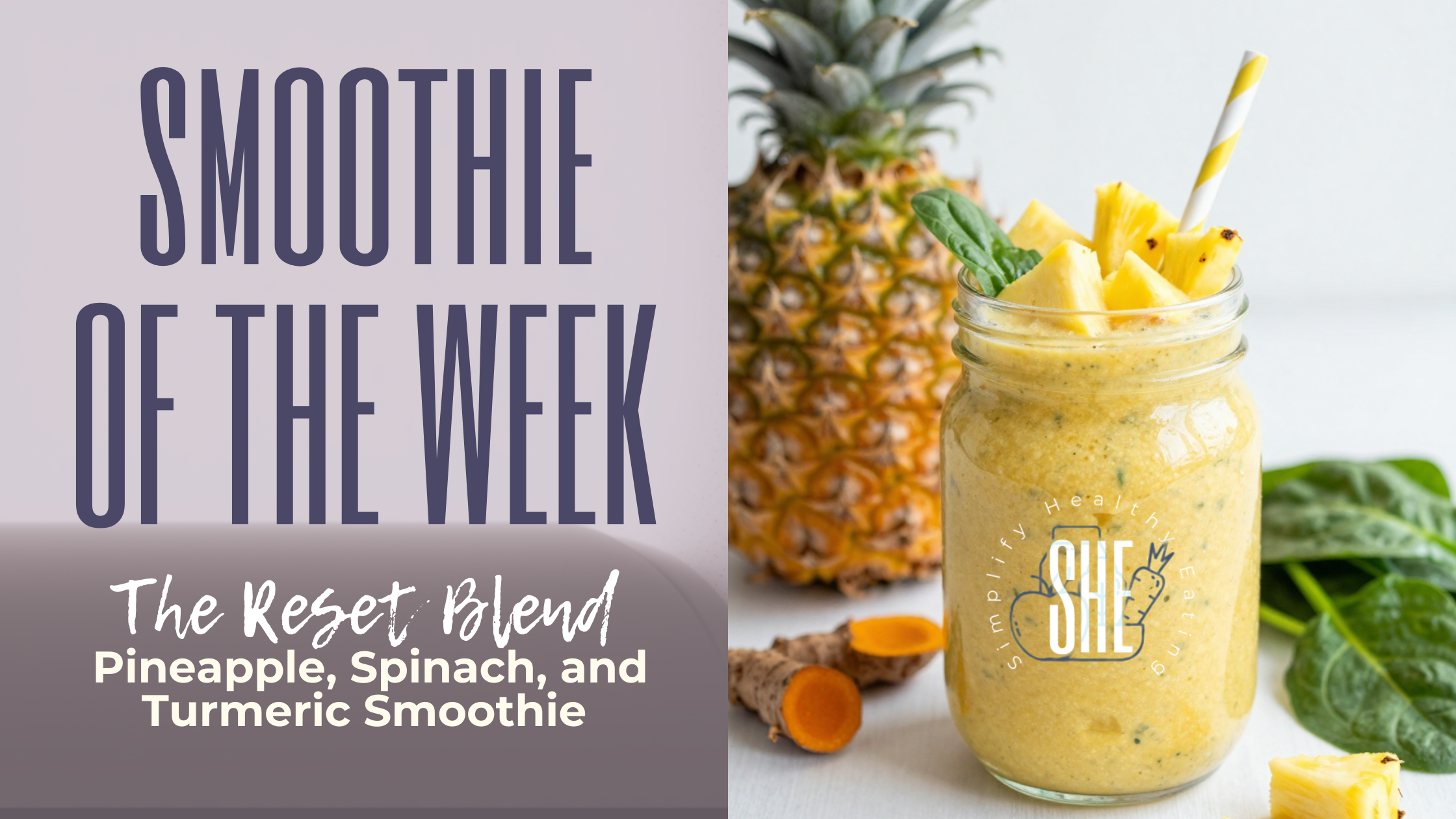
A Protein and Produce Smoothie for Rebuilding a Balanced Routine
Blend pineapple, spinach, turmeric, flaxseed, vanilla protein, and almond milk into a refreshing protein-and-produce smoothie for an easy healthy reset.
A reset does not require a detox, juice cleanse, or week of extreme restriction.
Sometimes a reset simply means returning to the foundational habits that help you feel your best:
Eating fruits and vegetables
Including protein
Getting enough fiber
Drinking fluids
Preparing food before you become overly hungry
Reestablishing consistency after a busy season
The Reset Blend combines spinach, pineapple, ground flaxseed, turmeric, protein powder, and unsweetened almond milk.
It offers protein, produce, fiber, and bright tropical flavor in one simple drink. However, the name should not be interpreted as a claim that the smoothie “detoxes” the body or medically resets inflammation. Your liver, kidneys, lungs, skin, and digestive system already perform the body’s normal waste-processing functions.
The smoothie’s benefit is much more practical: it makes several nutritious ingredients easy to consume in one convenient recipe.
The Reset Blend Recipe
Ingredients
1 tablespoon ground flaxseed
2 handfuls spinach
1 teaspoon turmeric
½ cup frozen pineapple
1 scoop vanilla protein powder
1 cup unsweetened almond milk
Ice or water, as needed
Directions
Pour the almond milk into the blender.
Add the spinach and blend briefly to break down the leaves.
Add the pineapple, flaxseed, turmeric, protein powder, and ice.
Blend until smooth.
Add water or more almond milk if the smoothie is too thick.
Taste before adding sweetener. The pineapple and vanilla protein powder may already provide enough sweetness.
Ingredient Benefits
Spinach
Spinach adds vegetables without creating an overpowering flavor when it is blended with pineapple and vanilla.
Dark green leafy vegetables such as spinach are rich food sources of folate. Folate participates in DNA synthesis, cell division, and several other essential processes. (Office of Dietary Supplements)
Spinach is also a significant source of vitamin K, which is involved in normal blood clotting and bone-related functions. (Office of Dietary Supplements)
People who take warfarin or another medication affected by vitamin K should not necessarily avoid spinach. They may instead need to keep vitamin K intake reasonably consistent and follow the advice of their prescribing clinician.
Frozen Pineapple
Pineapple brings natural sweetness and acidity, helping balance the earthy spinach and turmeric.
Fruit contributes carbohydrates and fluid along with vitamins and plant compounds. Fruits and vegetables are the primary dietary sources of vitamin C, which is involved in collagen formation, immune function, antioxidant protection, and the absorption of nonheme iron. (Office of Dietary Supplements)
Pineapple is frequently promoted because it contains bromelain, but one serving of fruit should not be marketed as a treatment for inflammation or digestive disease. Use it because it adds fruit, flavor, and a refreshing texture.
Ground Flaxseed
Flaxseed contributes fiber, alpha-linolenic acid—an essential plant-based omega-3 fat—and lignans.
Research on flaxseed and cholesterol, blood pressure, glucose control, and other outcomes has produced varying results. Whole or ground flaxseed may support parts of a heart-healthy eating pattern, but it should not replace prescribed treatment. (NCCIH)
Ground flaxseed is generally more practical in a smoothie than whole seeds because it blends smoothly and does not pass through the digestive system as intact as whole seeds sometimes can.
Increase fiber gradually when your usual intake is low, and drink an appropriate amount of fluid.
Turmeric
Turmeric adds warm color and a mild earthy flavor. Curcumin, one of its most studied compounds, has been investigated for inflammatory conditions and other health concerns.
Laboratory findings are promising in some areas, but current evidence is insufficient to conclude that culinary turmeric or curcumin supplementation treats inflammatory disorders generally. (NCCIH)
One teaspoon in a smoothie should be viewed as a culinary ingredient—not a medical dose or replacement for treatment.
Turmeric can taste bitter when too much is added. Start with ½ teaspoon when you are new to the flavor.
Vanilla Protein Powder
Protein powder balances the fruit and vegetables with a concentrated protein source.
That combination can make the drink more useful as a breakfast or recovery snack than a smoothie made only with fruit and almond milk.
Protein supports the maintenance and repair of body tissues, but building or preserving muscle also requires resistance training and sufficient overall nutrition. Research consistently shows that protein and resistance exercise work better together than either strategy alone. (PubMed)
Unsweetened Almond Milk
Almond milk creates a mild base that allows the pineapple and vanilla to stand out.
Select an unsweetened variety to avoid unnecessary added sugar. Check whether your preferred brand is fortified with calcium or vitamin D because formulations differ.
Does This Smoothie Reduce Inflammation?
No single drink can diagnose, prevent, or treat chronic inflammation.
A broader anti-inflammatory eating pattern may include:
Vegetables and fruit
Beans and lentils
Whole grains
Nuts and seeds
Fish or other appropriate protein sources
Unsaturated fats
Limited amounts of heavily processed foods and excess alcohol
This smoothie can contribute spinach, fruit, flaxseed, and protein to that larger pattern. Its value comes from repeated habits—not from treating turmeric as a miracle ingredient.
Optional Additions
For More Staying Power
Add:
¼ avocado
1 tablespoon almond butter
Plain Greek yogurt
Silken tofu
For More Flavor
Try:
Fresh ginger
Cinnamon
Lime juice
A few mint leaves
For More Fruit
Add berries, mango, or orange segments, understanding that the calorie and carbohydrate content will rise with larger portions.
When to Use the Reset Blend
This smoothie may work well:
After a weekend of irregular meals
As a quick weekday breakfast
When fresh produce is limited
As an afternoon snack
Following a moderate workout
When you need a convenient way to add leafy greens
The objective is not to use it as punishment after eating differently than planned.
It is simply a practical way to return to a supportive routine.
Explore the FREE Clarity Over Cocktails Mocktail Guide
A genuine wellness reset can also include examining your relationship with alcohol.
Our new FREE Clarity Over Cocktails Mocktail Guide offers flavorful alcohol-free ideas for evenings, celebrations, and social occasions. It is designed to help you preserve the ritual and experience while making more intentional choices around hydration, sleep, recovery, and clarity.
Explore the guide in the FREEBIES section.
References
National Center for Complementary and Integrative Health. (n.d.). Flaxseed and flaxseed oil: Usefulness and safety. https://www.nccih.nih.gov/health/flaxseed-and-flaxseed-oil
National Center for Complementary and Integrative Health. (n.d.). Turmeric: Usefulness and safety. https://www.nccih.nih.gov/health/turmeric
National Institutes of Health, Office of Dietary Supplements. (2021, March 29). Vitamin K: Fact sheet for health professionals. https://ods.od.nih.gov/factsheets/VitaminK-HealthProfessional/
National Institutes of Health, Office of Dietary Supplements. (2022, November 30). Folate: Fact sheet for health professionals. https://ods.od.nih.gov/factsheets/Folate-HealthProfessional/
Bibliographic details were verified against the federal health-agency records. (NCCIH)