

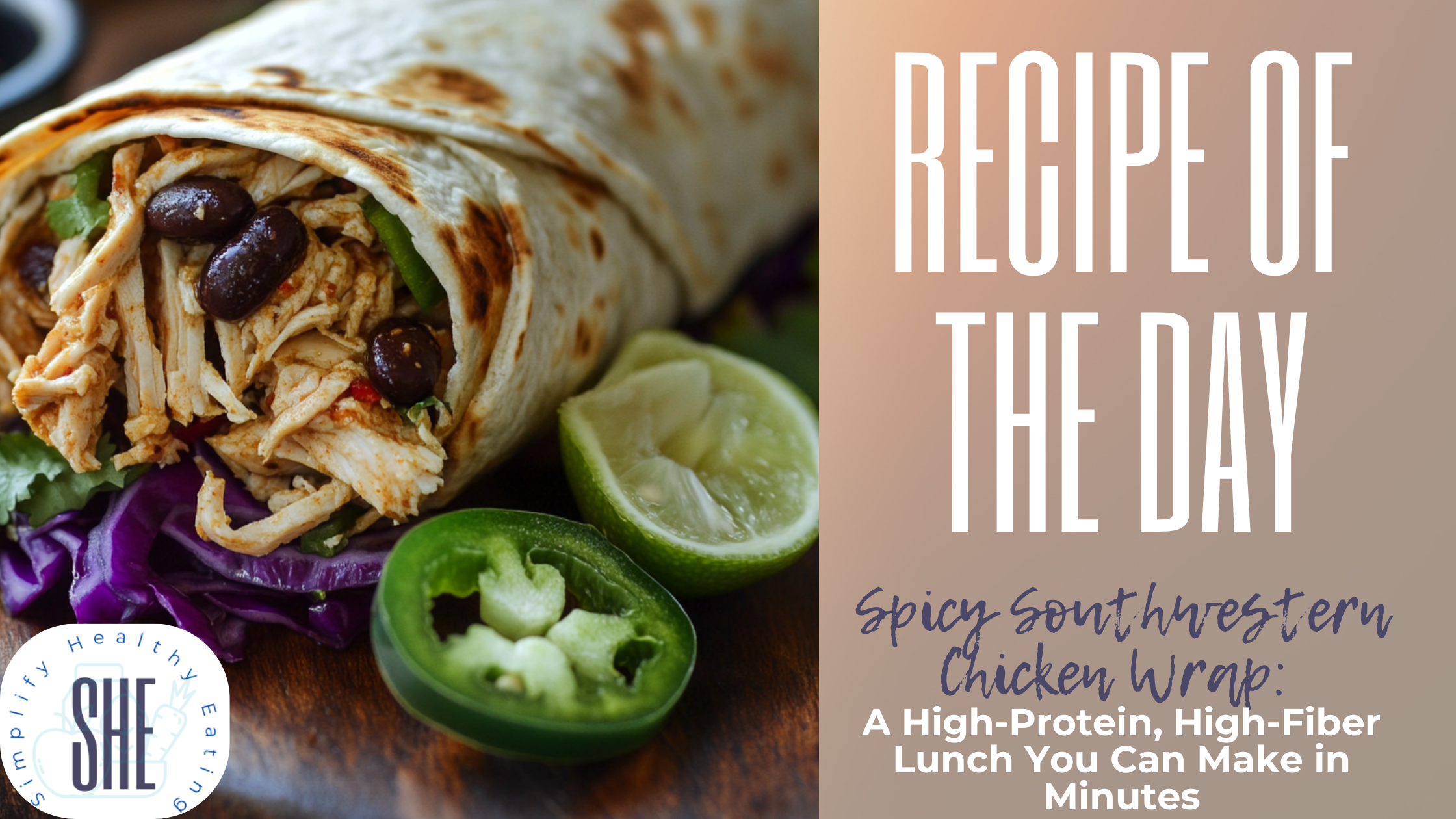
Spicy Southwestern Chicken Wrap: A High-Protein, High-Fiber Lunch You Can Make in Minutes
Make a spicy Southwestern chicken wrap with black beans, crunchy vegetables, avocado, and chipotle Greek-yogurt sauce for an easy high-protein lunch.
A satisfying lunch does not have to require an hour of cooking or a container full of plain chicken and broccoli.
This Spicy Southwestern Chicken Wrap combines shredded roasted chicken, black beans, red cabbage, carrots, avocado, jalapeños, cilantro, lime, and a chipotle Greek-yogurt sauce inside a high-fiber tortilla.
It provides contrast in every bite: warm chicken, crunchy vegetables, creamy avocado, tangy yogurt, bright lime, and enough heat to keep the meal interesting.
More importantly, it demonstrates how to build a portable meal around protein, fiber-rich carbohydrates, vegetables, and fat.
Why This Wrap Is More Satisfying Than a Basic Chicken Wrap
Many convenience-store or restaurant wraps are built primarily around a large tortilla, a small amount of meat, cheese, and a heavy sauce.
This version distributes the ingredients more deliberately:
Chicken serves as the primary protein.
Black beans and the tortilla add fiber and carbohydrates.
Cabbage and carrots increase volume and crunch.
Avocado adds creaminess and fat.
Greek yogurt replaces a heavier mayonnaise-based sauce.
Jalapeños, lime, cilantro, and chipotle provide flavor.
This structure can help a moderate-sized lunch feel more complete without requiring an extreme calorie target.
Ingredient Benefits
Roasted chicken
Chicken provides complete protein, which supplies the amino acids used to maintain and repair body tissues.
Protein intake can support muscle growth and strength when paired with resistance training, but the total daily intake and quality of the training program matter more than any single meal. (PubMed)
Using leftover roasted chicken also reduces preparation time.
High-fiber tortilla
The tortilla provides the structure and a meaningful portion of the recipe’s fiber. Choose a wrap that is large enough to hold the filling without tearing.
Products marketed as “high fiber” vary in ingredients and digestibility. Check the serving size and choose one you tolerate well.
Black beans
Black beans add plant protein, fiber, and carbohydrates. Like white beans, they are pulses and can make mixed meals more filling and substantial. (USA Pulses)
Rinsing canned beans removes some of the packing liquid and can improve the texture inside the wrap.
Red cabbage
Red cabbage contributes crunch, color, fiber, and vitamin C. Its strong texture helps prevent the wrap from becoming soft and one-dimensional.
It also makes it easier to increase the amount of vegetables in the meal without adding a separate side dish.
Carrots
Carrots provide beta-carotene, a plant pigment that the body can convert into vitamin A. Vitamin A supports normal vision, immune function, growth, and cell development. (Office of Dietary Supplements)
Shredded carrots blend easily with the cabbage and require no cooking.
Avocado
Avocado contributes fiber, potassium, and predominantly monounsaturated fat. It also replaces the need for a large amount of cheese or creamy dressing. (PubMed)
Greek-yogurt chipotle sauce
Greek yogurt provides creaminess and some additional protein. Mixing it with chipotle powder creates a sauce that spreads easily without overwhelming the filling.
The amount of protein and calcium differs between yogurt brands, so check the label when those nutrients are priorities.
Jalapeños
Pickled jalapeños add acidity, heat, and a salty contrast. Use less or replace them with mild peppers when you prefer less spice.
Because pickled products can be high in sodium, the portion can be adjusted without losing the Southwestern character.
Cilantro and lime
Cilantro and lime brighten the heavier chicken, beans, and avocado. Lime juice also helps distribute flavor, reducing the need for a large quantity of sauce.
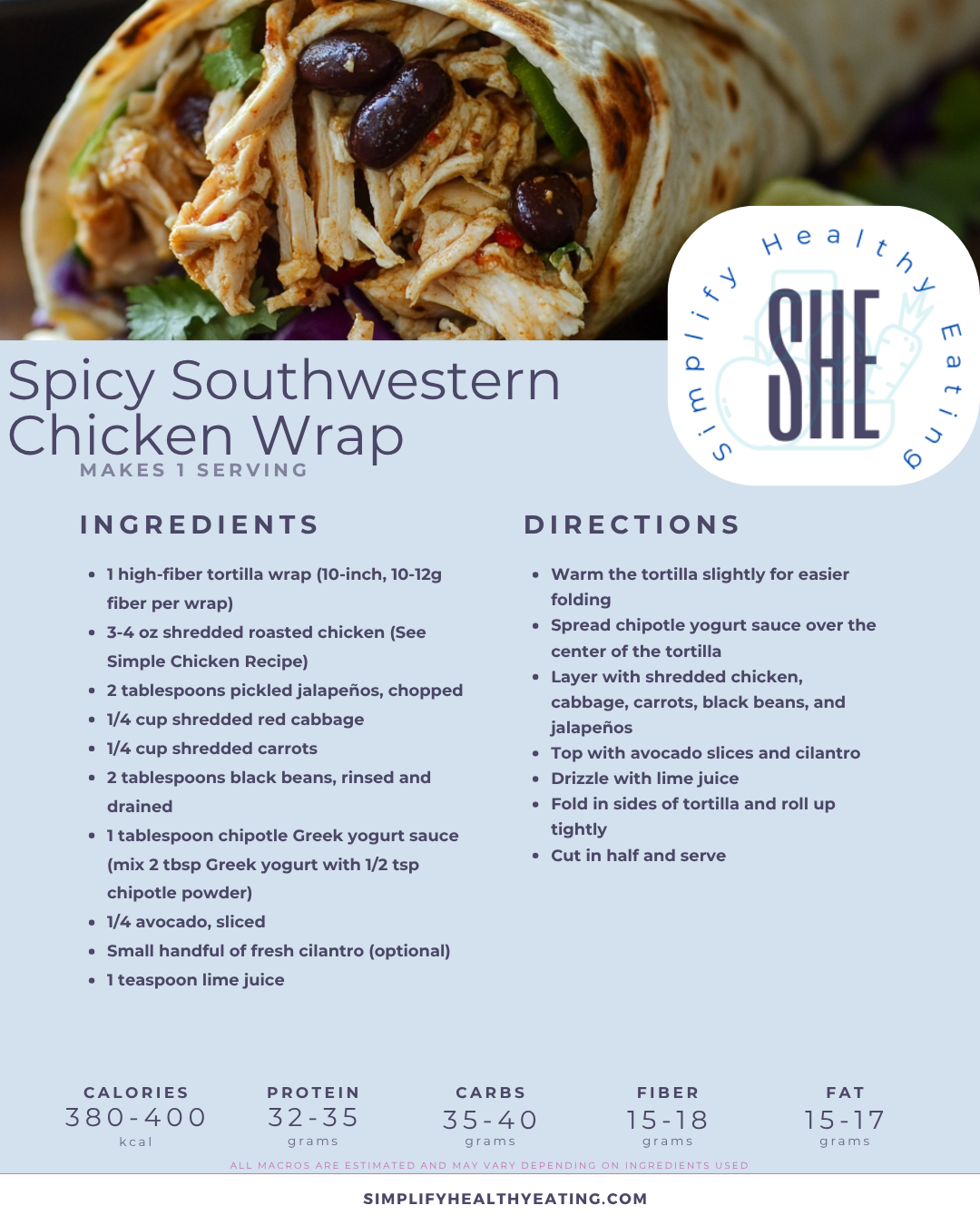
Spicy Southwestern Chicken Wrap Recipe
Makes 1 serving
Ingredients
1 high-fiber 10-inch tortilla wrap, providing approximately 10–12 grams of fiber
3–4 ounces shredded roasted chicken
2 tablespoons chopped pickled jalapeños
¼ cup shredded red cabbage
¼ cup shredded carrots
2 tablespoons black beans, rinsed and drained
1 tablespoon chipotle Greek-yogurt sauce
¼ avocado, sliced
Small handful of fresh cilantro, optional
1 teaspoon lime juice
Quick Chipotle Greek-Yogurt Sauce
Mix:
2 tablespoons plain Greek yogurt
½ teaspoon chipotle powder
Only about one tablespoon of the prepared sauce is required for the wrap, so save the remainder for another meal or adjust the batch.
Directions
Warm the tortilla briefly to make it easier to fold.
Spread the chipotle Greek-yogurt sauce over the center.
Layer the chicken, cabbage, carrots, black beans, and jalapeños.
Add the avocado slices and cilantro.
Drizzle with lime juice.
Fold in the sides of the tortilla.
Roll tightly.
Cut in half and serve.
Estimated Nutrition
This recipe estimates one wrap at:
380–400 calories
32–35 grams of protein
35–40 grams of carbohydrates
15–18 grams of fiber
15–17 grams of fat
The tortilla brand will have the greatest effect on the fiber and carbohydrate numbers. Chicken quantity, avocado size, and yogurt also affect the final total.
Use the labels from your actual products for the most reliable estimate.
Meal-Prep Strategy
Prepare the components separately:
Shred the roasted chicken.
Slice or shred the vegetables.
Rinse and portion the black beans.
Mix the yogurt sauce.
Cut the lime into wedges.
Store wet ingredients separately from the tortilla. Assemble the wrap shortly before eating to prevent sogginess.
To pack it for work, wrap it tightly in parchment paper or foil after assembly.
Variations
Vegetarian
Replace the chicken with additional black beans, seasoned tofu, tempeh, or a mixture of beans and quinoa.
Lower-spice version
Replace the jalapeños with diced bell pepper and use smoked paprika instead of chipotle.
Higher-volume version
Add lettuce, spinach, cucumber, tomatoes, or extra cabbage. Do not overfill the tortilla to the point that it cannot close.
Bowl version
Skip the tortilla and serve the ingredients over brown rice, quinoa, greens, or roasted vegetables.
Breakfast version
Replace the chicken with scrambled eggs and keep the beans, cabbage, avocado, and sauce.
Dairy-free
Use a dairy-free plain yogurt or avocado-lime sauce.
Why the Wrap’s Fiber Estimate Deserves Attention
The listed 15–18 grams of fiber is relatively high for one meal and depends largely on using the specific high-fiber tortilla described in the recipe.
Someone who is not accustomed to high-fiber products may prefer to increase intake gradually and drink enough water. You can also choose a wrap with less added fiber and serve vegetables or fruit on the side.
More fiber is not automatically better when it causes discomfort. The appropriate amount is the one that supports your health and is tolerated well.
What to Serve With the Wrap
The wrap may be complete on its own, but sides can be added based on hunger and activity:
Fresh fruit
A side salad
Salsa and sliced vegetables
Vegetable soup
Corn and tomato salad
Plain Greek yogurt
A small serving of rice
Roasted vegetables
Explore More Support for Simplifying Healthy Eating
A single wrap can solve today’s lunch. A meal-planning system can solve the repeated question of what to eat throughout the month.
Explore:
The FREE 7-Day Reset
The FREE Busy Woman’s Veggie Reset Guide
The FREE 3-Day Anti-Inflammatory Meal Plan
The FREE 14-Day Belly Fat Reset
The FREE Clarity Over Cocktails Mocktail Guide
Visit the Home page to find the resource that aligns with your healthy-lifestyle goals.
Nutrition information is estimated and varies by ingredient brand, serving size, and preparation. These articles provide general education and do not replace individualized medical or nutrition advice.
References
Becerra-Tomás, N., Papandreou, C., & Salas-Salvadó, J. (2019). Legume consumption and cardiometabolic health. Advances in Nutrition, 10(Suppl. 4), S437–S450. https://doi.org/10.1093/advances/nmz003
Dreher, M. L., & Davenport, A. J. (2013). Hass avocado composition and potential health effects. Critical Reviews in Food Science and Nutrition, 53(7), 738–750. https://doi.org/10.1080/10408398.2011.556759
Morton, R. W., Murphy, K. T., McKellar, S. R., Schoenfeld, B. J., Henselmans, M., Helms, E., Aragon, A. A., Devries, M. C., Banfield, L., Krieger, J. W., & Phillips, S. M. (2018). A systematic review, meta-analysis and meta-regression of the effect of protein supplementation on resistance training-induced gains in muscle mass and strength in healthy adults. British Journal of Sports Medicine, 52(6), 376–384. https://doi.org/10.1136/bjsports-2017-097608
U.S. Department of Agriculture, Agricultural Research Service. (n.d.). FoodData Central. Retrieved July 28, 2026, from https://fdc.nal.usda.gov/
Bibliographic details were verified against the journal and USDA records. (PubMed)