


Chocolate Protein Fiber Oatmeal Bars: A Satisfying Make-Ahead Snack for Busy Days
Make these chocolate protein fiber oatmeal bars with oats, whey, flaxseed, cocoa, and almond butter for a convenient meal-prep snack.
Packaged snack bars are convenient, but they are not always as filling—or as affordable—as their marketing suggests. Some contain very little protein or fiber, while others are so small that you find yourself searching for another snack 30 minutes later.
These Chocolate Protein Fiber Oatmeal Bars offer a homemade alternative built around rolled oats, whey protein, ground flaxseed, cocoa, eggs, almond butter, and almond milk. They can be prepared in advance, divided into individual servings, and refrigerated for quick breakfasts, preplanned snacks, or a slightly sweet addition to a balanced meal.
They are not intended to be a “magic” weight-loss food. Their value lies in the combination of convenient meal preparation, portion awareness, protein, fiber, and enough flavor to make the healthy choice feel satisfying.
Why This Recipe Works
Many snack foods provide fast-digesting carbohydrates without much protein or fiber. That does not make them automatically “bad,” but they may be less satisfying when eaten alone.
This recipe combines several nutritional elements:
Rolled oats and flaxseed provide fiber.
Whey protein and eggs increase the protein content.
Almond butter and coconut oil contribute fat and moisture.
Cocoa, vanilla, and chocolate chips make the bars feel like a treat.
Baking the mixture creates a portable option that is easier to portion than a loose bowl of oatmeal.
Fiber does not guarantee fullness for everyone, and different fiber types produce different responses. However, soluble fibers—including oat beta-glucan—can influence digestion and may support appetite regulation as part of a balanced diet. (PubMed)
Ingredient Benefits
Rolled oats
Oats provide complex carbohydrates and beta-glucan, a form of soluble fiber. Meta-analyses have found that regular oat beta-glucan intake can reduce total and LDL cholesterol, although the effect depends on the amount consumed and the overall dietary pattern. (PubMed)
In this recipe, oats also give the bars structure and make them more substantial than a snack made primarily from protein powder.
Whey protein powder
Whey protein increases the protein concentration without requiring additional meat, eggs, or dairy foods at serving time. Protein supplementation can support gains in strength and lean mass when it is paired with an appropriate resistance-training program, but protein powder alone does not replace training or a balanced diet. (PubMed)
Choose an unflavored or lightly flavored powder that bakes well. Different products vary considerably in scoop size, sweetness, carbohydrate content, and protein concentration.
Ground flaxseed
Ground flaxseed contributes fiber, fat, and alpha-linolenic acid, a plant-based omega-3 fatty acid. Whole or ground flaxseed may also support healthier cholesterol levels, although research outcomes vary by the type of flax product used. (NCCIH)
Ground flaxseed is generally easier to incorporate into baked recipes than whole seeds. Because it adds a meaningful amount of fiber, increase high-fiber foods gradually and drink adequate fluids.
Unsweetened cocoa powder
Cocoa gives the bars a rich chocolate flavor without requiring large amounts of added sugar. It also contributes small amounts of fiber and minerals.
The practical benefit is simple: cocoa can make a protein-and-oat snack feel more enjoyable, which may make meal preparation easier to maintain.
Eggs
Eggs provide protein while helping bind the bars together. They also supply choline, an essential nutrient involved in cell-membrane structure, nervous-system function, muscle control, and several metabolic processes. (Office of Dietary Supplements)
Almond butter
Almond butter adds creaminess and helps prevent the bars from becoming dry. It also contributes plant protein and mostly unsaturated fat.
Because nut butter is calorie-dense, measure it rather than estimating directly from the jar when consistent portions are important to your goals.
Coconut oil
Coconut oil adds moisture and firmness after refrigeration. It is also a concentrated source of fat, so the quarter-cup measurement contributes significantly to the recipe’s calorie content.
For a slightly different texture, some cooks may prefer replacing part of the coconut oil with applesauce or another moisture-rich ingredient. That substitution will change both the texture and estimated macros.
Almond milk
Unsweetened almond milk adds moisture with relatively little sugar. Fortified brands may provide calcium or vitamin D, but amounts differ, so check the nutrition label.
Sugar-free chocolate chips and sweetener
These ingredients provide sweetness without requiring a large amount of table sugar. The exact taste and texture will depend on the sweetener and chocolate-chip brand chosen.
Use the option that agrees with your digestion and dietary preferences.
Chocolate Protein Fiber Oatmeal Bars Recipe
Makes 12 bars
Ingredients
2 cups rolled oats
1 cup unflavored whey protein powder
½ cup ground flaxseed
⅓ cup unsweetened cocoa powder
¼ cup granulated erythritol or monk-fruit sweetener
1 teaspoon baking powder
½ teaspoon salt
2 large eggs
1 cup unsweetened almond milk
¼ cup melted coconut oil
¼ cup natural almond butter
1 teaspoon vanilla extract
⅓ cup sugar-free chocolate chips
Directions
Preheat the oven to 350°F.
Line an 8-by-8-inch baking pan with parchment paper.
Combine the rolled oats, protein powder, flaxseed, cocoa, sweetener, baking powder, and salt in a large bowl.
In a separate bowl, whisk the eggs, almond milk, coconut oil, almond butter, and vanilla.
Add the wet ingredients to the dry ingredients and stir until fully combined.
Fold in the chocolate chips.
Spread the mixture evenly in the prepared pan.
Bake for 25 to 30 minutes, or until the center is set.
Cool completely before cutting the mixture into 12 bars.
Refrigerate in an airtight container.
Estimated Nutrition and an Important Macro Note
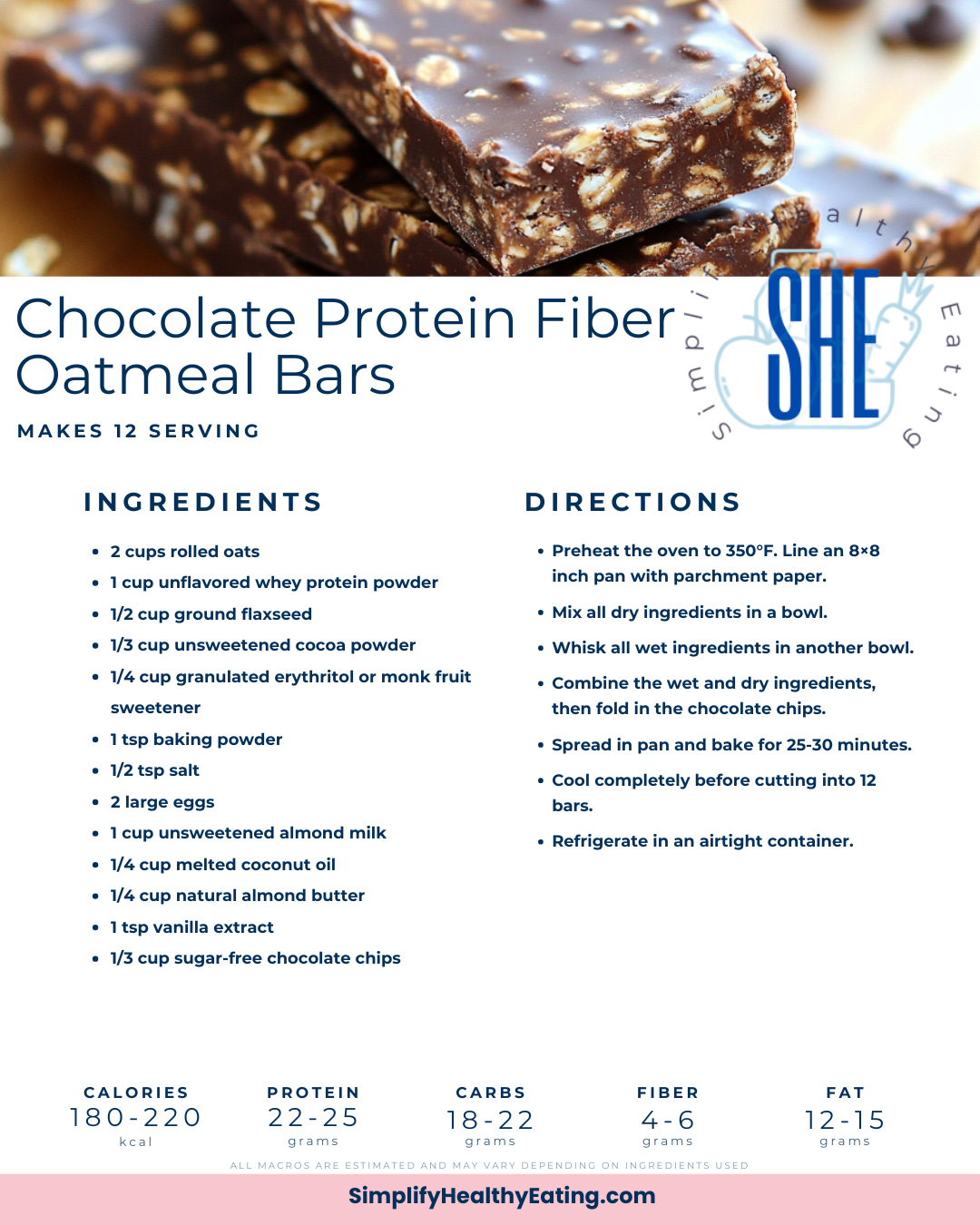
The recipe graphic estimates each bar at:
180–220 calories
22–25 grams of protein
18–22 grams of carbohydrates
4–6 grams of fiber
12–15 grams of fat
Treat these numbers as planning estimates rather than guaranteed nutrition facts. Whey-powder scoop sizes and protein concentrations differ substantially, and almond butter, coconut oil, almond milk, and chocolate-chip brands can alter the final totals.
The protein estimate in particular should be recalculated from the exact whey powder used. Enter each ingredient and its precise amount into your preferred recipe calculator, then divide the totals by 12.
How to Make the Bars Work in a Balanced Routine
Depending on your individual needs, one bar may work as:
A snack with berries or another piece of fruit
A quick breakfast paired with Greek yogurt
A preplanned option for a busy workday
A post-workout snack when your full meal is still an hour or two away
A lightly sweet addition to a protein-forward breakfast
A bar does not necessarily need to replace an entire meal. Use hunger, activity level, medical needs, and the rest of your daily intake to determine the appropriate portion.
Variations
Make them dairy-free
Use a plant-based protein powder instead of whey. Because plant powders absorb liquid differently, you may need to adjust the almond milk.
Make them less rich
Reduce the chocolate chips or replace part of the coconut oil with unsweetened applesauce. The texture will be softer and the macro profile will change.
Add texture
Try chopped walnuts, pecans, pumpkin seeds, or unsweetened coconut. Measure additions because they will increase the calories per bar.
Increase the fruit flavor
Add raspberries, dried cherries, or a small amount of orange zest for a chocolate-fruit variation.
Storage
Refrigerate the cooled bars in an airtight container. Separate layers with parchment paper to prevent sticking.
They can also be individually wrapped and frozen. Thaw one overnight in the refrigerator or allow it to soften at room temperature before eating.
Explore More Healthy-Eating Support
One recipe can make the week easier, but a repeatable system makes consistency easier to sustain.
Explore The Relentlessly Empowered’s FREE and low-cost resources, including:
The FREE 7-Day Reset
The FREE Busy Woman’s Veggie Reset Guide
The FREE 3-Day Anti-Inflammatory Meal Plan
The FREE Clarity Over Cocktails Mocktail Guide
Visit the Home page to choose the resource that best fits your current goals.
References
Ho, H. V. T., Sievenpiper, J. L., Zurbau, A., Blanco Mejia, S., Jovanovski, E., Au-Yeung, F., Jenkins, A. L., & Vuksan, V. (2016). The effect of oat β-glucan on LDL-cholesterol, non-HDL-cholesterol and apoB for CVD risk reduction: A systematic review and meta-analysis of randomised-controlled trials. British Journal of Nutrition, 116(8), 1369–1382. https://doi.org/10.1017/S000711451600341X
Morton, R. W., Murphy, K. T., McKellar, S. R., Schoenfeld, B. J., Henselmans, M., Helms, E., Aragon, A. A., Devries, M. C., Banfield, L., Krieger, J. W., & Phillips, S. M. (2018). A systematic review, meta-analysis and meta-regression of the effect of protein supplementation on resistance training-induced gains in muscle mass and strength in healthy adults. British Journal of Sports Medicine, 52(6), 376–384. https://doi.org/10.1136/bjsports-2017-097608
Pan, A., Yu, D., Demark-Wahnefried, W., Franco, O. H., & Lin, X. (2009). Meta-analysis of the effects of flaxseed interventions on blood lipids. American Journal of Clinical Nutrition, 90(2), 288–297. https://doi.org/10.3945/ajcn.2009.27469
U.S. Department of Agriculture, Agricultural Research Service. (n.d.). FoodData Central. Retrieved July 28, 2026, from https://fdc.nal.usda.gov/
Bibliographic details were verified against the journal and USDA records. (PubMed)