

By Michelle Leslie | The Relentlessly Empowered
If a can of sardines has been living in your pantry while you wait to become “the kind of person who eats sardines,” this is a good place to start.
Baked fish cakes change the presentation. You mash the fish, mix it with eggs and seasonings, and use panko for structure and a crisp coating. You still get the ingredients’ nutritional value in a meal that may feel more familiar.
The sardines are the main draw. They provide protein and the marine omega-3 fats EPA and DHA. When the can includes soft, edible bones and you mash those into the mixture, the fish also contributes calcium. The other ingredients help turn that useful pantry food into something you may actually want for dinner.
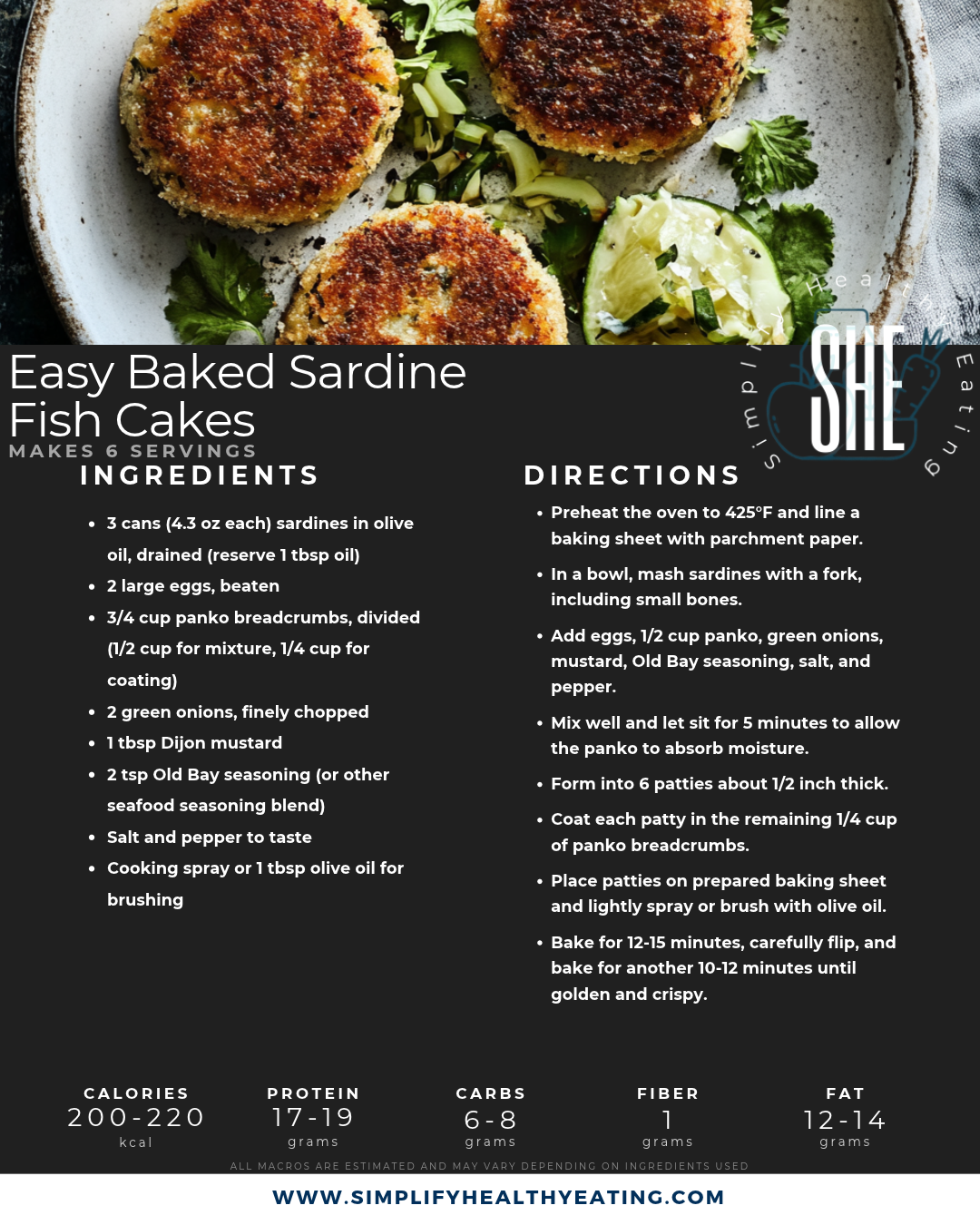
Sardines bring protein and marine omega 3 fats
Sardines provide protein that contributes to your daily intake. Dietary protein supplies amino acids the body uses to repair and maintain tissues (MedlinePlus, n.d.).
They also supply EPA and DHA, forms of omega-3 fat found in seafood. Omega-3s are components of cell membranes and have roles in normal heart and other body functions (National Institutes of Health Office of Dietary Supplements, n.d.-b).
Those roles give sardines a useful place in a varied eating pattern. This recipe makes that seafood option familiar by adding a crisp coating and savory seasoning. You can rotate the cakes with other fish or protein meals you enjoy.
The soft bones are part of the calcium story
The recipe specifically says to mash the sardines, including their small bones. That detail matters.
Canned sardines with edible bones are a food source of calcium, a mineral needed for bones and normal muscle and nerve function (National Institutes of Health Office of Dietary Supplements, n.d.-a). Boneless products will not provide the same calcium contribution.
Check the can before you buy. Choose sardines with soft, edible bones if calcium is part of your reason for making the recipe, then mash them thoroughly into the fish. The calcium amount depends on the product and the portion. Use the can’s label and your portion size to understand its contribution.
Eggs help the cakes hold together
Two eggs help bind the fish and breadcrumbs into patties. They add some protein and choline to the batch.
Choline helps form cell membranes and supports normal nervous system function; eggs are one food source (National Institutes of Health Office of Dietary Supplements, n.d.-c). Because this recipe makes six patties, each patty contains only part of the eggs used. Keep the benefit in proportion rather than implying every cake contains a whole egg’s nutrients.
Olive oil adds unsaturated fat and helps the coating
The sardines are packed in olive oil. The recipe drains the cans, reserves a tablespoon of that oil, and allows cooking spray or a little olive oil for the outside.
Olive oil contributes mostly unsaturated fat. Using unsaturated oils in place of fats higher in saturated fat can fit a heart-healthy eating pattern (American Heart Association, n.d.). The amount retained in the fish and brushed onto the coating will affect the recipe’s total fat and calories.
Use the oil deliberately. A light coating helps with browning; measuring it keeps the recipe consistent from one batch to the next.
Panko and seasonings make the recipe approachable
Panko has two jobs: some goes into the mixture to help hold moisture, and some coats the outside for texture. It also contributes carbohydrate. The contrast between a soft center and crisp coating is part of the appeal.
Green onions add a fresh, savory note. Dijon brings tang, and the seafood seasoning adds a familiar flavor profile. These small amounts help the fish cakes taste complete; they do not turn a patty into a full serving of vegetables.
Check the sodium on the fish, mustard, and seasoning blend before adding extra salt. The amount varies by brand. A lower-sodium fish or seasoning can be useful if that fits your needs. Use the flavor already in the ingredients rather than automatically salting everything.
Make a meal around the fish cakes
Serve the cakes with vegetables and a carbohydrate you enjoy. Try a cabbage slaw and potato, roasted vegetables and rice, or a salad with beans. These are serving suggestions rather than additions to the supplied recipe.
The recipe makes six patties and labels them as six servings. One patty may be a snack or one component of a meal for you. Choose your portion and side dishes according to your appetite and needs; a serving label simply describes how the recipe was divided.
The mixture contains fish, eggs, and wheat from standard panko. Mustard is also present. Check the seasoning label for additional allergens. If you need gluten-free panko, use a suitable product and expect the texture to vary.
Bake until cooked through
The directions call for baking at 425°F, flipping the cakes partway through. Treat the timing as an estimate. Because the mixture contains raw eggs, check the center reaches at least 160°F using a food thermometer (USDA Food Safety and Inspection Service, n.d.).
Let the cakes hold together before moving them, and use a spatula to flip carefully. The aim is a cooked center and a coating you enjoy, rather than relying on color alone.
Build a useful meal pattern one recipe at a time
You can start with one can of fish and one familiar preparation. Protein, marine omega-3s, and calcium from edible bones give sardines a useful nutritional role. Eggs, breadcrumbs, and seasonings make that role easier to bring to the table.
For more simple meal ideas, download our FREE 3-Day Anti-Inflammatory Meal Plan. It includes breakfast, lunch, and dinner options with straightforward preparation. Use it for planning and variety; a three-day plan is not a treatment for symptoms or a promise of a rapid change in inflammation.
Get the FREE 3-Day Anti-Inflammatory Meal Plan
References
MedlinePlus. (n.d.). Protein in diet.
https://medlineplus.gov/ency/article/002467.htm
National Institutes of Health Office of Dietary Supplements. (n.d.-a). Calcium: Fact sheet for consumers.
https://ods.od.nih.gov/factsheets/Calcium-Consumer/
National Institutes of Health Office of Dietary Supplements. (n.d.-b). Omega-3 fatty acids: Fact sheet for consumers.
https://ods.od.nih.gov/factsheets/Omega3FattyAcids-Consumer/
National Institutes of Health Office of Dietary Supplements. (n.d.-c). Choline: Fact sheet for consumers.
https://ods.od.nih.gov/factsheets/Choline-Consumer/
American Heart Association. (n.d.). Healthy cooking oils.
https://www.heart.org/en/healthy-living/healthy-eating/eat-smart/fats/healthy-cooking-oils
USDA Food Safety and Inspection Service. (n.d.). Safe minimum internal temperature chart.