

By Michelle Leslie | The Relentlessly Empowered
By the time you get home, you may have answered questions all day and still have one more waiting: “What are we eating?”
Chile, dinner should come with fewer decisions.
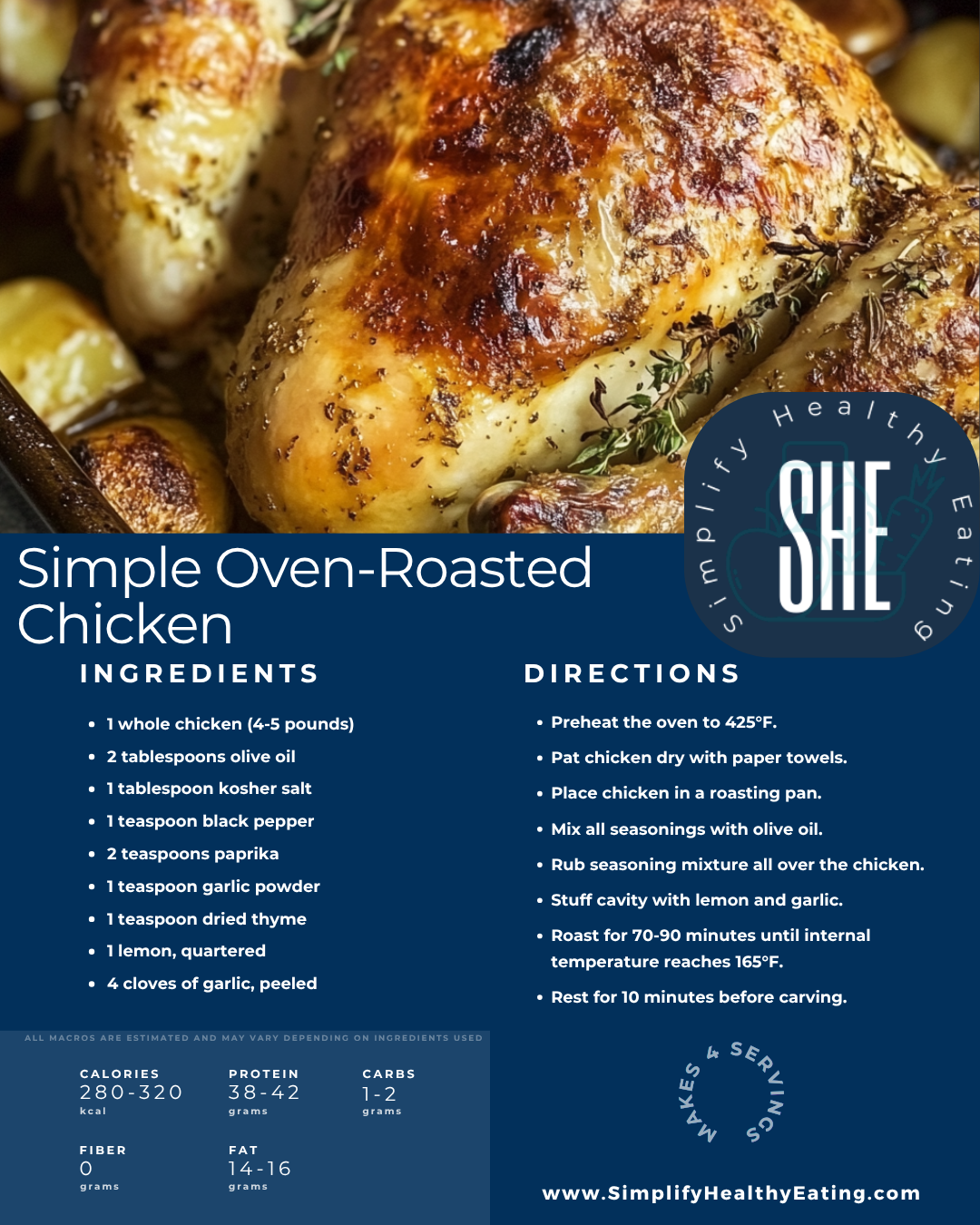
A simple oven-roasted chicken gives you a clear place to start. The chicken supplies protein. Olive oil helps the seasonings coat the bird, and lemon, garlic, paprika, and thyme make the meal appealing enough to repeat. Add vegetables and a carbohydrate you enjoy, and you have the beginnings of a balanced dinner.
The benefit is both nutritional and practical. You know where the protein is coming from, and you can plan another meal around the cooked chicken. That can be useful when the week leaves very little room for a brand-new recipe every evening.
Chicken supplies protein your body uses
Chicken provides complete protein, meaning it supplies all nine essential amino acids. Your body uses dietary protein to build and repair tissues, including muscle (U.S. Food and Drug Administration, n.d.).
That gives chicken a useful job on the plate, especially when supporting strength is one of your goals. It is one practical option for planning meals around a recognizable protein source. Vary it with fish, beans, eggs, and other foods you enjoy over the week.
The breast and darker cuts can both fit. Their fat content differs, and eating the skin changes the meal’s fat and energy content. Choose the parts you enjoy and a portion that fits your appetite and needs. Choose the cut you enjoy and build the rest of the plate around it.
Olive oil helps with flavor and adds unsaturated fat
The recipe uses two tablespoons of olive oil across the whole bird. It helps spread the paprika, garlic powder, thyme, and pepper over the surface.
Olive oil contains mostly unsaturated fat. Choosing unsaturated oils in place of fats higher in saturated fat can support a heart-healthy eating pattern (American Heart Association, n.d.). The benefit depends on the overall eating pattern and what the oil replaces.
Measure the oil called for, use it to distribute the seasonings, and let the recipe do its job.
Lemon and garlic make familiar food more interesting
The quartered lemon and peeled garlic cloves go into the cavity to add aroma as the chicken roasts. Garlic powder also brings savory flavor to the seasoning rub.
Their flavor gives the roast its character. Garlic powder seasons the outside while the cloves and lemon add aroma from the cavity. That makes these ingredients useful even in the small amounts spread across the finished meal.
If lemon and garlic help a basic protein become a meal your household enjoys, that is a practical reason to keep them in the rotation.
Paprika thyme and pepper give the meal character
Paprika contributes color and a mild pepper flavor; the exact taste depends on the type you buy. Dried thyme adds an earthy, herbal note. Black pepper gives the rub a little warmth.
These small seasoning amounts are best understood as flavor ingredients. They help you vary a familiar recipe and can make vegetables served alongside it more appealing, too. Try the same seasoning combination on a vegetable side for a meal with connected flavors.
Salt also seasons the bird. The supplied recipe calls for one tablespoon of kosher salt, but kosher salt brands differ in how much fits in a spoon. Adjust the amount for your preferences and any sodium guidance you follow, particularly if the chicken has already been salted or enhanced.
Give the chicken some company on the plate
Chicken has no dietary fiber. A balanced meal needs more than the protein ingredient.
Try roasted chicken with broccoli and rice, a salad and a baked potato, or green beans and a serving of beans or whole grains. These are serving ideas; the potatoes visible in the photo are not included in the supplied ingredient list.
Make the next meal easier while you are carving. Set aside some cooked chicken for a grain bowl or a sandwich with vegetables. Keep the side dishes flexible so a second meal does not feel like a copy of the first.
Use the thermometer and plan the leftovers
Roasting time is an estimate. USDA advises cooking whole chicken to at least 165°F, checking the thickest part of the breast and the innermost thigh and wing without touching bone (USDA Food Safety and Inspection Service, n.d.).
Refrigerate cooked chicken within two hours, or within one hour if the surrounding temperature is above 90°F. Divide it into shallow containers and use refrigerated leftovers within three to four days; reheat leftovers to 165°F. Freeze portions you will not use in that window. The recipe page includes these handling steps so your meal plan works beyond the first dinner.
Connect dinner with your bigger nutrition goals
For busy women, a repeatable meal can be a useful form of care. Start with a protein you enjoy, add the other foods your body needs, and make enough of the plan visible that tomorrow’s dinner feels manageable.
Our FREE Fat Loss Success Principles for Women Over 35 connects protein with strength, recovery, and sustainable nutrition habits. Download your copy and choose one principle to practice alongside your next meal. There is room to pursue your goals while enjoying food that tastes good.
Get the FREE Fat Loss Success Principles for Women Over 35
References
U.S. Food and Drug Administration. (n.d.). Interactive Nutrition Facts Label: Protein.
https://www.accessdata.fda.gov/scripts/InteractiveNutritionFactsLabel/protein.cfm
American Heart Association. (n.d.). Healthy cooking oils.
https://www.heart.org/en/healthy-living/healthy-eating/eat-smart/fats/healthy-cooking-oils
USDA Food Safety and Inspection Service. (n.d.). Chicken from farm to table.
https://www.fsis.usda.gov/food-safety/safe-food-handling-and-preparation/poultry/chicken-farm-table