

By Michelle Leslie | The Relentlessly Empowered
Some days, the vegetables in the refrigerator need a better invitation.
A bowl of plain carrot sticks may be perfectly fine. A bowl of carrot sticks with a creamy, savory dip might be what you actually want to eat.
This simple yogurt dip uses Greek yogurt, lemon juice, Old Bay seasoning, and a little salt and pepper if needed. Stir it together, chill it, and serve it with vegetables you enjoy. The yogurt contributes protein and calcium, while the other ingredients give it enough flavor to feel like part of the snack.
That combination is useful when you are trying to make nourishing choices easier in the middle of a full day.
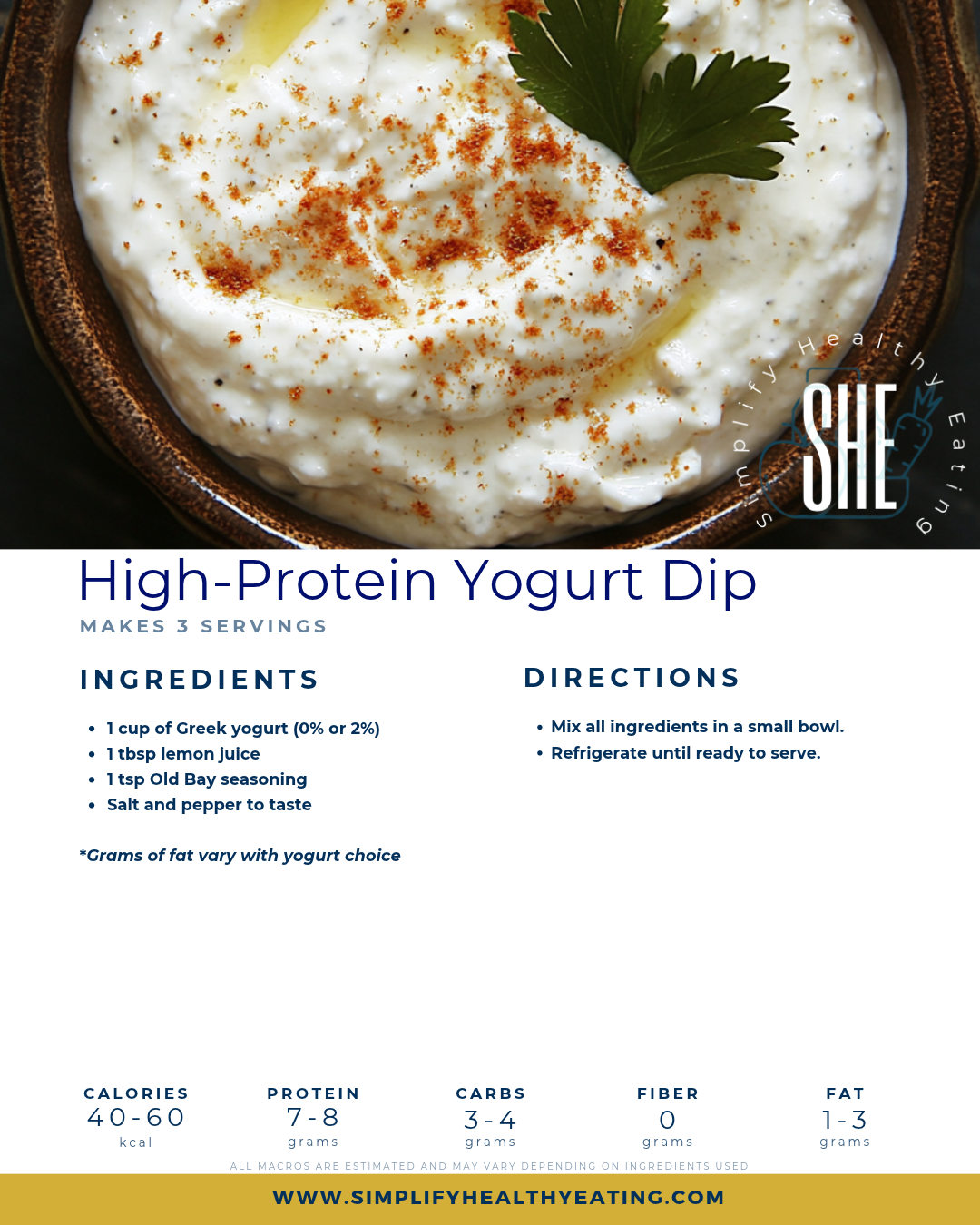
Greek yogurt brings protein to the dip
The recipe starts with one cup of Greek yogurt and divides the batch into three servings. Yogurt is a food source of protein, which the body uses for tissue maintenance and repair (MedlinePlus, n.d.-a).
Read the yogurt label rather than assuming every tub has the same protein amount. Brand, serving weight, and formulation matter. To estimate the yogurt’s protein contribution to one serving of this dip, use the amount for the full cup and divide it by three.
A portion of the dip can add protein to a vegetable snack. For lunch, use it as a sauce with a protein, grain, and vegetables, then adjust the plate to your appetite and needs.
Calcium gives the yogurt another nutritional role
Yogurt also contributes calcium. Your body needs calcium for bone structure and normal muscle and nerve function (National Institutes of Health Office of Dietary Supplements, n.d.).
The amount varies across yogurt products. Check the Nutrition Facts panel if calcium is one of your reasons for choosing it. Vitamin D is another label item to check; it should not be assumed to be present in the same amount in every yogurt.
The practical benefit is that a familiar ingredient can contribute more than one nutrient. You can enjoy its creamy texture while recognizing the protein and calcium it brings to the meal.
Lemon juice adds brightness
One tablespoon of lemon juice gives the whole batch a tangy, fresh edge. That acidity helps the seasoning stand out.
The lemon is a flavor ingredient in this recipe. Its tang works with the creamy yogurt and savory seasoning. Adjust it to your taste after you make the recipe once, especially if you prefer a milder dip.
Flavor is part of making a routine workable. A vegetable pairing you enjoy is more useful than a plan that depends on forcing down a snack you dislike.
Seasoning makes a small recipe feel finished
Old Bay brings a savory blend of seasonings, and pepper adds a little warmth. The recipe’s one teaspoon is spread over three servings.
Check the blend’s ingredients and sodium before adding more salt. Some products already contain a substantial amount of salt. You can begin with the seasoning and pepper, taste the dip, then decide whether it needs anything else.
You can also try a lower-sodium blend if that suits your needs. Keep any variation clearly separate from the original recipe. The aim is a dip you enjoy, made with ingredients that work for you.
Let the vegetables supply the fiber
The yogurt dip itself is not a meaningful fiber source. Pairing it with vegetables brings different nutrients and fiber into the snack. Dietary fiber supports digestion and regular bowel movements (MedlinePlus, n.d.-b).
Try cucumber slices, carrots, bell pepper strips, snap peas, or broccoli prepared in a way you enjoy. Frozen vegetables cooked and cooled appropriately can work, too. You do not need an elaborate produce tray.
Start with one vegetable you already like. Put the dip and vegetables together where they are easy to see when you open the refrigerator. If chopping is the barrier, pre-cut vegetables may be a useful convenience. Make the habit fit the time and energy you actually have.
Choose the yogurt that suits you
The supplied recipe allows 0% or 2% Greek yogurt. Their fat and calorie content will differ, but either can work in the recipe. Compare products by the portion you will use, the protein and calcium listed, and the taste you prefer.
If you want live cultures, look for that information on the product. FDA allows a “contains live and active cultures” statement when the yogurt meets specific criteria and requires a different statement when cultures have been inactivated (U.S. Food and Drug Administration, 2023). That does not establish that every yogurt dip has a proven probiotic effect or treats a digestive condition.
For lactose intolerance, a suitable lactose-free dairy yogurt may be an option. A milk allergy requires avoiding milk ingredients. Plant-based alternatives vary widely in protein and calcium, so compare their labels rather than assuming they match Greek yogurt.
Make one vegetable moment easier
Stir the dip in a small bowl, refrigerate it, and use it alongside vegetables, in a wrap, or with a grain bowl. Keep it cold until serving. You can prepare only what you expect to use if that makes the routine easier.
Our FREE Busy Woman’s Veggie Reset Guide is a natural next step for adding vegetables to meals you already eat. Download it and choose one place in your day where a vegetable and a dip could make the choice more appealing.
Sis, the vegetables are allowed to have seasoning and company.
Get the FREE Busy Woman’s Veggie Reset Guide
References
Keep these sources with the published article. The short channel drafts use the same factual boundaries. Sources and resource pages reviewed October 26, 2026.
MedlinePlus. (n.d.-a). Protein in diet.
https://medlineplus.gov/ency/article/002467.htm
MedlinePlus. (n.d.-b). Fiber.
https://medlineplus.gov/ency/article/002470.htm
National Institutes of Health Office of Dietary Supplements. (n.d.). Calcium: Fact sheet for consumers.
https://ods.od.nih.gov/factsheets/Calcium-Consumer/
U.S. Food and Drug Administration. (2023, April 13). FDA amends standard of identity for yogurt.
https://www.fda.gov/food/hfp-constituent-updates/fda-amends-standard-identity-yogurt
FoodSafety.gov. (n.d.). Keep food safe.
https://www.foodsafety.gov/keep-food-safe