

Baked Eggs in Avocado: A Simple Protein-and-Fat Breakfast for Busy Mornings
Breakfast does not need to involve cereal, toast, or a complicated meal-prep routine.
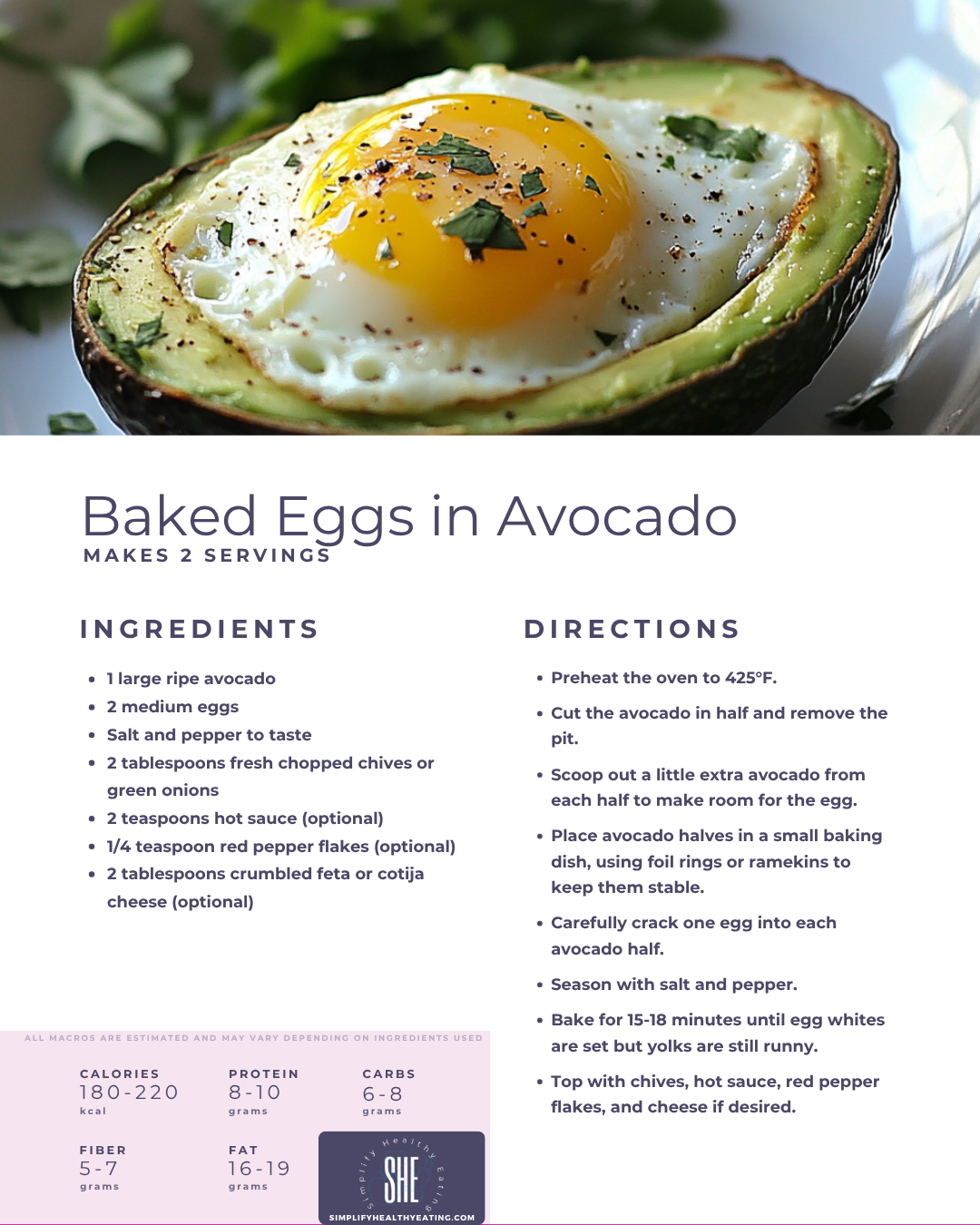
Baked Eggs in Avocado combines two familiar ingredients into a warm, satisfying dish that can be prepared with very little hands-on work. The avocado provides creaminess, fiber, and mostly unsaturated fat, while the egg adds protein and choline.
The recipe makes two servings and can be customized with chives, green onions, hot sauce, red-pepper flakes, feta, or cotija cheese.
Why This Recipe Works
This recipe is useful for mornings when you want something savory but do not want to stand at the stove.
Each serving includes:
Half an avocado
One baked egg
Herbs or onions for freshness
Optional heat from hot sauce or red-pepper flakes
Optional cheese for saltiness and additional flavor
Because it is relatively low in carbohydrate, some people may prefer pairing it with fruit, whole-grain toast, beans, or roasted potatoes for a more complete meal.
“Low-carb” is not automatically better for every person. The right meal depends on your hunger, activity, medical needs, preferences, and overall eating pattern.
Ingredient Benefits
Avocado
Avocado provides fiber and predominantly monounsaturated fat. Research reviews suggest avocado consumption may modestly reduce total and LDL cholesterol in some people with elevated cholesterol, although it should be viewed as one part of the total dietary pattern rather than a treatment by itself. (PubMed)
The fat in avocado also helps create a satisfying texture without requiring butter or a heavy sauce.
Eggs
Eggs provide complete protein and are among the more concentrated food sources of choline. Choline supports cell membranes and is needed by the nervous system for functions involving memory, mood, and muscle control. (Office of Dietary Supplements)
One egg provides a moderate amount of protein, so someone with higher protein needs may want to add Greek yogurt, cottage cheese, beans, turkey, smoked salmon, or another egg to the meal.
Chives or green onions
Chives and green onions add freshness and savory flavor with very little preparation. They also make the finished dish feel more intentional without requiring a calorie-dense topping.
Hot sauce and red-pepper flakes
These optional ingredients add heat and contrast to the mild avocado and egg.
Do not rely on spicy food as a “metabolism booster.” Use it because it improves the flavor and makes the meal more enjoyable. Check sodium levels if that is a concern.
Feta or cotija cheese
A small amount of feta or cotija adds saltiness, texture, and some protein and calcium. These cheeses can be relatively high in sodium, so a little can provide plenty of flavor.
Baked Eggs in Avocado Recipe
Makes 2 servings
Ingredients
1 large ripe avocado
2 medium eggs
Salt and pepper, to taste
2 tablespoons chopped fresh chives or green onions
2 teaspoons hot sauce, optional
¼ teaspoon red-pepper flakes, optional
2 tablespoons crumbled feta or cotija cheese, optional
Directions
Preheat the oven to 425°F.
Cut the avocado in half and remove the pit.
Scoop a small amount of avocado from each half to make enough room for an egg.
Place the avocado halves in a small baking dish. Use ramekins or rings made from foil to keep them stable.
Carefully crack one egg into each avocado half.
Season with salt and pepper.
Bake for 15 to 18 minutes, or until the whites are set to your preference.
Top with chives, green onions, hot sauce, red-pepper flakes, or cheese.
The Trick to Keeping the Egg in the Avocado
A standard avocado cavity is often too small to hold an entire egg.
To prevent overflow:
Scoop out a little more avocado than you think you need.
Crack the egg into a small bowl first.
Spoon the yolk into the avocado cavity.
Add only as much egg white as will comfortably fit.
Bake any remaining egg white separately rather than throwing it away.
Stabilizing the avocado halves is equally important. Small ramekins, muffin-pan cups, or tightly rolled foil rings can keep them upright.
Estimated Nutrition
The graphic estimates each serving at:
180–220 calories
8–10 grams of protein
6–8 grams of carbohydrates
5–7 grams of fiber
16–19 grams of fat
The final total depends heavily on the size of the avocado and whether cheese or other toppings are included. Large avocados can vary substantially in edible weight, so calculate the recipe using the avocado you actually serve when precise tracking matters.
How to Build a More Complete Breakfast
Baked Eggs in Avocado provides protein, fiber, and fat, but one serving may not be enough for everyone.
Consider pairing it with:
Fresh berries or citrus fruit
One slice of whole-grain toast
A side of black beans
Roasted potatoes
Greek yogurt
Cottage cheese
A second egg
A simple vegetable salad
Sautéed spinach or mushrooms
The purpose of adding a side is not to make the meal unnecessarily large. It is to give your body enough food to support your morning and reduce the likelihood of becoming ravenous shortly afterward.
Recipe Variations
Southwestern
Top with black beans, salsa, cilantro, and a small amount of cotija.
Mediterranean
Add tomatoes, feta, parsley, and a pinch of oregano.
Smoked-salmon version
Add a small amount of smoked salmon after baking, along with dill and lemon.
Vegetable version
Serve over sautéed spinach, peppers, onions, or mushrooms.
Extra-protein version
Add an additional egg or serve with Greek yogurt or cottage cheese on the side.
Is This a Weight-Loss Breakfast?
No individual breakfast causes fat loss.
This recipe can fit into a fat-loss plan because it offers controlled portions and nutrient-dense ingredients. However, total intake, physical activity, sleep, consistency, medical factors, and the rest of your eating pattern still matter.
Avocado is nutritious, but it is also energy-dense. A balanced approach measures the serving without treating the food as either “free” or forbidden.
Explore More Healthy-Lifestyle Support
A nourishing breakfast is one part of a sustainable wellness routine.
Explore our FREE and low-cost resources for help with meals, mindset, metabolic health, and consistency:
The FREE 3-Day Anti-Inflammatory Meal Plan
The FREE 7-Day Reset
The FREE Busy Woman’s Veggie Reset Guide
The FREE 14-Day Belly Fat Reset
The FREE Clarity Over Cocktails Mocktail Guide
Start at right here.
References
Dreher, M. L., & Davenport, A. J. (2013). Hass avocado composition and potential health effects. Critical Reviews in Food Science and Nutrition, 53(7), 738–750. https://doi.org/10.1080/10408398.2011.556759
National Institutes of Health, Office of Dietary Supplements. (2022, June 2). Choline: Fact sheet for health professionals. https://ods.od.nih.gov/factsheets/Choline-HealthProfessional/
U.S. Department of Agriculture, Agricultural Research Service. (n.d.). FoodData Central. Retrieved July 28, 2026, from https://fdc.nal.usda.gov/
U.S. Department of Agriculture & U.S. Department of Health and Human Services. (2020). Dietary guidelines for Americans, 2020–2025 (9th ed.). https://www.dietaryguidelines.gov/sites/default/files/2020-12/Dietary_Guidelines_for_Americans_2020-2025.pdf
Bibliographic details were verified against the research, NIH, and federal nutrition records. (PubMed)